This is a set of two faceted ceramic beer mugs by Toru Kawai (1941-present), a master craftsman who inherited the authentic artistic spirit of Kawai Kanjiro, the brilliant potter who led Japan's Mingei (folk craft) movement. It is characterized by its dignified style, which brings a comfortable weight to the palm of the hand. We propose this work as premium ceramic rock cups for enjoying Japan's excellent traditional crafts in a modern luxurious lifestyle. It is of the highest value as a vessel for slowly savoring rare aged sake that has transformed into a deep amber color over many years, exuding a rich aroma and mellow depth, or carefully selected whiskey with ice. The time spent enjoying the finest sake in these vessels, which possess an overwhelming dignity as works of art, will be a luxurious experience for entertaining international collectors and special guests with the highest Japanese hospitality.
The artist, Toru Kawai, was born in Kyoto City in 1941 and is a master of contemporary Mingei pottery who continues to create vigorously today. He was born into the pure lineage of Mingei, as the nephew of Kawai Kanjiro, who established his unique aesthetics from the Taisho to Showa eras, and the eldest son of Takeichi Kawai, who supported Kanjiro's pottery production as his right-hand man for approximately 40 years. After studying pottery in the art department of Kyoto City Hiyoshigaoka High School, he began his full-fledged pottery career in 1962 under the guidance of his father, Takeichi, and at the same time received direct instruction in technique and spirit from the late Kawai Kanjiro in his final years. As a noteworthy fact in the art market, Mr. Toru Kawai has no record of receiving any public awards or national titles from exhibitions such as the Nitten or the Japan Traditional Crafts Exhibition. This unique stance, independent of authority, is because he has completely inherited, along with his father Takeichi, the noble spirit of his great-uncle Kawai Kanjiro, who declined all public honors, including Living National Treasure and the Order of Culture, and upheld the beauty of anonymity—the beauty of nameless artisans—as a master without rank. This stance independent of authority is the ultimate proof of his genuine Mingei lineage, and his noble pedigree is highly sought after by museums and enthusiastic Mingei connoisseurs both domestically and internationally, and is included in the collections of prestigious museums such as the Asahi Group Oyamazaki Villa Museum of Art and the ZENBI -Kagizen Art Museum-. We proudly offer this rare work by a top-class Japanese artist, about whom there is almost no information overseas.
What makes Toru Kawai's pottery highly specialized is his thorough commitment to traditional techniques. He never uses an electric potter's wheel, instead forming his pieces using a traditional kick wheel, which allows the rhythm of the human body to be directly transmitted to the clay. This imbues the vessels with a non-mechanical warmth, subtle undulations, and a strong skeletal structure. Furthermore, they are fired rapidly by the intense flames of firewood in the Nantan kiln, a traditional climbing kiln he built in Kameoka City, Kyoto Prefecture, in 1976. He has authentically inherited the vast glaze recipes left by his great-uncle Kanjiro and possesses exceptional skill in freely controlling traditional Mingei glazes such as deep blue Gosu, vibrant red Shinsha, iron glaze, amber glaze, and ash glaze.
A detailed examination of this work reveals that these exceptional techniques and the artist's raw sensibility are expressed with overwhelming power down to the smallest details of the two beer mugs. The true essence of this work, the faceted design, is created when the thick clay body, formed on the potter's wheel, is in an extremely delicate semi-dry state, and the artist swiftly and roughly shaves it vertically with an unwavering stroke of the knife. The sharpness of the edges of the shaved surfaces and the bold undulations that appear when the clay is removed create a dramatic contrast of sculptural shadows when illuminated, while also providing an excellent grip for the fingertips when holding the large mugs. The color contrast between the two mugs is also very dramatic; one mug is coated with a deep, lustrous black-brown iron glaze or amber glaze, almost like jet black, on which iron-rust colored kiln changes and crystalline spots, brought about by the intense flames of the climbing kiln, are powerfully baked as if they were splashes of Earth's magma. The other mug features a warm, rustic clay surface as its base, with bold iron paintings drawn with an unwavering brushstroke, and the delicate, bluish, glassy pooling of flowing ash glaze lends a fresh moisture to the rugged expression of the vessel.
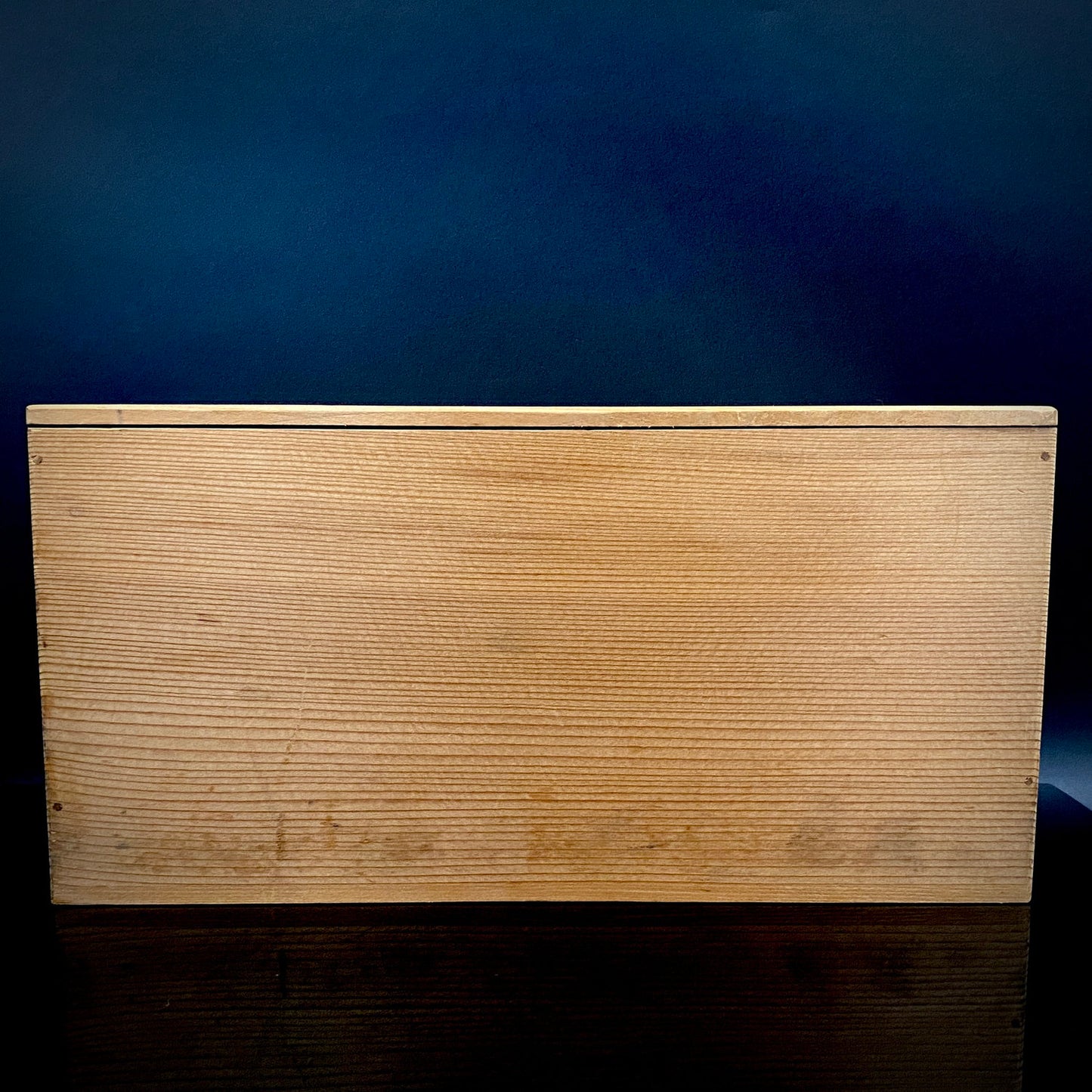
Furthermore, the texture of the robust handle, condensed with the power of handcraftsmanship, also exudes a special presence. Regarding this handle portion, there is a linear pattern on one of the mugs, extending from the inside to the surface of the handle, which at first glance may appear to be a crack. However, this is a crackle pattern in the glaze called kannyu (natural glaze crazing), unique to ceramics. There are no snags or steps on the surface, and since it is formed within the glassy glaze layer, the surface texture is extremely smooth, just like other areas, and has absolutely no impact on its strength or practicality during use. This is a natural testament to the clay and glaze breathing together at the moment of rapid cooling in the climbing kiln, and as a unique landscape inherent in handcrafted works, it is a point to be cherished deeply and for a long time, including this part, while pouring the finest aged sake. The bottom of the vessel is engraved with the workshop mark indicating that it is an authentic work from the Kawai studio, and it comes complete with its dedicated tomobako (original wooden box signed by the artist), wrapping cloth, and an official brochure. It is in excellent condition without any chips or cracks, and is a valuable item as a supreme Japanese craft piece that is extremely difficult to obtain overseas.
- Artist: Kawai Toru (1941-present)
- Artist's Notable Career: [1962] Began his pottery career under his father, Kawai Takeichi, and received direct instruction from the late Kawai Kanjiro; [1970] Moved his studio to Higashiyama Ward, Kyoto City; [1976] Built Nantan Kiln, a traditional climbing kiln, in Kameoka City, Kyoto Prefecture.
- Works in Collection: Asahi Group Oyamazaki Villa Museum of Art, ZENBI - Kagizen Art Museum, etc.
- Production Period: 2000s-2010s (estimated)
- Product Condition: Very Good (no chips, no cracks, no surface cracks, please note the characteristic crackle glaze)
- Box: Dedicated tomobako (wooden box) included
- Material: Ceramic (Iron glaze, Ash glaze, Iron painting)
- Dimensions: Height approx. 11.8 cm, Mouth diameter approx. 8.0 cm
- Note: Even if the products offered by our store are new and unused, they are from a very old production period and are all listed as used items. The product may have damage due to age, so please understand and confirm this before considering purchase.