Located at the mid-slope of Mount Koshidake in Imari City, Saga Prefecture, Nagisa Kiln is led by ceramic artist Kazuyasu Takagi (1944–), who is renowned as a leading pioneer who theorized saggar firing (saya-bachi firing) and elevated the ancient Jomon aesthetic into contemporary ceramic art. Since establishing Nagisa Kiln in 1970, after receiving awards at the Gendai Kogei Exhibition and winning the Saga Governor's Award at the Japan Shin-Kogei Exhibition in 1989, Mr. Kazuyasu Takagi stepped away from public competitions in 1992 to focus exclusively on creating one-of-a-kind works at his own kiln. In 2005, he authored the technical treatise "First-Time Electric Kiln Firing: Saggar Firing Japanese Ceramics", establishing a firm reputation in firing techniques that control the natural phenomena of clay and flame through advanced technology. Although originally crafted as a dignified Matcha bowl, our shop presents this piece to the global market not only as a tea vessel for enjoying a bowl of tea, but also as a luxury Japanese rocks glass (sake vessel) for quietly savoring amber aged sake, matured whisky, or authentic shochu over large ice cubes, utilizing its generous bowl form and profound interior bottom (mikomi).
Carefully inspecting the details of this piece reveals a magnificent realization of the intricate carved patterns reminiscent of ancient Jomon motifs—Kazuyasu Takagi's signature design—and the dramatic yohen (kiln transmutation) characteristic of saggar firing and anagama kiln firing, where wood, charcoal, and organic materials are reduction-fired inside sealed containers. Upon the heavy exterior ceramic body shifting from dark brown to iron-rust hues, sun-like, geometric lattice, and wave patterns are deeply hand-carved, with the unglazed reduction-fired texture and three-dimensional sculptural design exuding a commanding presence. On the other hand, turning one's gaze to the interior (mikomi), an extraordinarily rich glaze tone emerges where yellow, brown, and green glazes flow and layer in complex harmony, imparting a mystical depth to poured sake or tea. Beside the foot ring, artist's stamp marks "Nagisa" and "Kazuyasu" are clearly impressed in two rows by his own hand, certifying its intentional craftsmanship and authenticity alongside the raw texture of the base.
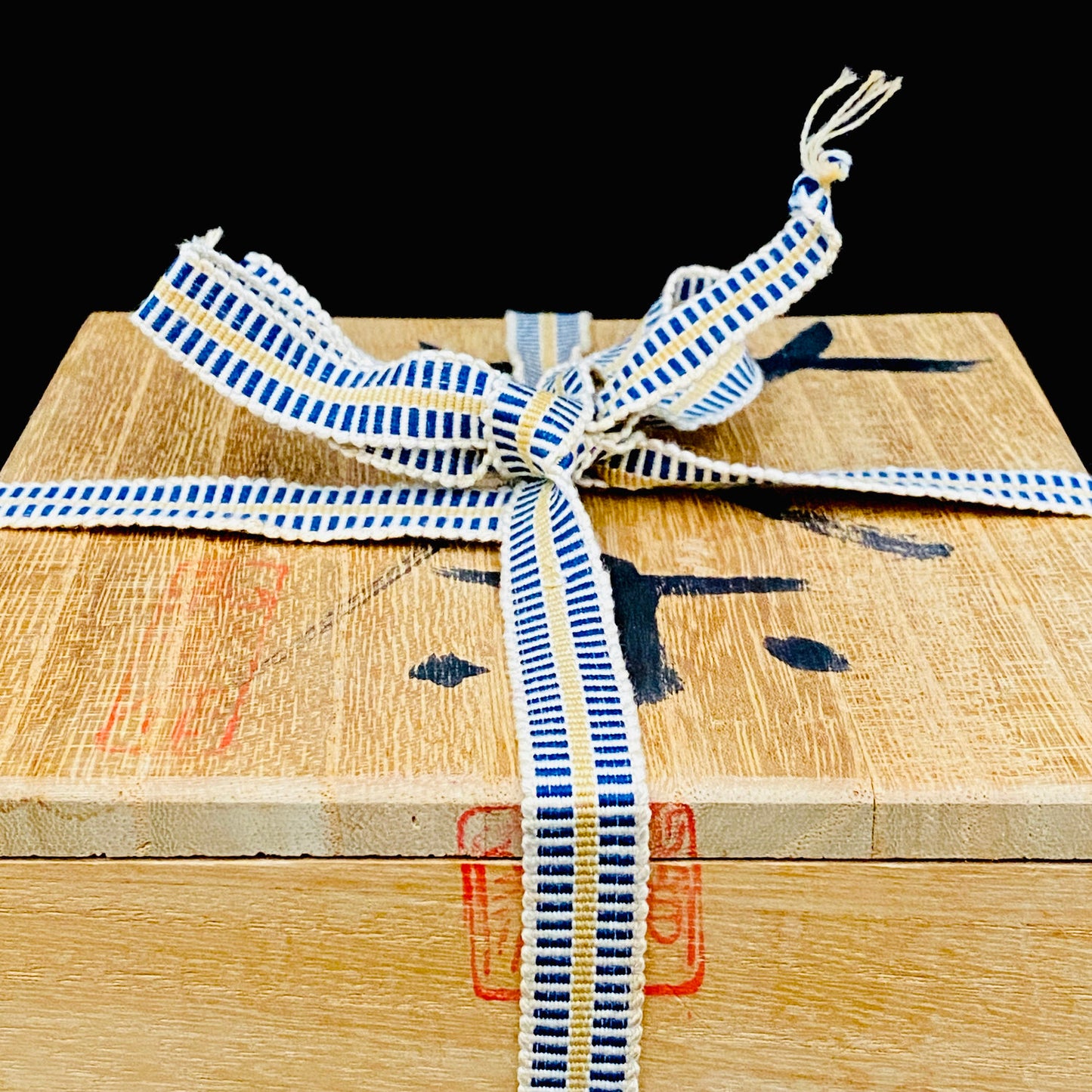
Regarding the period of production, it is estimated to have been created between circa 1995 and 2005, a peak period after building a full-scale anagama kiln at Nagisa Kiln in 1991, during which his expression of saggar firing and Jomon carving reached maturity, culminating in his 2005 publication. Created after becoming independent from public competition, this is a one-of-a-kind masterpiece that defies mass production, possessing exceptionally high rarity value. The vessel body itself has no damage such as cracks or chips, maintaining extremely excellent condition in both the coloration of the carved patterns and the glaze tone of the interior. It arrives in complete condition accompanied by its dedicated paulownia Tomobako, inscribed on the lid in an original calligraphic script with "Chawan" and on the back of the lid with "Nagisa Kiln" and "Kazuyasu" in ink, stamped with his seal.
- Artist: Kazuyasu Takagi (1944–)
- Artist's Key Activities: [1970] Established Nagisa Kiln in Imari City, Saga Prefecture; [1989] Won the Saga Governor's Award at the Japan Shin-Kogei Exhibition; [1991] Built a full-scale anagama kiln at Nagisa Kiln; [1992] Transitioned to an independent artist outside public competitions after receiving awards at the Gendai Kogei Exhibition; [1998] Appointed ceramics instructor at Keitoku High School; [2005] Authored and published the technical book "First-Time Electric Kiln Firing: Saggar Firing Japanese Ceramics" (Seibundo Shinkosha)
- Period of Production: Circa 1995–2005 (Estimated)
- Condition: Very good (no chips, no cracks)
- Accessories: Dedicated Tomobako included
- Material: Pottery (Imari ware, Nagisa Kiln, saggar firing, Jomon carved pattern, with artist's mark)
- Dimensions: Height approx. 8.0 cm, Mouth diameter approx. 13.6 cm
- Caution: All products offered by our shop are pre-owned items due to their historical production period, even if unused. Products may have age-related damage, so please consider purchasing after understanding and verifying these condition details.