

Vessels That Mirror Amber — How White Porcelain, Celadon, Tenmoku and Gold Change the Look of Whisky
Whisky is a drink you first taste with your eyes. The amber the moment it is poured into a glass, the gleam when you hold it up to the light, the gradient of colour that grows paler towards the rim. One reason most tasting glasses are colourless and clear is to let you see that colour accurately.
When you drink from a Japanese vessel, however, the colour of whisky is seen against the inside of the vessel, its mikomi. A white mikomi shows amber honestly, a blue one sinks the colour deeper, a black one turns the surface into a mirror, and a gilded one throws light back. Simply changing the vessel makes the same bottle show an entirely different face. In this article we explain, with photographs of our own pieces, how the colour of the mikomi and the nature of the glaze change the way whisky looks. All the photographs were taken by us.
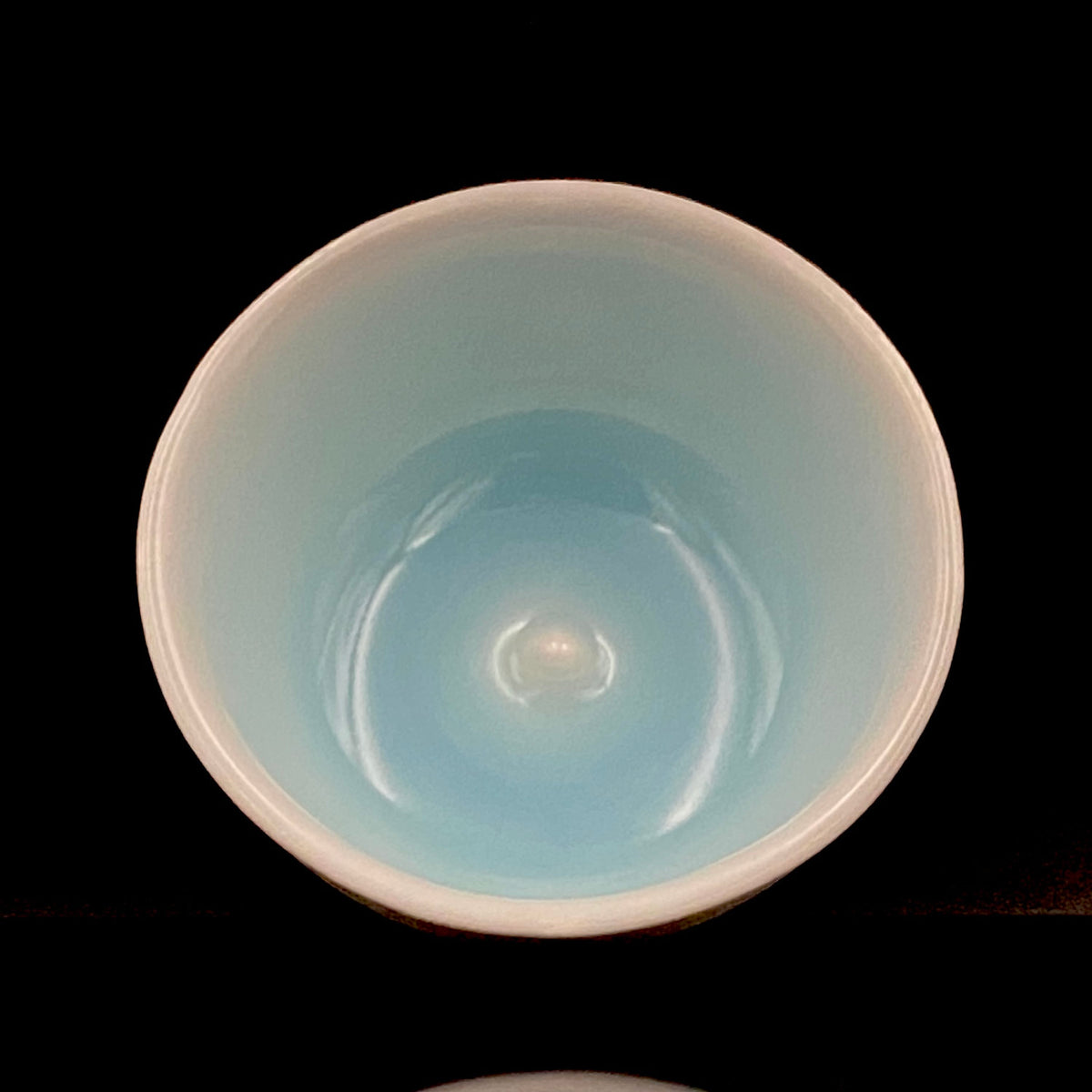
Learning from the janome — white for colour, blue for brilliance
The white porcelain cups used for tasting sake in Japan have two blue concentric circles drawn on the bottom. This pattern is called janome, the "snake's eye", and it is said that the white part is used to judge the colour of the sake and the blue part its clarity and brilliance. White suits the judging of colour, blue the judging of clarity: this idea is just as useful when you taste whisky from Japanese vessels.
A vessel with a white mikomi is one for checking the true colour of whisky. A vessel with a bluish mikomi brings out the clarity and sparkle of the liquid. And a vessel with a dark mikomi asks you to set colour aside for a moment and enjoy the light reflected on the surface and the scenery of the vessel itself. When you choose a vessel, look first at the colour of its mikomi.
Where does the colour of whisky come from?
Freshly distilled whisky spirit is as colourless and clear as water. Its amber colour is born mainly during the long years of maturation in the cask, as components of the wood dissolve into it. Depending on the type of cask, what it held before and the length of maturation, the colour ranges widely, from pale straw to deep reddish brown. Spirit matured in casks that once held sherry is known for tending towards a dark, reddish colour.
The rules for Scotch whisky, on the other hand, allow only two things to be added: water and plain caramel colouring (E150A) to adjust the colour. Some bottles have their tone adjusted with a little caramel so that the colour is consistent from batch to batch. So the depth of colour does not necessarily indicate the length of maturation. Even so, the amber swaying in the vessel still shapes the impression of every glass.
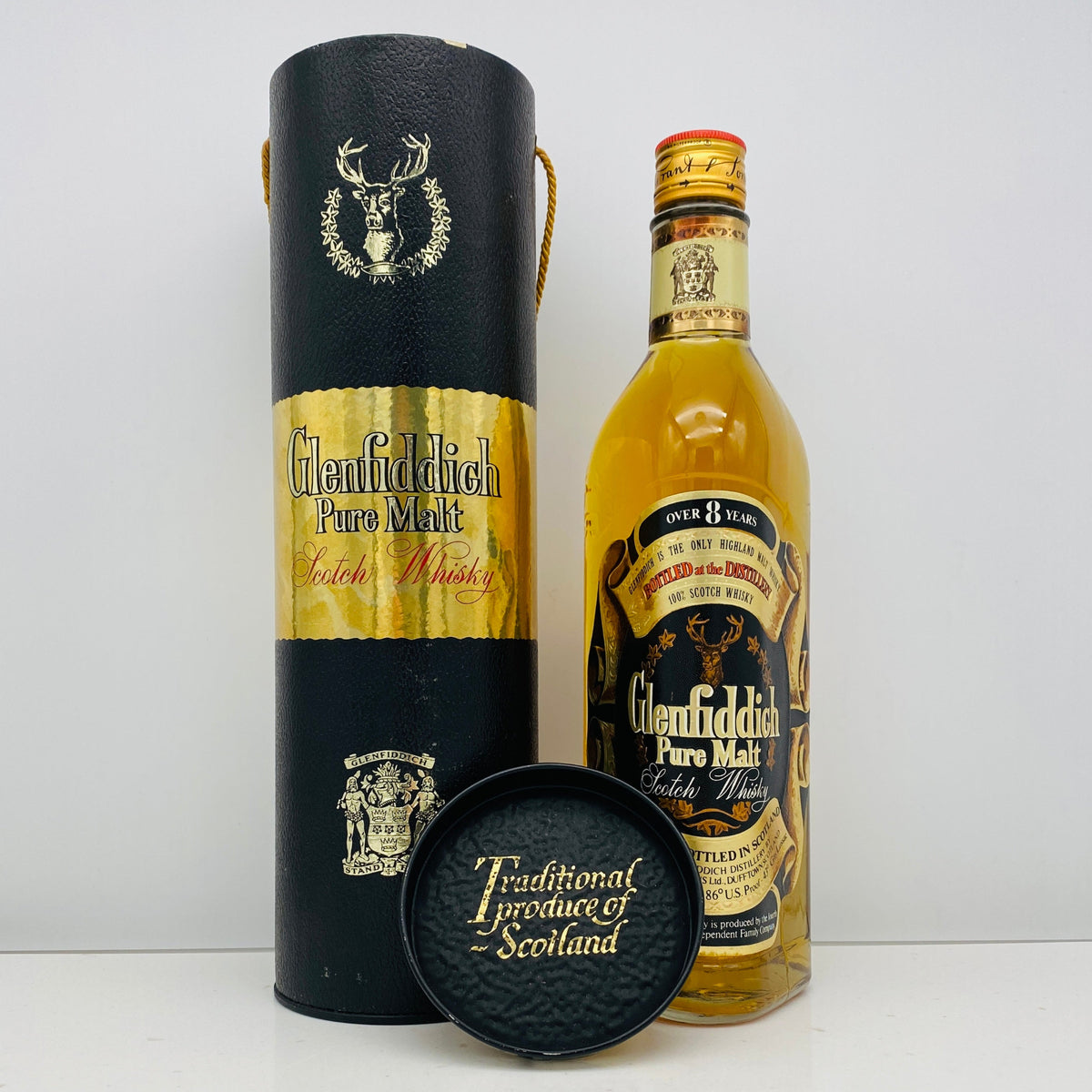
The colours in our own stock vary widely too. There are deeply coloured bottles such as Glen Hunter 21 Year Old, which uses a high proportion of sherry-cask-matured spirit, and there is the Glenfiddich 8 Year Old in a clear bottle (distributed in the 1970s), whose contents show their colour straight through the glass.
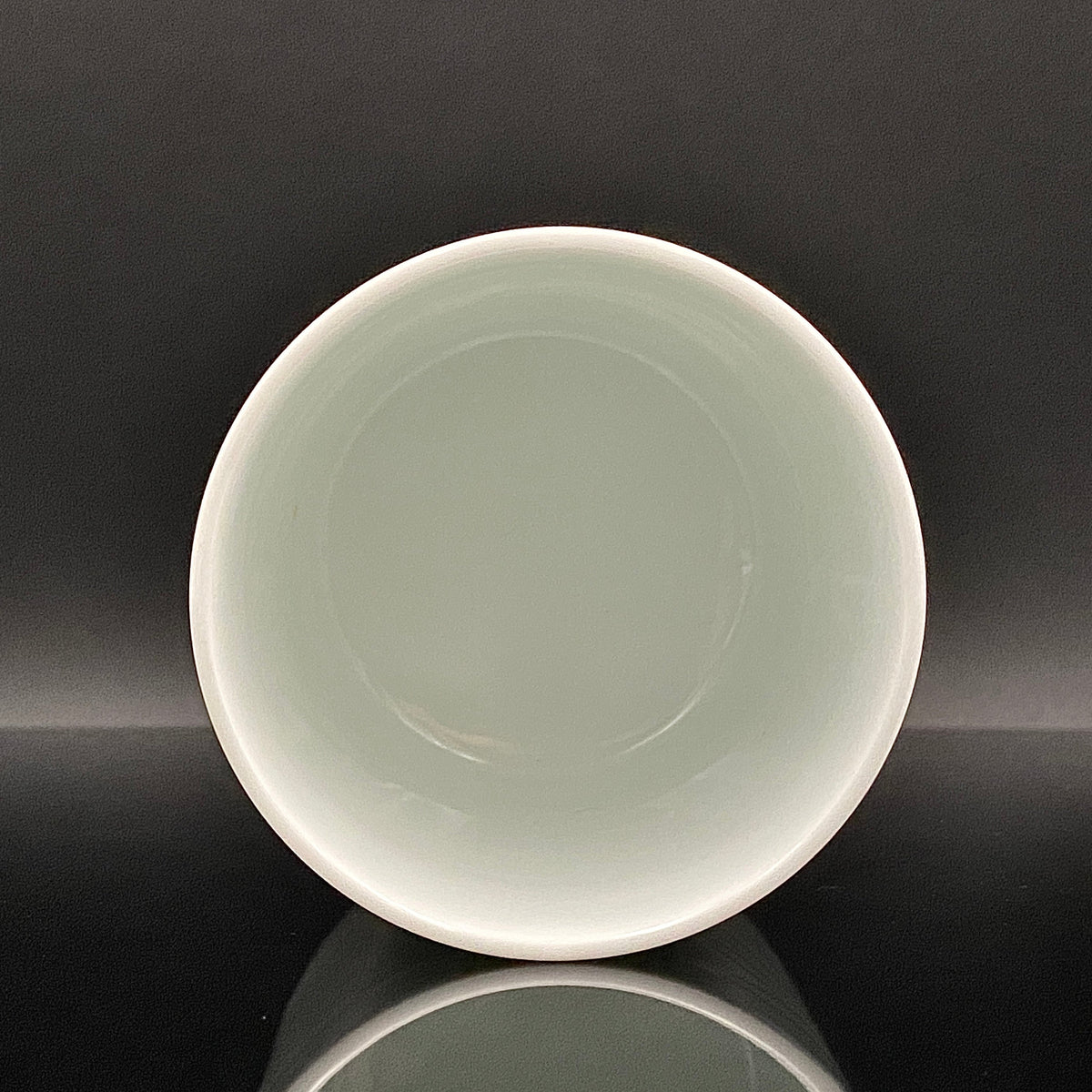
A white mikomi — showing colour honestly
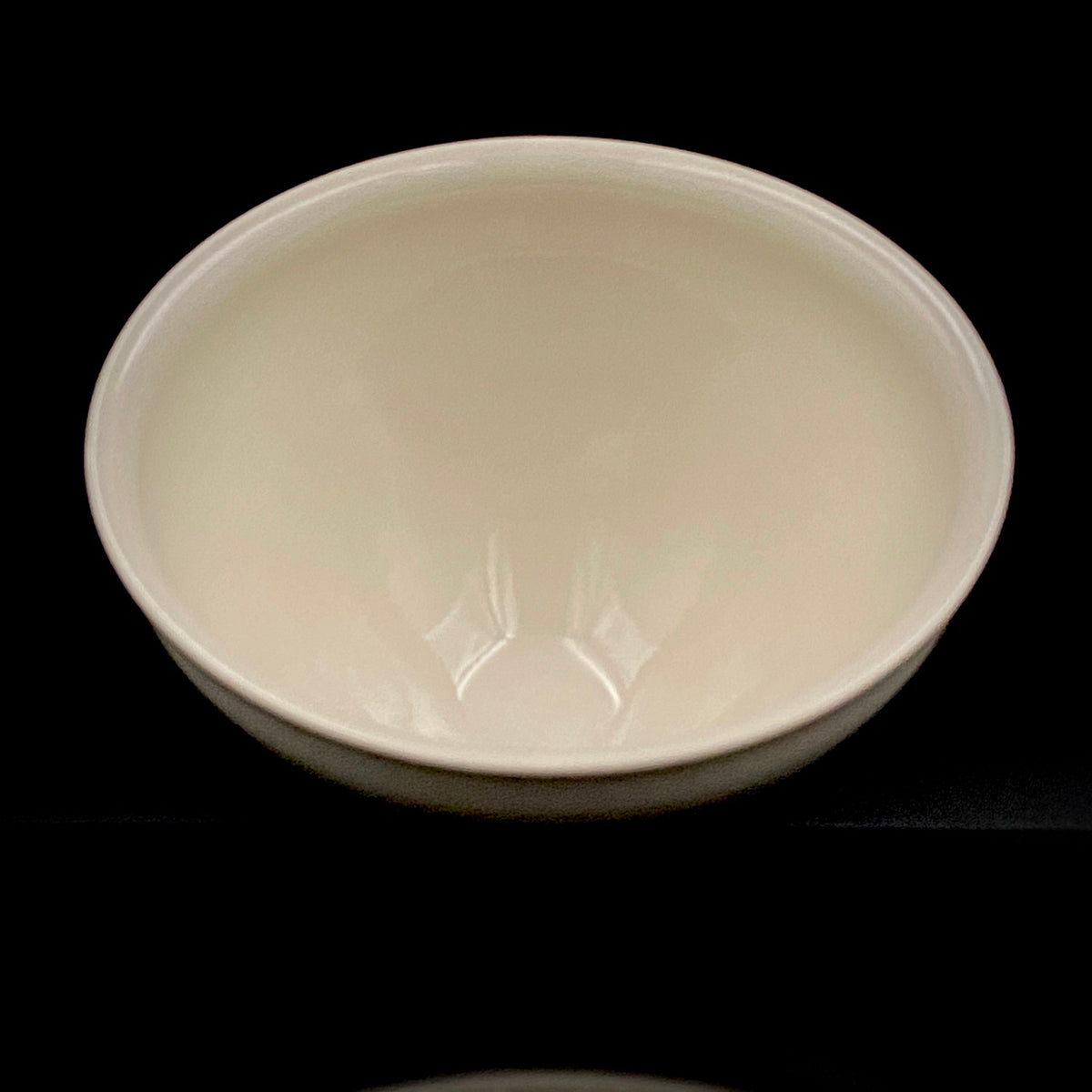
A white mikomi is the background that shows the colour of whisky most honestly. Above all, it lets you see how the colour changes with the depth of the liquid. Near the rim, where it is shallow, the whisky looks pale gold, and in the deep centre it looks dark amber, so a single glass holds a gradient of colour. The longer the path the light travels through the liquid, the more light is absorbed and the deeper the colour appears.
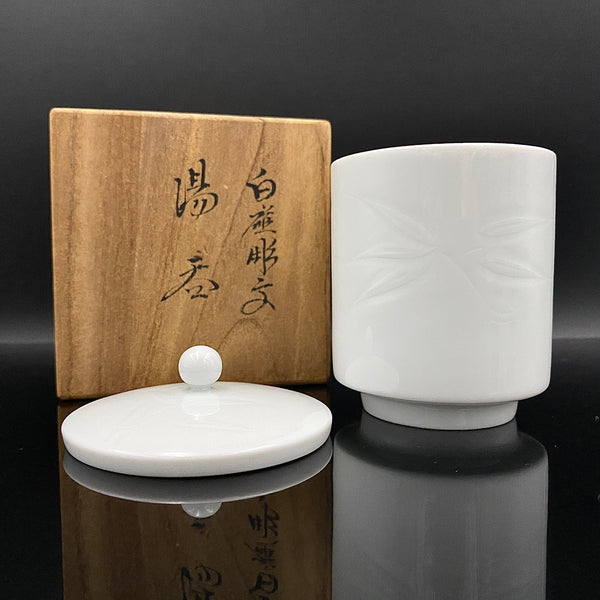
The classic white is hakuji, white porcelain: a white porcelain body covered with a clear glaze and fired. It shows amber clear and undistorted in its pure white. The white porcelain carved yunomi by Inoue Manji, holder of the Important Intangible Cultural Property "white porcelain", is white without a trace of cloudiness all the way into its mikomi.
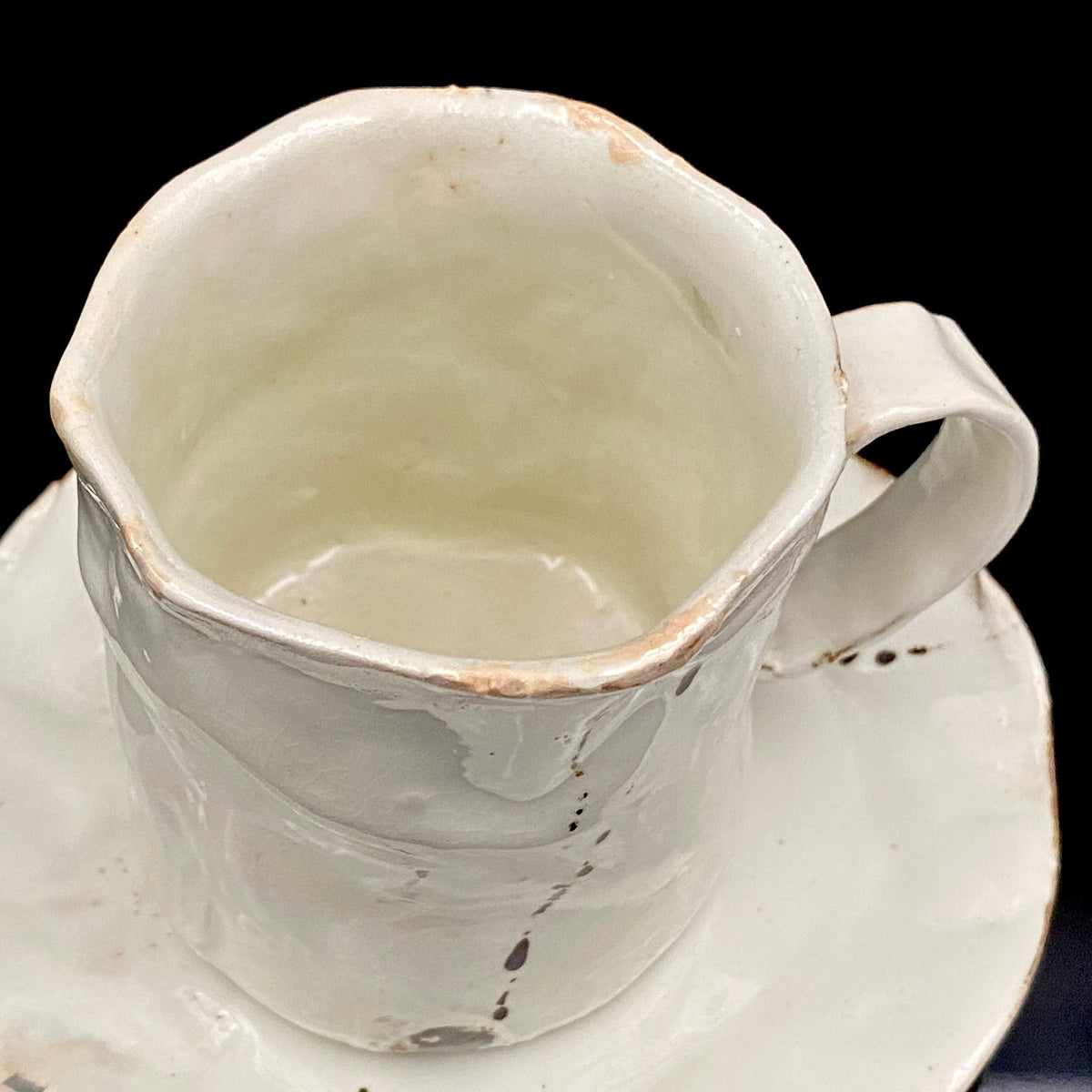
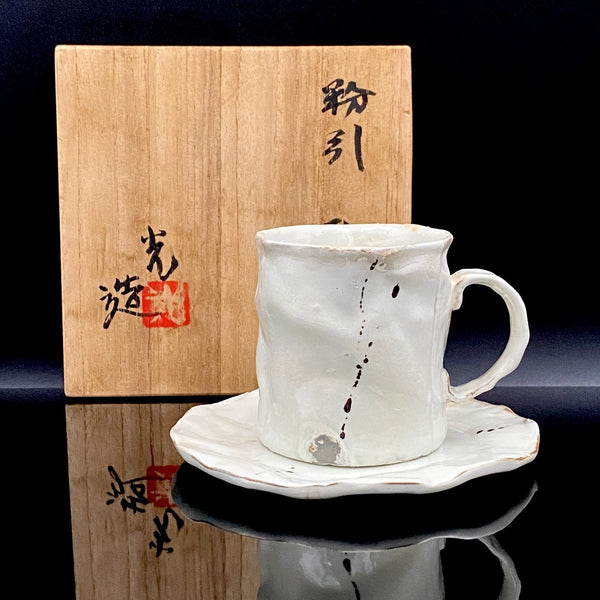
The white of earthenware shows yet another face. Kohiki is made by coating a brown, iron-bearing clay body with white slip, then applying a clear glaze and firing. The warmth of the clay shows through the white, and small specks of iron appear here and there. The kohiki coffee cup and saucer with iron-painted dotted lines by Yamada Hikaru, one of the founders of Sodeisha, is a piece we introduce as "a white vessel that sets off the amber of whisky". The white tenmoku tea bowl by Oketani Teiichi II, a tenmoku-shaped bowl with a white glaze, has a wide mouth, so you can look down on a broad expanse of whisky colour from above.
A blue mikomi — seihakuji and celadon
Pour amber whisky into a bluish mikomi and the colour looks deeper than in a white vessel, with a slight tinge of green. Amber liquid absorbs blue light readily, so the light returning from the blue background is weakened as it passes through the liquid, and what remains looks a deep greenish brown. Near the rim, where it is shallow, the blue shows through, and towards the centre the colour shifts from green to amber, a band of colour you will not see in other vessels. Just as the blue of the janome is used to judge brilliance, a blue mikomi also brings out the clear sparkle of the liquid.
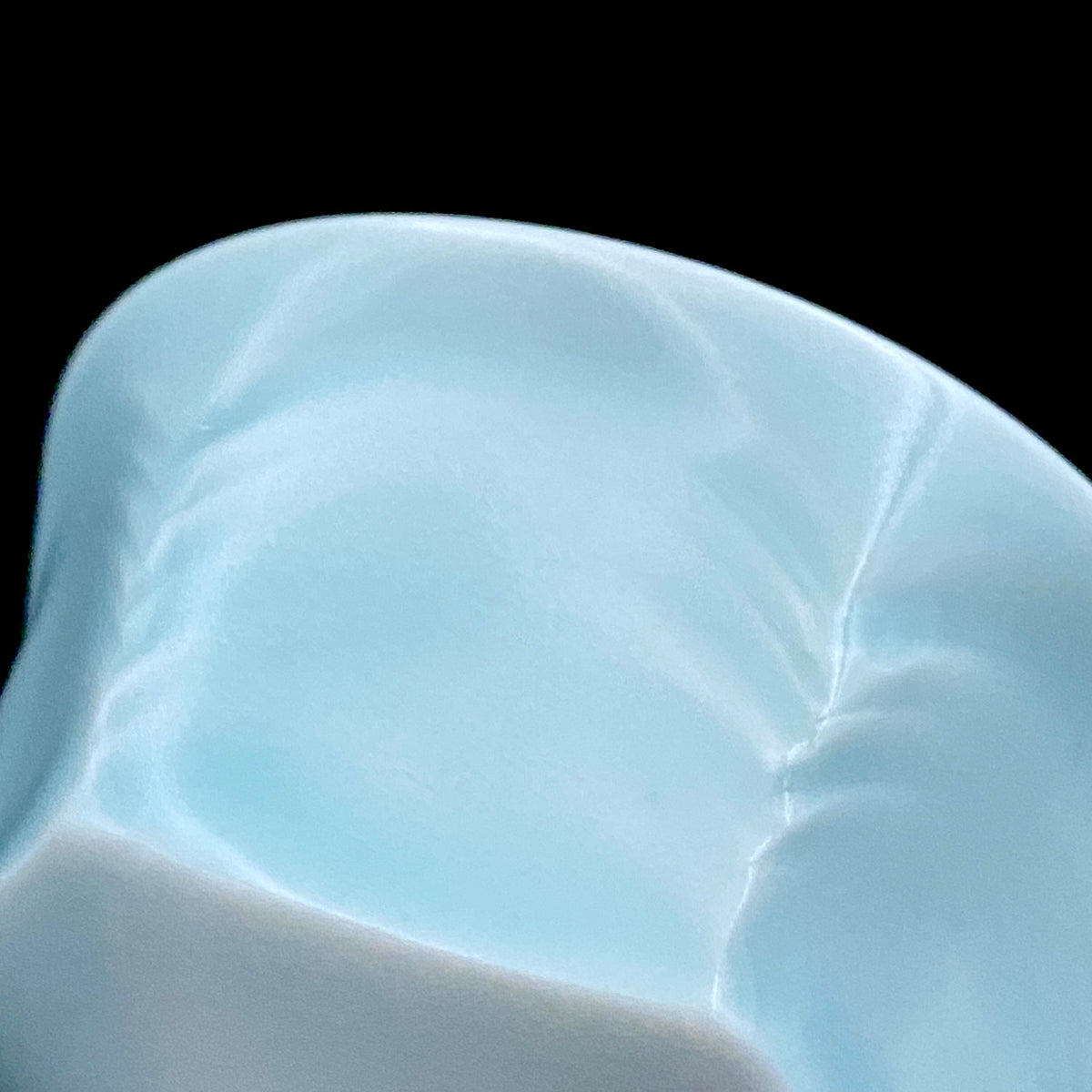
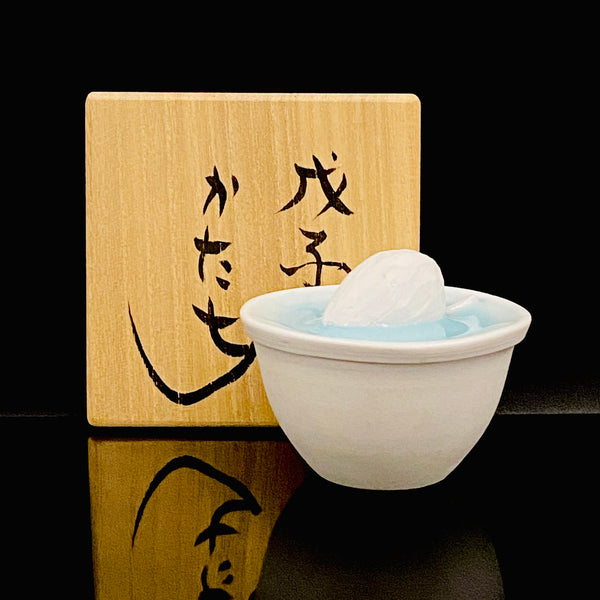
Seihakuji is a white porcelain body covered with a clear glaze that has the faintest bluish tinge. Where the glaze is thin it is close to white, and only where it pools, in carved hollows for example, does it take on a pale blue. The seihakuji hexagonal stem cup by Tanaka Hajime of Arita clearly shows the glaze glowing blue where it has gathered on the carved facets. In Nagae Shigekazu's "Form of Boshi", in contrast to the matt white porcelain outside, the inside is lined with seihakuji glaze, and the drink you pour sinks into a clear pale blue.
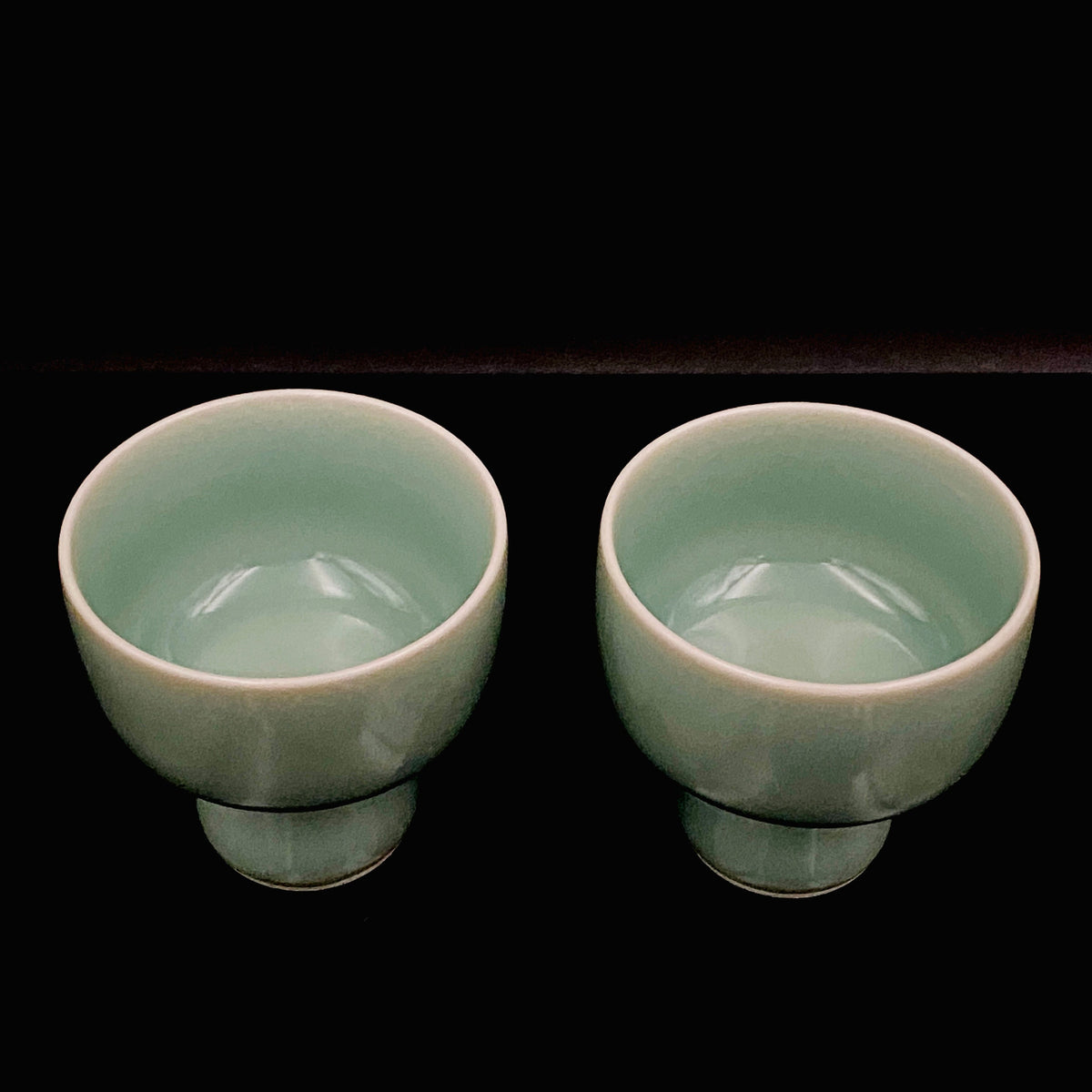
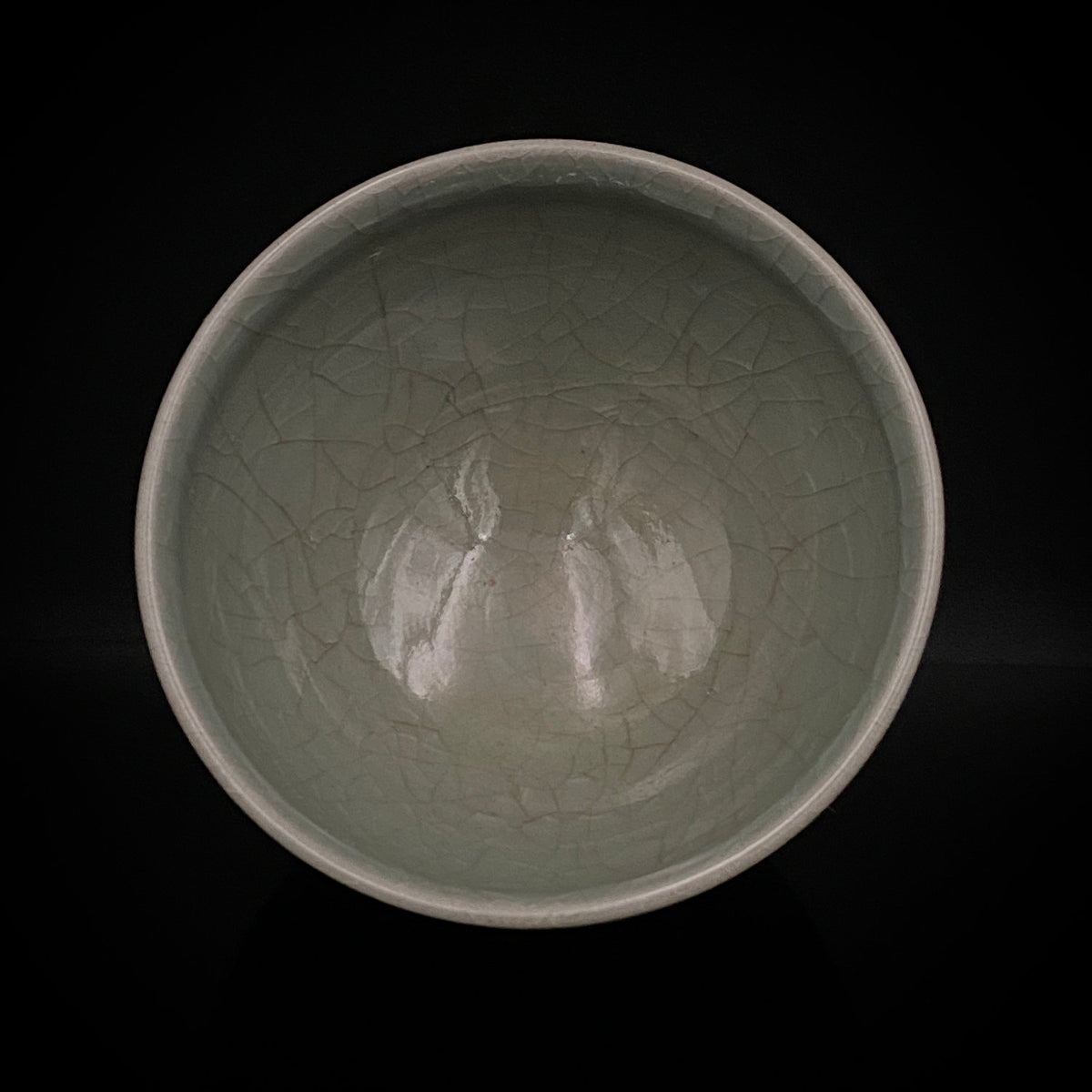
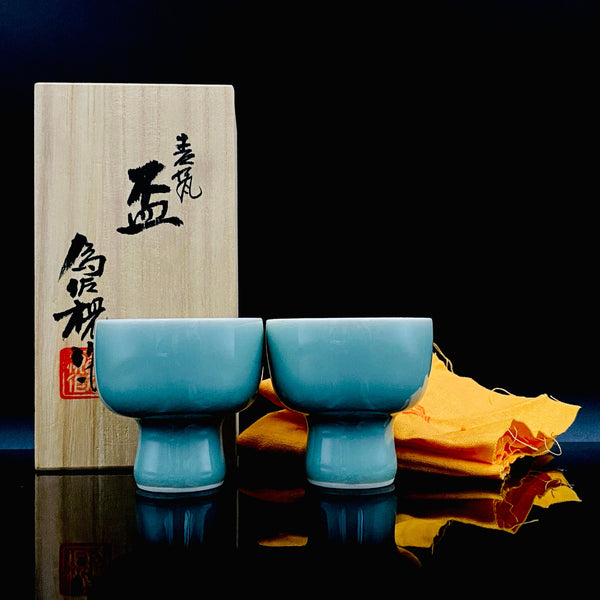
Celadon owes its blue-green colour to the small amount of iron in the glaze being fired in a low-oxygen atmosphere. It is also said that the fine bubbles and crystals trapped in the glaze scatter the light and give the colour its depth. The pair of celadon sake cups by Matsumoto Isami of Kyoto are cups whose clear blue-green glaze fills them to the depths of the mikomi. Pour whisky into them, and the blue-green and amber melt together into the colour of deep jade.
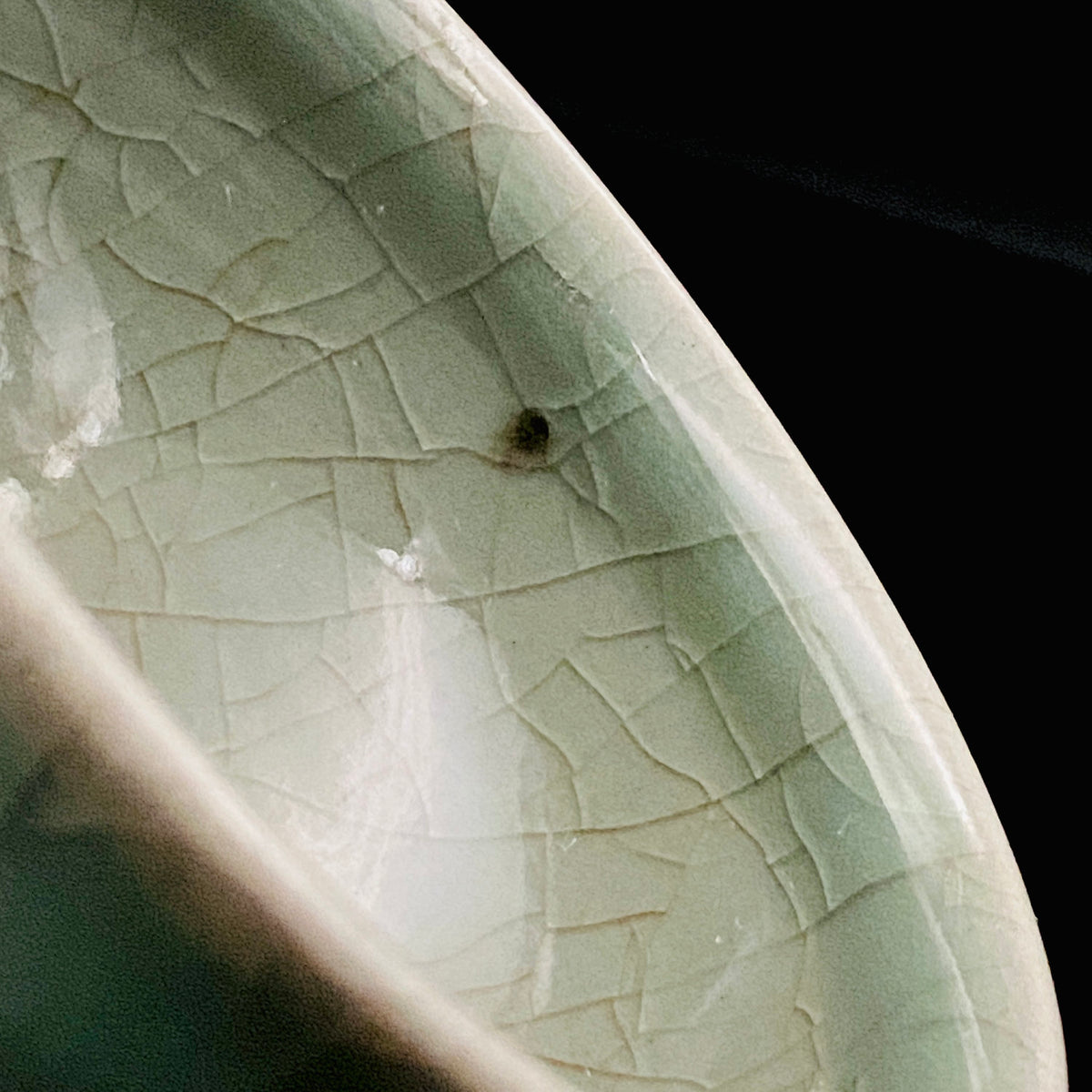
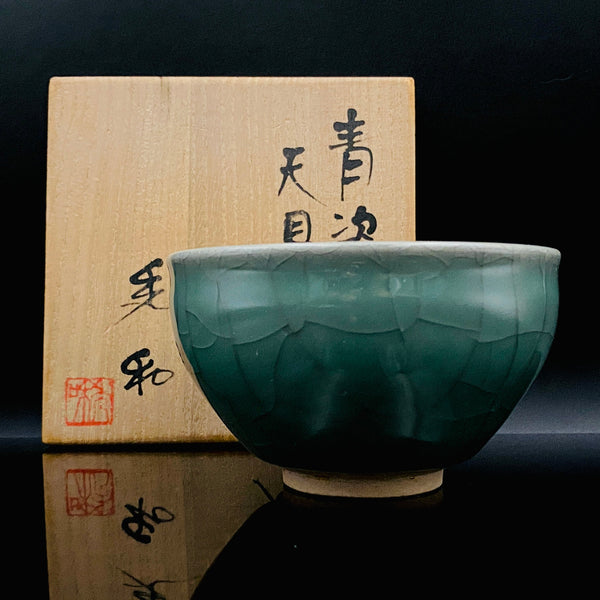
Even within celadon, the crackle can change its expression completely. In the celadon tenmoku bowl by Nakamura Hidekazu of Yamagata, layer upon layer of ice-crack crackle runs through the glaze, spreading a web like broken ice across the whole mikomi. Pour in amber liquid and every line of the web rises up through it, as though whisky had been sealed inside ice.
A black mikomi — tenmoku turns the surface into a night sky
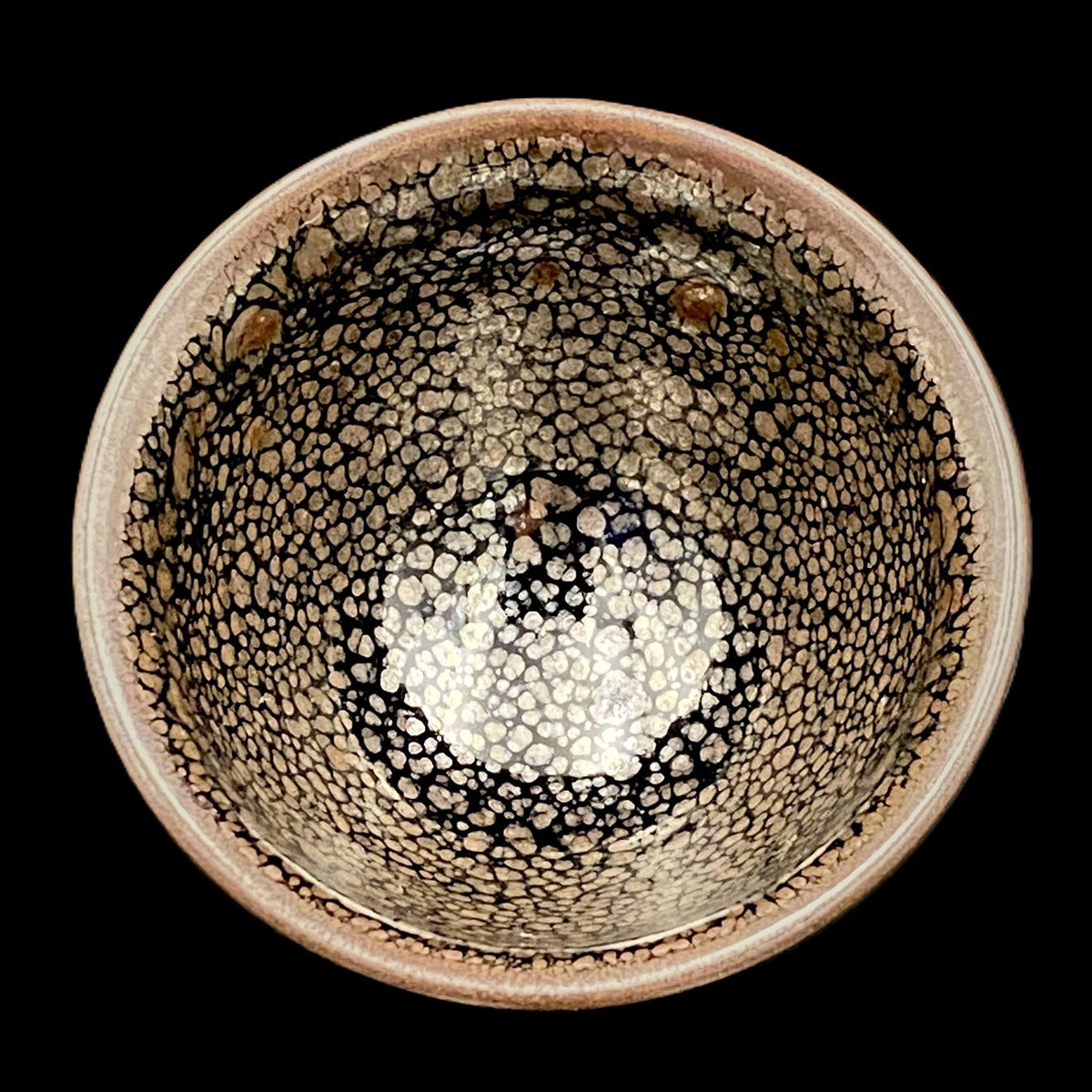
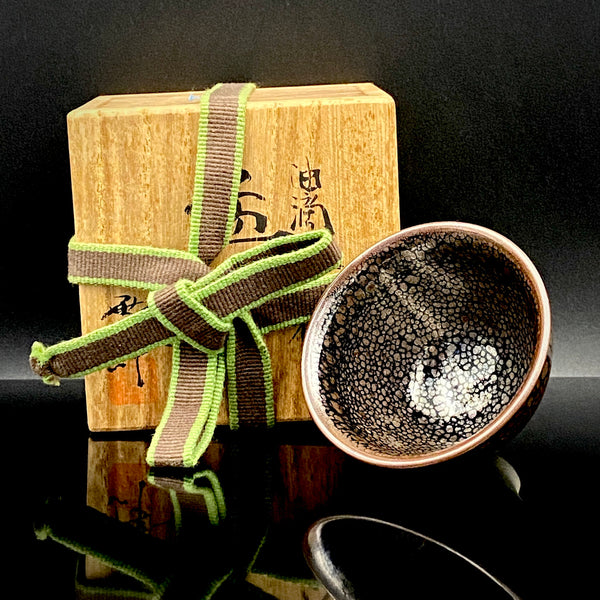
Tenmoku is black or brown ware fired with a glaze rich in iron. Because the mikomi is dark, the colour of whisky almost disappears. Instead, the surface of the liquid reflects the surrounding light like a mirror. With oil-spot tenmoku in particular, iron crystals rise to the surface of the glaze during firing and silver spots scatter across the black ground. Pour in whisky and the spots glitter through the liquid, turning the mikomi into a night sky full of stars.
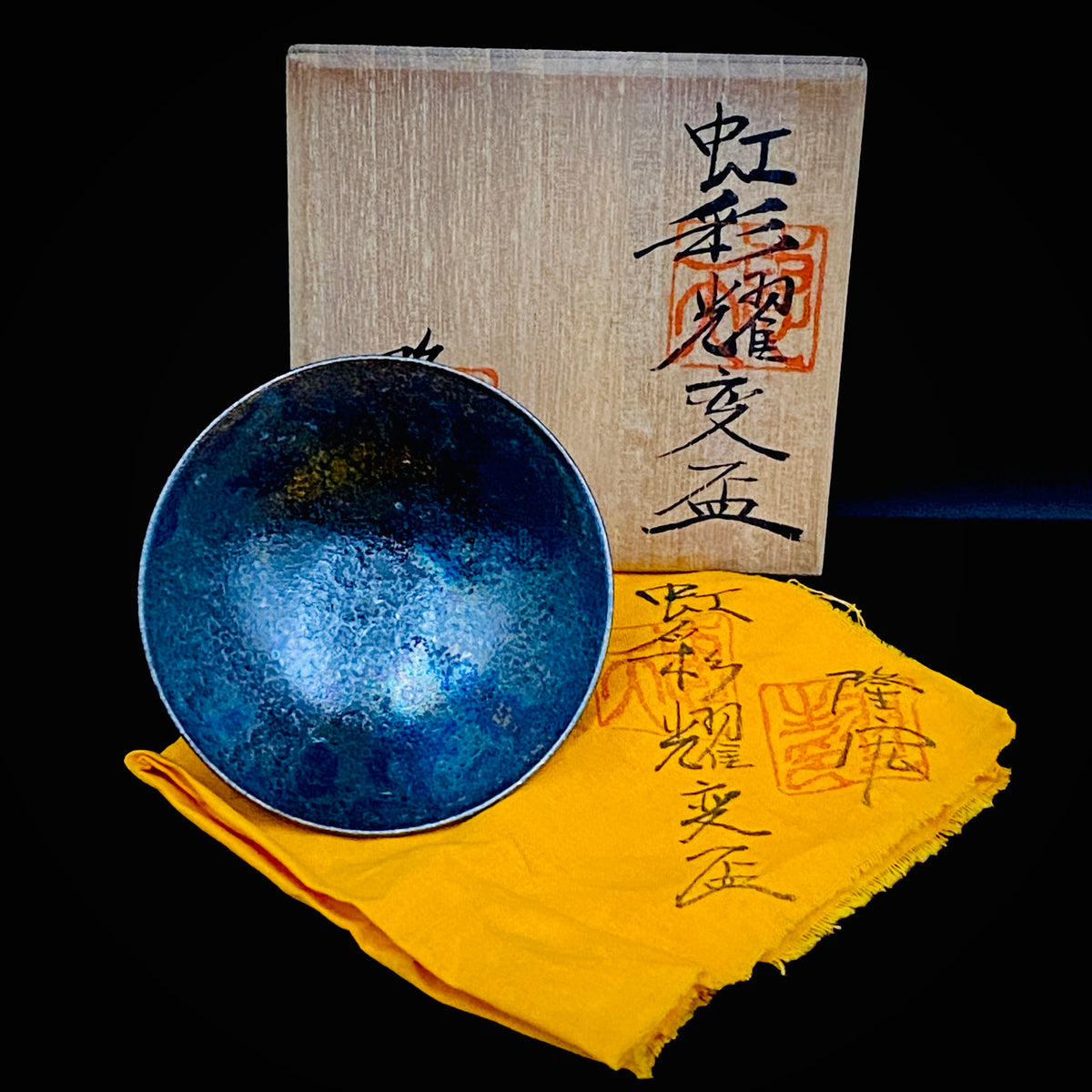
The oil-spot tenmoku cup by Iida Seppo of Kanazawa is a cup with fine oil spots spread across its entire mikomi. It is a vessel in which you set aside checking the colour for a moment and enjoy the aroma and the flicker of lamplight on the surface. In the iridescent yohen cup by Haniu Takahiro, which shimmers with the colours of the rainbow depending on the light, the gleam of crystals shifting from silver to blue and violet sways beneath the amber liquid. We look more closely at the mysterious gleam that appears in tenmoku mikomi in our article on yohen tenmoku.
A gold or silver mikomi — light thrown back
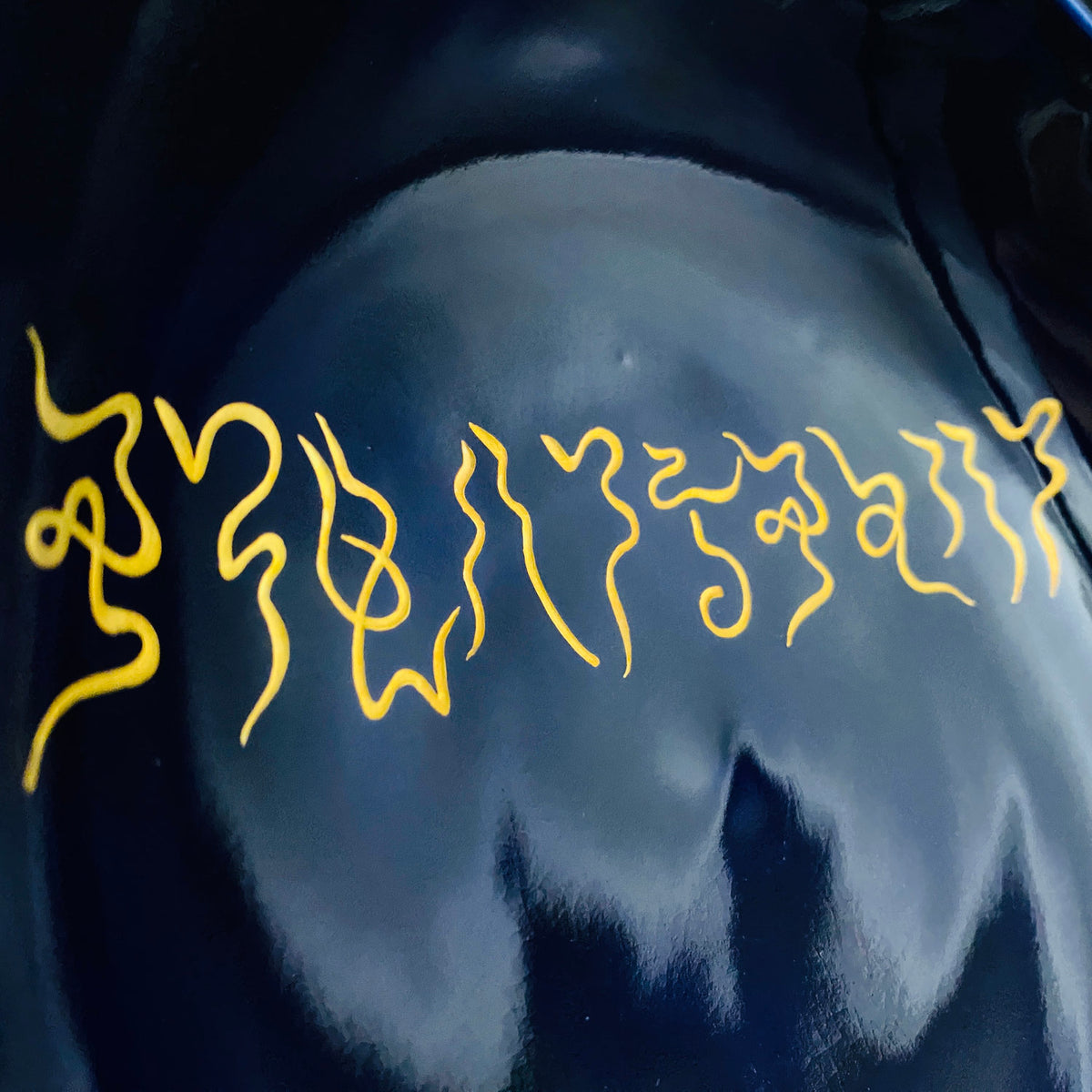
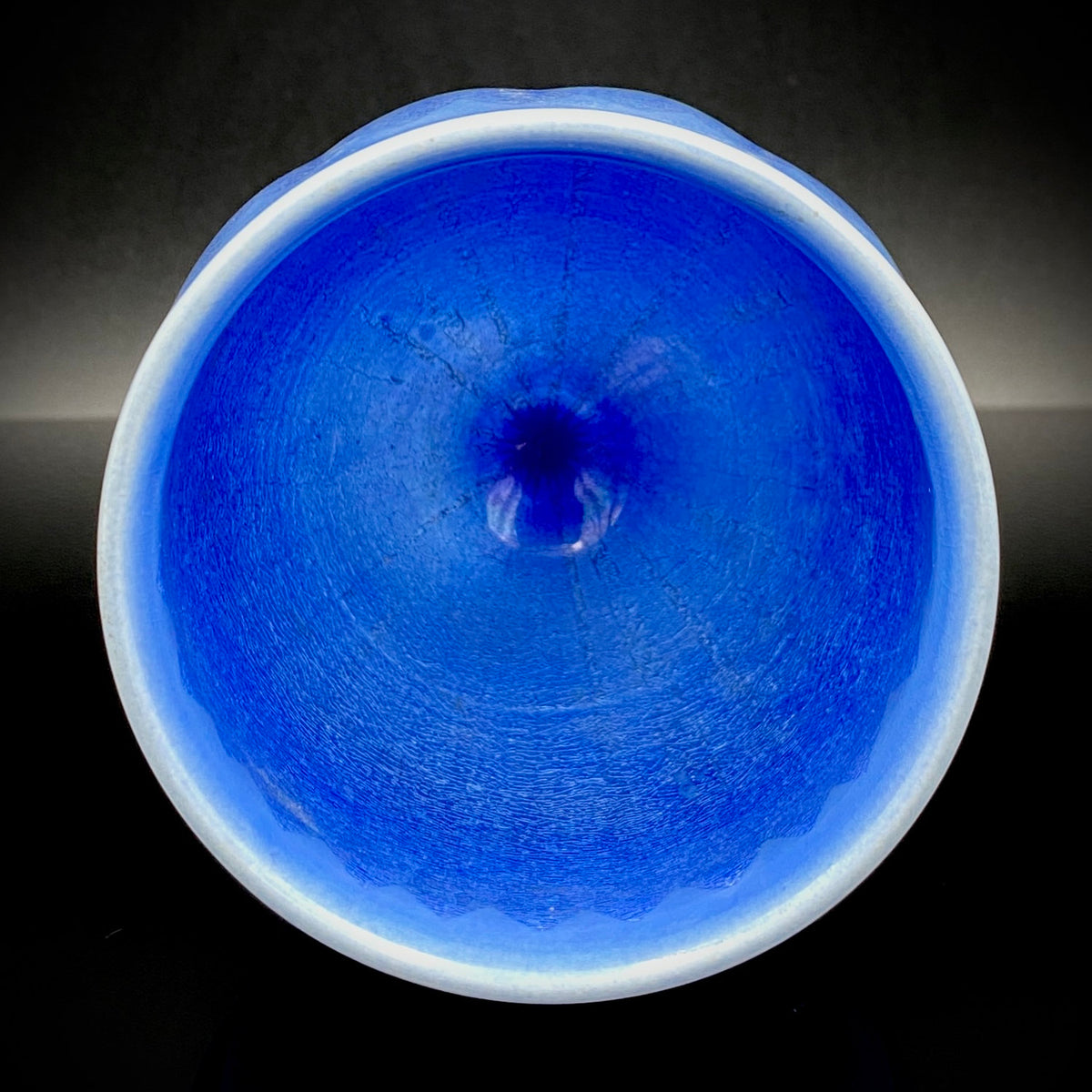
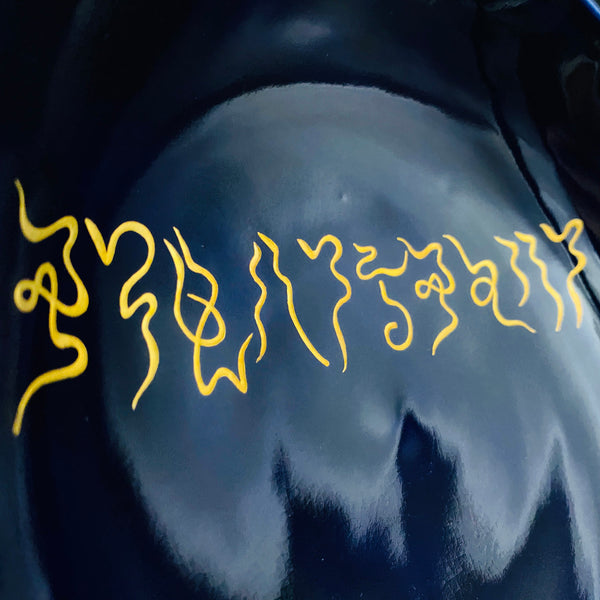
In vessels whose mikomi is decorated with gold or silver, the amber of whisky overlaps with the gleam of metal. The ruri-glazed confectionery bowl with gold kamiji characters by Miyanaga Tozan II is a bowl with a single line of jindai moji, the "characters of the age of the gods", drawn in gold on its deep lapis-blue mikomi. It was made for sweets, but pour in a little whisky with ice and look at it: the gold characters waver through the amber over the deep lapis blue, a scene as mysterious as the vessel's name.
The Kutani-ware yuri-ginsai shochu cup by Living National Treasure Nakada Kazuo is a vessel in the yuri-ginsai technique, with silver leaf sealed beneath the glaze, and silver glows faintly at the bottom of its blue mikomi. Vessels with gold or silver are less for looking at colour than for enjoying light. In a room with the lights turned a little lower, tilt the vessel and watch the gleam shift.
Scenery that appears as you drink — neriage and overglaze enamels
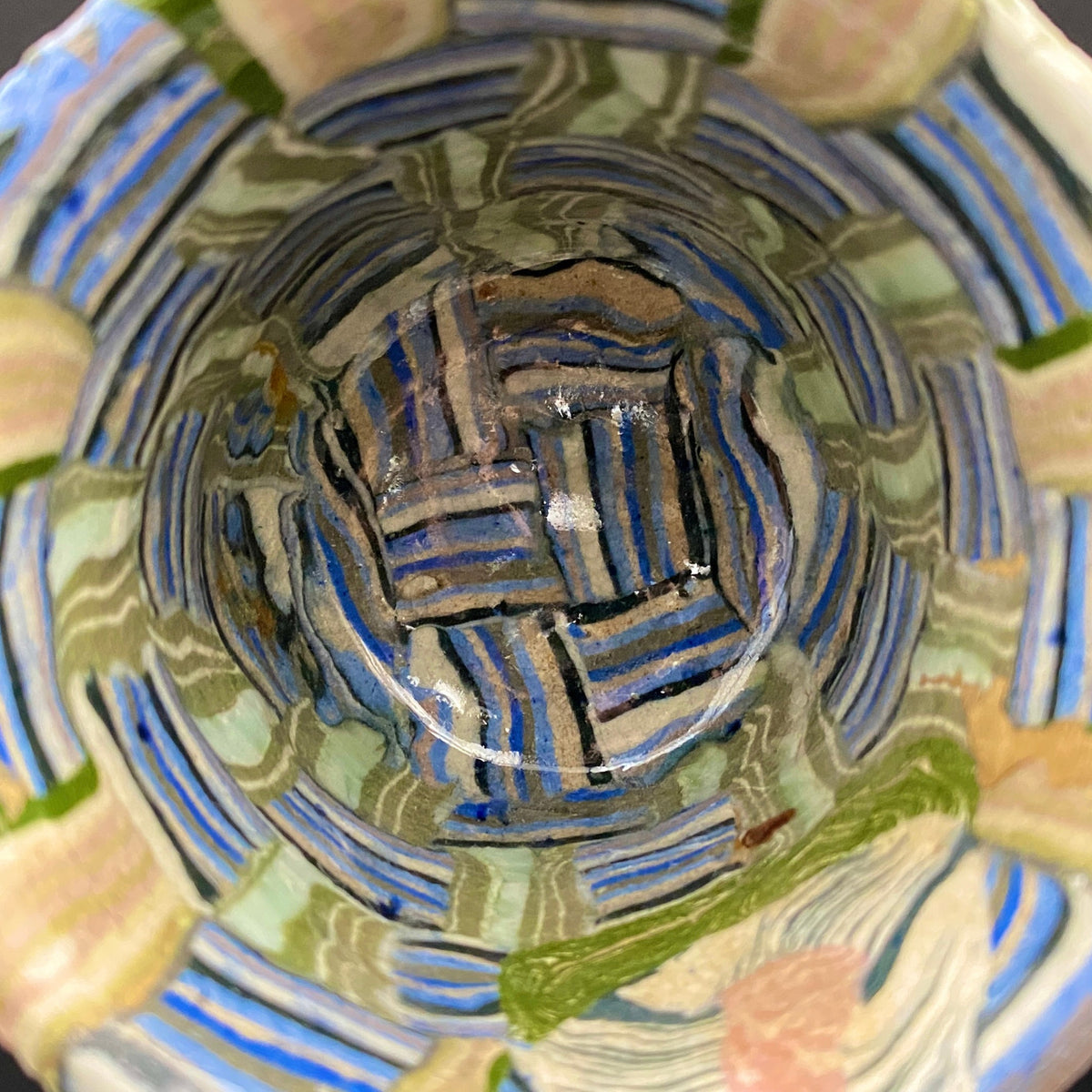
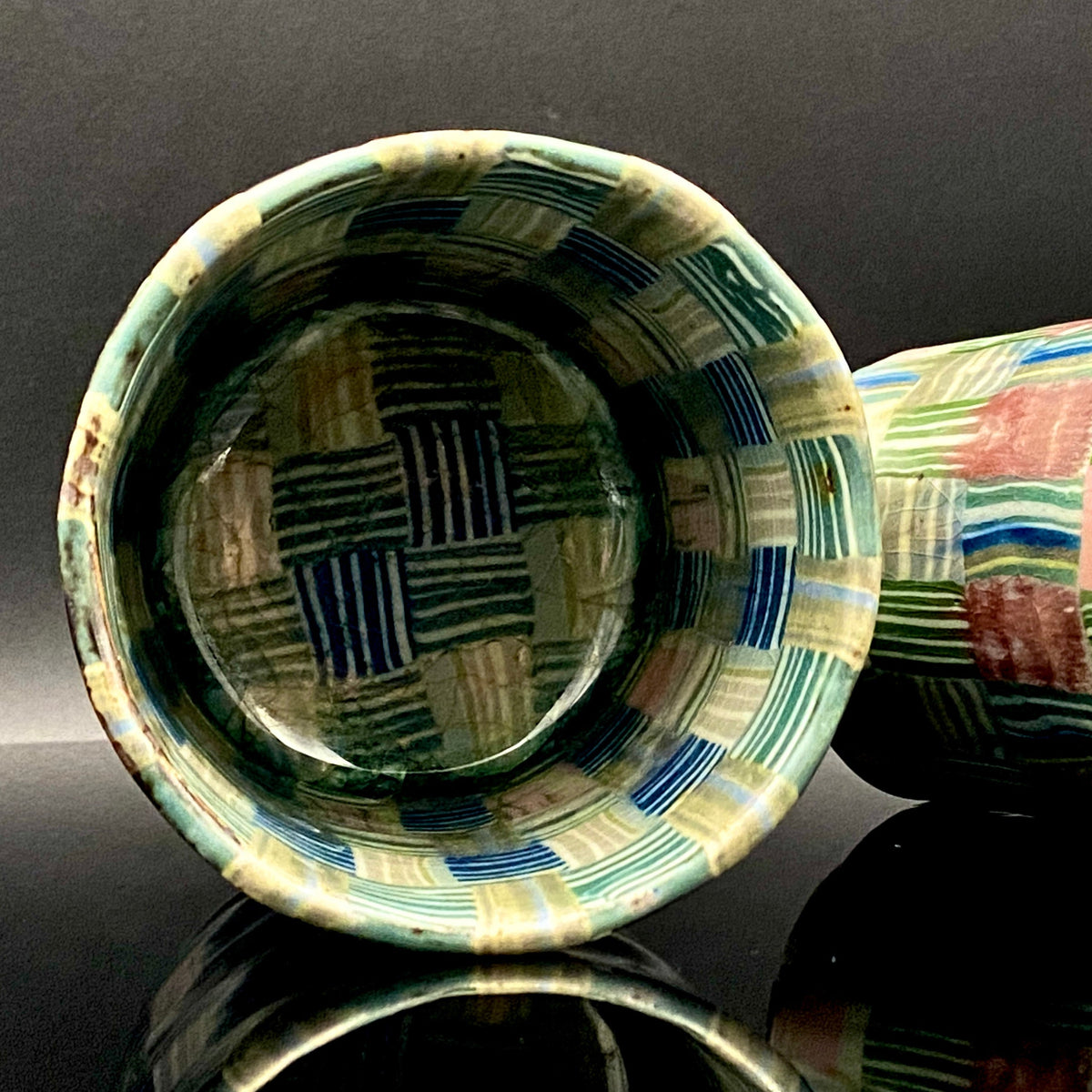
When there is a pattern inside a vessel, what you see changes with the amount of whisky. The pattern that was submerged when you first poured gradually reveals itself as you drink.
The "hyori kantsu nishiki neriagede" of Uchida Yasuhide, holder of an Important Intangible Cultural Property designated by Hiroshima Prefecture, is the neriage technique, which creates patterns by kneading together clays of different colours, carried right through the vessel from outside to inside. Because the pattern on the outside appears in the mikomi as well, in the rocks glass made in 1980 and the pair made in 1977 the lattice of coloured clays wavers beneath the whisky, and when you drain the glass the vivid pattern emerges. We explain the neriage technique in detail in our article on the neriage technique.
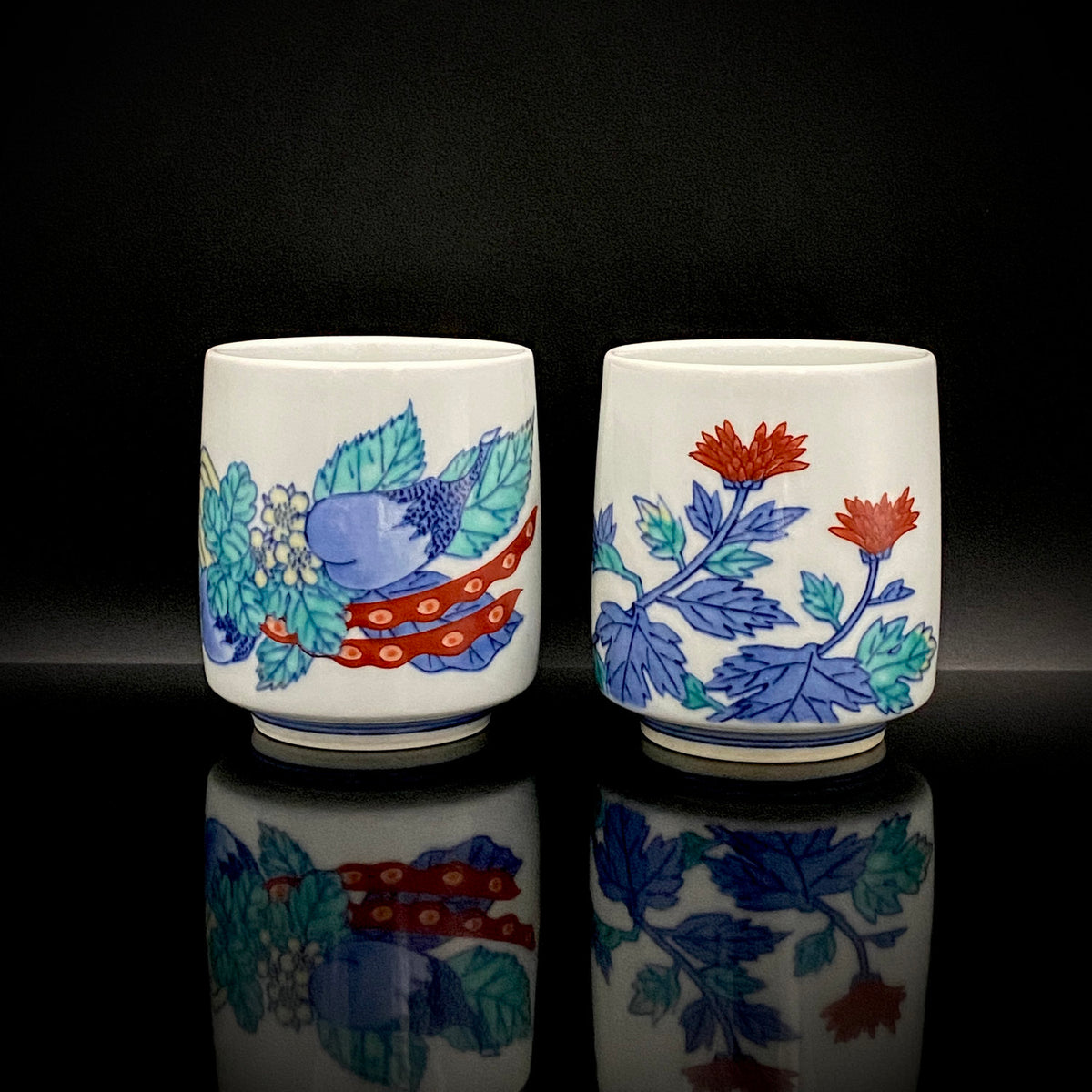
The pair of cylindrical Iro-Nabeshima cups with varied brocade designs by Living National Treasure Imaizumi Imaemon XIII have splendid Iro-Nabeshima patterns painted on the outside and no pattern inside. The contrast between the splendour outside and the quiet mikomi sets off the amber you pour.
Glass vessels — layering colour, letting light through
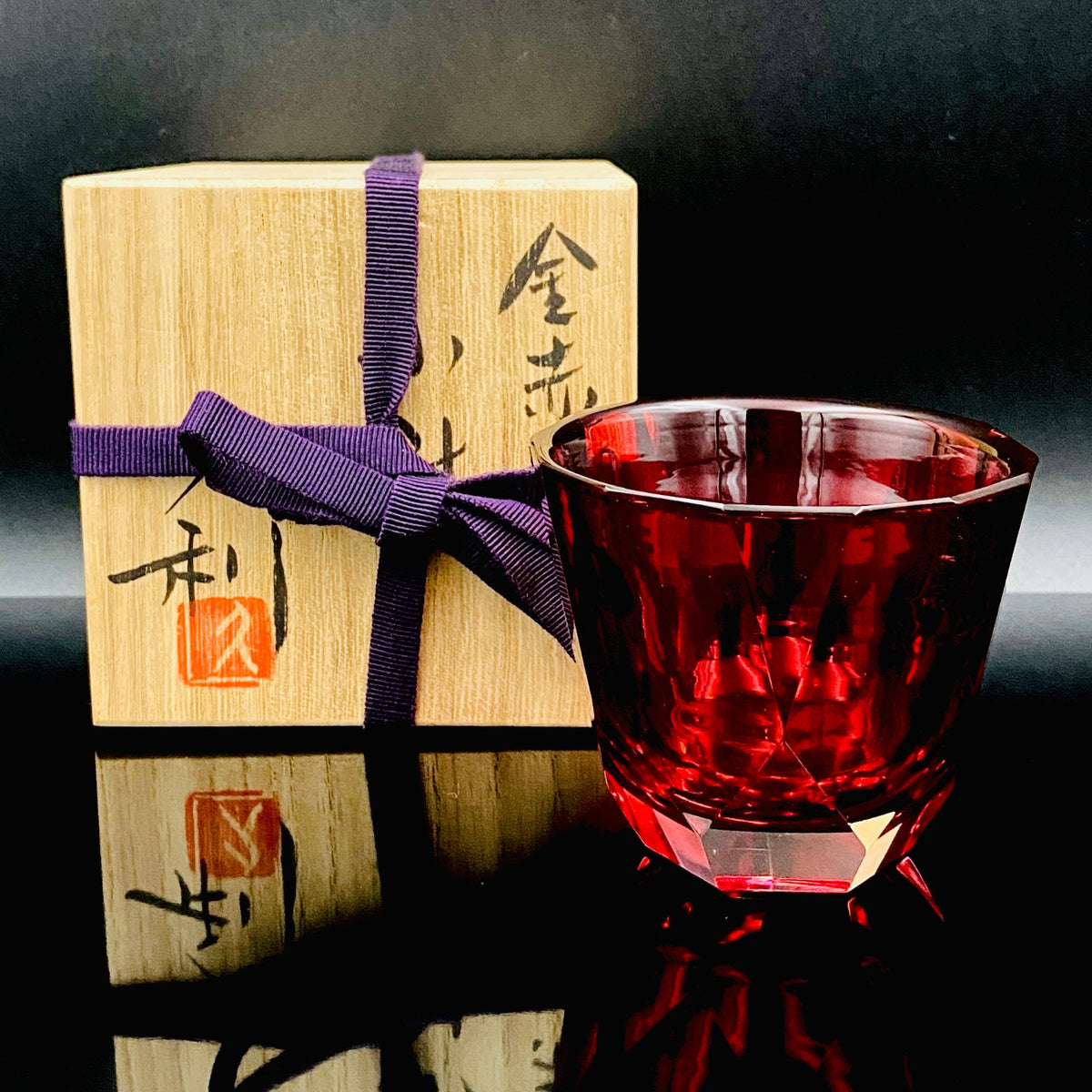
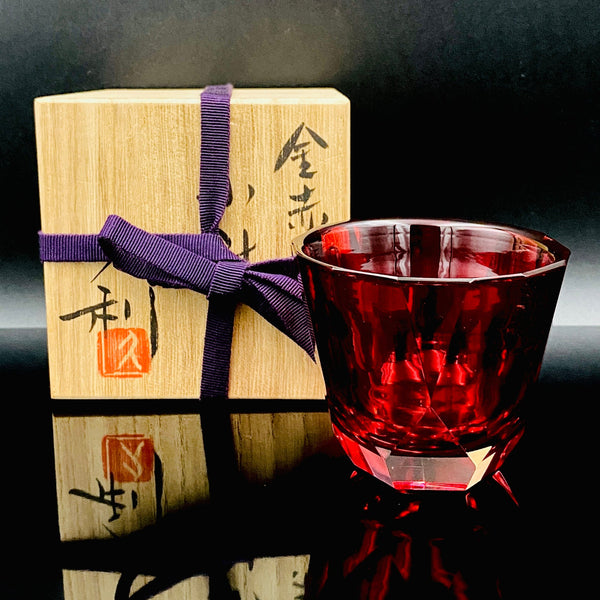
With glass vessels, light passes through the vessel itself as well as reflecting from the mikomi. Pour whisky into coloured glass, and the colour of the glass and the amber overlap, changing the colour you see through the vessel. Iwata Hisatoshi's kin-aka rocks glass is cut glass in "kin-aka" (gold ruby), glass coloured red by gold dissolved in it; pour in whisky and the red and amber overlap to glow a deep reddish brown. We tell the story of kin-aka in detail in our article on kin-aka glass.
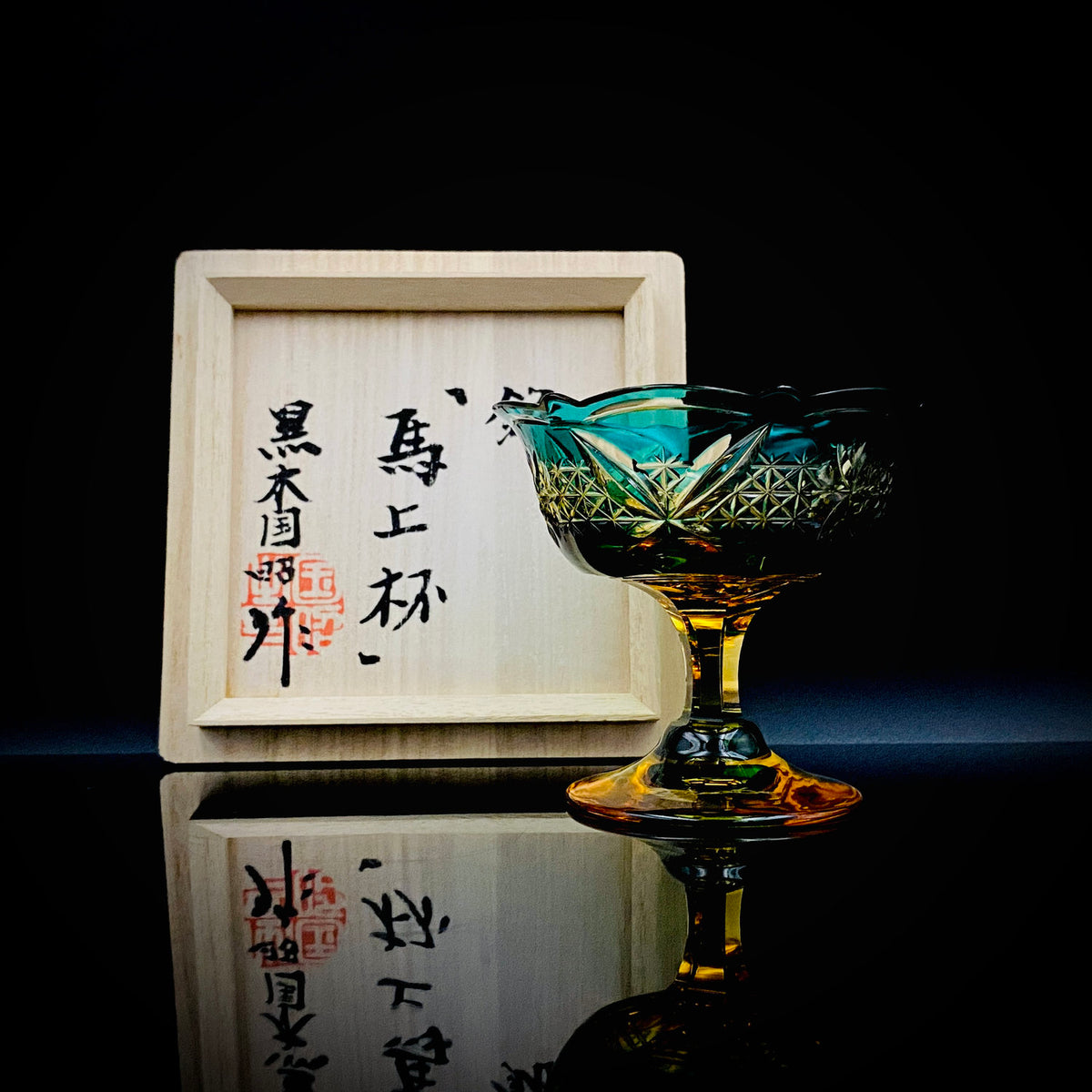
Kuroki Kuniaki's Aya Kiriko stem cup in green and amber overlay glass is a cup with kiriko cutting on a body of layered green and amber glass. The colour of whisky overlaps with the green and amber seen through the cut facets, and the layers of colour change places with the angle.
Quick guide: how whisky looks in each mikomi
Here, in a single table, are the differences between the mikomi introduced so far. Please use it as a guide when choosing a vessel.
| Mikomi | How whisky looks | Best for | Example from our shop |
|---|---|---|---|
| White porcelain | Shows the colour honestly; the shading from rim to centre is clearly visible | Comparing and checking colour | Inoue Manji, white porcelain carved yunomi |
| Kohiki and white tenmoku | The warmth of the clay beneath the white softens the amber | Enjoying colour and scenery together on the rocks | Yamada Hikaru, kohiki cup and saucer |
| Seihakuji and celadon | The colour deepens and turns slightly green; the clear sparkle stands out | Checking clarity; jade-like changes of colour | Matsumoto Isami, celadon cups |
| Tenmoku | The colour almost disappears; the surface reflects light like a mirror | Concentrating on aroma; enjoying flickering lamplight | Iida Seppo, oil-spot tenmoku cup |
| Gold and silver | The gleam of metal sways through the liquid | Enjoying light in a dimly lit room | Miyanaga Tozan II, confectionery bowl |
| Neriage and overglaze enamels | The pattern appears as you drink | Enjoying the changes over the course of a glass | Uchida Yasuhide, nishiki neriagede |
| Coloured glass | The colour of the glass and the amber overlap, and the whole vessel glows | Looking through it by a window or a lamp | Iwata Hisatoshi, kin-aka |
Pairing the colour of the bottle with the colour of the mikomi
The colour of the mikomi can also be enjoyed in combination with the colour of the bottle. A deeply coloured whisky made with a high proportion of sherry-cask spirit, poured into the white mikomi of white porcelain or kohiki, reveals reddish tones within the amber and lets you take in the full depth of its colour. Conversely, a pale whisky poured into a celadon mikomi becomes a bright colour like young leaves as the blue-green and pale gold melt together. Even with the same bottle, a colour that seemed "dark" in a white vessel seems "deep" in a blue one, and in a tenmoku vessel the impression of colour itself vanishes and the aroma comes to the fore.
We recommend pouring the same bottle into three mikomi, white, blue and black, and comparing them. For example, set out three vessels, Inoue Manji's white porcelain for white, Matsumoto Isami's celadon for blue and Iida Seppo's oil-spot tenmoku for black, and you can see at once the colours one whisky can show. You may even notice that the impression of aroma and taste seems to change with the colour that enters through your eyes.
Small rituals for enjoying colour
- Look in natural light: For checking colour, daylight by a window is best. At night, looking under a whitish light with little colour cast shows something close to the true colour.
- Lay down white paper: A sheet of white kaishi paper or plain paper under the vessel lets you concentrate on the mikomi and the colour of the liquid without being distracted by the colours around it.
- Change how much you pour: Pour a little and it looks pale gold; pour more and it looks deep amber. Just changing the amount in the same vessel changes the impression of the colour.
- Pour into two vessels: Pour the same whisky into a vessel with a white mikomi and one with a blue mikomi, and look at them side by side. You will be surprised at the difference in colour.
- Reflect the moon: In Japan, the elegant pleasure of reflecting the moon in a sake cup while drinking has been loved since ancient times. On a bright moonlit night, try pouring whisky into a white vessel, setting it by the window and gazing at the moon on its surface.
Summary
White shows colour honestly, blue deepens it, black turns the surface into a mirror, and gold and silver throw light back. And in vessels of neriage or overglaze enamel, scenery emerges as you drink. When you taste whisky from Japanese vessels, the colour of the mikomi is an important element that decides how each glass looks. Enjoying the different faces of colour, not only aroma and taste, is one of the true pleasures of tasting whisky from Japanese vessels. We introduce how the shape of a vessel changes the taste in our article on how the shape of a cup changes the taste.
Frequently asked questions
Q. Which vessel is best for looking at the colour?
To check the true colour of whisky, a vessel with a pure white mikomi, such as white porcelain, is best. The shades of colour are clearly visible, and it is easy to compare the colours of different bottles.
Q. Can't I enjoy the colour of whisky in a black tenmoku vessel?
The colour itself becomes hard to see, but in return the surface reflects light like a mirror, and the oil spots glitter through the liquid. It is a vessel that offers a different pleasure from the vessels for looking at colour.
Q. Is there anything to be careful about when using vessels with gold or silver?
Gold and silver decoration can be damaged in a dishwasher or spark in a microwave oven. Wash by hand with a soft sponge and dry thoroughly before putting away. Silver may darken as it reacts with substances in the air.
Related items in our shop
Pieces from our shop connected with this article. Click a photo to open its product page.
You can browse more in Celadon & White Porcelain Sake Cups & Vessels, White Sake Cups and Vessels (White Porcelain, Shino, Kohiki), Lapis & Blue Sake Cups and Glasses, Tenmoku Sake Cups & Bowls.