

Whisky and Vessels Shaped by Time — Old Bottles, Hagi's Seven Changes, Kohiki Rain Stains and Growing Crackle
What our shop deals in is, in a sense, time. Old bottles of whisky that were moved from cask to bottle decades ago and have crossed long years under seal. And vessels that left the hands of Showa-era master craftsmen and have since passed time with one owner after another. Both are things you inherit not as they were at the moment they were made, but together with all the time that has flowed since.
In Japan there is an expression, "raising" a vessel (utsuwa wo sodateru). As a vessel is used, its colour deepens, scenery appears in its crackle and it settles into the hand. It is a way of thinking that cherishes these changes not as dirt or damage but as the vessel's growth. In this article we bring together the years an old bottle has crossed inside the glass and the world of vessels that change their expression the more they are used, and propose a way of enjoying artist-made vessels by using and raising them day by day with your whisky. All the items introduced here are from our shop, and all the photographs were taken by us.
The years in the bottle — the time an old bottle has crossed
Whisky matures in the cask, and once in the bottle it does not go on accumulating years as it did in the cask. Even so, the decades spent in the bottle do not leave the bottle without a trace.
The most visible change is the level of the liquid. Even in an unopened bottle, over long years a little of the contents can evaporate through tiny gaps in the closure, and the level can fall. We use the position of the bottle's shoulder, the so-called shoulder line, as one standard, and supply only bottles we judge fit for sale.
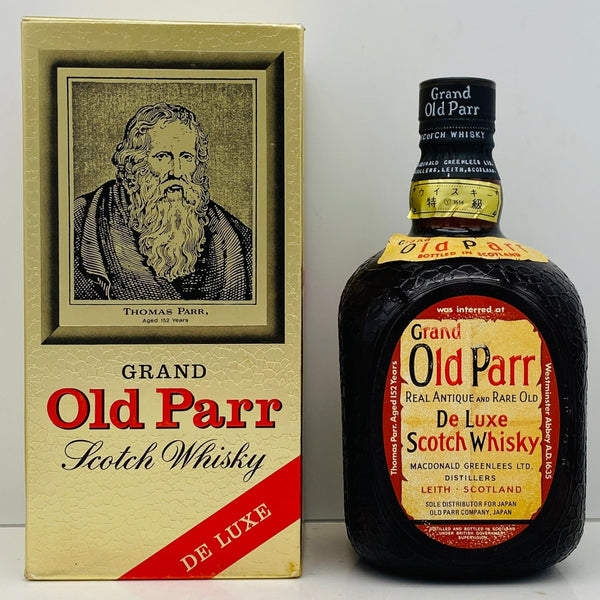
Closures, too, have changed with the times. Grand Old Parr of the 1960s used an old-style metal cap, while bottles of the same brand from the early 1970s switched to a screw cap. Because the material and construction of a closure affect how air passes in and out of the bottle and how much evaporates, they are an important clue when you look at an old bottle.
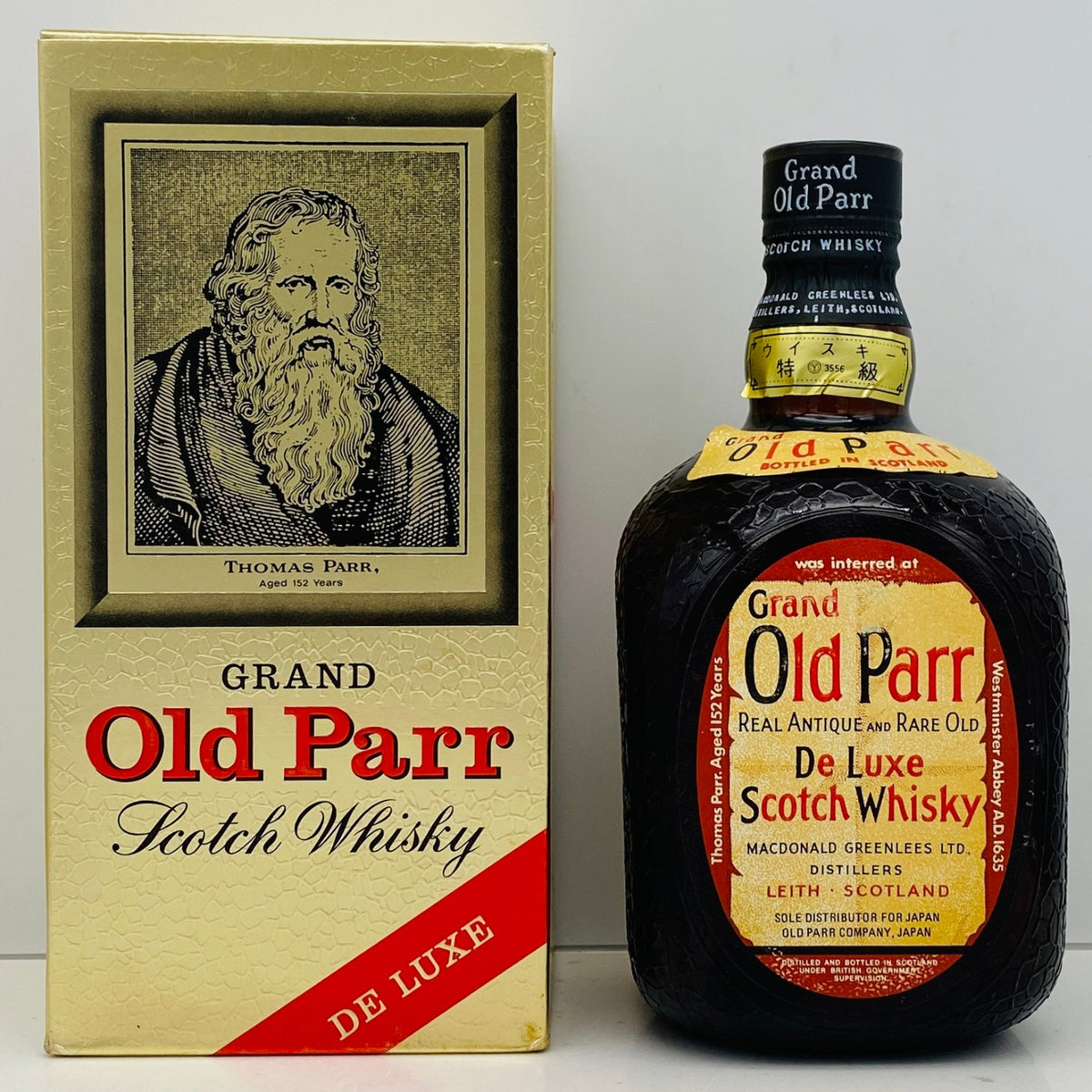
Among enthusiasts there are words for the aromas and flavours peculiar to old bottles. As for the reason, some point to differences in the raw materials and methods of production of the time, and others to changes brought about by long years in the bottle; there is no single agreed answer. What is certain is that the same brand shows a different face in different eras, and the only way to discover that difference is to open a bottle that has crossed the years. We tell our customers that, because so many years have passed since they were made, old bottles may not keep their original quality in full, and we check the level, the label and the closure of every bottle before selling it. We explain storage in detail in our articles on how to store old bottle whisky correctly and on Parafilm.

The marks of time remain not only on the contents but on the outside of the bottle too. The paper of the label takes on a slight tint, the printed colours fade a little, and fine scuffs and dullness appear on the metal of the closure. On bottles for the Japanese market, the importer's details of the time and the words "special grade" still convey how bottles were traded in that era. The "scenery" of the world of ceramics exists on bottles too. We do not hide these signs of age; we show the level, the label and the closure in many photographs. When you take a bottle in your hand, we hope you will savour the time it has crossed, including the tint of its label and the texture of its closure.
Raising a vessel — scenery that changes with use
If the time in a bottle is something you taste only once, at the moment you cut the seal, the time in a vessel is something that builds up little by little each time it is used. Japanese ceramics include many vessels whose expression changes with use and which have been cherished for that change as "scenery" (keshiki).
In the world of chanoyu, beauty has long been found less in perfect form than in the irregular expressions left by chance in the kiln and by the years of use. A glaze that missed a patch, scorching left by the flames, the traces of long use: rather than rejecting these as faults, tea people gave them names as the scenery unique to that vessel and handed them down. The idea of raising a vessel is an extension of this aesthetic.
The seven changes of Hagi
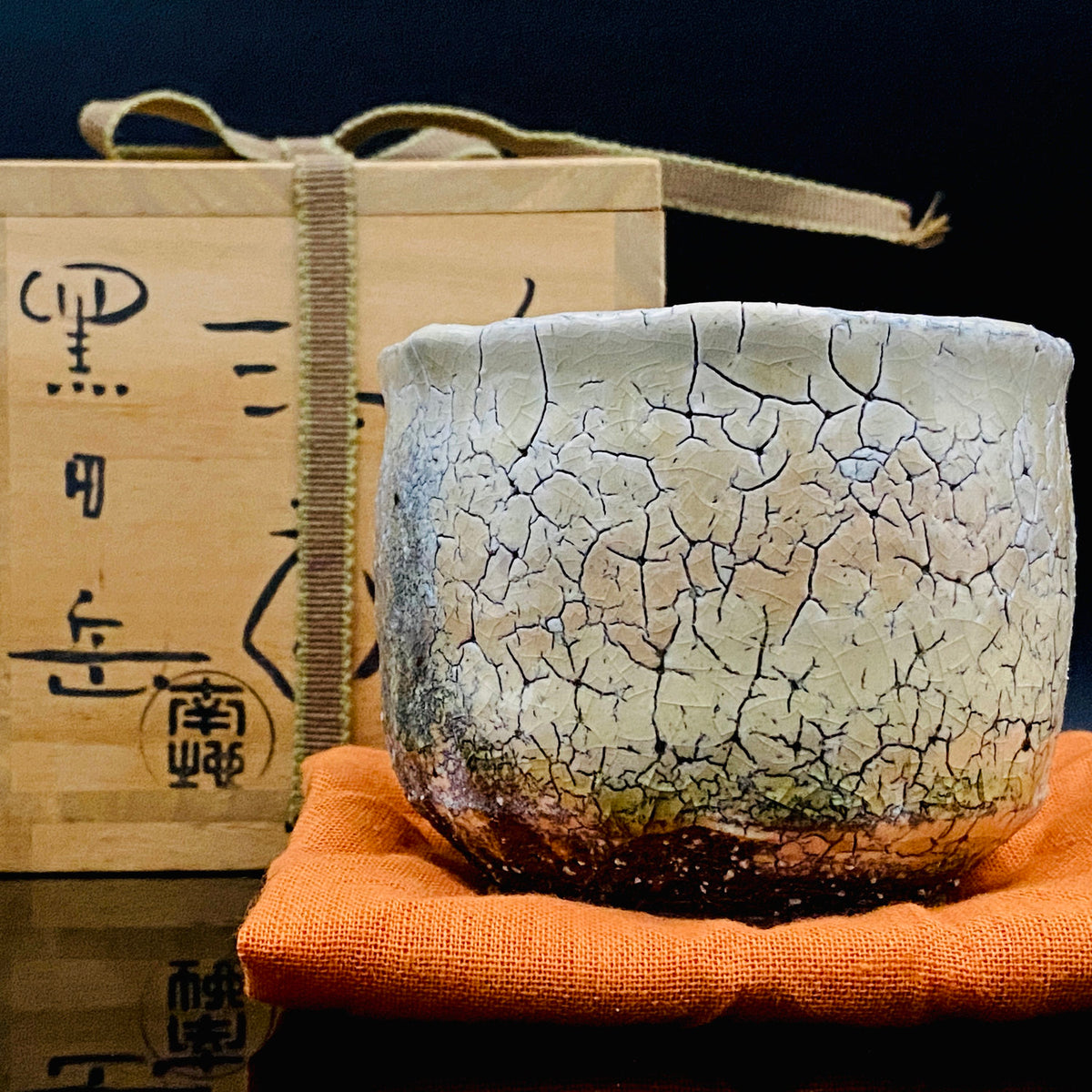
Hagi ware is made from soft, absorbent clay. As it is used, tea and sake soak in through the fine cracks of its surface, its crackle, and the colour of the vessel gradually changes. Tea people have called this "Hagi no nanabake", the seven changes of Hagi, and have enjoyed it as the particular charm of Hagi ware.
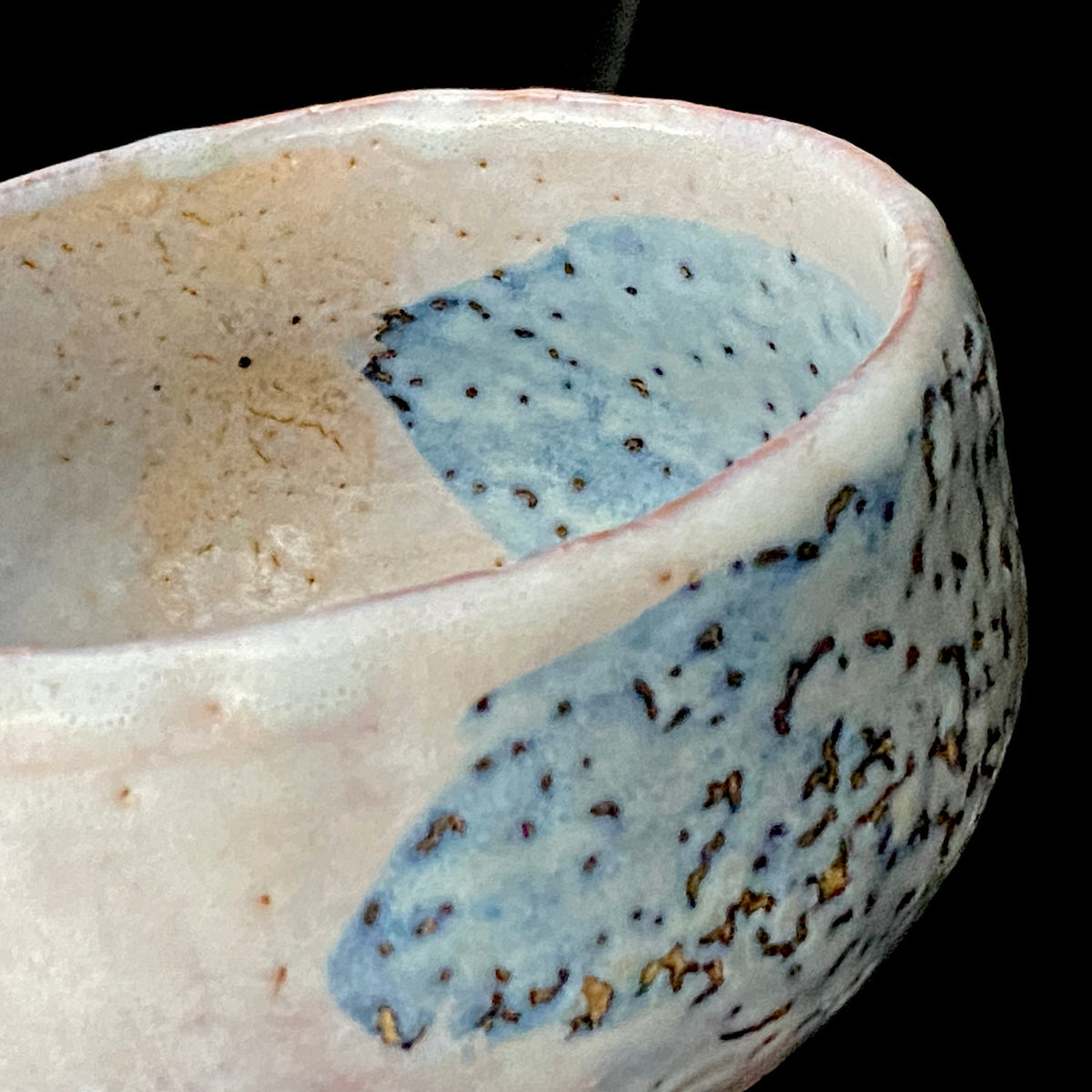
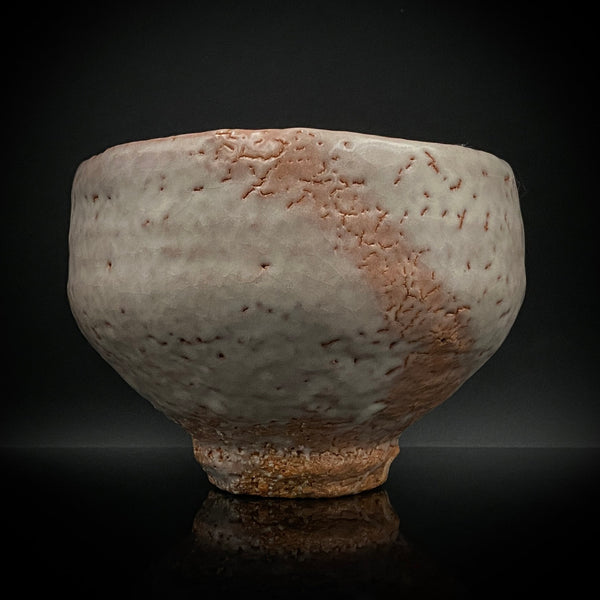
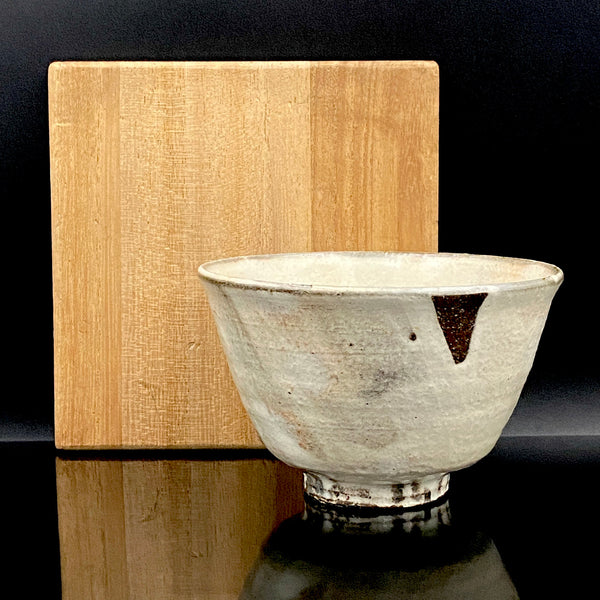
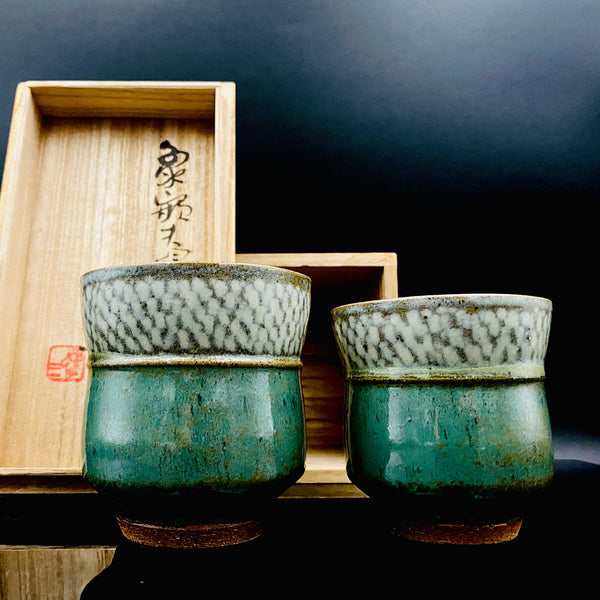
The hidasuki drinking vessel by Kuroda Gaku, a regular member of the Hagi Ceramic Artists Association, is Oni-Hagi made by the artist's own technique of firing an already fired vessel once again. Our product description also introduces the pleasure of the seven changes, with drink soaking into the crackle and deepening the vessel's character the more it is used. The Hagi-ware tea bowl by Morishima Isshin is a katami-gawari bowl, with white Hagi glaze and loquat colour each applied to one half, and offers the pleasure of comparing how the white side and the loquat side change as they are raised. The Oni-Hagi tea bowl with blue and white Hagi glazes by Yoshida Shuen, who studied under Miwa Kyusetsu X, the Living National Treasure of Hagi ware, has white Hagi glaze and a blue glaze over rough Oni-Hagi clay, and its fine crackle is the ground for scenery that is yet to grow.
The rain-leak stains of kohiki
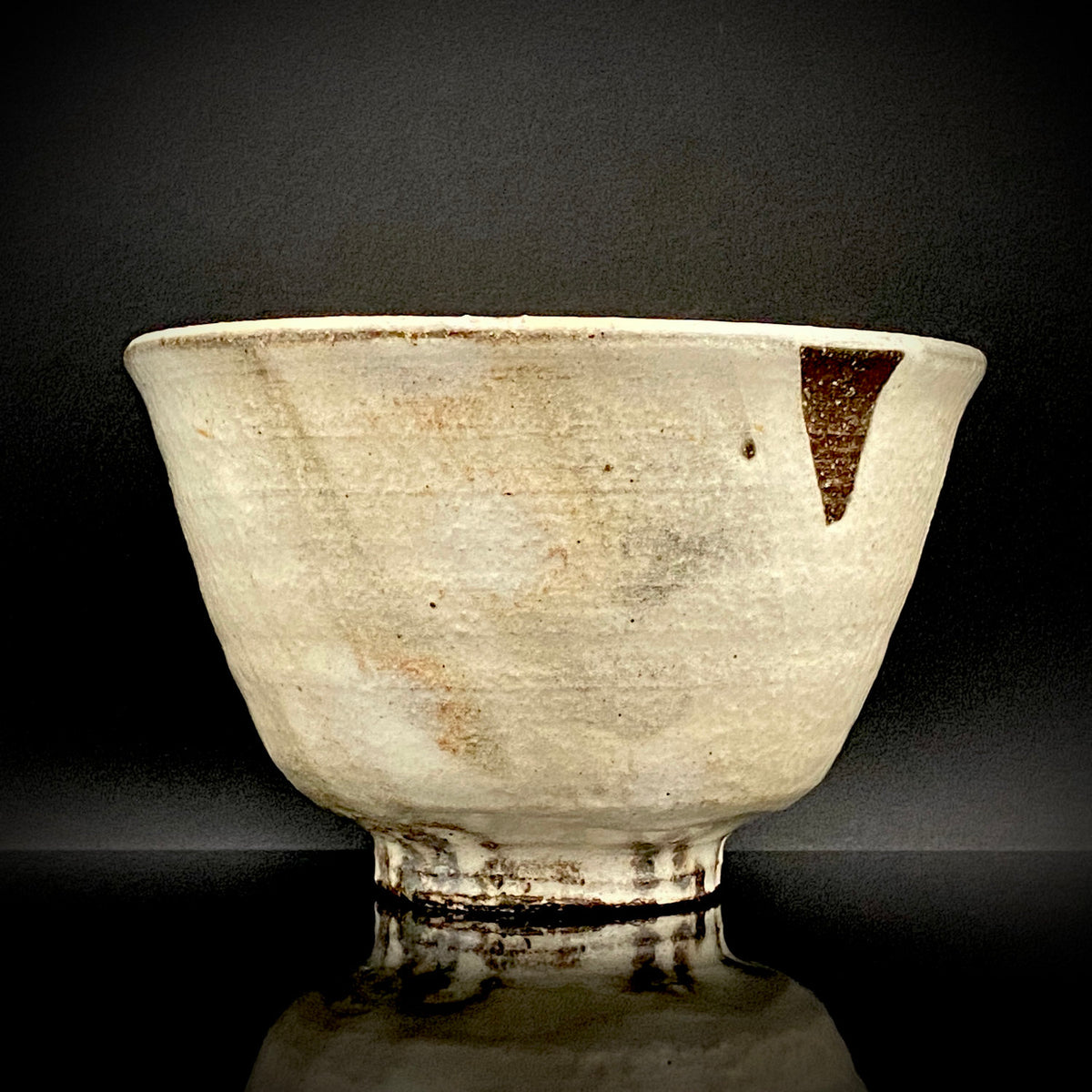
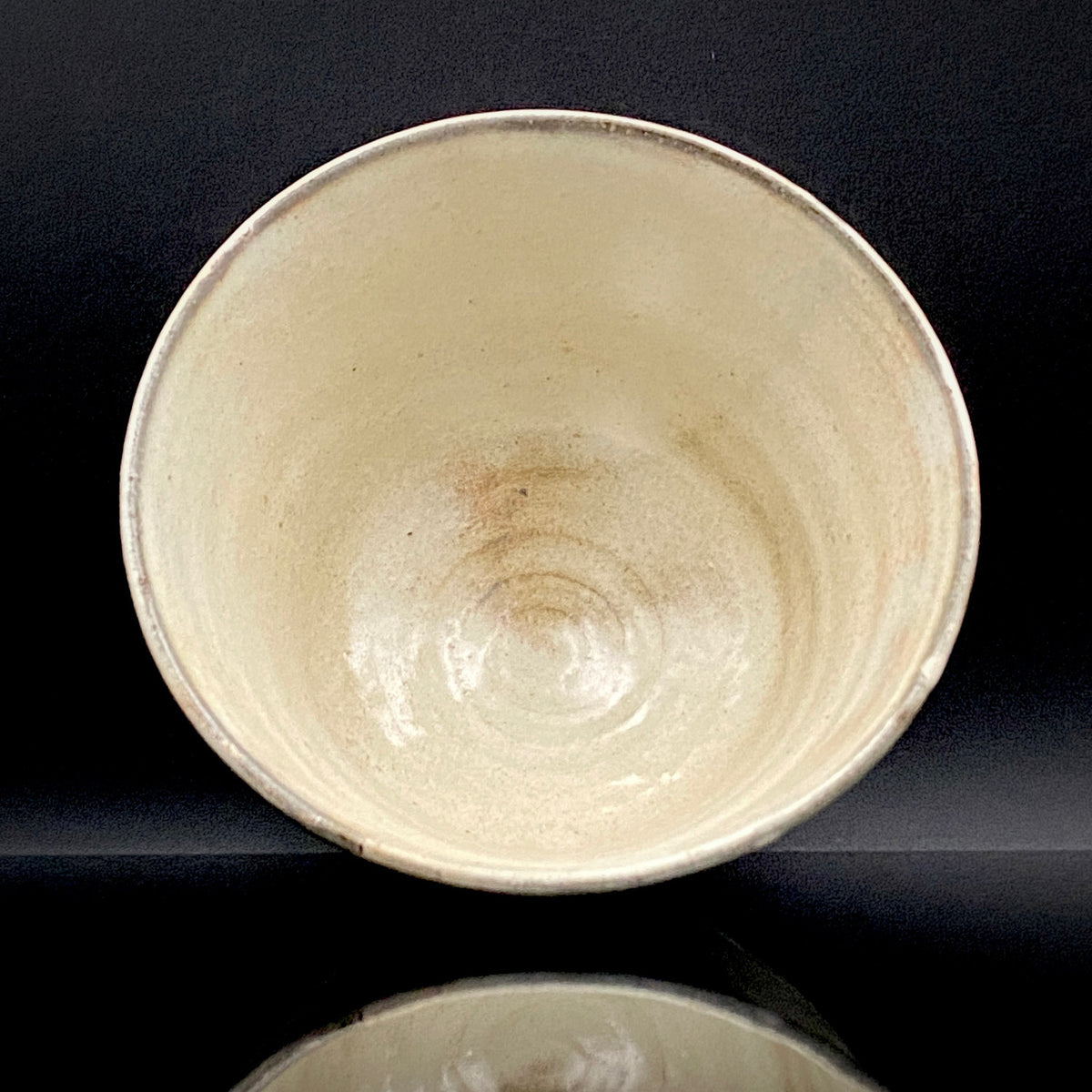
Kohiki is made by coating a brown, iron-bearing clay body with white slip, applying a clear glaze and firing. The white slip absorbs water readily, and when liquid soaks in through small holes in the glaze or through the crackle, stains appear on the white surface. In the world of chanoyu, such stains have been likened to the marks of a leaking roof and called amamori, "rain leak", and prized as scenery.
The Important Cultural Property "Kohiki tea bowl (Miyoshi)" in the collection of the Mitsui Memorial Museum has rain-leak stains in its mikomi, and on its body a scenery called hima, where the glaze has missed and the white slip is exposed. The "Rain-leak tea bowl named Minomushi" at the Nezu Museum is a bowl in which stains that formed from small holes in the glaze spread like a leaking roof, and it is said that its name derives from that scenery. The very stains born over time have become part of the names of famous pieces.
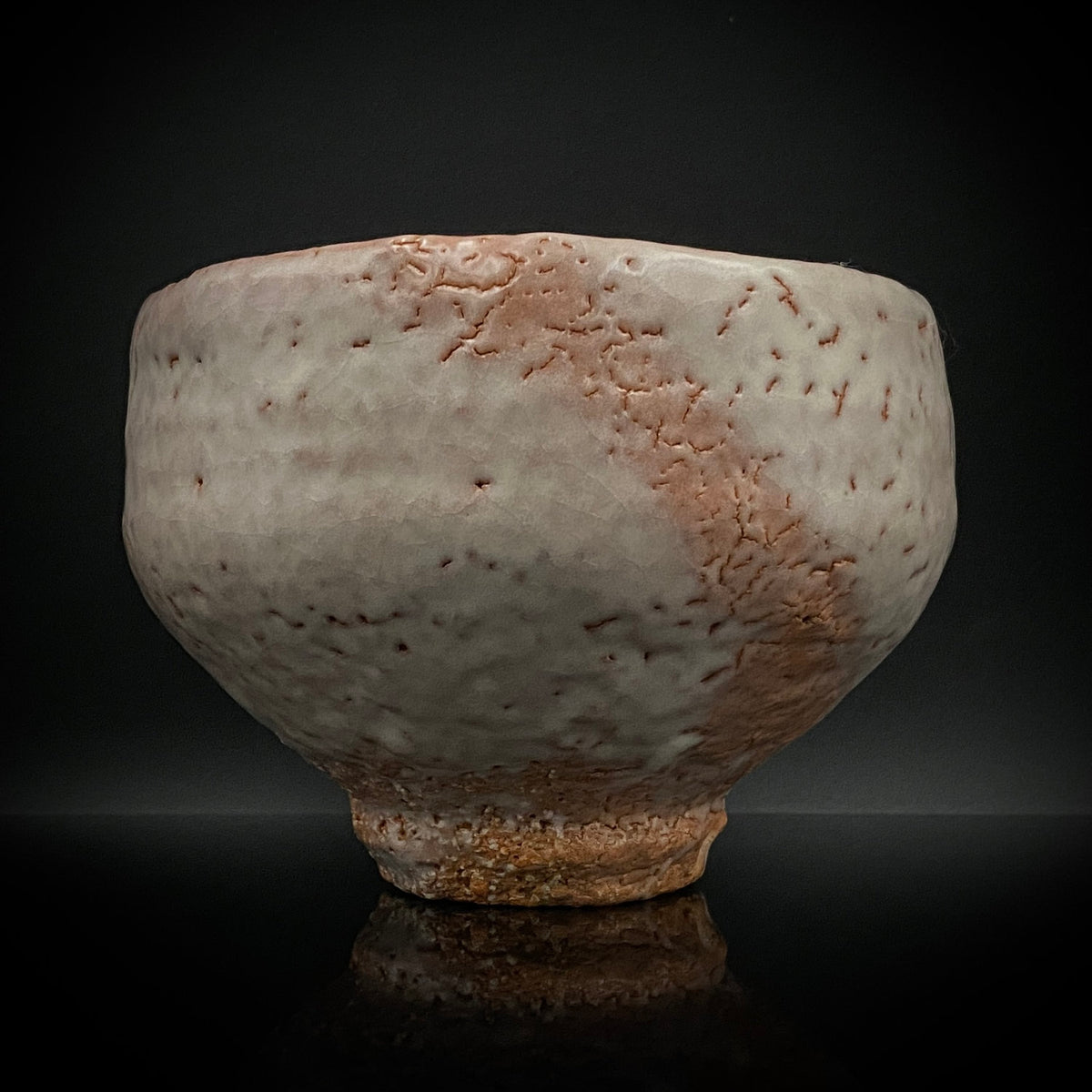
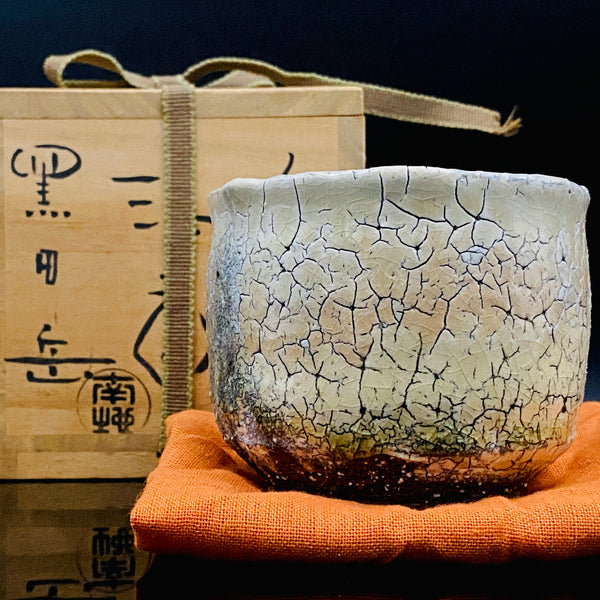
Our kohiki tea bowl with hima from Seiwa Kiln has on its body a hima like that of the Miyoshi bowl, and small iron specks and pinholes formed in the firing can also be seen. As it is used, colour may gradually soak in through these small holes, and a rain leak unique to this bowl may grow.
Crackle keeps growing after the kiln
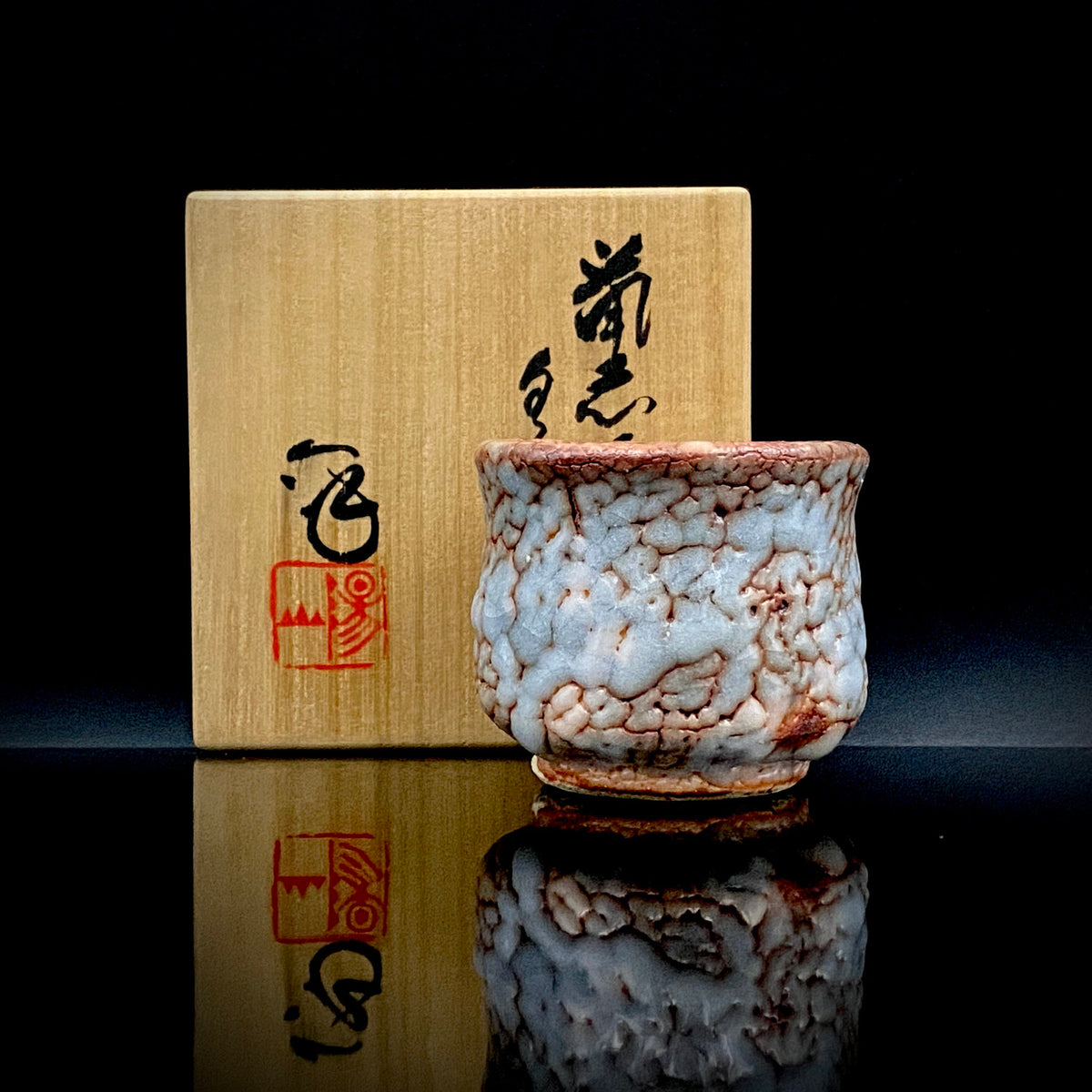
Crackle is a network of cracks that forms when a fired vessel cools and the glaze shrinks more than the body. It does not form only just after the vessel comes out of the kiln: as the body very slowly absorbs moisture over the years and expands slightly, new crackle can gradually be added. This is why, when you hold an old vessel in a quiet room, you may occasionally hear a faint ping as a new crackle forms.
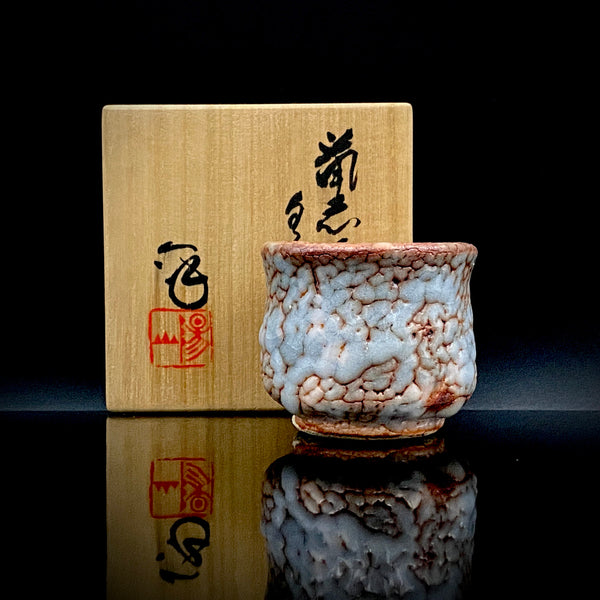
And as the vessel is used, the colour of tea or drink enters the lines of the crackle, and the network gradually stands out. The Nezumi-Shino guinomi by Mizuno Takuzo, holder of an Intangible Cultural Property designated by Toki City, is a Nezumi-Shino vessel, with Shino's white feldspar glaze over an iron-bearing slip, and within its scenery of grey and white lies a network of crackle that is yet to grow.
The sheen of unglazed stoneware, and surfaces that do not change
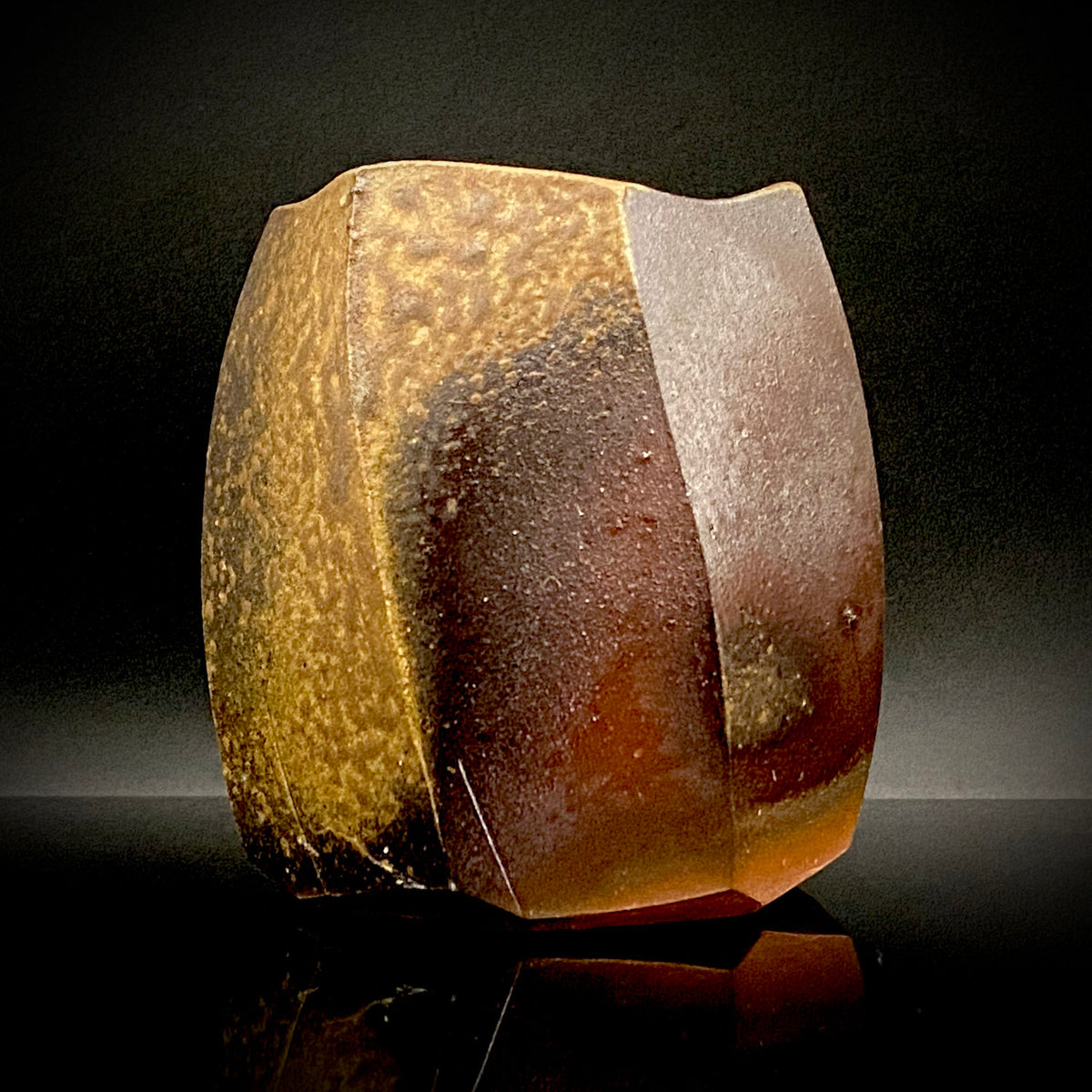
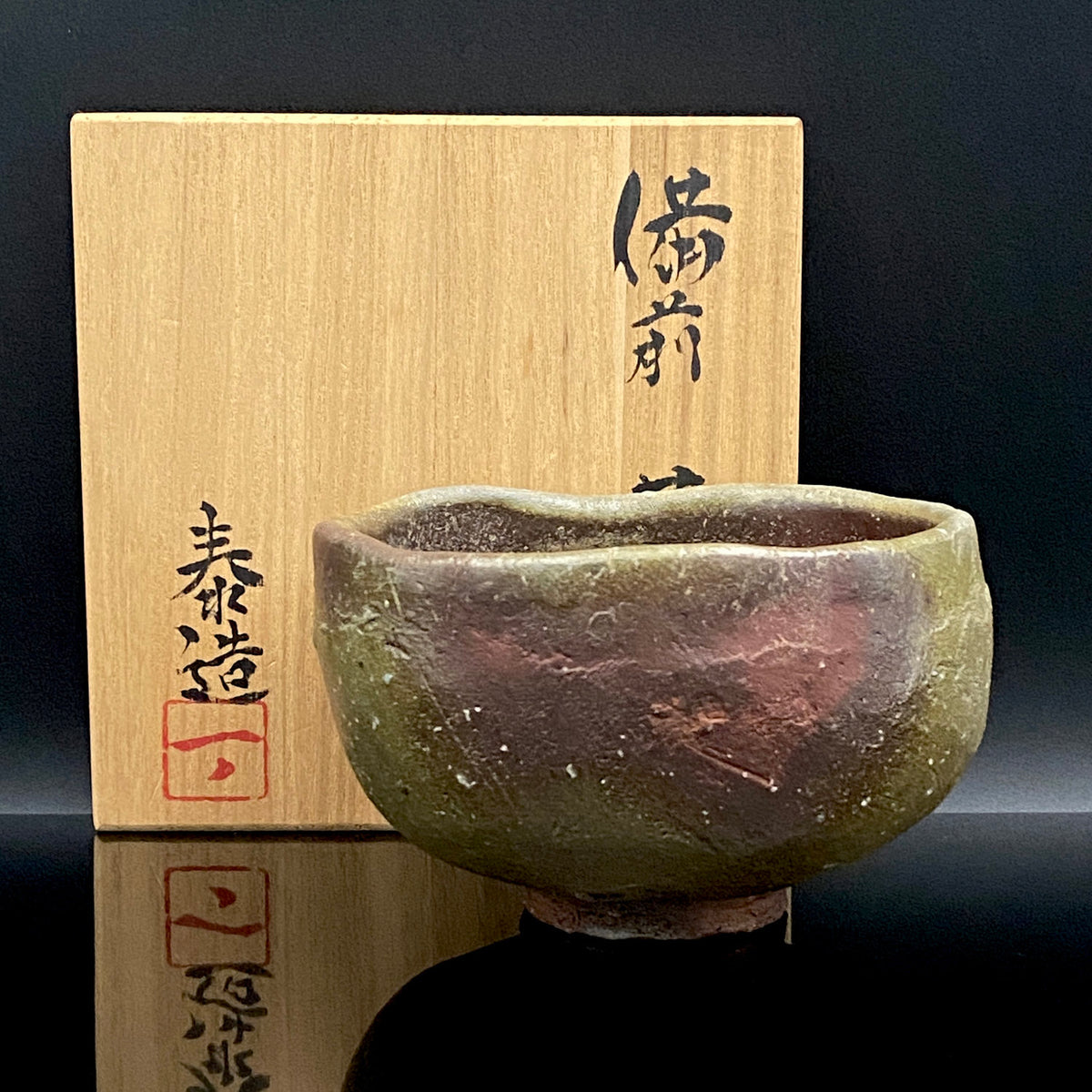
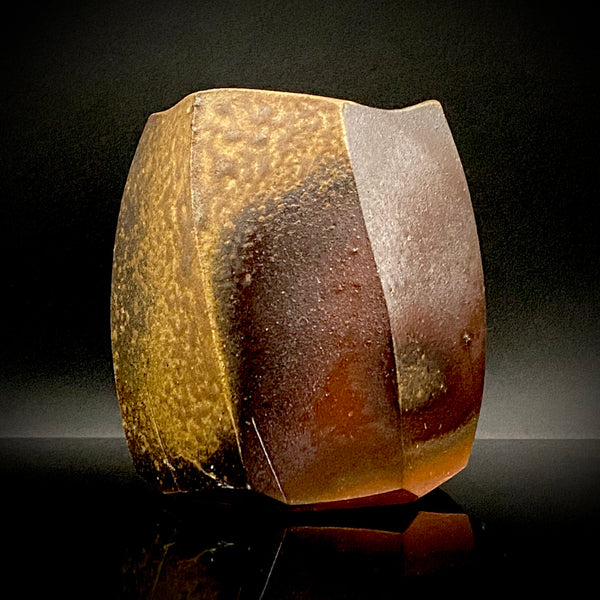
Bizen ware, fired hard without glaze, is said to grow smoother and to gain a soft sheen the more it is used. The faceted yunomi with yellow goma by Iwamoto Tetsuya, who works at Mantoh Kiln in Inbe, Bizen City, is a yunomi with yellow goma, kiln ash melted on the ridges between its facets, and it will no doubt gradually take on a sheen from the ridges your hand touches. The Bizen tea bowl by Ishino Taizo, who turned to pottery after working as an editor at a publishing house, comes with a shiori carrying an essay by the Akutagawa Prize-winning novelist Miura Tetsuo, so the years are recorded in both the vessel and the words.
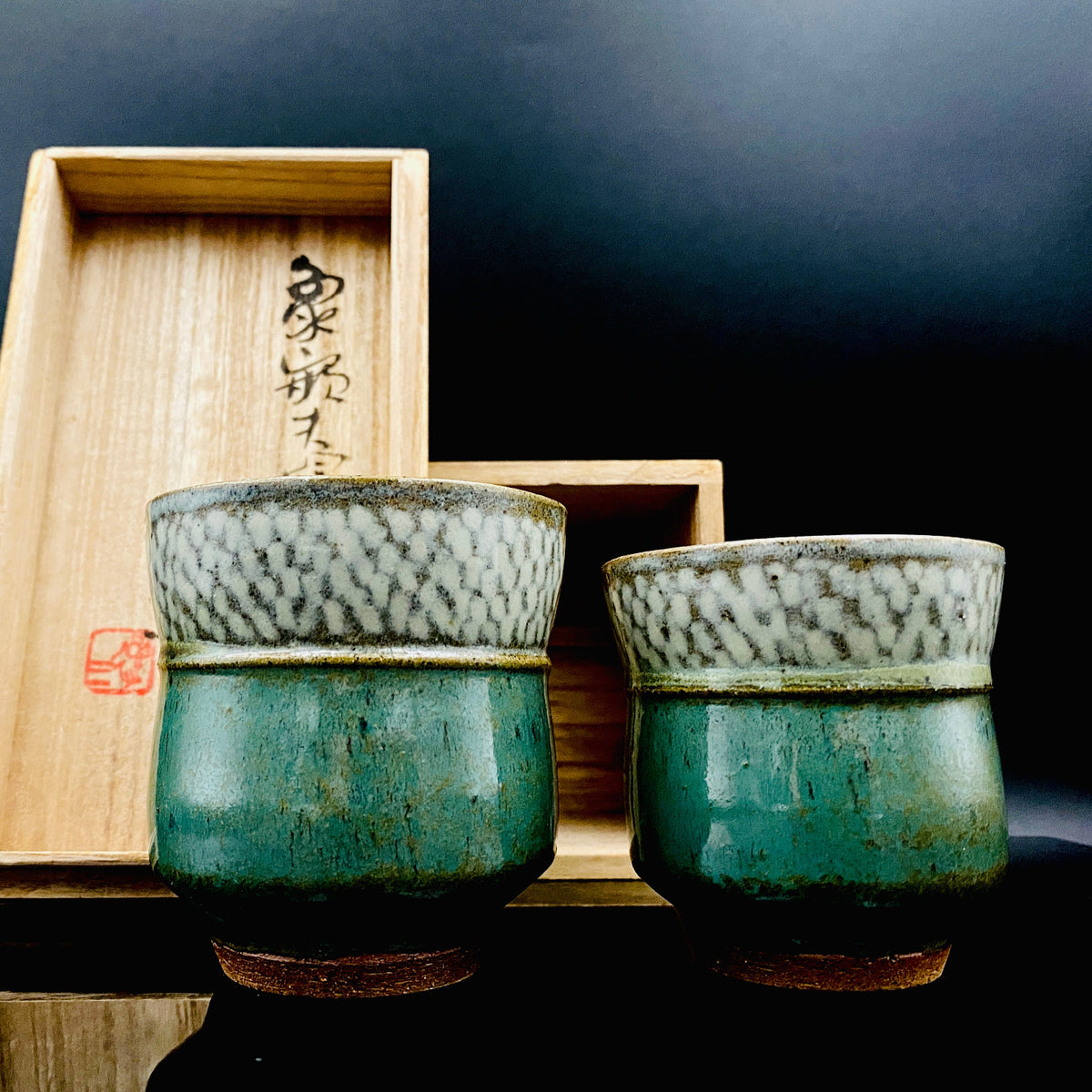
On the other hand, there are vessels whose value lies in hardly changing at all. The jomon-inlaid pair of yunomi by Living National Treasure Shimaoka Tatsuzo is salt-glazed ware, in which salt or similar is thrown into the kiln at its highest temperature and its vapour forms the glaze. Its hard, glassy surface hardly absorbs liquid and keeps the expression it had when it was made, however many decades it is used. Vessels that grow and vessels that do not change: keep both at hand and you can savour the difference in the way time flows.
Metal vessels — copper that deepens, silver that darkens
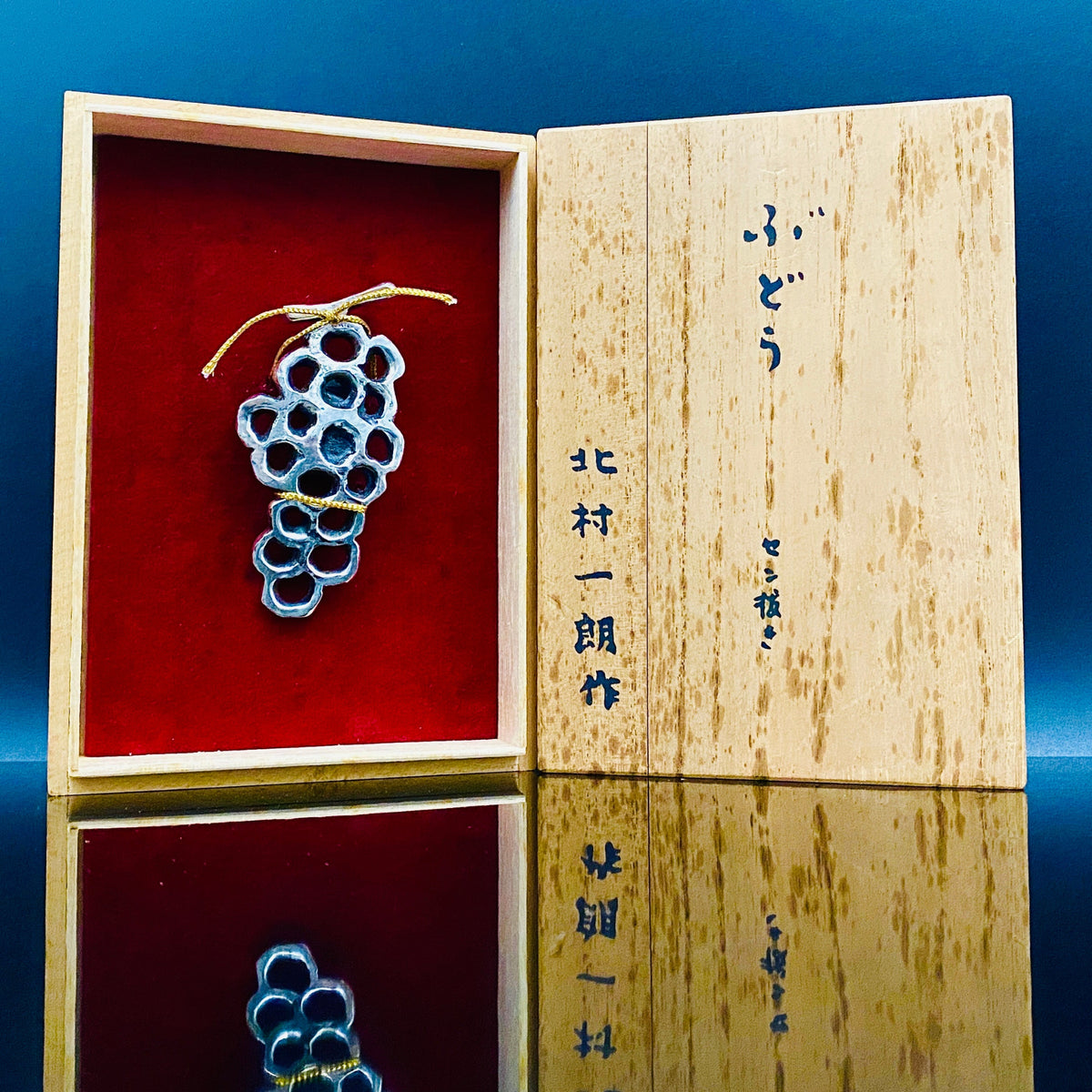
Metal vessels also change their expression with time. Copper gradually deepens in colour as it meets the air, and silver darkens as it reacts with substances in the air. The bottle opener "Grapes" by the metal artist Kitamura Ichiro, father of the Living National Treasure Kitamura Shinichi, is a piece believed to be copper and estimated to date from the 1960s, and it shows the colour of metal that has passed more than half a century. With silver or copper vessels you can polish them to keep their shine or enjoy the colour of age. Which you choose is up to the owner.
Raise it or keep it — two ways of living with a vessel
Whether to enjoy a vessel growing or to keep it as it was when made is not a question of right or wrong; you can choose for each vessel.
If you use it as a vessel to raise. Use it almost every day and accept the colour that soaks in and the crackle that grows as scenery. It is important not to scrub hard, to wash gently with a soft sponge and not to hurry the changes. Some makers recommend medome, simmering Hagi or kohiki vessels in the water used to rinse rice before first use, to restrain sudden staining. You might do medome if you want to raise the vessel slowly, or skip it if you want the scenery to grow sooner.
If you use it as a vessel to keep. Dipping the vessel in water before use helps keep darkly coloured liquids from soaking into the crackle or the body. Wash it straight after use and let it dry thoroughly before putting it away. Pieces whose value also lies in conveying their original form, such as a tea bowl with a tea master's inscription or a vessel with a clear provenance, suit this way of living with them.
Either way, dry it thoroughly. If an absorbent earthenware vessel is put away with moisture still inside, it can develop odours or mould. After use, let it dry thoroughly upside down in a well-ventilated place before returning it to its tomobako.
Keeping a chronicle of the vessel
There is a way to deepen the pleasure of raising a vessel still further: recording how it changes. For example, on the same day each year, such as the anniversary of the day it came to you or your birthday, photograph the vessel in the same place and the same light. Set several years' photographs side by side, and you will clearly see the lines of the crackle gradually emerging and the colour of the surface deepening.
If you also note what you drank from the vessel, its photographs become a chronicle of your own drinking: which bottle you opened, when, and with whom. Do not write directly on the tomobako; write on a separate sheet and keep it with the box, and when one day you pass the vessel on to its next owner, you can hand over the time it has spent along with it. Just as many of our vessels arrive still carrying the time of their previous owners, your time, too, will pass with the vessel to the next generation.
It is also interesting to keep a record of opened bottles alongside the chronicle of the vessel: the day you cut the seal, the aroma of the first glass, and the aroma a month later and three months later. Because opened whisky gradually changes its expression as it meets the air, jotting down a few words each time you drink from the same vessel lets you trace the changes up to the last glass. While the vessel grows over many years, bottle after bottle is opened and finished. That record is the very trace where two kinds of time, the vessel's and the bottle's, have crossed.
A bottle that has crossed the years, and a vessel yet to grow
Finally, here are some combinations of a bottle that has crossed long years in the glass and a vessel that is yet to grow.
| Bottle | Vessel | How to enjoy |
|---|---|---|
| Grand Old Parr (distributed in the early 1970s) | Kuroda Gaku, Hagi-ware hidasuki vessel | Begin raising the seven changes of Hagi with a blend that has crossed half a century |
| House of Peers 22 Year Old (distributed in the 1980s) | Seiwa Kiln, kohiki tea bowl with hima | Use it on the rocks and watch the scenery born on the white surface |
| SMWS No.2 Glenlivet (distilled in 1971) | Mizuno Takuzo, Nezumi-Shino guinomi | Pour a little at a time and record the changes in the network of crackle |
| Bell's 20 Year Old (distributed in the early 1970s) | Iwamoto Tetsuya, faceted Bizen yunomi | Raise a sheen on the unglazed surface with a glass every evening |
| Finlaggan (distilled 1980, released 1993) | Yoshida Shuen, Oni-Hagi tea bowl | Add water to a powerful 60% bottle while raising the crackle of the Oni-Hagi |
Summary
The time in an old bottle is something you taste only once, at the moment you cut the seal. The time in a vessel builds up each time it is used. The two flow in different ways, but both are flavours that can only be born over long years. Savouring a bottle that has crossed decades from a vessel that will grow over the decades to come: each glass remains as part of the vessel's scenery. Looking at a vessel, taking it in your hand and going on using it at your daily table: that, we believe, is what it means to truly cherish artist-made vessels and old bottles.
Frequently asked questions
Q. Aren't the stains on a vessel simply dirt?
In absorbent vessels such as Hagi or kohiki, colour entering the crackle or the body with use is a natural change, and in the world of chanoyu it has been cherished as scenery. Odours and mould are another matter, however. Wash the vessel well after use and dry it thoroughly.
Q. Can stains be removed once they have formed?
Colour that has soaked in is hard to remove, and forcing it out with bleach or similar may spoil the scenery of the vessel itself. For vessels you want to keep free of stains, we recommend dipping them in water before use and washing them straight after.
Q. Should I drink an old bottle quickly once it is opened?
After opening, the aroma gradually changes as it meets the air. Close the bottle tightly, store it upright and, while enjoying how the aroma changes, savour it reasonably soon.
Related items in our shop
Pieces from our shop connected with this article. Click a photo to open its product page.

You can browse more in Hagi Ware Sake Cups & Vessels, Ceramic Cups & Glasses, Bizen Ware Sake Cups & Vessels, Old-Bottle Whisky.