

Enjoying Old Bottle Whisky from Japanese Vessels — Pairing Bottles and Cups
Our shop deals in two things: old bottles of whisky distributed between the 1970s and the 1990s, and drinking vessels made by Japanese artists and kilns. There is a reason we offer both under one roof. A whisky that has travelled through long years is beautifully matched by a vessel that has aged in the same way.
Whisky is usually drunk from a tulip-shaped tasting glass or a rocks glass. Yet when you taste it from a Japanese sake cup, a guinomi or a chawan (tea bowl), the same bottle can show an entirely different face. In this article we introduce the idea of “one bottle, one vessel” — choosing a vessel to suit the character of each whisky — together with specific pairings you can put together from our stock. All the vessels and bottles shown are items from our shop, photographed by us. If a pairing catches your interest, please see every detail on the product pages.
How whisky and vessels met in Japan
Full-scale whisky making in Japan began after construction of a distillery started in 1923 at Yamazaki, on the outskirts of Kyoto (in Shimamoto, Osaka Prefecture). Some half a century later, in the 1970s and 1980s, whisky spread widely into Japanese homes and bars and became an everyday drink, together with the uniquely Japanese style of drinking it with water, mizuwari. Many of the old bottles we handle were imported into Japan, or bottled in Japan, in exactly this period.
The Japanese table of that era was also familiar with the work of potters and kilns. During the pottery boom of the Showa period, many artists produced teacups, sake cups and guinomi, which were used not only for sake but also for enjoying whisky. Pairing whisky with Japanese vessels is by no means a new idea; it is also a culture that grew naturally out of everyday life in the Showa era.
How the vessel changes aroma and mouthfeel
The shape and material of a vessel greatly affect how you perceive a whisky. A vessel that narrows at the rim gathers the aroma and carries it to the nose, while a wide-mouthed vessel lets the aroma spread gently. Thinly blown glass conveys sharply the moment the liquid touches the tongue, whereas thick stoneware wraps the mouthfeel in softness.
Differences in temperature due to the material should not be overlooked either. Glass and porcelain tend to keep the whisky cool, while stoneware that retains the texture of the clay readily passes on the warmth of the hand. Some whiskies release their aroma as they warm a little; others show their clearest outline when cool. Each time you change the vessel, a new side of the same bottle comes into view.
Choosing a vessel by material
| Material | Characteristics | Suits which whisky |
|---|---|---|
| Hand-blown glass | Thin and light; lets you enjoy the colour through it | Neat pours and highballs where you want to check aroma and colour |
| Crystal and kiriko cut glass | Weighty and brilliant; returns light beautifully | Whisky on the rocks, or a glass for a special day |
| Porcelain (white porcelain, celadon) | Hard and smooth; shows off the colour of the liquid | Malts with delicate aromas and pale whiskies |
| Yakishime unglazed stoneware (Bizen, etc.) | Unglazed, preserving the marks of clay and flame | Smoky malts and powerful blends |
| Earthenware-style stoneware (Hagi, Shino, etc.) | Soft to the touch; gains character the more it is used | Mizuwari, or a glass you let warm slowly as you drink |
Hand-blown glass is a material in which the artist's breath takes form directly. A thinly blown vessel feels light on the lips and lets you hold the whisky's colour up to the light. Porcelain, with its hard, smooth surface, reflects the colour of the liquid beautifully and makes a pale amber malt look all the purer. Yakishime stoneware, being unglazed, has a powerful presence that resonates with smoky aromas and heavy blends. Earthy wares such as Hagi and Shino are “vessels that grow”, changing colour the more you use them, and they reward a long companionship.
Our recommended “one bottle, one vessel” pairings
1. For Islay smoke, Bizen yakishime
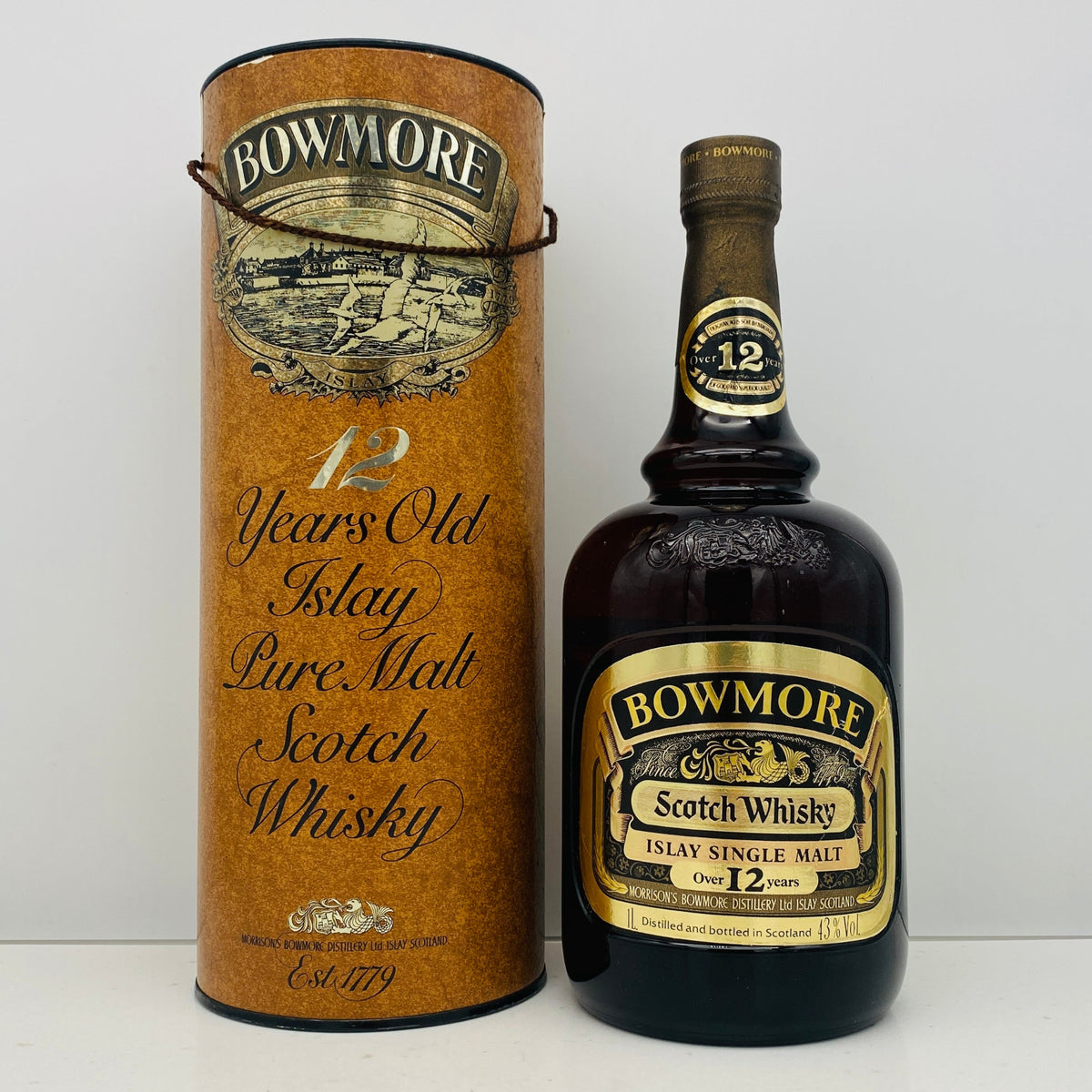
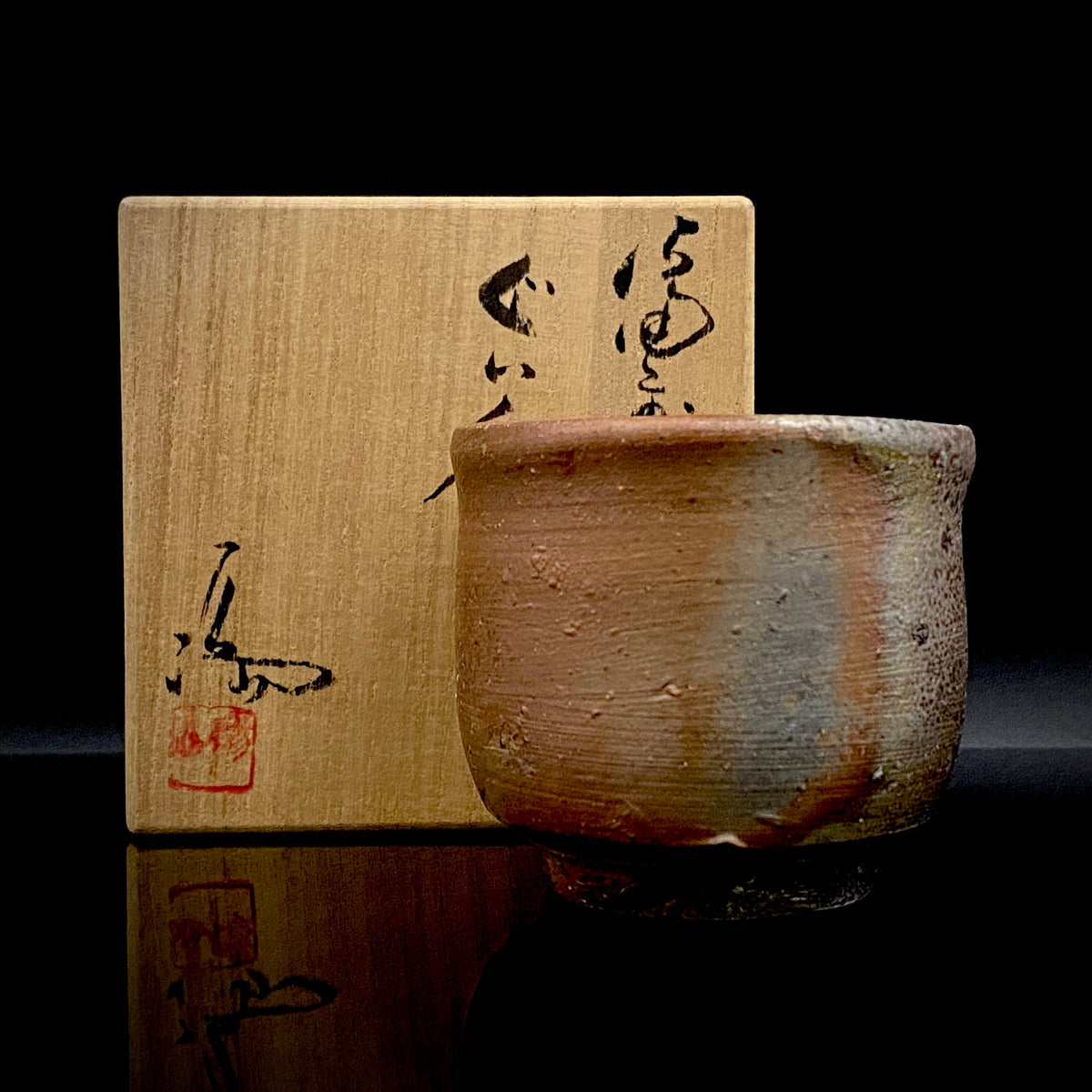
Islay malts, characterised by peat smoke, go well with Bizen ware, fired hard without glaze. Try a malt with sea air and smoke, such as Bowmore 12 Year Old (early 1980s, 1,000ml), from the Bizen guinomi by Isezaki Mitsuru (伊勢崎満). As you raise it to your lips while admiring the kiln effects (yohen) and goma ash glaze created by the flames of the anagama kiln, the presence of earth and fire merges with the smoky aroma, creating a sense of unity that no glass vessel can offer. Because Bizen ware is fired hard at high temperature over a long period, the slight unevenness of its surface can make the liquid feel rounder in the mouth. The kiln effects, different on every piece, will make even the same whisky feel like a different glass each time.
2. For a fragrant malt, a stemmed glass that gathers the aroma
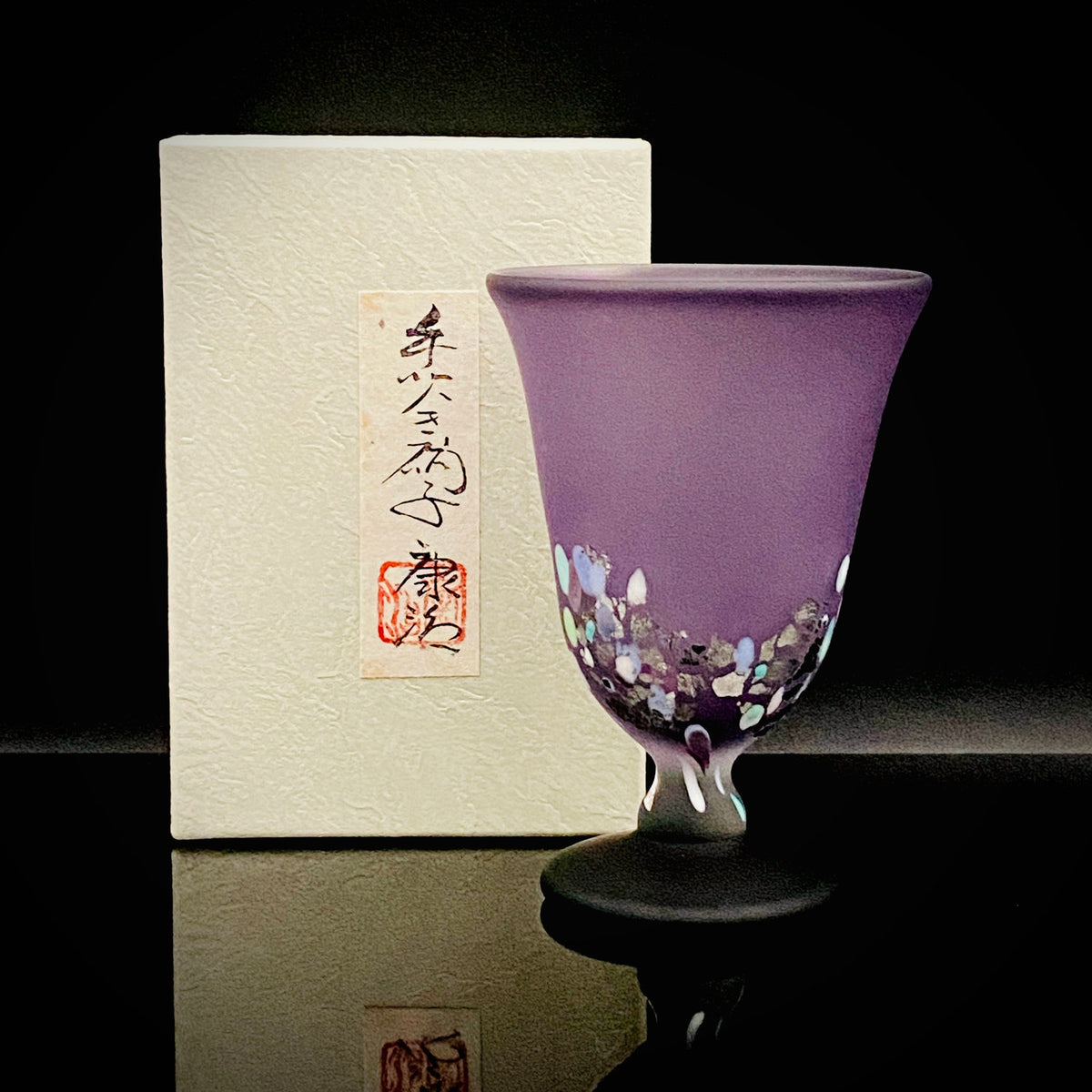
A malt with a lavish aroma of flowers and fruit deserves a vessel that does not let the aroma escape. For Glenmorangie 10 Year Old (1990s, 500ml) or Royal Lochnagar 12 Year Old (1980s), we recommend the hand-blown satin-glass stemmed tasting glass by Ishii Koji (石井康治). This soft, milky-white vessel with its floating silver-leaf flower pattern gathers the aroma within the bowl while letting the amber of the whisky show gently through.
3. For a rich, long-aged whisky, a tenmoku chawan as a rocks glass
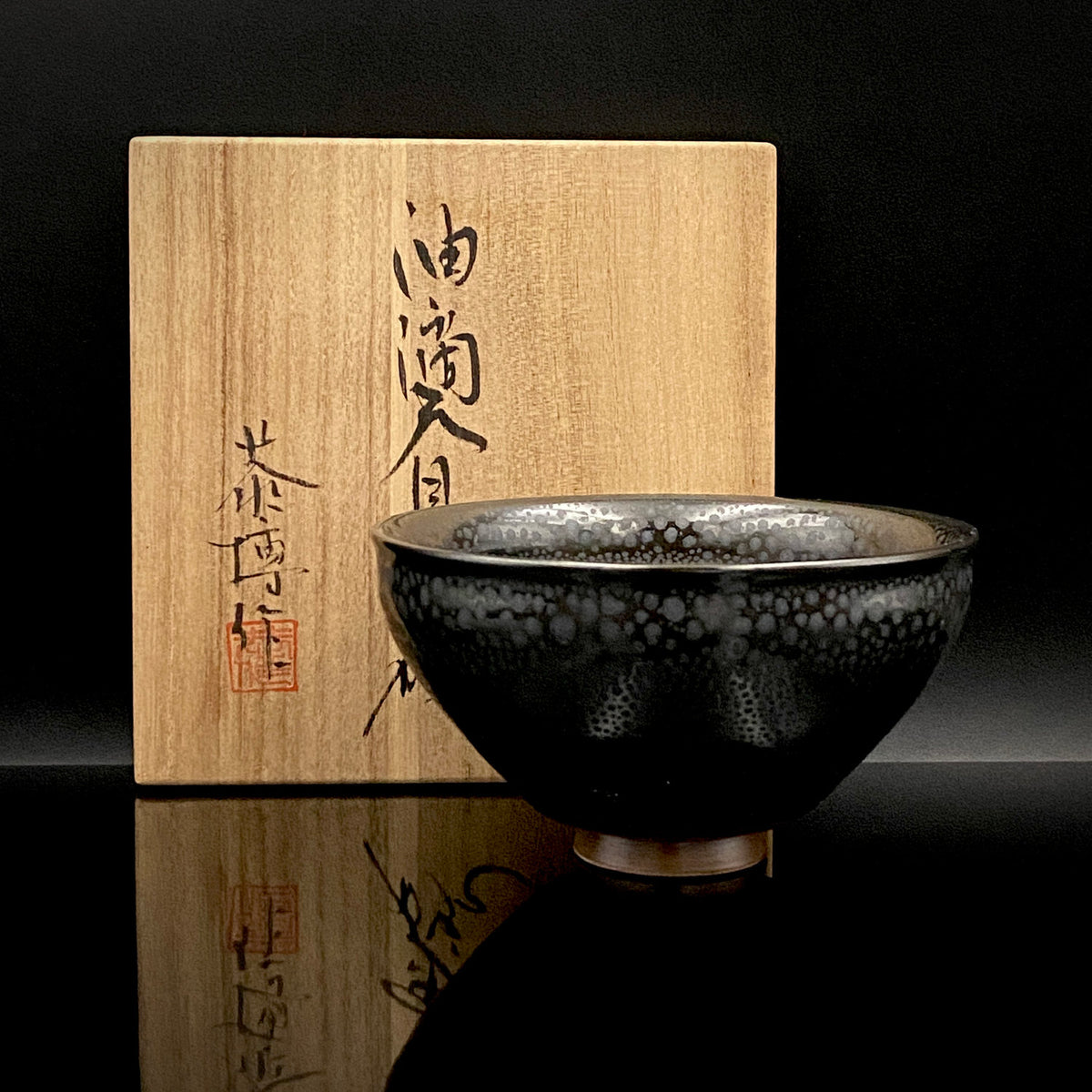
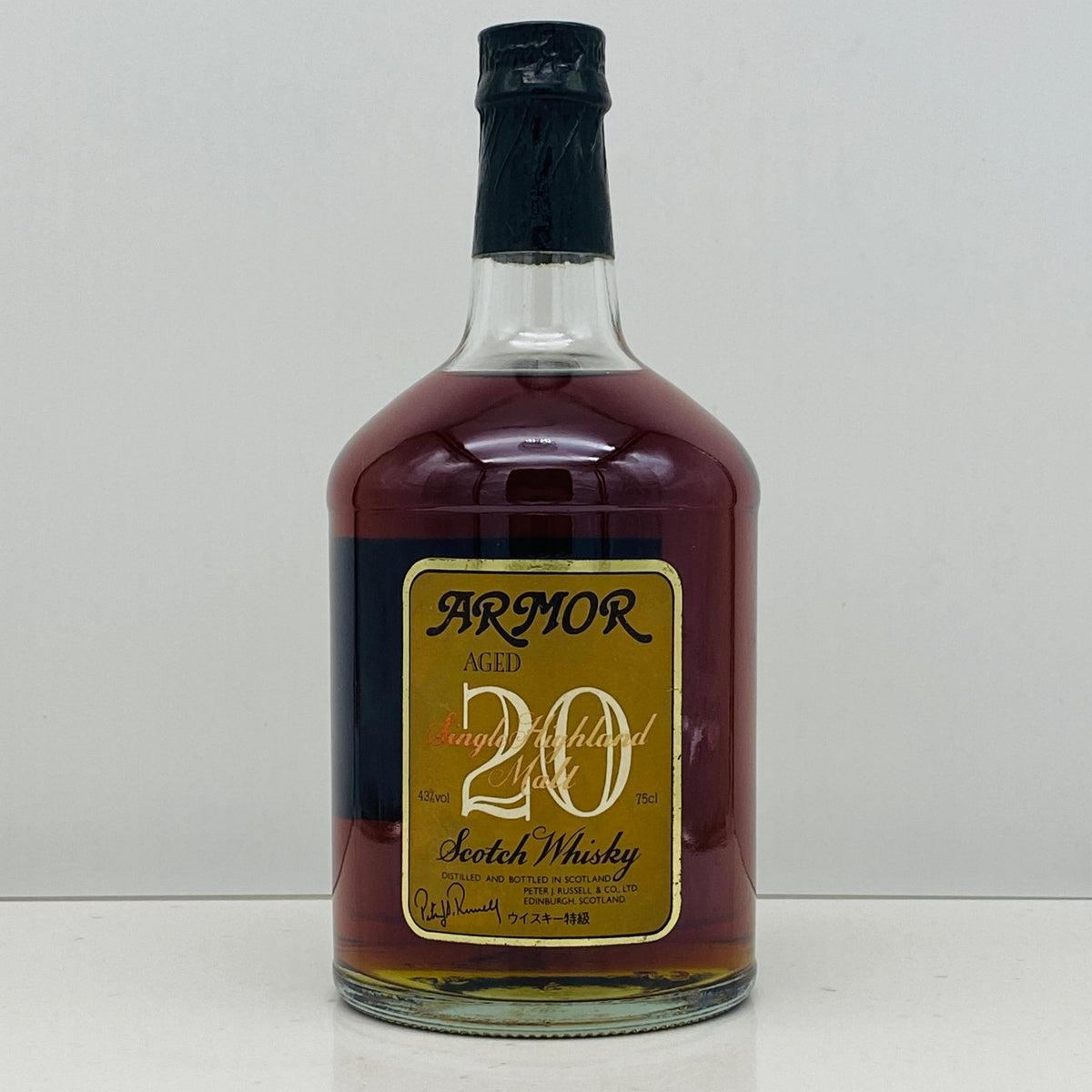
For a long-aged malt with the deep amber of sherry casks and the weight of dried fruit and caramel, try a tenmoku chawan clad in a deep-coloured glaze. Pour Armor Glenfarclas 20 Year Old (late 1980s, special grade) over a large ice cube into the oil-spot tenmoku chawan by Kato Yasuhiro (加藤恭博), and the silver spots floating on the black glaze answer the amber of the whisky, making a drink that delights the eye as well. The wide mouth of the chawan releases the heavy aroma of long maturation gently. A chawan is originally a bowl for whisking matcha, but its shape, which you can cradle in both hands, is also well suited to enjoying the slow rise in temperature of a chilled whisky as it takes on the warmth of your hands. We describe the pleasure of mitate — inviting tea-ceremony vessels to the drinking table — in more detail in our Japanese crafts articles.
4. For a well-mannered blend, an elegant washi-zome vessel
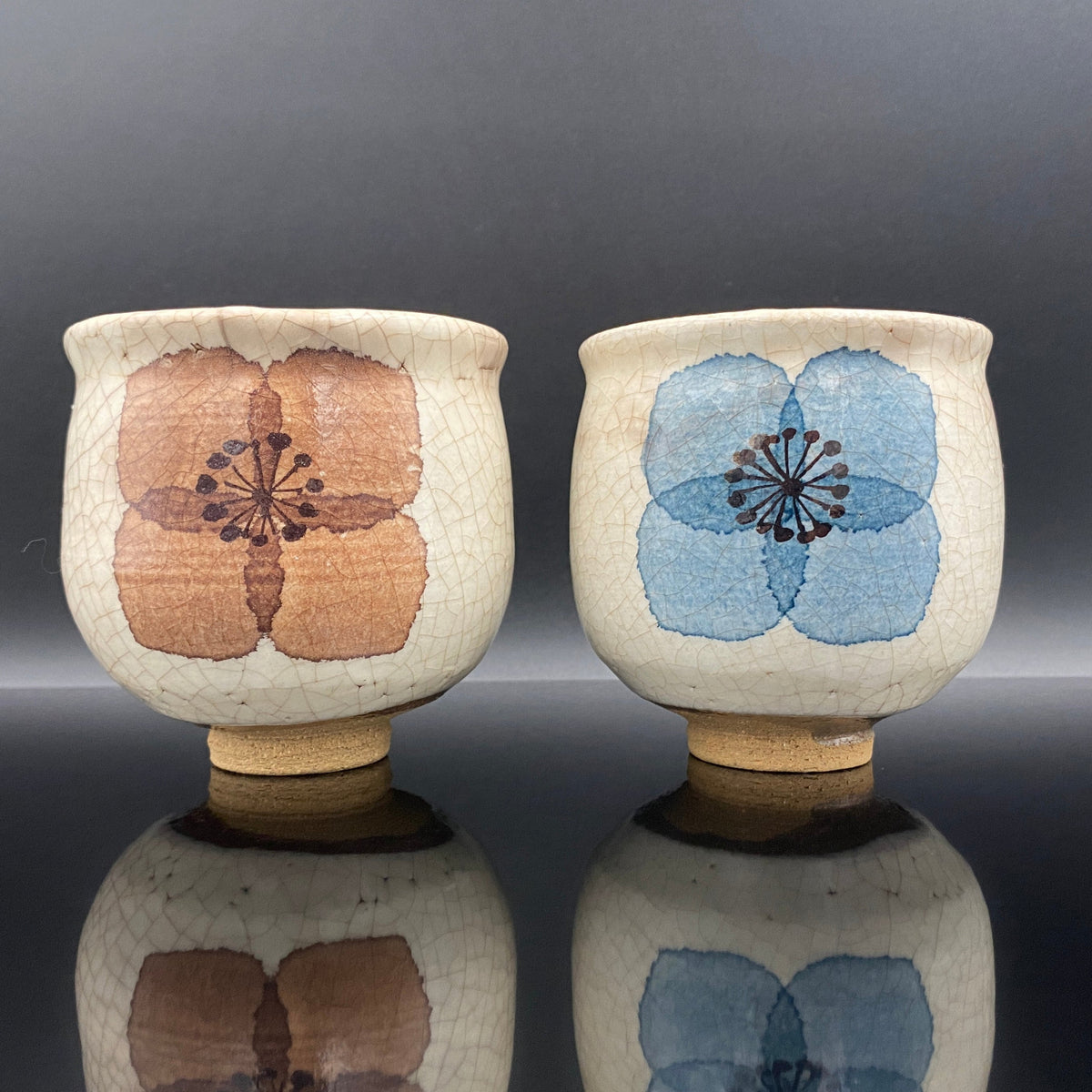
A blend with a well-balanced aroma suits an elegant vessel that does not assert itself too much. Try Ballantine's 17 Year Old, Blue-Blue Flag label (mid-1980s) in the washi-zome flower-pattern rocks glasses by Eguchi Katsumi (江口勝美). The soft flower pattern of washi-zome, in which colour is applied using Japanese paper as a stencil, harmonises gently with the smooth sweetness of Ballantine's. As the vessels come as a set of two, they are also perfect for sharing the same bottle with someone special.
5. For high-strength malts, a small glass cup
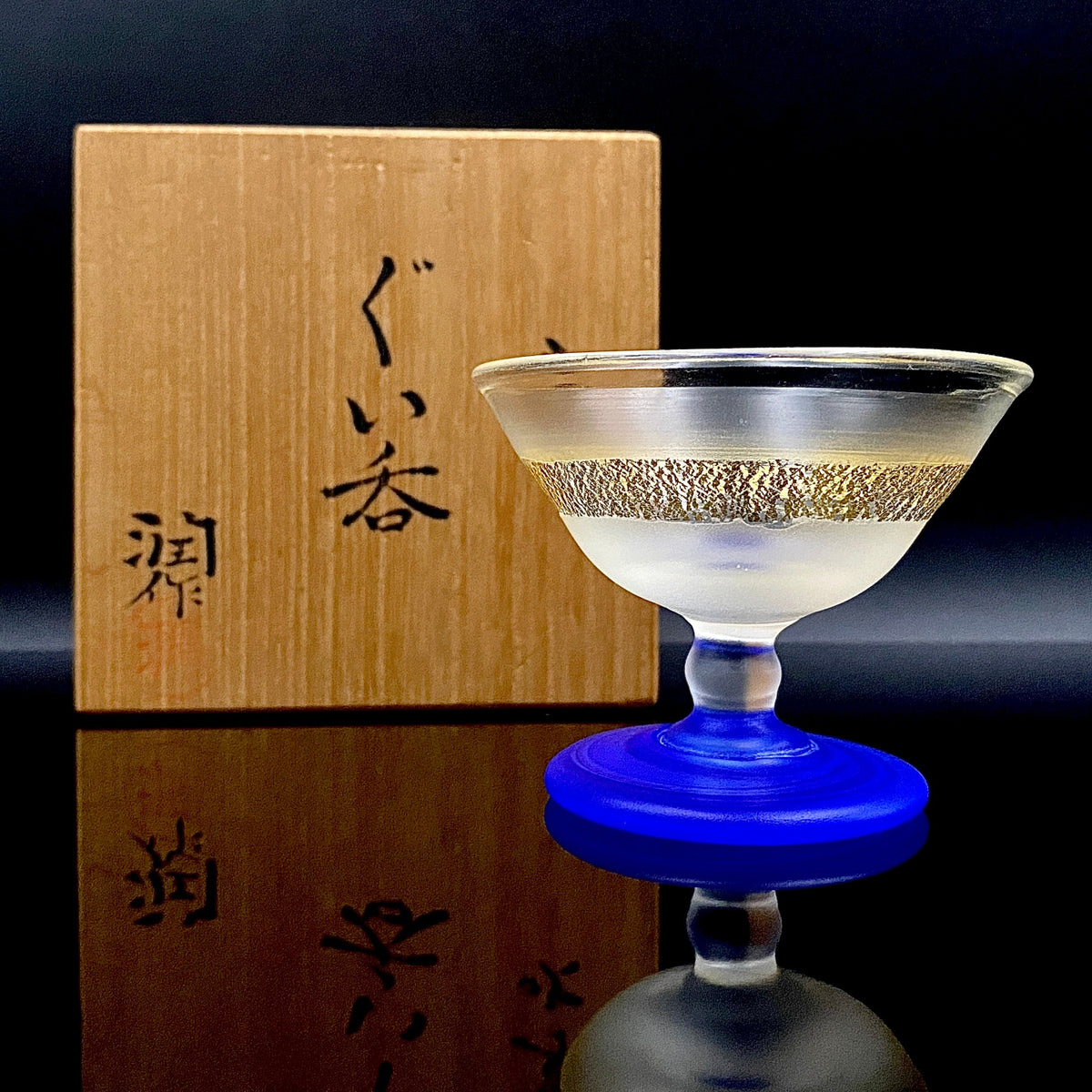
High-strength malts such as Glendullan 12 Year Old at 47% (early 1970s) or Dufftown 8 Year Old at 46% are a pleasure to taste a little at a time, checking the aroma as you go. Pour small amounts into the large hand-blown glass guinomi by Fujita Jun (藤田潤), which fits in the palm of your hand, or into the “Shinjin-mon” glass cup by Sakata Jinnai (坂田甚内), and you can explore the dense aroma sip by sip. Tasting whisky neat from a sake cup is a distinctly Japanese way of enjoying it.
Change the vessel, compare the same bottle
The best way to experience how vessels differ is to pour the same whisky into vessels of different character. Here is the procedure we recommend.
- Prepare three vessels: one glass that narrows at the rim, one wide-mouthed stoneware chawan and one small sake cup.
- Pour the same amount: pour about 10ml into each, the same amount in all three.
- Compare the aroma: bring your nose to each vessel and note the differences in intensity and impression. You should find that the narrower the rim, the more the aroma is concentrated, and the wider the mouth, the more gently it spreads.
- Compare the mouthfeel: take a sip from each and compare the sensation as the whisky touches your tongue, and how you perceive sweetness and heat.
- Taste again after a while: wait a few minutes and taste in the same order again, and you will notice that the way the aroma changes on contact with air also differs from vessel to vessel.
Some old bottles have aromas that have closed up over the long years. Pour such a whisky into a wide-mouthed vessel and leave it for a little while, and the closed aroma may slowly open up. A vessel with a white interior, such as white porcelain, also makes it easy to check the colour of the whisky and any fine sediment stirred up from the bottom of the bottle.
Choosing a vessel for the occasion
For a quiet evening alone: we recommend pouring a small measure neat into a small guinomi or sake cup and savouring it slowly while admiring the surface of the vessel. Taking the vessel in your hand to feel its weight and texture becomes part of the time you spend with an old bottle.
When sharing with someone: choose a set of two, or vessels in different colours by the same artist, so you can enjoy the same bottle in the same spirit. We have collections that gather works by each maker, so look for a maker you like in All Makers & Studios.
When entertaining guests: placing a water dropper or an ice bowl on the table turns the small task of adding water or ice into part of the hospitality. Add a word about the origins of the whisky and the vessels, and the conversation will flow naturally.
As a gift: pairing a bottle distributed in the recipient's birth year or a memorable year with a vessel by an artist of the same era is a way of giving that only our shop can offer. Browse by era in the 1970s and 1980s collections.
Vessels for water and ice, too
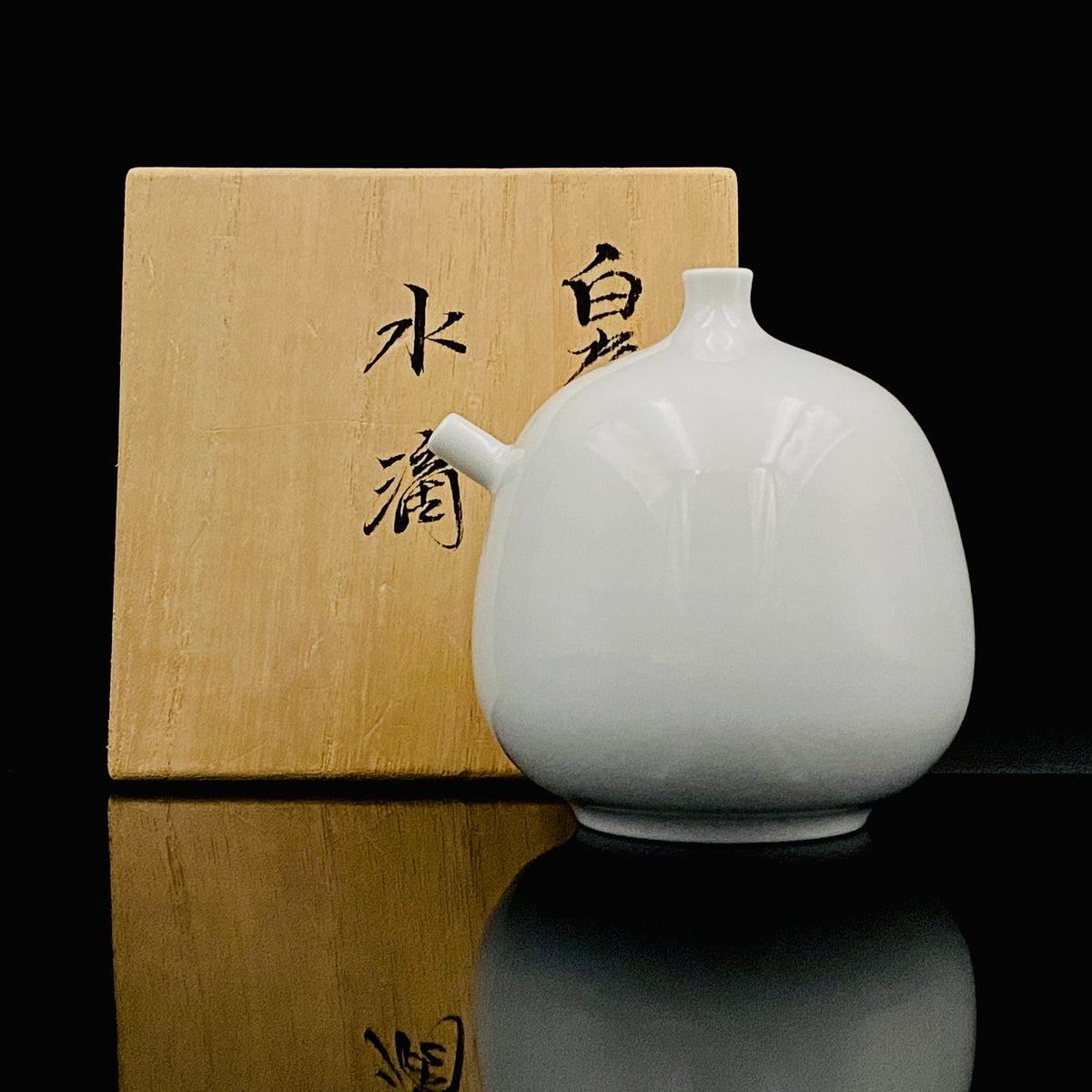
The few drops of water that open up the aroma of an old bottle can be added with a suiteki (water dropper), a familiar object in the world of Japanese vessels. A suiteki is originally a tool for adding water to an inkstone in calligraphy, but its shape, which lets you release small amounts of water drop by drop, is perfect for adding water to whisky. Place the white porcelain water dropper by Living National Treasure Inoue Manji (井上萬二) or the yakishime three-footed water dropper with stamped pattern by Kitagawa Hiroyuki (北川宏幸) on the table, and the small task of adding water becomes a little ritual. We recommend soft water at room temperature, which does not interfere with the aroma. Add one drop, check how the aroma changes, then another: adding water little by little lets you find the dilution at which that bottle's aroma opens most fully. A drop falling from the spout of a suiteki is easy to control, making it the perfect tool for this “little by little” pleasure.
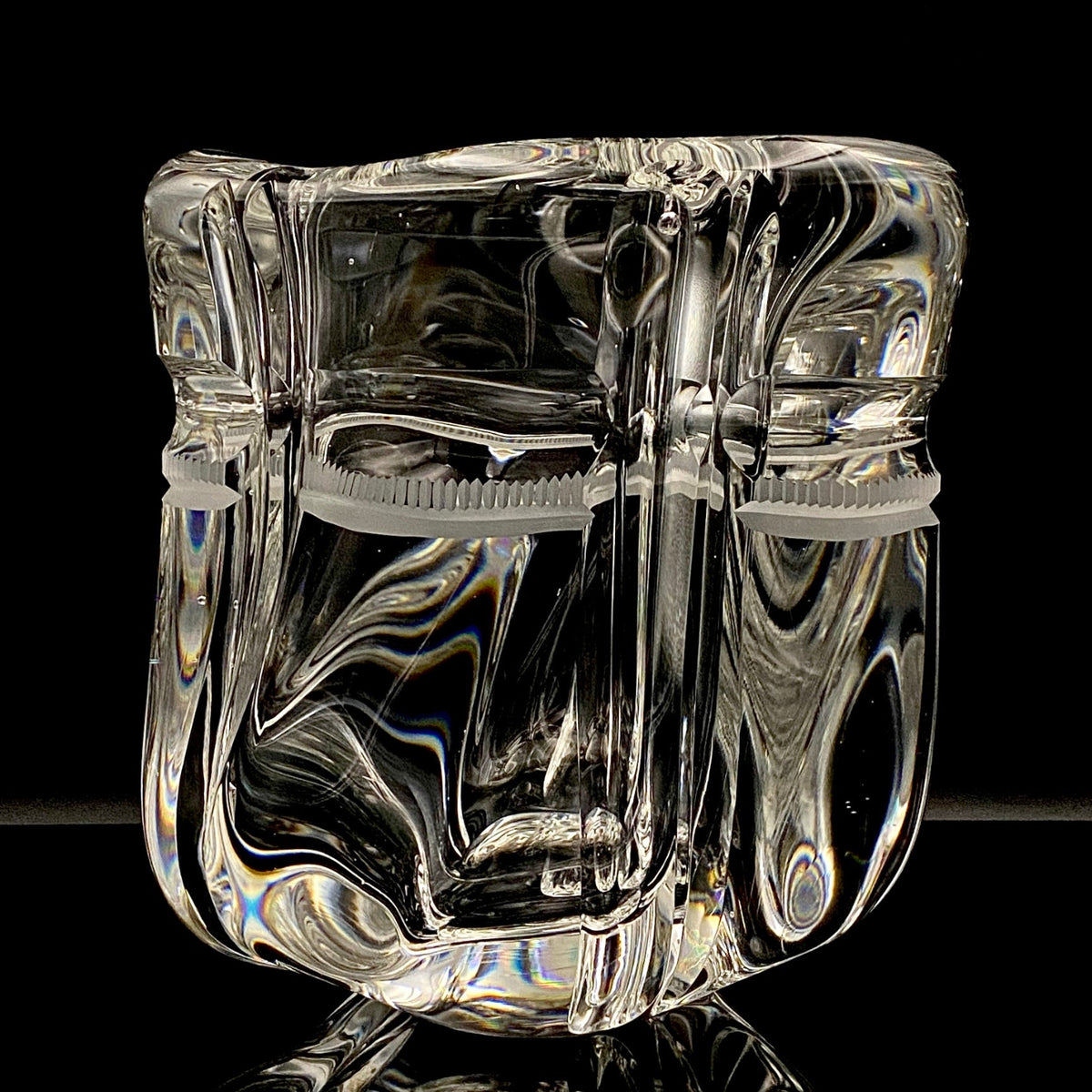
On days when you enjoy whisky on the rocks, an ice bowl joins the pleasures of choosing vessels. The hand-blown glass ice bowl by Ichiya Akira (壹谷旭) and the large ice bowl “Kousho” by Yoshida Takeo (吉田丈夫) are works that make the ice itself look beautiful on the table.
Points to note when enjoying whisky from artist-made vessels
When you use artist-made vessels for everyday drinking, a few precautions will let you enjoy them for a long time.
- Dip in water before use: dipping stoneware in water before use makes it harder for dark liquids to soak into the crackle (fine cracks in the glaze) or the clay body.
- Wash straight after use: wash gently with lukewarm water and a soft sponge, and avoid leaving the vessel to soak for long periods.
- Dry thoroughly before putting away: stoneware tends to retain moisture inside, so dry it fully in a well-ventilated place before storing.
- Avoid sudden changes in temperature: pouring boiling water into glass, or suddenly warming a chilled vessel, can cause breakage.
- Do not use a dishwasher or microwave: hand washing is especially recommended for vessels with gold or silver decoration and for hand-blown glass.
Details of each vessel's condition and materials are given under “Material” and “Note” on each product page.
Our suggestion — one bottle and one vessel from the same era
Our stock includes many whiskies and vessels alike from the 1970s and 1980s. Tasting the early-1970s Glendullan 12 Year Old, for example, from a sake cup made by an artist in the same period — the pleasure of combining “one bottle and one vessel from the same era” is a suggestion only a shop that handles both old bottles and artist-made vessels can offer.
| Whisky character | Recommended bottle | Vessel to pair |
|---|---|---|
| Smoky, sea air | Bowmore 12 Year Old | Isezaki Mitsuru, Bizen guinomi |
| Lavish, floral | Glenmorangie 10 Year Old / Royal Lochnagar 12 Year Old | Ishii Koji, tasting glass |
| Rich, long-aged | Armor Glenfarclas 20 Year Old | Kato Yasuhiro, oil-spot tenmoku chawan |
| Well-mannered blend | Ballantine's 17 Year Old | Eguchi Katsumi, washi-zome rocks glasses |
| High strength | Glendullan 12 Year Old, 47% | Fujita Jun, large guinomi |
How we inspect items and describe their condition
So that you can combine vessels and whisky with confidence, we check the condition of each item before listing it. For drinking vessels, we check for chips or cracks on the rim, crackle and kiln flaws, and record anything of concern under “Note” in the product description. Crackle in stoneware, kiln effects from firing and bubbles in glass are in most cases features unique to the piece rather than defects, but we describe them as specifically as possible to help you decide before purchase.
For whisky, we make it possible to check the fill level, the condition of the label and the type of closure and seal in both photographs and text. That is why we post so many photographs of both vessels and bottles. Zoom in on the photos on the product pages and picture the bottle and vessel you would like to pair.
Summary
Enjoying whisky is not only about choosing the brand and the era. Depending on which vessel you use and how you drink, the same bottle can show an entirely different face. An old bottle that has come to you across the years, and a Japanese vessel that still bears the traces of its maker's hands: please enjoy that meeting at your own table.
Frequently asked questions
Q. Is it all right to drink whisky from a sake cup?
Of course. Guinomi and sake cups are the right size for tasting small amounts and suit neat whisky well. The shape and material of the vessel change the aroma and mouthfeel, so do try a variety of vessels.
Q. Can whisky stain stoneware?
With crackled vessels or absorbent earthy wares, dark liquids can soak in. Dipping the vessel in water before use, and washing and drying it thoroughly straight after use, helps prevent staining.
Q. Can I buy vessels and whisky together?
Yes, you can order them together. Liquor can only be shipped within Japan, but we do ship drinking vessels overseas. For details, see our FAQ (Q&A).
Browse whisky in Old Bottle Whisky, vessels in ceramic cups and glasses and art glass cups and glasses, or search by maker in All Makers & Studios.