

Whisky Warmed Like Sake — Hot Whisky in Japanese Vessels, from Hitohada-kan to Jo-kan
Japan has a culture of drinking sake warmed, known as kan. In the world of sake, temperatures are named not in steps of ten degrees but of five, and drinkers have long enjoyed how the aroma and taste change at each one. Whisky, too, has its traditions of being drunk warm: the "hot toddy", long loved in Scotland on winter nights and at the first sign of a cold, and oyuwari, whisky with hot water, which took root in Japanese homes and bars.
In this article we apply the Japanese scale for warmed sake to whisky and suggest ways of enjoying warm whisky from Japanese vessels such as tokkuri flasks, yunomi cups and tall tea bowls. Using vessels and bottles from our shop as examples, we cover how temperature changes aroma, how to work out the water temperature, how to warm a tokkuri, how to choose vessels for warm drinks and how to enjoy them safely. All the items introduced here are from our shop, and all the photographs were taken by us.
The scale of kan — from hinata-kan to tobikiri-kan
Warmed sake has a beautiful name for each temperature. None of them is a strict standard, only a guide, but they make a very handy scale when you think about a warm glass of whisky as well.
| Name | Approximate temperature | How it feels |
|---|---|---|
| Hinata-kan (sunshine warm) | about 30°C | Like something left in the sun; neither clearly warm nor cool |
| Hitohada-kan (skin warm) | about 35°C | A little below body temperature; the vessel feels faintly warm in the hand |
| Nuru-kan (lukewarm) | about 40°C | Clearly warm; the aroma begins to swell |
| Jo-kan (finely warm) | about 45°C | Steam rises as you pour, and the aroma opens wide |
| Atsu-kan (hot) | about 50°C | The vessel is hot and the aroma turns sharp |
| Tobikiri-kan (piping hot) | about 55°C and above | So hot you hesitate to pick it up |
For whisky with hot water, we recommend the range from nuru-kan to jo-kan, around 40 to 45°C. At these temperatures the sweet notes and cask aromas of whisky swell, while the sting of alcohol is still gentle.
Why temperature changes aroma and taste
The aroma of whisky comes from volatile compounds rising from the liquid. The higher the temperature of the liquid, the more readily these compounds turn into vapour, and the stronger and richer the aroma feels. This is why cold whisky seems closed and why its aroma opens when you warm it in your palm.
Raise the temperature too far, however, and another problem appears. Alcohol (ethanol) has a lower boiling point than water, boiling at about 78°C. The hotter the drink, the more the alcohol itself rises from it, and its pungency masks the delicate parts of the aroma. That is why whisky and hot water above atsu-kan temperature tends to feel harsh.
How we perceive taste also changes with temperature. It is generally known that sweetness is felt more strongly near body temperature than when a drink is cold. The way the sweetness of whisky stands out between nuru-kan and jo-kan can be seen as the benefit of temperature on both aroma and taste.
The water temperature can be worked out
The finished temperature of whisky with hot water can be estimated with a simple calculation. When you add hot water to whisky at room temperature (about 20°C), the result is roughly the average of the two temperatures weighted by their volumes. If you take the whisky as 1 and add r times as much hot water, the water temperature needed to reach your target is "target temperature × (1 + r) − 20", divided by r.
| Whisky : hot water | Water needed for nuru-kan (40°C) | Water needed for jo-kan (45°C) |
|---|---|---|
| 1 : 1 | about 60°C | about 70°C |
| 1 : 2 | about 50°C | about 58°C |
| 1 : 3 | about 47°C | about 53°C |
In practice the vessel and the air take some heat away, so prepare water 5 to 10°C hotter than the figures in the table and warm the vessel with hot water beforehand. Conversely, if you pour twice as much water freshly boiled at about 95°C onto whisky, the result works out at around 70°C, far above tobikiri-kan. It is best to let water from the kettle cool a little before using it. As for the order of pouring, we recommend putting the hot water into the warmed vessel first and then pouring the whisky in gently. This makes it easier to keep down the rising sting of alcohol, and the two mix calmly.
The way you dilute also changes the strength considerably. Whisky at 43% mixed with the same amount of hot water comes to about 21%, with twice as much water about 14%, and with three times as much about 11%. In other words, whisky mixed 1 : 2 with hot water is about as strong as sake. The scale of kan fits whisky with hot water so naturally because it becomes a drink close to sake not only in temperature but in strength too. With a powerful bottle such as Finlaggan at 60%, even a 1 : 3 dilution still leaves about 15%, so you can enjoy it just like warmed sake.
Without a thermometer, you can check in the same way as with warmed sake, by touching the bottom of the vessel with a finger. If it feels faintly warm, it is hitohada-kan; clearly warm, nuru-kan; and if it feels hot enough to make you pull your finger away, somewhere between jo-kan and atsu-kan. With practice, you will be able to judge the rough temperature from the way the steam rises.
Warming in a tokkuri — maewari and a water bath
To enjoy warm whisky even more in the Japanese manner, try warming it in a tokkuri. In the world of shochu there is a custom called maewari, diluting the spirit with water in advance, the day before drinking for example. With whisky, too, some people feel that the water and spirit settle together and become smoother in the mouth.
- Make the maewari: Put whisky and soft water into a tokkuri in a ratio of about 1 : 1 to 1 : 1.5, stopper it and let it rest for a while somewhere cool and dark.
- Warm it in a water bath: Bring water to the boil in a pan, turn off the heat and stand the tokkuri in it up to the shoulder. Check the temperature with a thermometer every few minutes, and lift it out once it reaches nuru-kan or jo-kan.
- Pour into small cups: Pour a little at a time into small sake cups or guinomi. Small portions in small cups are finished before they cool, so you can enjoy every sip warm to the last.
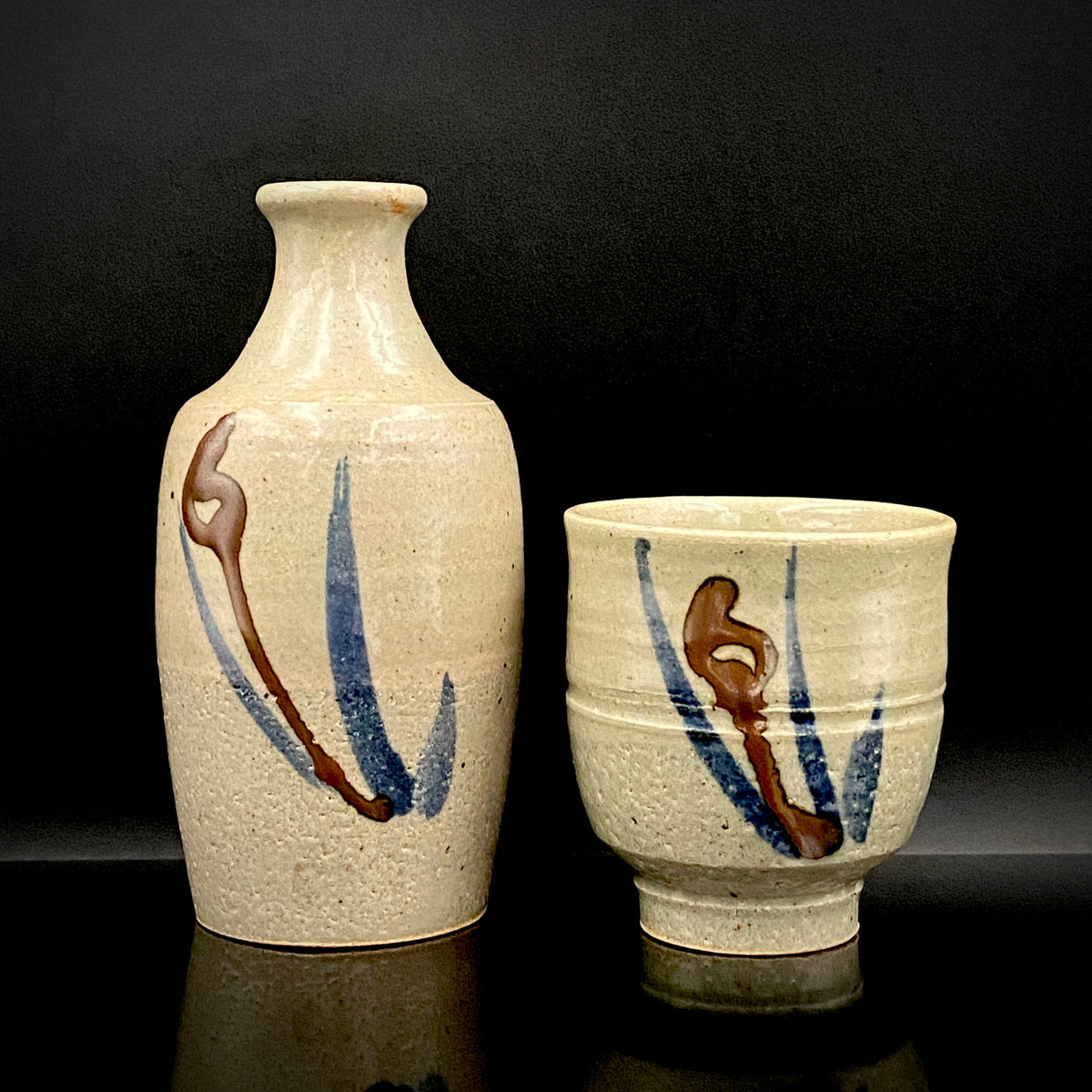
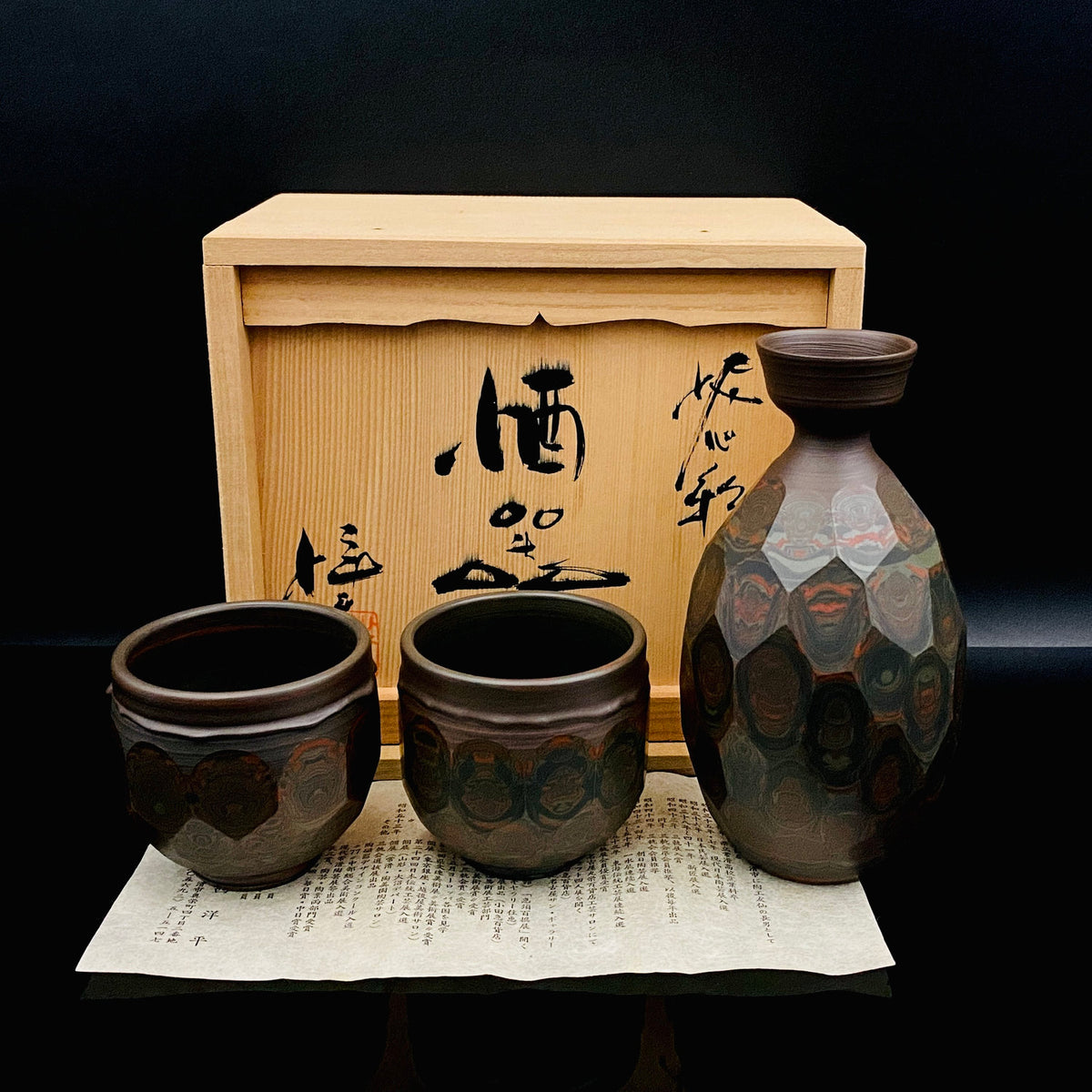
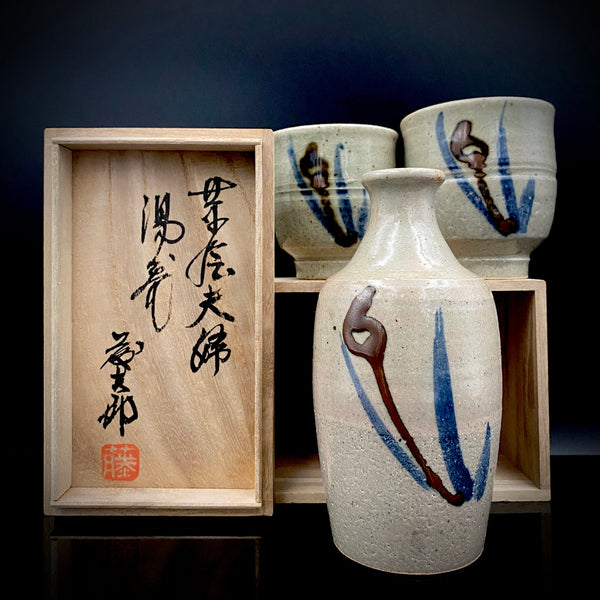
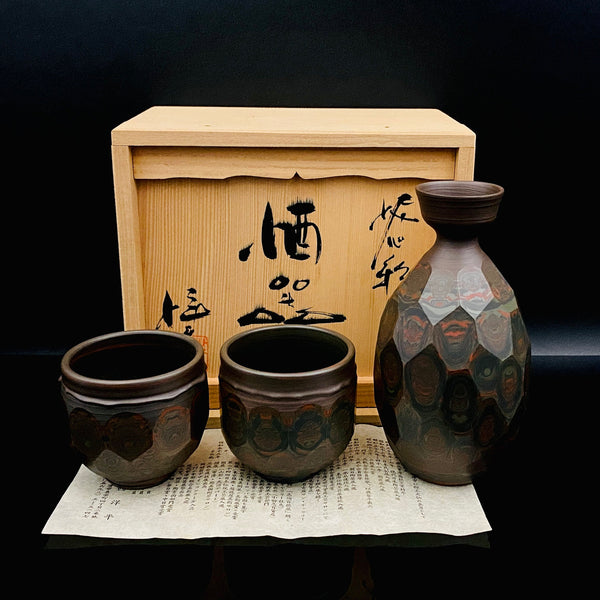
The tokkuri and pair of yunomi with gosu-painted flowers by Sakuma Totaro of Mashiko are a set made for exactly this way of drinking. The artist was a Mashiko potter who studied under Hamada Shoji, and the neat tokkuri with a clear step at its shoulder and the two yunomi of slightly different sizes share the same design. The shudei neriage sake set with tokkuri and cups by Konishi Yohei of Tokoname is notable for the tokkuri's tightly narrowed neck and its thinly finished cups, and suits warmed spirits poured a little at a time.
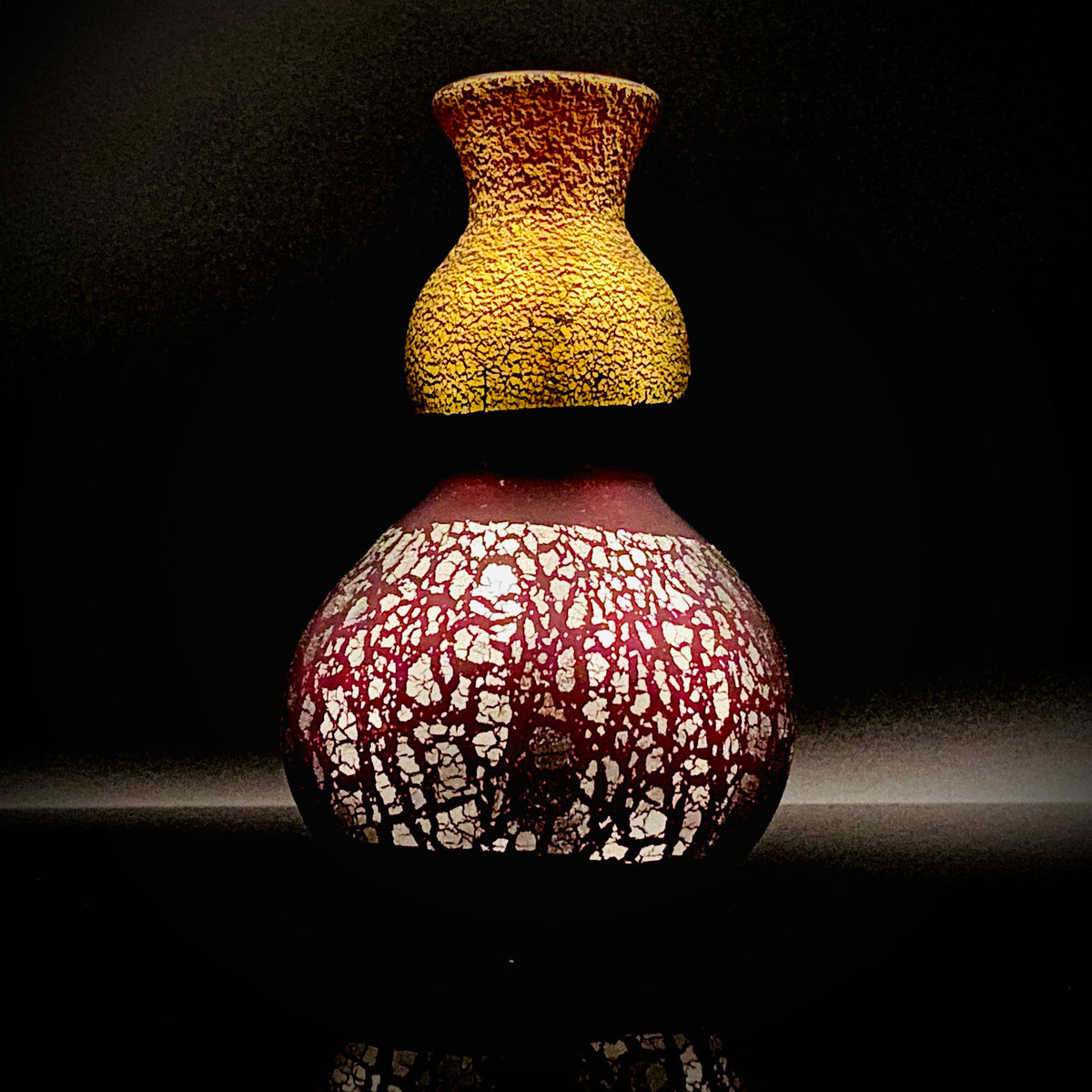
Note that a glass tokkuri cannot be used for warming. Glass vessels such as the gourd-shaped tokkuri by Okawa Kaoru in Tsugaru Vidro may break with a sudden change of temperature, so please use them to pour chilled maewari. Comparing a cold maewari with a warm kan is a pleasure particular to the turn of the seasons.
Choosing vessels for warm drinks
The vessels for warm whisky are chosen a little differently from those for cold drinks. The three points to consider are thickness, material and shape.
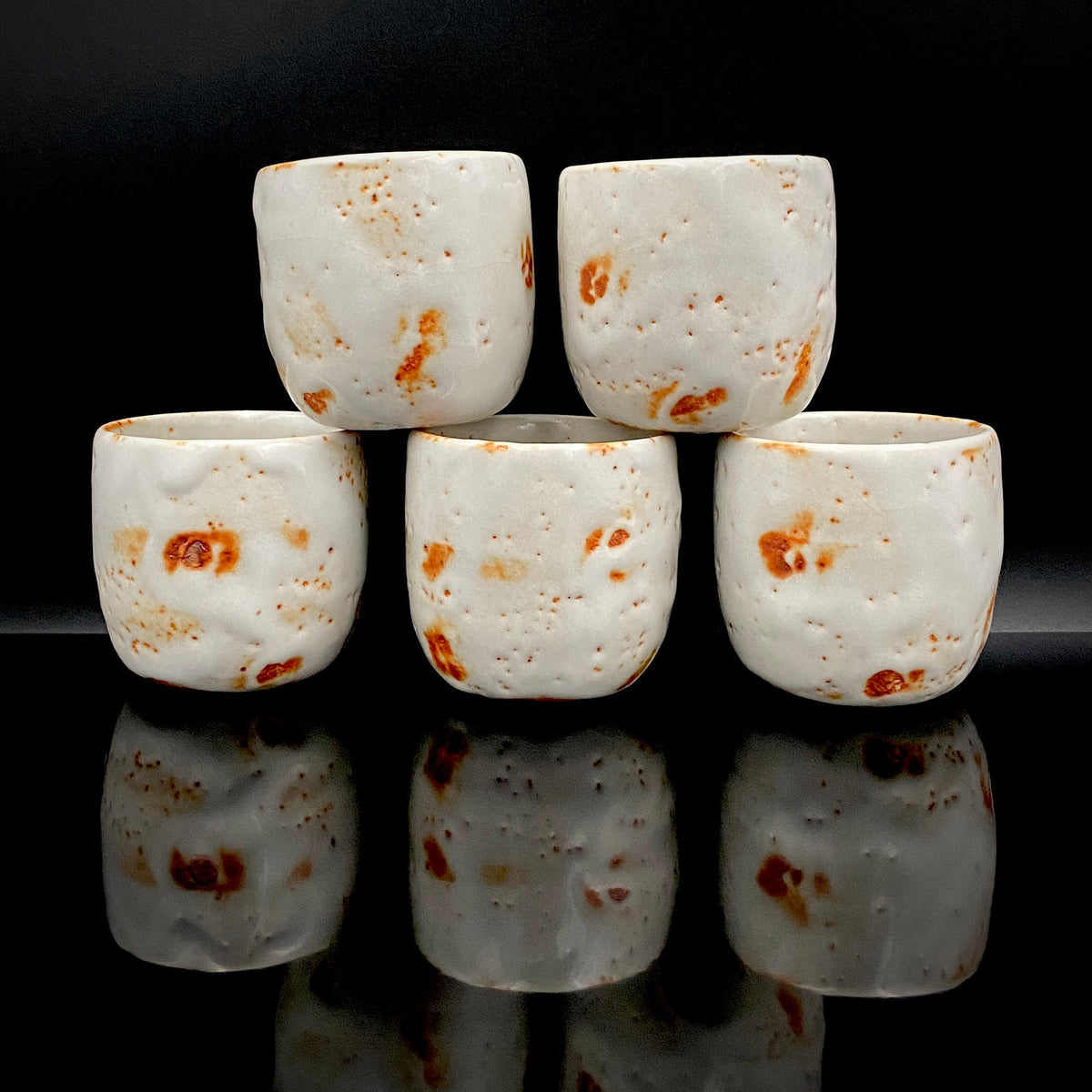
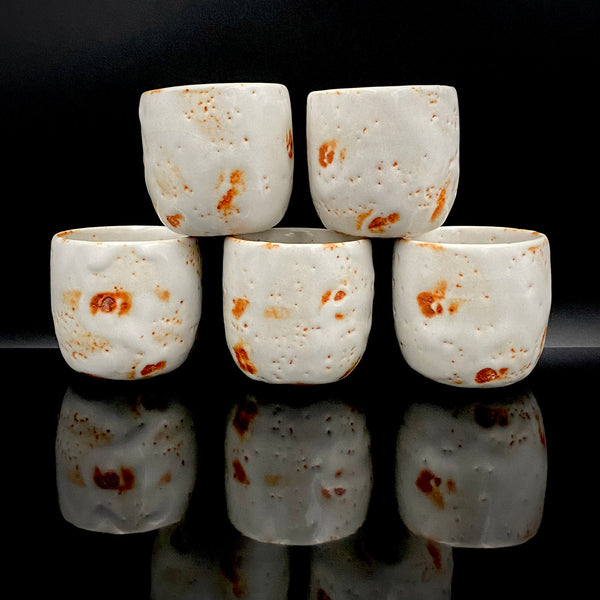
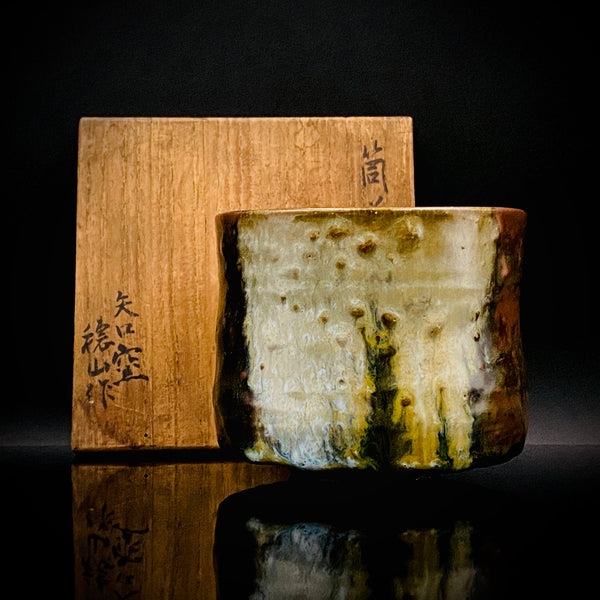
Thickness. The thicker the wall of a vessel, the more heat it stores and the more slowly the drink inside cools. The heat reaching your hand is also softened, so you can hold a warm drink for longer. The set of five Shino yunomi by Ando Hidetake, thickly made at about 7.5cm in both diameter and height, is ideal for a gathering around warm drinks.
Material. Earthenware, porcelain and glass do not differ greatly in how readily they conduct heat, but metal conducts heat several hundred times more readily than ceramics. Pour a hot drink into a silver or copper cup and it quickly becomes hot right up to the rim, too hot to put to your lips. Use metal vessels for cold drinks and choose ceramics for warm ones. Earthenware made from coarse clay, with many tiny spaces within it, passes heat to the hand gently and receives warm drinks kindly.
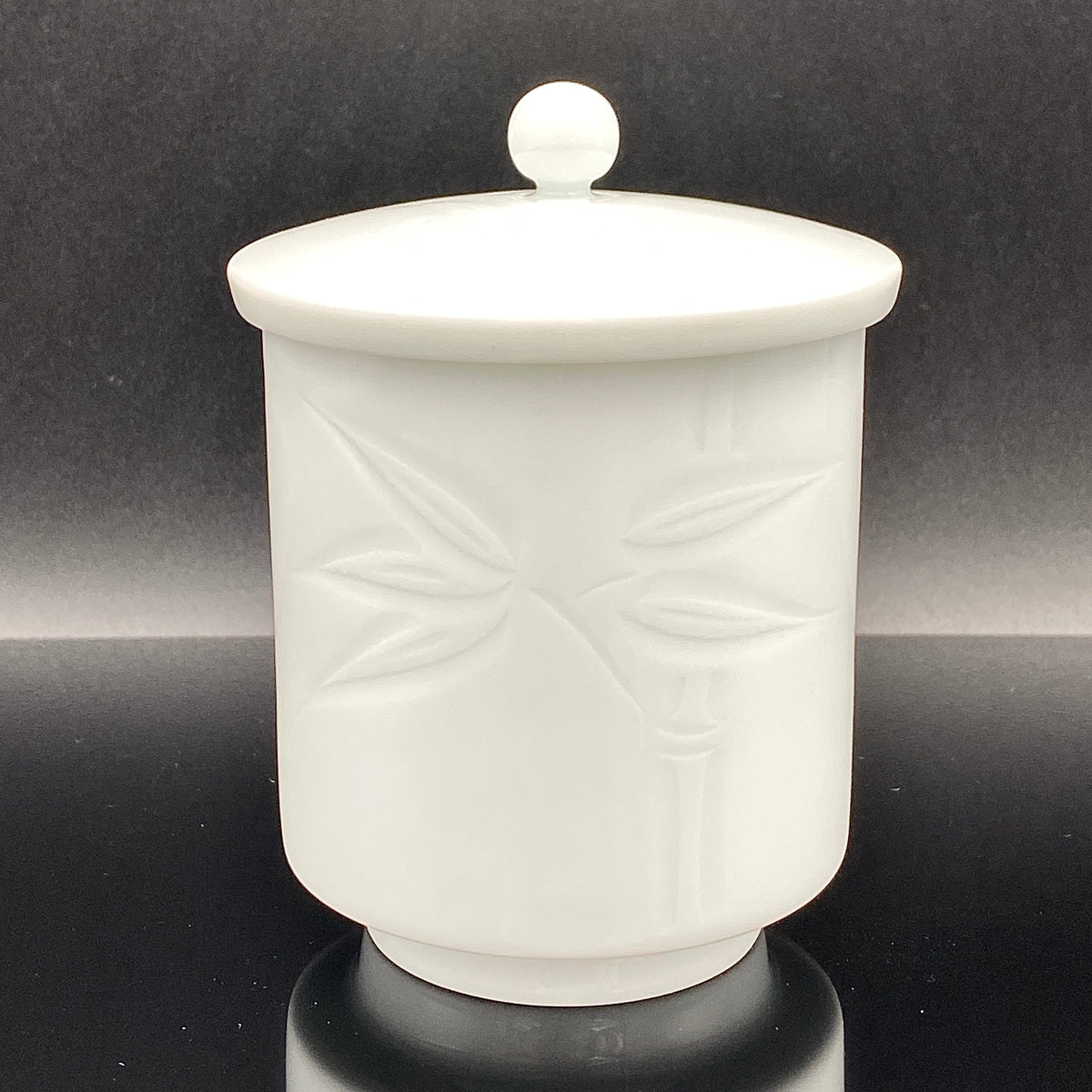
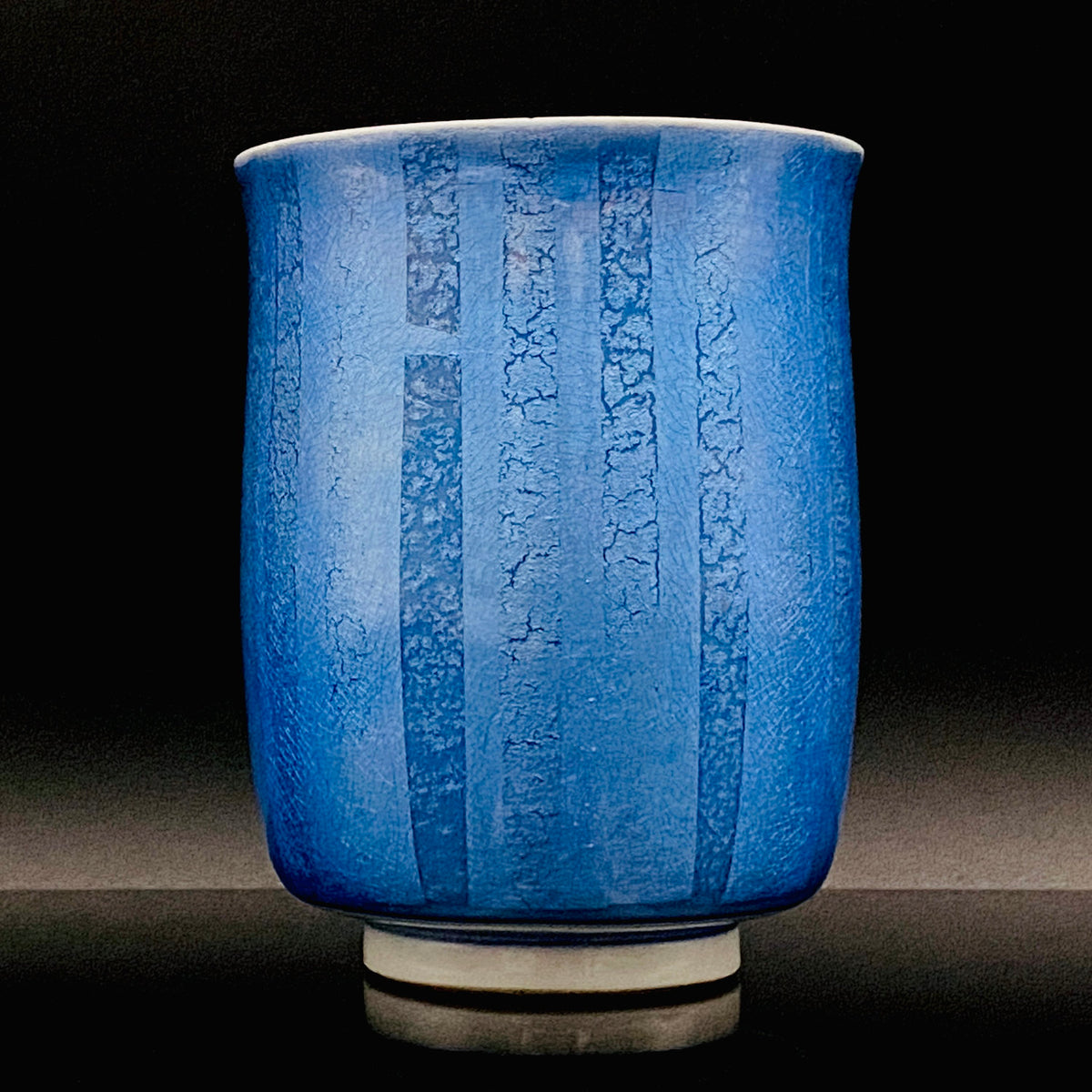
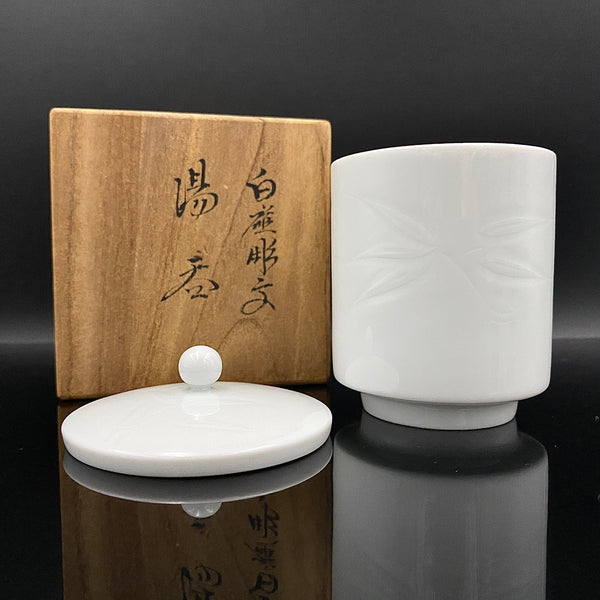
Shape. A vessel with a wide mouth loses heat quickly from its surface and soon cools. Just as tall tsutsu-jawan have been favoured in the cold season in chanoyu, vessels with a narrow mouth and a deep body keep their warmth for a long time. A lid also traps both heat and aroma. The white porcelain carved yunomi by Living National Treasure Inoue Manji has a lid, and the moment you lift it, the aroma gathered inside rises softly.
Incidentally, when warming sake, a metal vessel called a chirori, made of tin or copper, is sometimes used. Precisely because metal conducts heat so readily, it warms quickly in a water bath. Warming in a metal utensil and drinking from ceramics is a division of roles that makes good sense in the light of the materials' properties.
Here are some more vessels from our shop that we would like to pair with warm drinks.
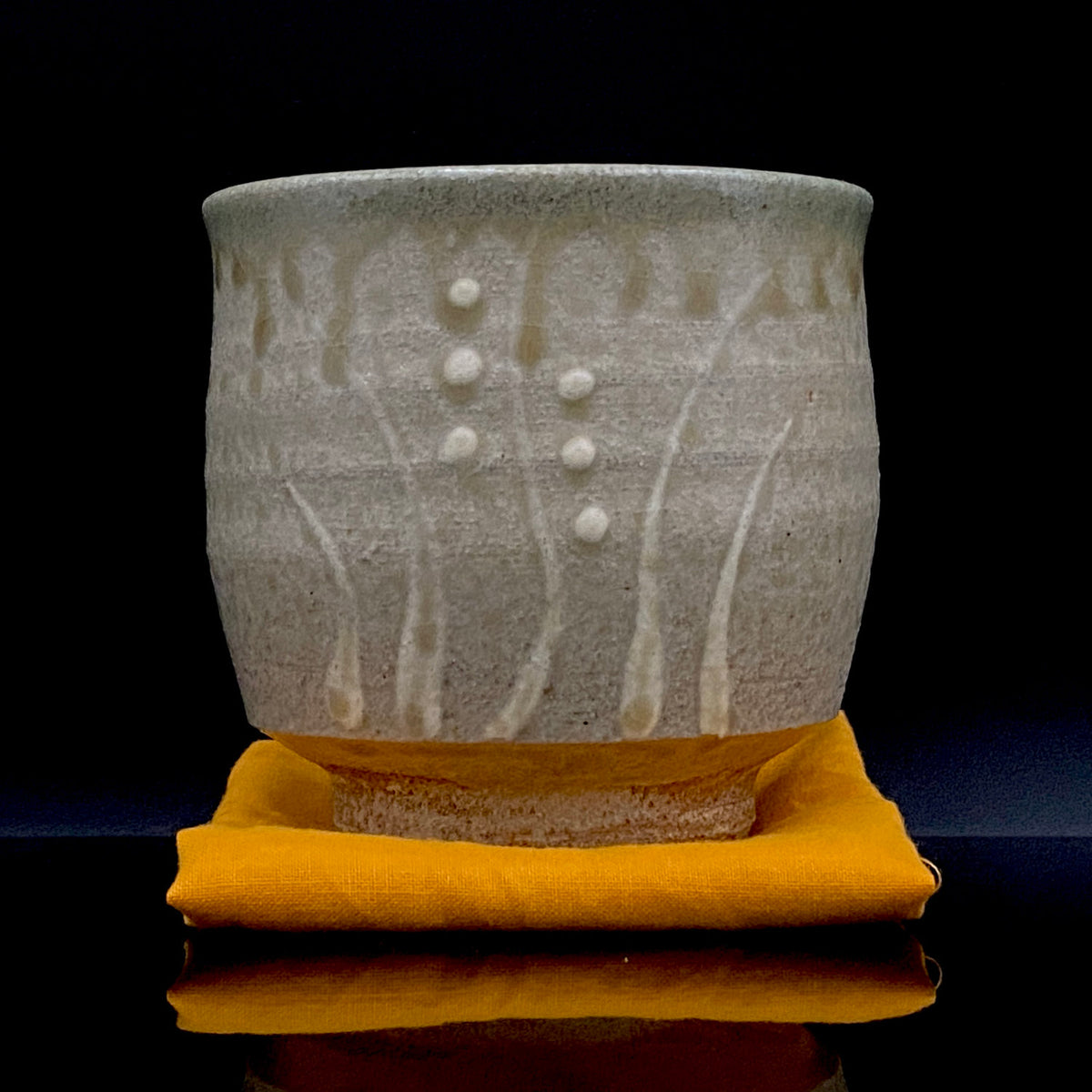
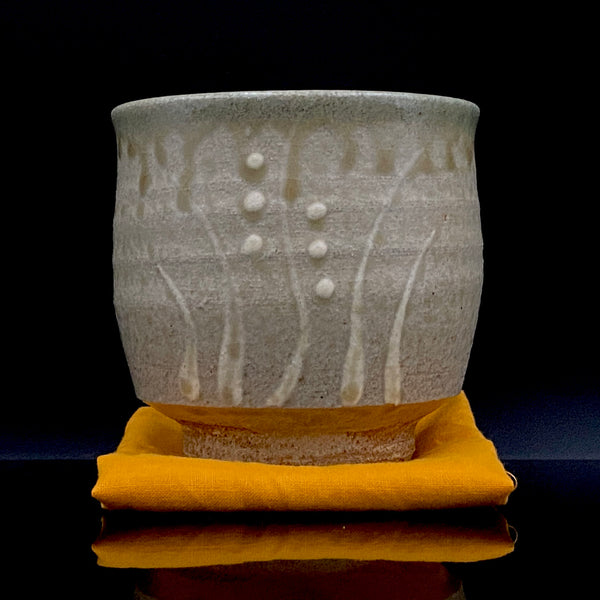
- Slip-trailed salt-glazed yunomi by Akashi Shosaku: A yunomi by an artist who studied under Hamada Shoji and Hamada Shinsaku, with slip-trailed dots and flowing lines that sit comfortably in the hand. Amber drinks glow against the pale greyish green of its interior.
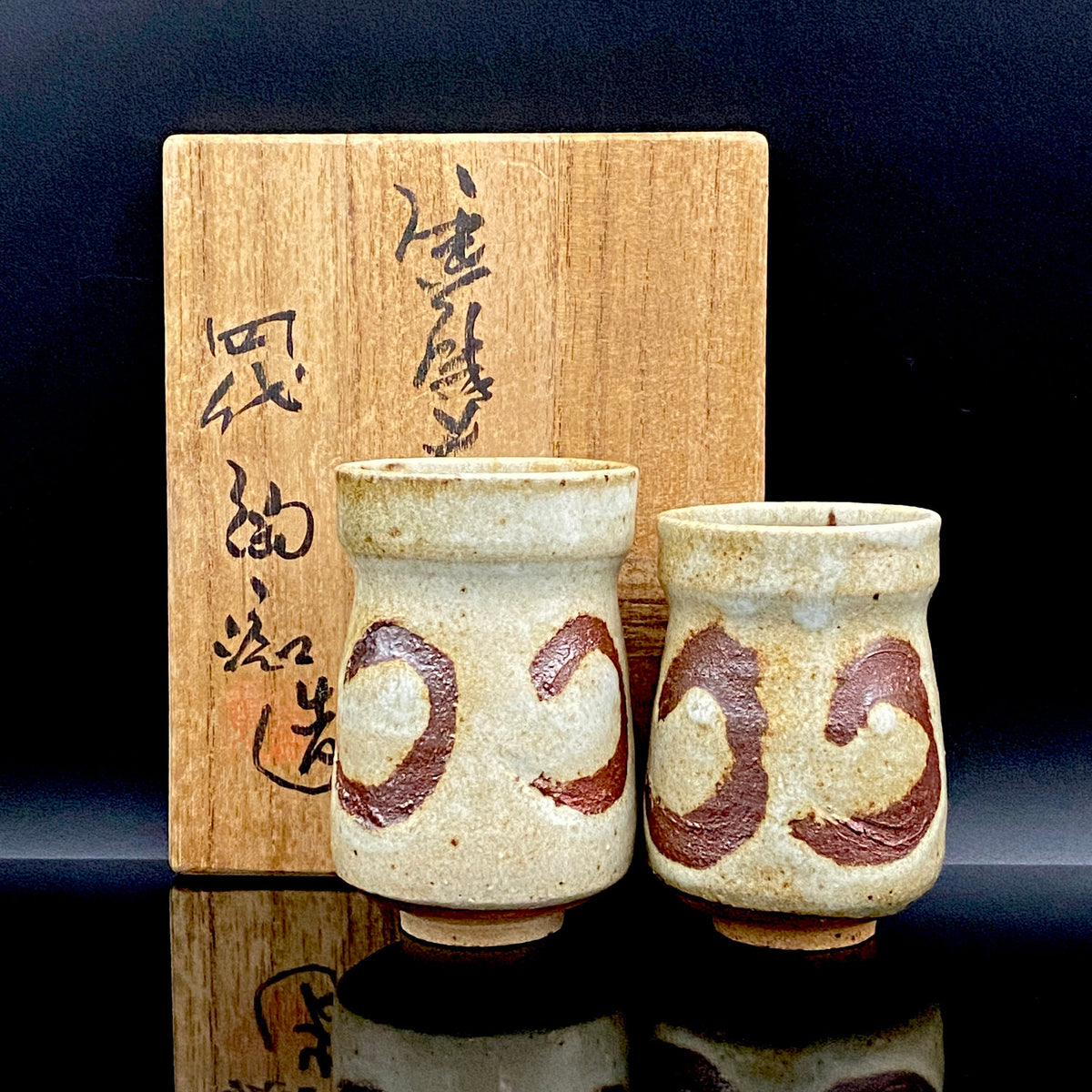
- E-Karatsu pair of yunomi by Nakano Tochi IV: A simple pair in Karatsu clay with iron-painted circles. Vessels for a couple to share a warm drink.
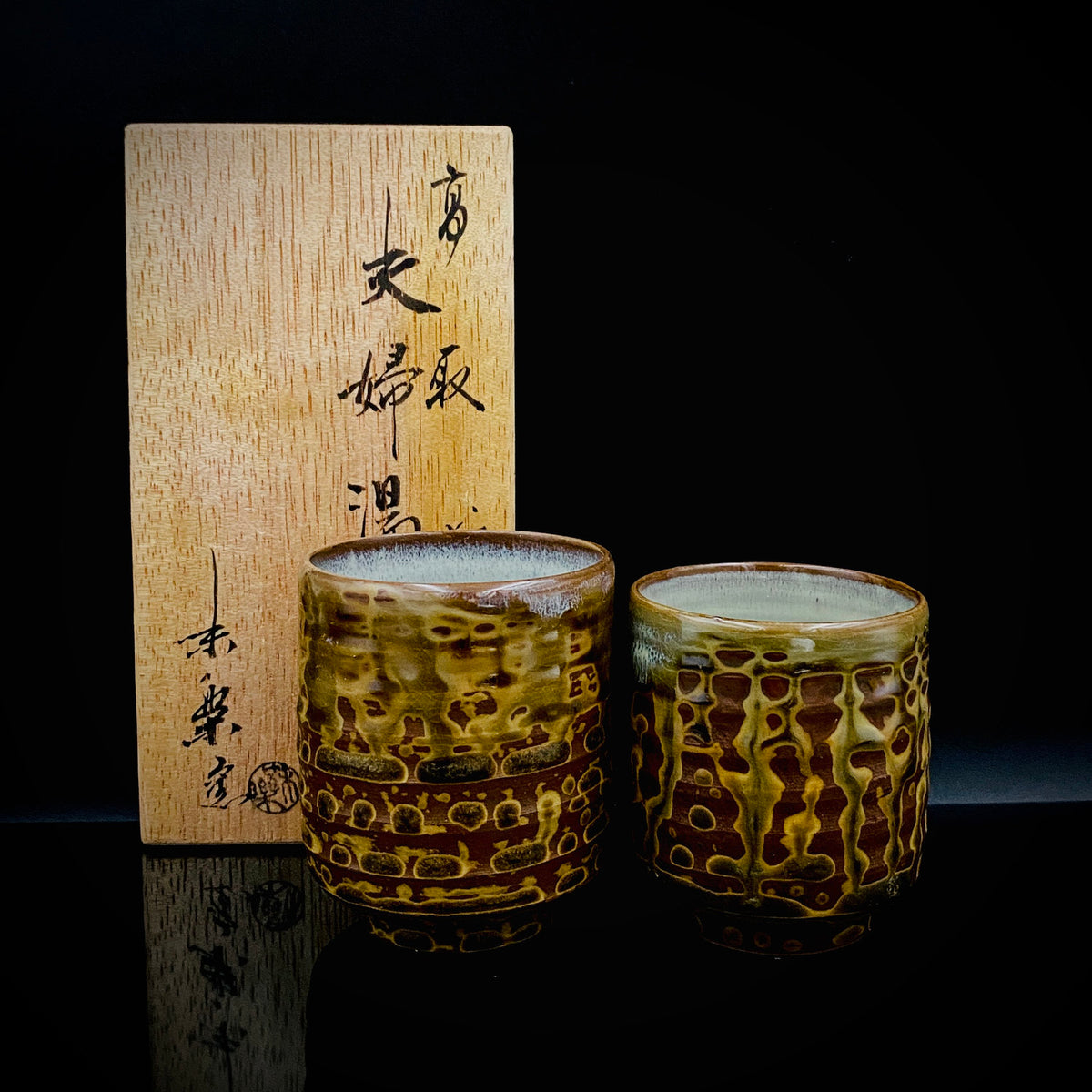
- Takatori-ware pair of yunomi by Kamei Miraku XIV: A pair of Takatori ware, descended from the official kiln of the Kuroda clan of Chikuzen, beautiful with its many-coloured running glazes.
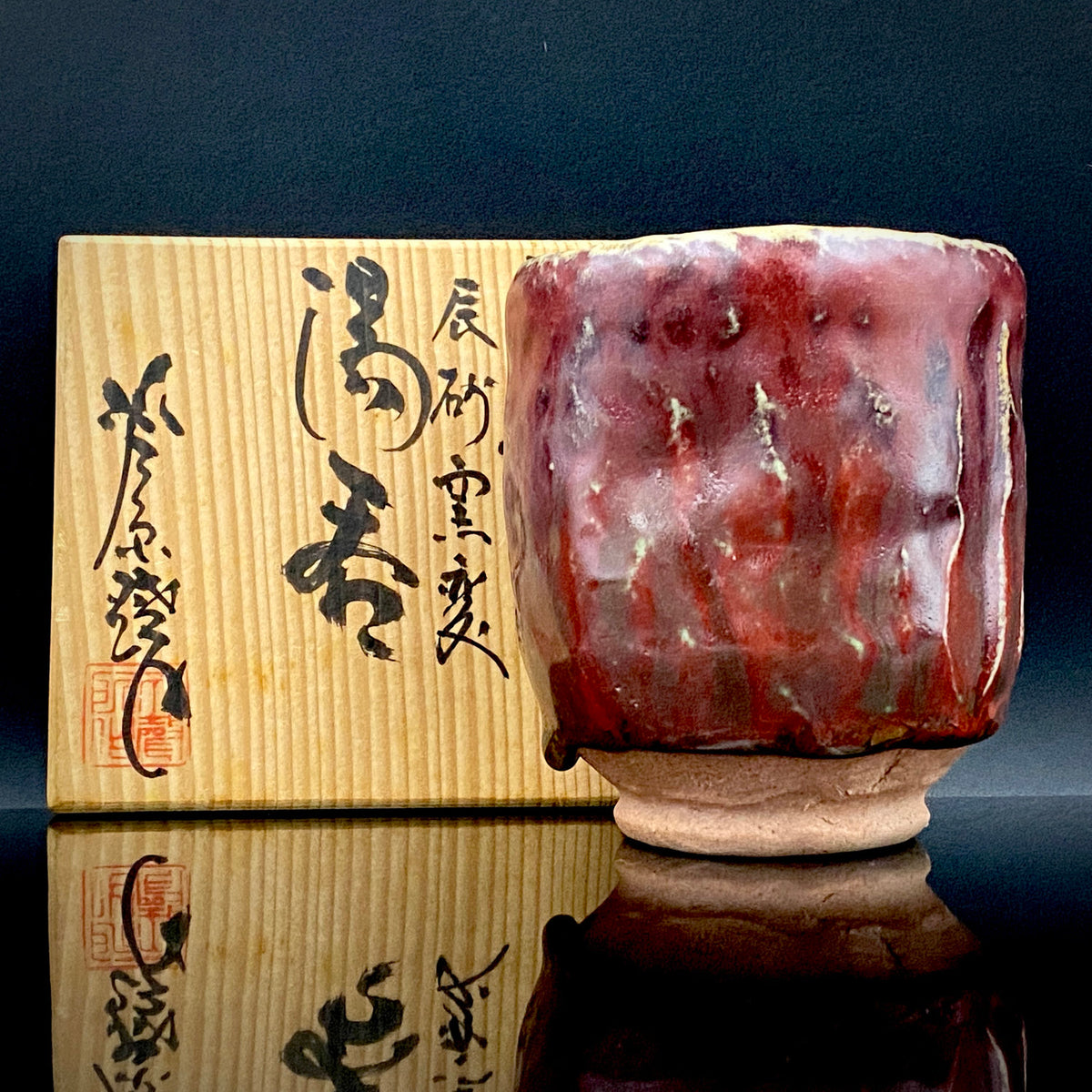
- Hand-built shinsha yohen yunomi by Kuze Tensei: A hand-built yunomi whose copper-bearing glaze turned red in the flames.
- Faceted Bizen yunomi with yellow goma by Iwamoto Tetsuya: A Bizen yunomi fired unglazed. The ridges between its facets rest pleasantly against the fingers.
Hot whisky with Japanese ingredients
The Scottish hot toddy is a warm drink of whisky with hot water, honey or sugar and lemon, with spices such as cloves or cinnamon if you like. Replace these with Japanese ingredients, and you have a "Japanese hot whisky" to savour from a yunomi.
- Yuzu and honey: To 30ml of whisky add 60 to 90ml of hot water and a teaspoon of honey. A sliver of yuzu peel floated on top gives a gentler, deeper aroma than lemon.
- Kokuto and ginger: Dissolve kokuto, Okinawan black sugar, in place of sugar, and add just a little grated ginger. It goes well with malts that carry the aroma of sherry casks.
- Nothing added: To taste the character of an old bottle, first add nothing and see how its aroma opens at nuru-kan temperature.
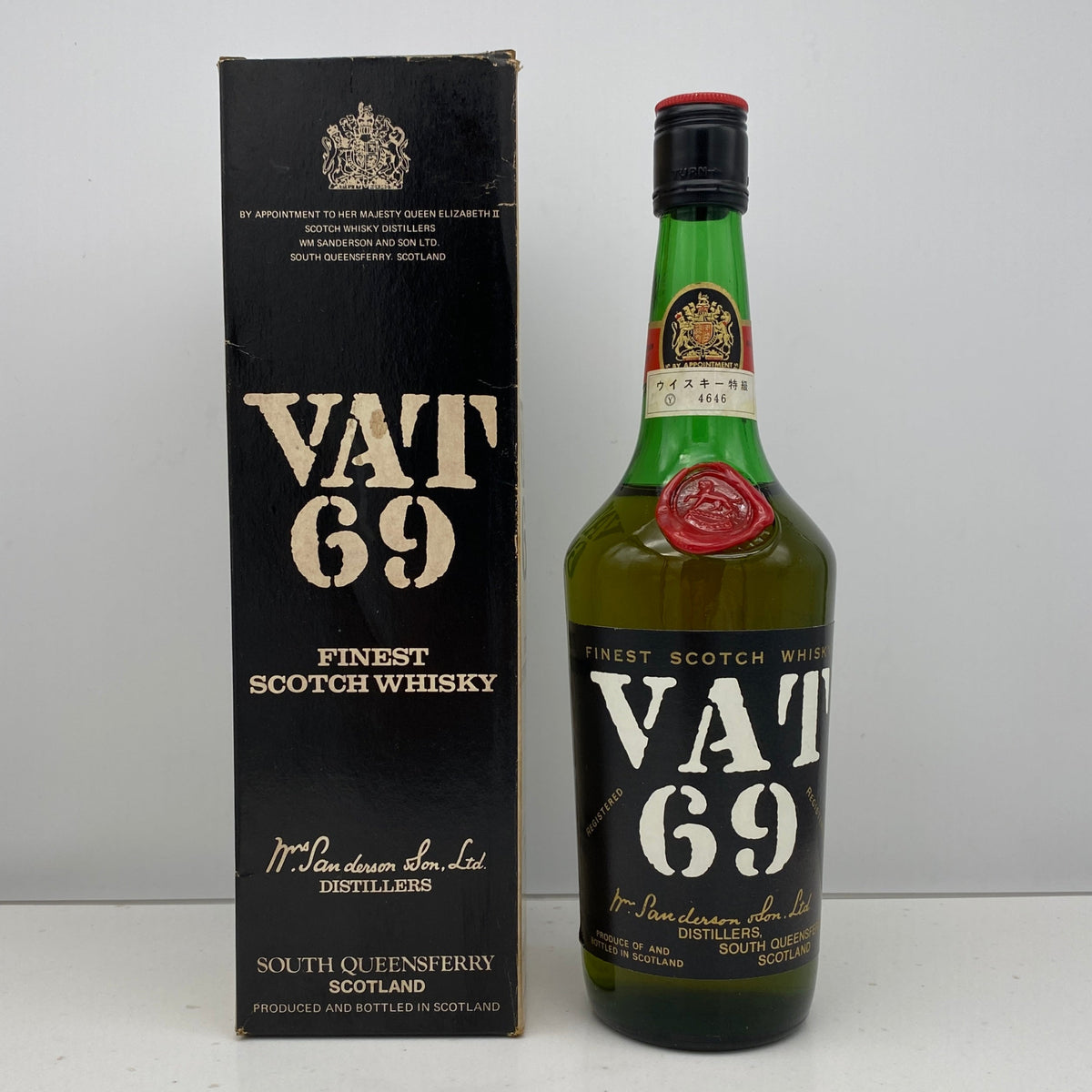
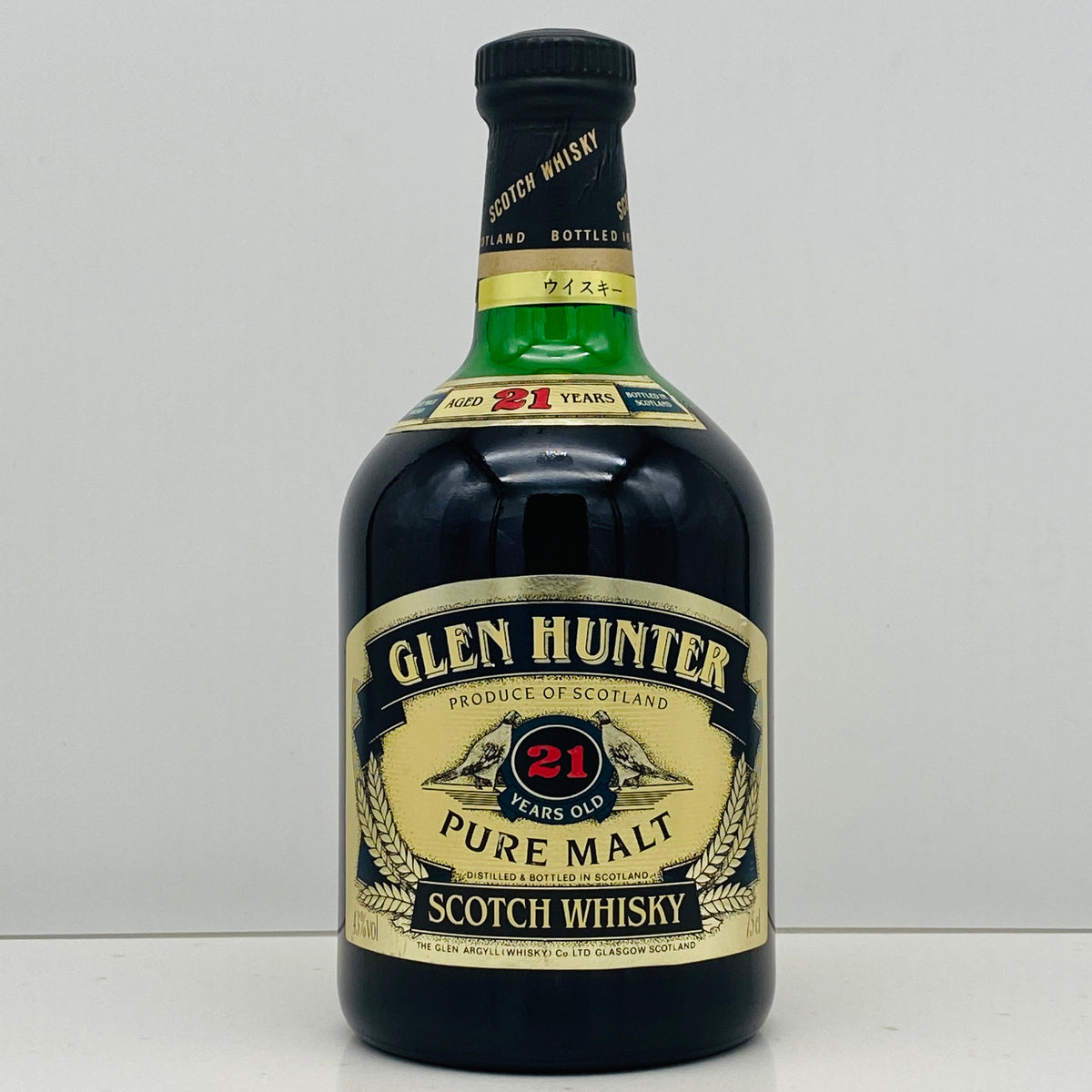
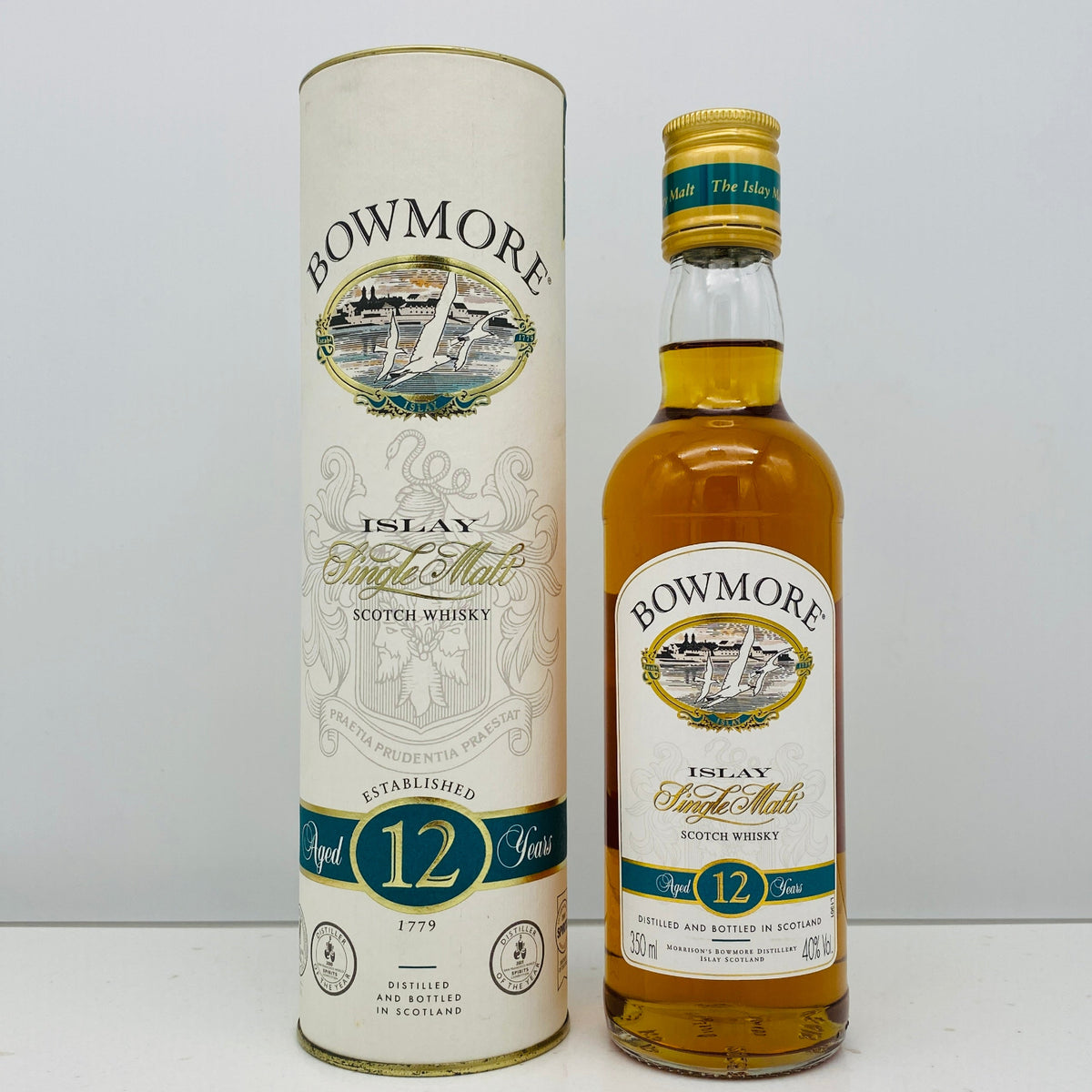
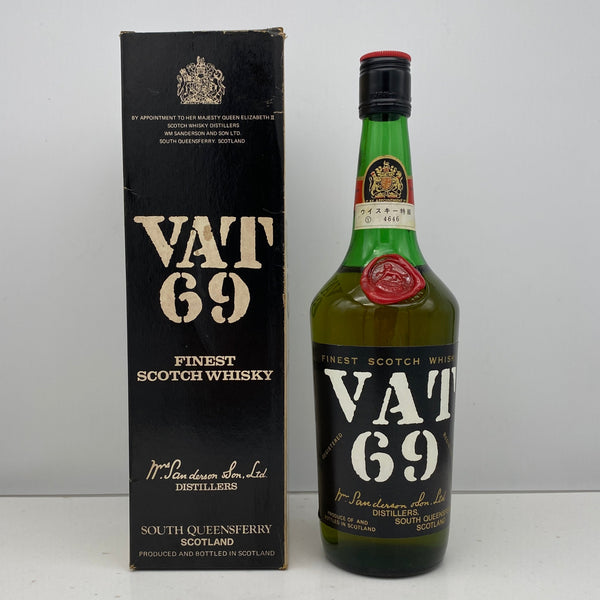
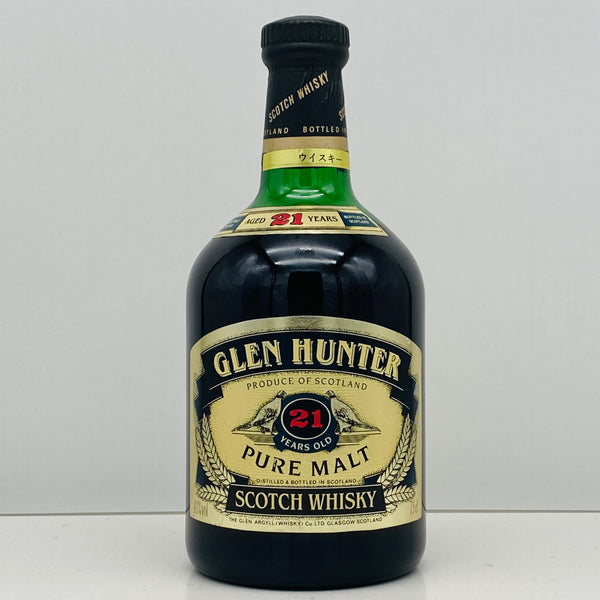
For an everyday glass, we recommend choosing from reasonably priced blends. VAT 69 distributed in the mid-1970s, Grand Old Parr from the early 1970s and Tomatin Big T are robust blends whose structure holds up well when warmed. To pair with kokuto, try Glen Hunter 21 Year Old, which uses a high proportion of sherry-cask-matured spirit. If you want to try smoky notes with yuzu, the 1990s Bowmore 12 Year Old half bottle is an easy bottle to start with. Finlaggan at 60% keeps its aroma even when diluted with hot water, letting you savour the power of whisky warmed like sake.
Our recommended warm pairings
Here are our recommended combinations of bottle, temperature, vessel and addition. The temperatures are a guide to the finished drink.
| Bottle | Temperature | Vessel | Addition |
|---|---|---|---|
| VAT 69 | Nuru-kan (about 40°C) | Ando Hidetake, Shino yunomi | Nothing added |
| Grand Old Parr | Jo-kan (about 45°C) | Sakuma Totaro, tokkuri and pair of yunomi | Maewari warmed in a water bath |
| Glen Hunter 21 Year Old | Nuru-kan (about 40°C) | Akashi Shosaku, slip-trailed salt-glazed yunomi | Kokuto and ginger |
| Bowmore 12 Year Old | Jo-kan (about 45°C) | Tanaka Hozan, Chosen-Karatsu tsutsu-jawan | Yuzu peel and honey |
| Finlaggan (60%) | Nuru-kan (about 40°C) | Konishi Yohei, tokkuri and cups | 1 : 3 maewari warmed in a water bath |
The first is an everyday evening glass: whisky with hot water and nothing added, at nuru-kan, in a thick Shino yunomi. The second is for two: maewari warmed in a tokkuri and poured into the pair of yunomi. The third is a glass for late on a winter night, with kokuto supporting the sweet aroma of sherry casks. The fourth is for a cold day, letting smoky notes and yuzu linger inside a tall tsutsu-jawan. The fifth dilutes a powerful bottle generously as maewari, to be enjoyed cup after cup from small cups, just like warmed sake.
Notes for enjoying it safely
- Never heat whisky over a flame: Alcohol is flammable, and heating it directly in a pan risks it catching fire. To warm whisky, always dilute it with hot water or use a water bath.
- Do not let it boil: Boiling drives off the aroma compounds along with the alcohol. Turn off the heat before using the water bath.
- Do not pour boiling water into glass: Sudden changes of temperature can crack glass. Use hand-blown glass and kiriko cut glass for cold drinks.
- Keep vessels with gold or silver out of the microwave: Metallic decoration can cause sparks. With vessels that use silver or gold, such as the yuri-ginsai yunomi by Nakada Kazuo, limit yourself to pouring in a drink warmed in a water bath, and wash them by hand.
- Do not warm a cracked vessel: Before using an old vessel, check its rim and body for cracks. Pouring something hot into a cracked vessel can widen the crack.
- Keep yawaragi-mizu at hand: Warm drinks are soft in the mouth, and it is easy to drink more than you mean to. Keep a glass of water beside you and enjoy it slowly.
Summary
The culture of kan is a peculiarly Japanese wisdom that gives names to something invisible, temperature, and savours the shifts in aroma and taste that come with it. Apply that scale to whisky, and whisky with hot water changes from "a vaguely warm drink" into a glass you savour at a temperature of your choosing. The range from nuru-kan to jo-kan, a thick earthenware yunomi with a narrow mouth, and a tokkuri in a water bath: in the cold season, try savouring warm whisky from Japanese vessels. We also introduce ways of pairing vessels and whisky in our article on enjoying old bottle whisky from Japanese vessels.
Frequently asked questions
Q. Can I warm whisky neat?
We do not recommend it. Warmed neat, whisky gives off a strong sting of alcohol that makes the delicate parts of its aroma hard to perceive. If you want to raise the temperature of a neat whisky, cradling the vessel in both hands and warming it to about hitohada-kan with your palms is pleasant enough.
Q. Can I warm it in a microwave oven?
The temperature tends to become uneven inside the vessel, and vessels with gold or silver decoration may spark, so we recommend a water bath. In a water bath you can reach the temperature you want while checking it with a thermometer.
Q. Isn't it a waste to mix an expensive old bottle with hot water?
We suggest using reasonably priced blends for everyday glasses, and with a special bottle, tasting a little neat first and then trying just a small amount with hot water. Changing the temperature can reveal sides of the same bottle you had never met.
Related items in our shop
Pieces from our shop connected with this article. Click a photo to open its product page.
You can browse more in Blended Whisky, Ceramic Cups & Glasses, Mino Ware (Shino, Oribe, Ki-Seto) Sake Cups & Vessels, Mashiko Ware Sake Cups & Vessels.