Very Good (No chips, no cracks). Please regard the crazing that forms in firing, other characteristics of ceramics and the patina of age as part of the pleasure of an antique piece.
Accompanied by
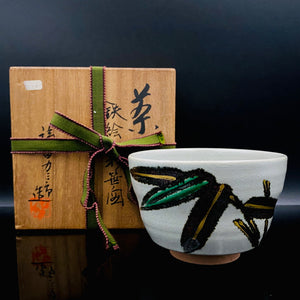
Dedicated paulownia wooden box (Tomobako with handwritten calligraphy "Teacup", signature seal, and seal stamp on the inside of the lid), explanatory pamphlet included
Free within Japan. We also ship overseas for a flat fee (see our Shipping Policy).
Dispatch
Within 5 business days after payment is confirmed (excluding weekends, Japanese public holidays and our closing days).
Payment
Credit cards, Apple Pay, Google Pay and more. You can choose at checkout.
Returns
As our items are antiques and vintage spirits, we cannot accept returns or cancellations for a change of mind. If an item arrives significantly damaged through our clear fault, we refund the full amount once it is returned (Refund Policy).
Delivery to your hotel while visiting Japan
If you are visiting Japan, we can also deliver to your hotel or other accommodation in Japan.
In that case, after placing your order and at least 5 days before your preferred delivery date, please send us the reservation holder's details, your check-in date, and whether you have confirmed that the hotel will accept the parcel, by email (support@antiqueliquor1926.com) or via our contact form.
About this piece
This is a teacup decorated with itchin (slip-trailing) created by Akashi Shosaku (明石庄作, b. 1946), a highly skilled ceramic artist who studied under Living National TreasureHamada Shoji and Shoji's eldest son Hamada Shinsaku, undergoing 20 years of extremely rigorous training as a senior apprentice at the Hamada Kiln, the sacred ground of Mingei (folk crafts) ceramics. Establishing the artist's own kiln in Sayado, Mashiko-machi in 1981 to become independent, Akashi achieved high public acclaim, including winning the New Artist Award in the Crafts Division of the Kokuten exhibition, being repeatedly selected for The Japan Folk Crafts Museum Exhibition, and being invited to the Prime Minister's Official Residence in 1993 as a cultural figure. The inside of the lid of the accompanying dedicated paulownia wooden box (tomobako) features the handwritten calligraphy "Yunomi" (Teacup), accompanied by the signature seal "Shosaku" and a seal stamp. Furthermore, as the final entry in the included explanatory pamphlet (shiori) records Akashi's winning of the Tochigi Prefecture Culture Encouragement Award and selection for the Mashiko Ceramic Art Exhibition in 1998, this work can be identified as an authentic piece produced in the late 1990s (around Heisei 10), a period when the wheel-throwing technique inherited from the Hamada Kiln and the artist's original slip-trailing methods reached full fruition.
A detailed analysis of the piece's design reveals a magnificent expression of flawless wheel-throwing, cultivated through 20 years of training, alongside three-dimensional stippling and flowing-line patterns executed through slip-trailing (itchin), Akashi's signature technique. On the vessel surface, the itchin technique—where clay slip is extruded through a tube—applies elegant vertical lines reminiscent of swaying silver grass and raised, rounded dots reminiscent of dew or water droplets. Wrapping the vessel in a moist texture characteristic of salt glaze (or ash glaze) firing, the exterior displays a beautiful gradation from pale grey-green (olive green) to ecru from the interior bowl to the rim, with fine glaze craze marks creating deep, nuanced shadows. The area from the foot to the foot-side is intentionally left unglazed, exposing Mashiko's characteristic rustic and warm clay body (rotai), where a seal stamp proving it to be Akashi's work is clearly impressed into the raw clay.
With substantial yet comfortable dimensions measuring approx. 8.0 cm in height and approx. 8.2 cm in diameter that rest comfortably in the hand, our shop proposes this work, in alignment with modern refined lifestyles and drinking culture, as a dignified "Japanese-style rocks glass (Japanese liquor vessel)" for enjoying vintage whisky, aged sake, matured Japanese liquor, or premium spirits over a large ice cube. The tactile comfort drawn by the three-dimensional dots and flowing lines of the slip-trailing, combined with the visual effect of amber liquor reflecting beautifully against the pale olive-green glaze tone inside the vessel, dramatically deepens a special evening drink. A masterpiece merging the orthodox techniques of Mashiko Mingei with modern sculptural sensitivity, this piece allows one to relish the true essence of Japanese craft beauty through both visual appreciation and practical use.
Career Highlights: [1962] Apprenticed under the late Hamada Shoji and Hamada Shinsaku, training at Hamada Kiln for 20 years. [1981] Established a kiln in Sayado, Mashiko-machi to become independent. Selected for The Japan Folk Crafts Museum Exhibition; [1987] Won New Artist Award in Crafts Division at Kokuten exhibition; [1993] Invited to Prime Minister's Official Residence; [1996] Became Associate Member of Kokugakai; [1998] Won Tochigi Prefecture Culture Encouragement Award.
Public Collections & Exhibitions: Exhibited and selected for The Japan Folk Crafts Museum Exhibition, exhibited at Mashiko Museum of Ceramic Art, etc.
Date: Late 1990s (around Heisei 10)
Condition: Very Good (No chips, no cracks). Please regard the crazing that forms in firing, other characteristics of ceramics and the patina of age as part of the pleasure of an antique piece.
Accompanied by: Dedicated paulownia wooden box (Tomobako with handwritten calligraphy "Teacup", signature seal, and seal stamp on the inside of the lid), explanatory pamphlet included
Medium: Ceramic / Pottery (Mashiko clay, salt glaze / ash glaze, white slip-trailing decoration)
Dimensions: Height approx. 8.0 cm, Diameter approx. 8.2 cm
Please Note: The items provided by our shop were produced a very long time ago even if unused, and are all listed as pre-owned items. Please understand and confirm that the item may have age-related changes before considering your purchase.
About the Photographs: We prepare every description with great care, but errors may still remain in the text. Please examine the photos carefully before purchasing. Where the photos and the description differ, please take the photos as the basis for the product information.



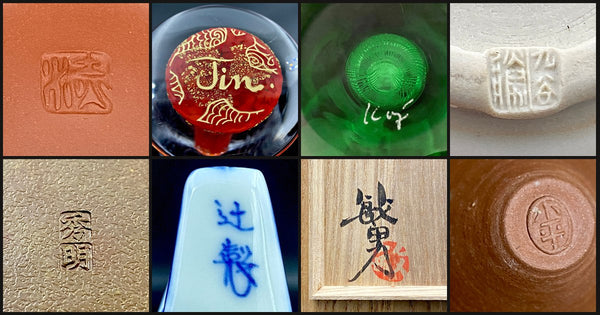 Japanese Pottery Seals, Box Signatures and Marks: A Photo Index of 162 MakersThe seal or incised signature on the base of a piece, and the signature and s...
 Letters from Teachers: Potters' Mentors and Friendships, Read Through the Recommendations in Their LeafletsA leaflet lying at the bottom of a fitted box sometimes carries words by some...
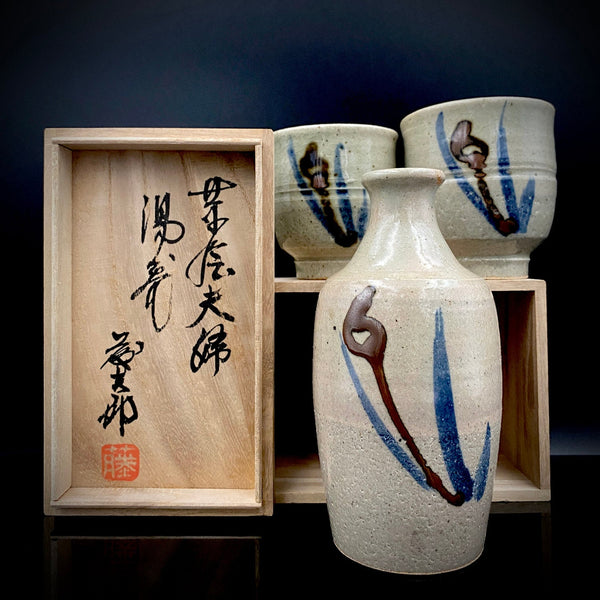 Whisky Warmed Like Sake — Hot Whisky in Japanese Vessels, from Hitohada-kan to Jo-kanIn the world of sake, warmed sake is named in five-degree steps — hinata-kan,...
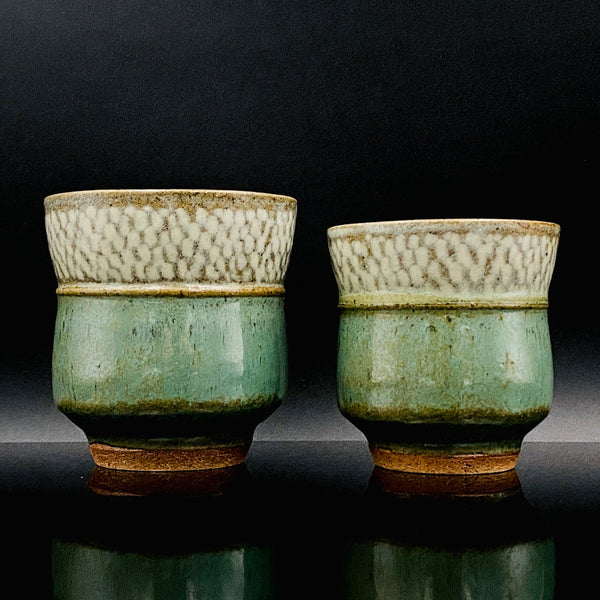 Traces of the Hand on the Surface: Reading How Forms and Patterns Are Made Through the 27 Techniques in Kano Mitsuo’s NotesThe streaks of a running brush, lines drawn with a comb, dents pressed by a f...

