This is a masterpiece Oribe glaze bowl by Kumakura Junkichi (熊倉順吉, 1920–1985), a legendary master who left an indelible mark on modern Japanese avant-garde ceramics. Born in Kyoto in 1920 (Taisho 9) and passing away in 1985 (Showa 60), Kumakura was a pioneer who led postwar Japanese ceramic history. After thoroughly studying modern design and architectural structural expression at the Architectural Department of Kyoto Municipal First Technical School and the Design Department of Kyoto Higher School of Arts and Crafts (now Kyoto Institute of Technology), Kumakura embarked on the path of ceramics. The artist studied under Fukuda Rikisaburo at Shosai Toen in Kyoto, and was further imbued with a creative spirit under Tomimoto Kenkichi, a giant of modern ceramics and Living National Treasure. Kumakura's style, which fused the strict modernist ethos inherited from Tomimoto—"do not create patterns from existing patterns"—with Kumakura's own design and architectural background, stood out remarkably in the ceramic world of the time. In 1957, the artist joined Sodeisha, the legendary avant-garde ceramic group formed by Yagi Kazuo, Suzuki Osamu, and others, becoming a core member and reigning at the pinnacle of Japanese ceramics. Kumakura's artistry earned high international acclaim, including winning the Grand Prix at the 1958 Brussels World's Fair in Belgium and the Silver Prize at the 1962 Prague International Ceramic Exhibition in Czechoslovakia. The artist's works are officially housed in public institutions such as The National Museum of Modern Art, Tokyo; The National Museum of Modern Art, Kyoto; The Shigaraki Ceramic Cultural Park; and The Museum of Modern Ceramic Art, Gifu. Because Kumakura's period of production was short and most major works reside in public museum collections, genuine pieces circulating in the private market are extremely limited, making this an extraordinarily rare worldwide collector's item.
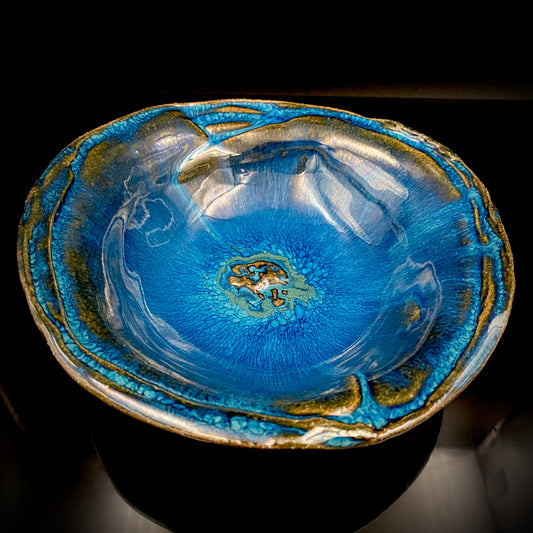
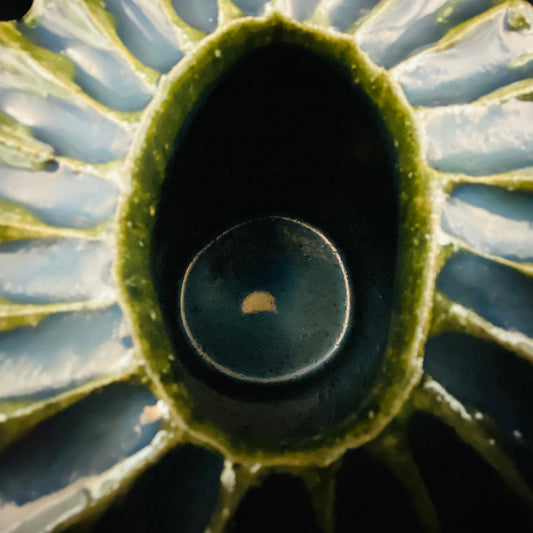
This work represents a supreme fusion of Kumakura’s most highly acclaimed achievements: the "modernization of traditional glazes" and the artist's "architectural and graphic design approach." Inside the bowl, which boasts an impressive presence measuring approximately 23.0 cm in width and 7.0 cm in height, fine, powerful incised lines radiate outwards from the center, while the rim features an elegantly wavy, rinka (scalloped) form resembling frills. Dynamic Oribe glaze flows along these incised lines, pooling in the deep center to create rich green tonal gradations and a crystalline, glass-like texture overflowing with transparency. Observing the outer body near the foot ring, while retaining the white, raw clay texture of the body, a delicate line of hiiro (fire marks / scorching) emerges along the boundary, over which the wavy, dripping Oribe glaze displays a dynamic sculptural beauty. While other members of Sodeisha moved toward pure objet d'art by completely denying vessel functionality, Kumakura pursued a unique artistic philosophy of extending avant-garde expression as far as possible while maintaining functional utility and morphological beauty as a vessel. The artist's own seal "Jun" (顺) is clearly stamped beside the foot ring, fully demonstrating Kumakura's sculptural and architectural intelligence. We present this piece tailored to modern lifestyles as a Japanese Kogei creation to enjoy traditional Japanese aesthetics. It is particularly ideal as a large serving bowl or side-dish plate to elegantly present seasonal simmered dishes or gourmet appetizers when savoring aged sake that has acquired deep richness and aroma over time, creating a luxurious experience that satisfies the five senses alongside the rich flavor of koshu.
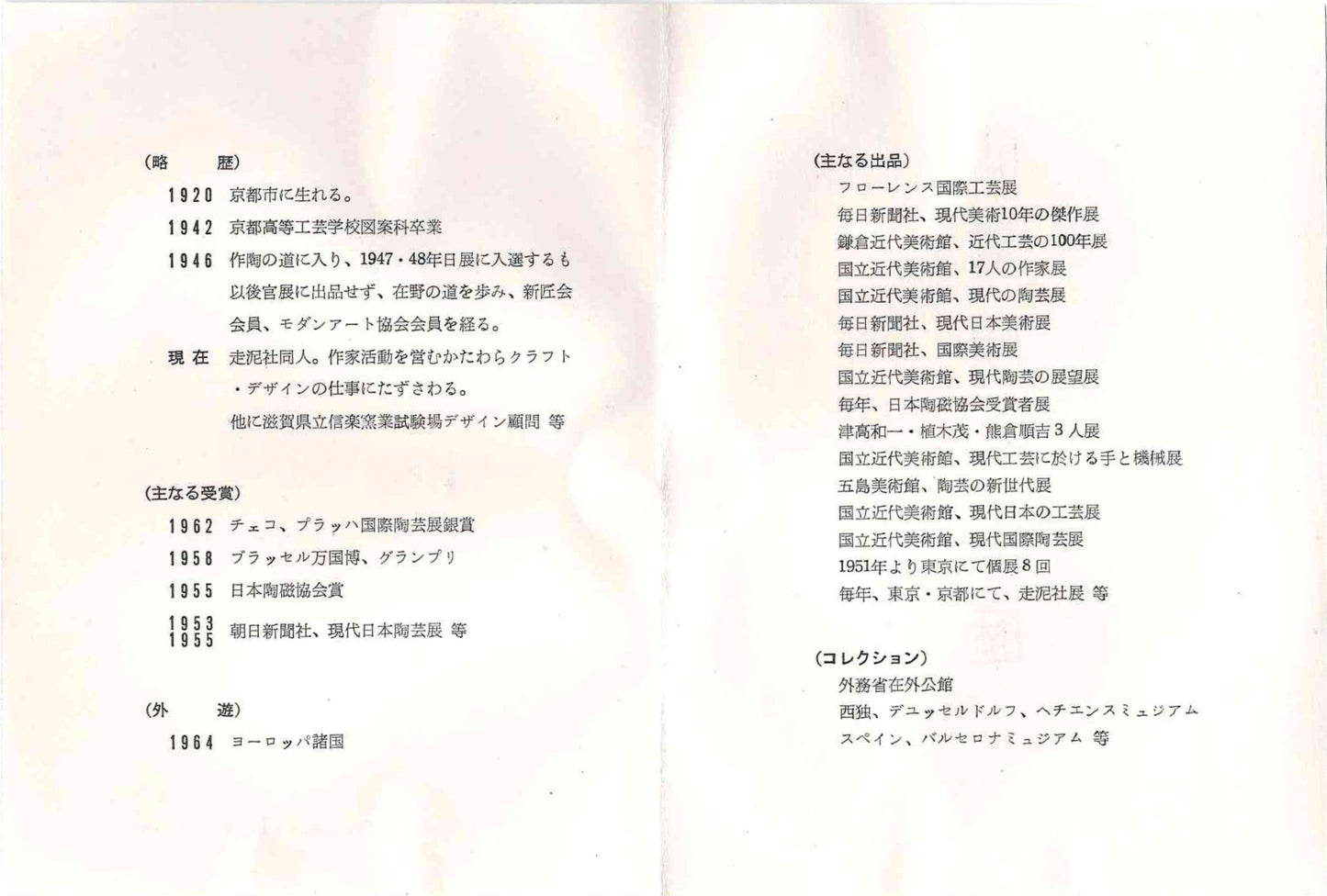
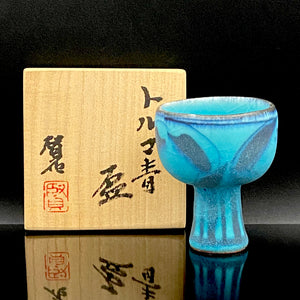
Regarding the period of production, it is identified as an authentic work created between 1975 and 1985 (Kumakura's late, peak period), when the architectural design concepts developed in youth and Kumakura's interpretation of traditional Oribe glaze reached maturity after fully establishing Kumakura's international reputation as a Sodeisha member. The vessel itself has no chips or cracks, remaining in very good condition. It arrives as a complete set, accompanied by its dedicated Tomobako (wooden box) inscribed in ink on the lid "Oribe-yu Hachi" with a red seal, a wrapping cloth, and a biography leaflet.
- Artist: Kumakura Junkichi (熊倉順吉, 1920–1985)
- Artist's Key Activities: [1955] Received the 1st Japan Ceramic Society Award; [1957] Joined the avant-garde ceramic group "Sodeisha" and became a core member; [1958] Won the Grand Prix at the Brussels World’s Fair in Belgium; [1962] Won the Silver Prize at the Prague International Ceramic Exhibition in Czechoslovakia
- Works Housed In: The National Museum of Modern Art, Tokyo; The National Museum of Modern Art, Kyoto; The Shigaraki Ceramic Cultural Park; The Museum of Modern Ceramic Art, Gifu, etc.
- Period of Production: 1975–1985
- Condition: Very good (no chips, no cracks)
- Accessories: Dedicated Tomobako, leaflet included
- Material: Ceramic (Oribe glaze, green glaze, incised lines, rinka scalloped form, artist's seal)
- Dimensions: Height approx. 7.0 cm, Width approx. 23.0 cm
- Caution: All products offered by our shop are pre-owned items due to their historical production period, even if unused. Products may have age-related damage, so please consider purchasing after understanding and verifying these condition details.
- Please check the photos: We prepare every description with great care, but errors may still remain in the text. Please examine the photos carefully before purchasing. Where the photos and the description differ, please take the photos as the basis for the product information.








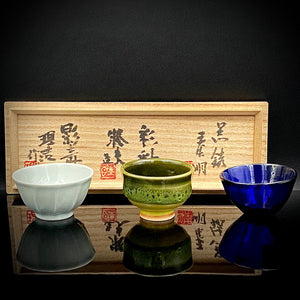
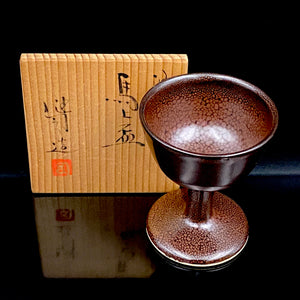
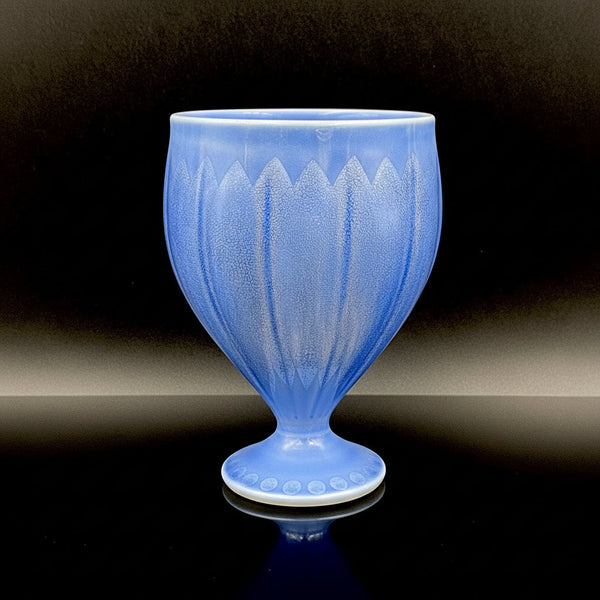 The Vanished "Showa Obsession": Why Japanese Ceramics from That Era Transcend the Modern DayShowa-era ceramics from around the 1980s represent a Golden Age where obsessi...
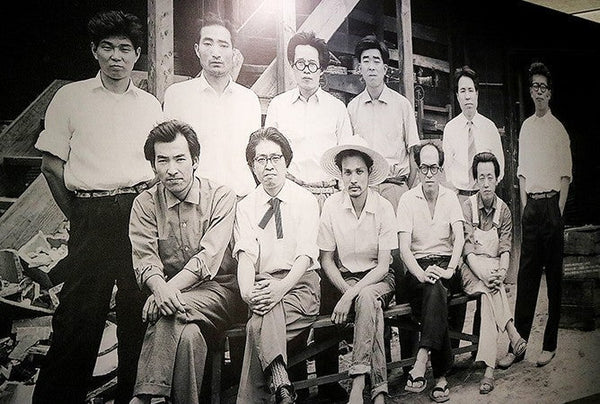 The Kyoto Avant-Garde Ceramics Monument: Sodeisha's Half-Century Journey and the Masters of Obje-yakiWe meticulously examine the trajectory of the Sodeisha, an avant-garde cerami...
 Mitate Drinking Vessels — Bringing Water Droppers, Tea Bowls and Confectionery Bowls Back into UseThe more beautiful a vessel, the more likely it is to be kept on display as “...
 Japanese Pottery Seals, Box Signatures and Marks: A Photo Index of 153 MakersThe seal or incised signature on the base of a piece, and the signature and s...
