

Mitate Drinking Vessels — Bringing Water Droppers, Tea Bowls and Confectionery Bowls Back into Use
Vessels that artists made with great care often end up, before anyone notices, tucked away at the back of a shelf or left inside their paulownia boxes. Handling old vessels, we come across many such pieces. The more beautiful a vessel, the more it is displayed as “too good to use”, until it leaves its true role behind and becomes an ornament. Among vessels born as tea utensils or calligraphy tools, many have lost their moment on stage simply because the occasions to use them for their original purpose have become rare.
What we value is breathing life back into such vessels as “vessels to be used”. The key is mitate, a way of seeing that has long been alive in the Japanese sense of beauty. In this article we show, with pieces from our shop, how to invite vessels such as the suiteki (water dropper), the chawan (tea bowl) and the kashibachi (confectionery bowl) to the drinking table for whisky and sake.
What is mitate?
Mitate means seeing an object as something other than what it was made for, and using it in that new role. In the world of tea, Sen no Rikyu and other tea masters took up a fisherman's basket as a flower vase and everyday wares as tea utensils, discovering new kinds of beauty. Mitate is not mere repurposing: it is a creative act of connoisseurship that looks deeply into a vessel's form and surface and finds the place where its appeal comes most alive.
One of the most famous fruits of mitate is the Korai chawan. Bowls used as everyday ware on the Korean peninsula caught the eye of Japanese tea masters and came to be treasured as celebrated tea bowls. Vessels that were once humble daily objects were given new value by the eyes of those who looked at them, and have been carefully handed down for hundreds of years. Mitate, in other words, creates new value without changing the vessel itself, by changing the way we see it.
It is this idea of mitate that lies behind words such as “whisky dropper” and “Japanese rocks glass” in our product names. A suiteki, a calligraphy tool, for adding water to whisky; a chawan for whisking matcha, as a rocks glass. Giving a vessel a new role in modern life while respecting its original purpose — that is our proposal for bringing vessels that were on their way to becoming ornaments back into your hands.
Mitate 1: a suiteki as a whisky dropper
A suiteki is a tool for adding water to an inkstone in calligraphy. It has two small holes in the top: cover one with a finger and the water stops; lift the finger and the water falls drop by drop from the spout. This “drop by drop” nature makes it perfect for adding water to whisky.
Just a few drops of water can open up a whisky's aroma considerably. Tilt the suiteki over the glass, let one drop fall and check the aroma, then another — a quiet, rich moment that echoes the time of calligraphy, adding water to the inkstone.
How to use it as a whisky dropper:
- Fill the suiteki about eighty per cent full with soft water at room temperature. Filling through the smaller hole lets the air escape so the water goes in smoothly.
- Keeping the small hole covered with your finger, bring the spout over the glass.
- Lift your finger gradually and the water falls from the spout one drop at a time. Cover the hole again to stop it.
- Check the change in aroma after each drop, and stop when you reach the strength you like.
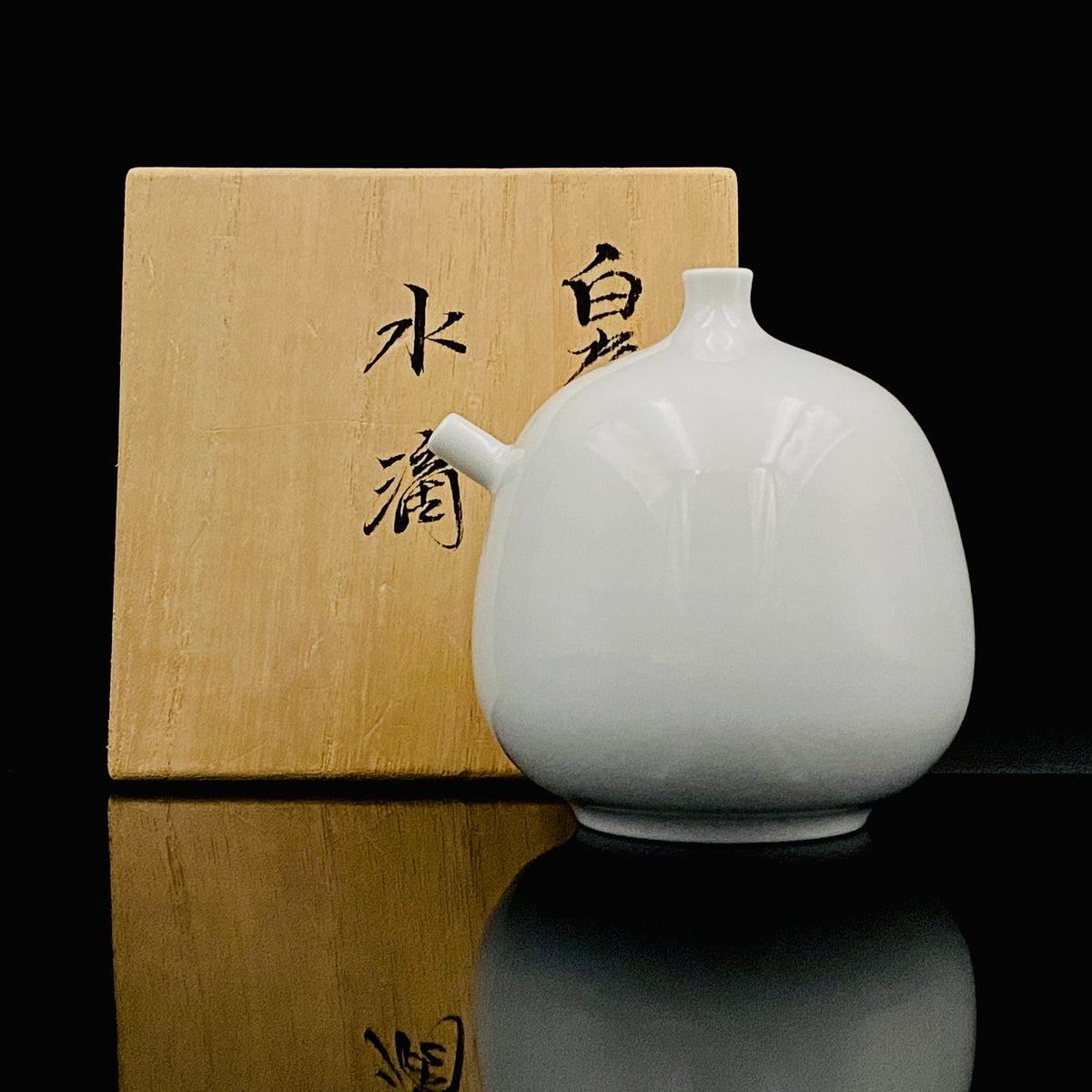
Each of our suiteki has its own expression. The white porcelain water dropper by Inoue Manji (井上萬二), holder of Important Intangible Cultural Property for white porcelain, is a piece in which the beauty of form stands out precisely because white porcelain has no colour. In the words of Inoue Manji, “because white porcelain has no colour, its form must be made beautiful”; the artist's personal motto was “meito muzatsu” (a fine piece of pottery has no stray thoughts). The inside of the foot ring bears a mark in gosu cobalt blue.
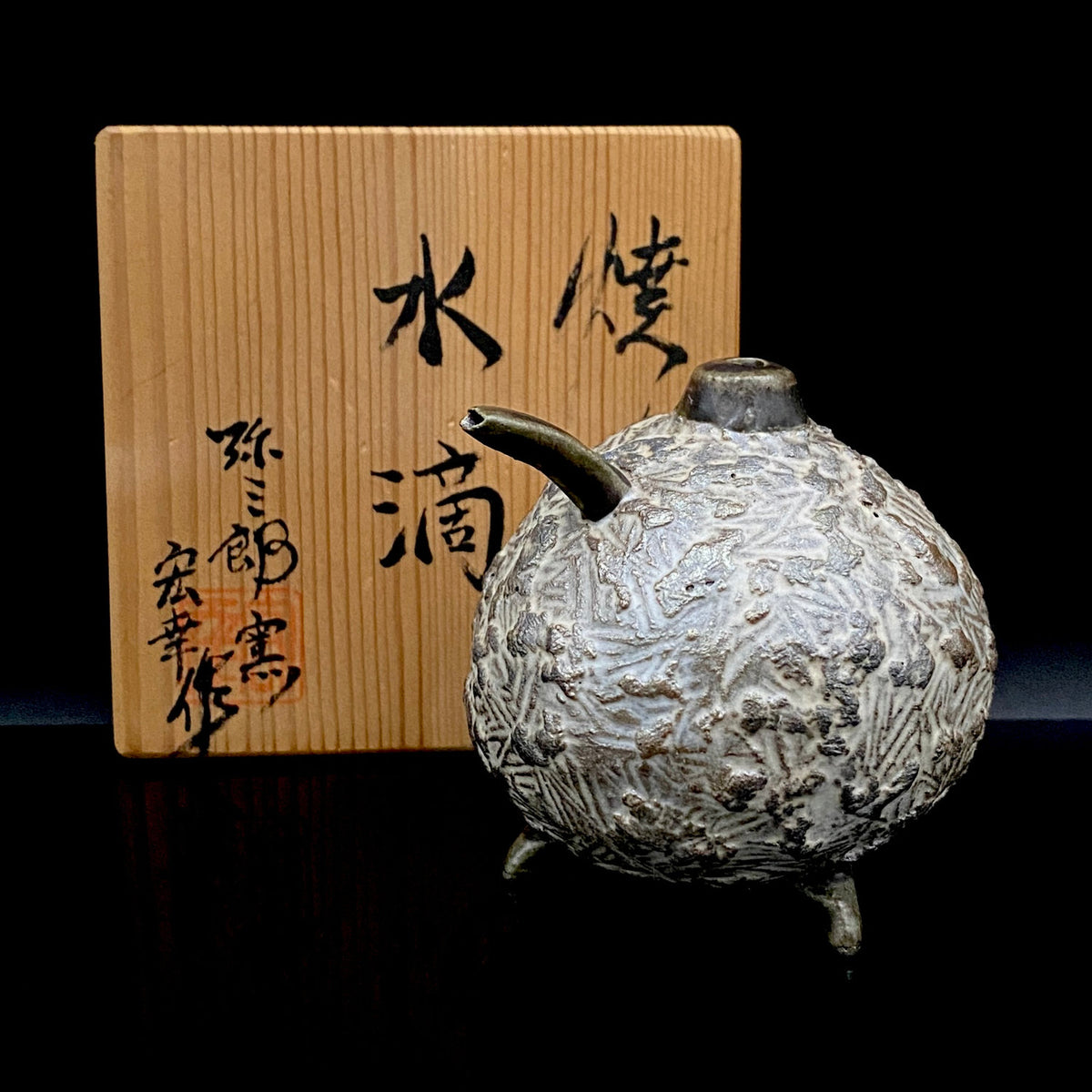
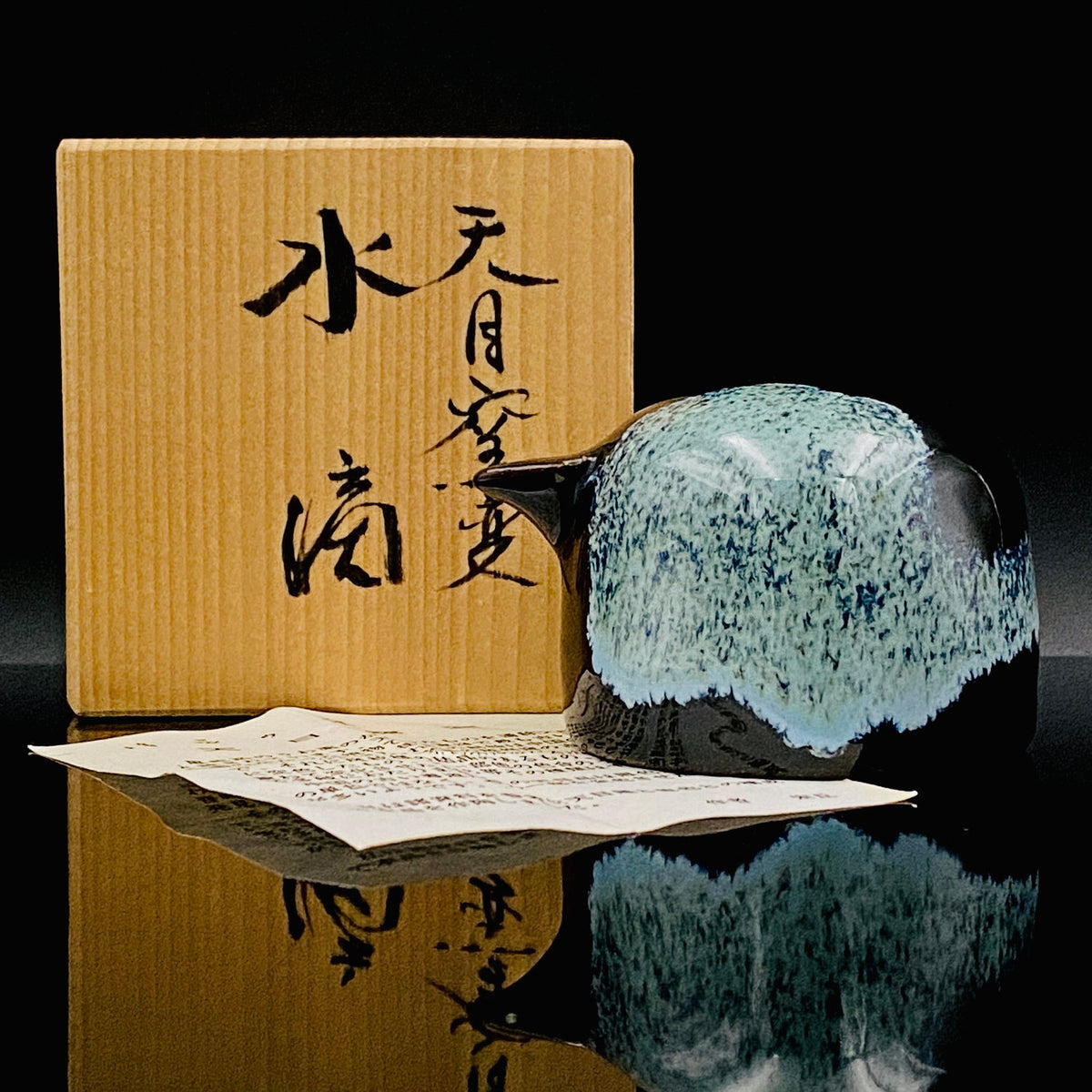
The yakishime three-footed water dropper with stamped pattern by Kitagawa Hiroyuki (北川宏幸), on the other hand, is a sculptural piece standing on three feet, with stamped patterns layered over a body fired hard without glaze. The artist's signature is incised on the base, and it comes complete with a tomobako bearing the artist's own inscription and seal, a wrapping cloth and a shiori (leaflet) outlining the artist's career. We also have water droppers from different regions and techniques, including the tenmoku yohen water dropper by Heian Sokyu III (三代 平安宋丘), winner of the Prime Minister's Award; the salt-glazed water dropper by Mizukawa Toei II (二代 水川陶影) in Kibi ware; and the Kutani-ware aote yuri-kinsai flower-pattern water dropper by Yoshida Katsuzan (吉田勝山).
Mitate 2: a chawan as a Japanese rocks glass
A chawan for whisking matcha is a vessel whose mouth size, weight and texture have been carefully considered on the assumption that it will be cradled in both hands. Its size and wide mouth are just right for a single large ice cube with whisky poured over it, and they let the aroma spread gently.
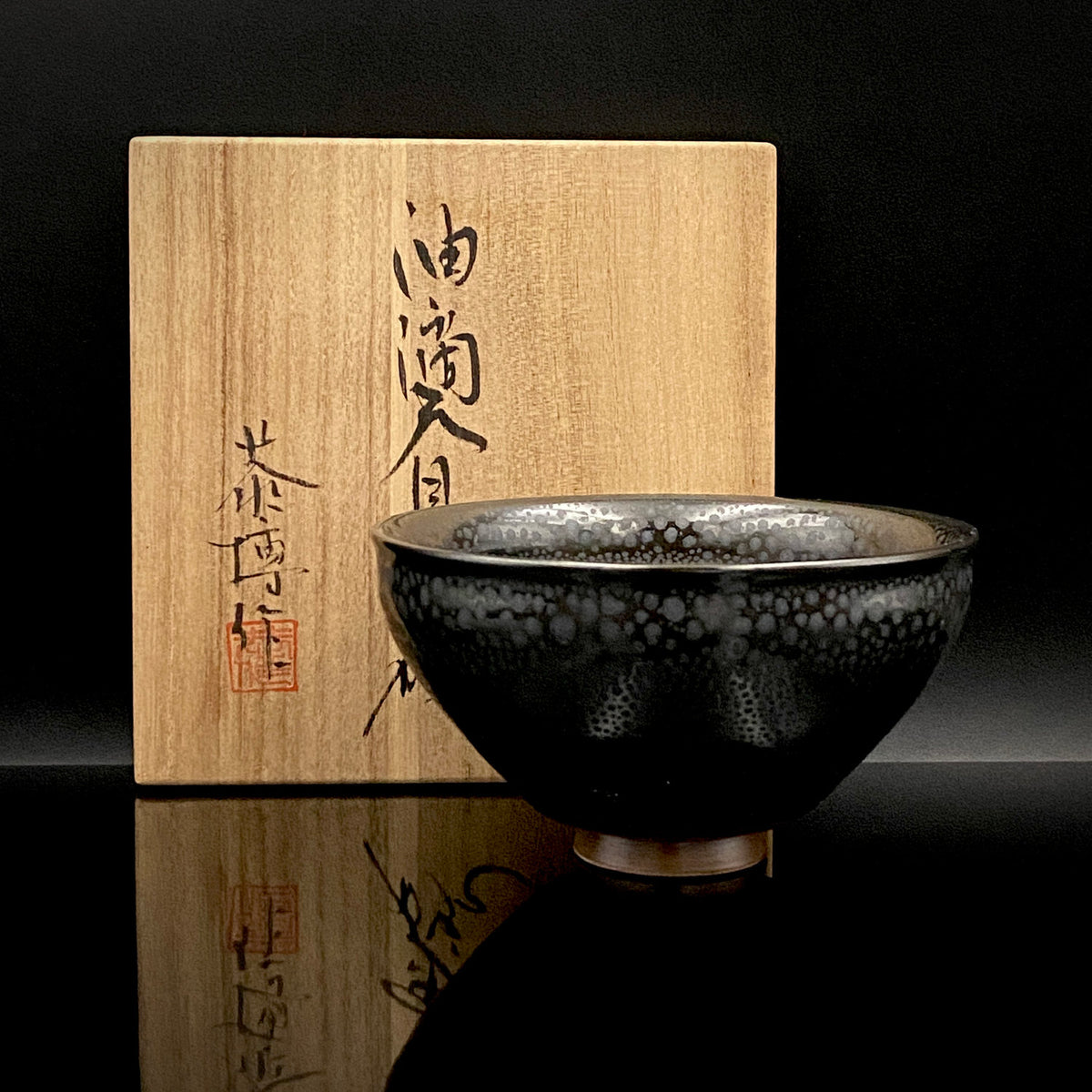
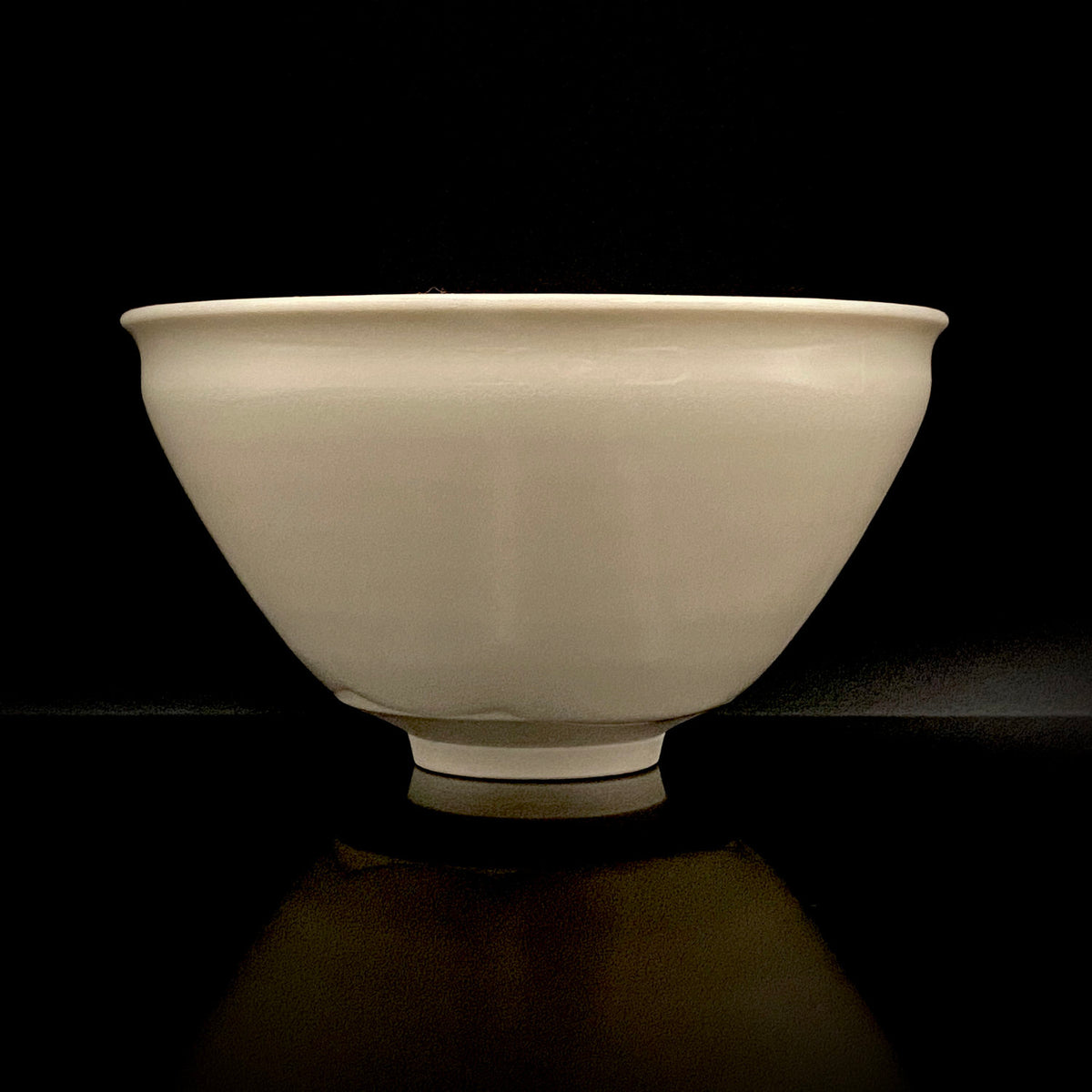
The oil-spot tenmoku chawan by Kato Yasuhiro (加藤恭博), for example, is a yuteki tenmoku piece with silver spots floating on a black glaze. Pour in amber whisky, and black, silver and amber overlap to create a brilliance quite different from that of a tea-ceremony bowl. The white tenmoku chawan by Oketani Teiichi II (二代 桶谷定一), with its soft white glaze, gently reflects pale whiskies and also suits a light highball.
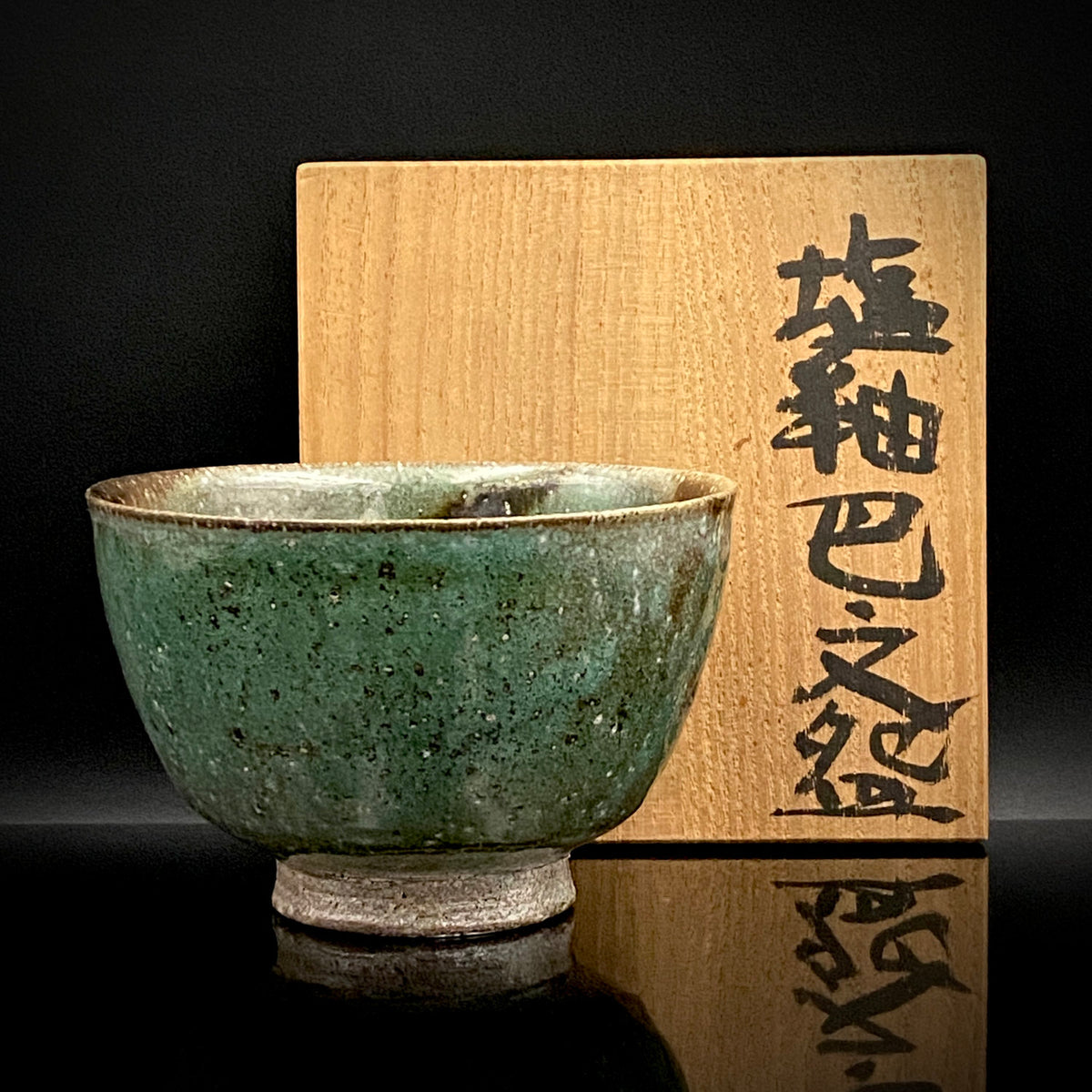
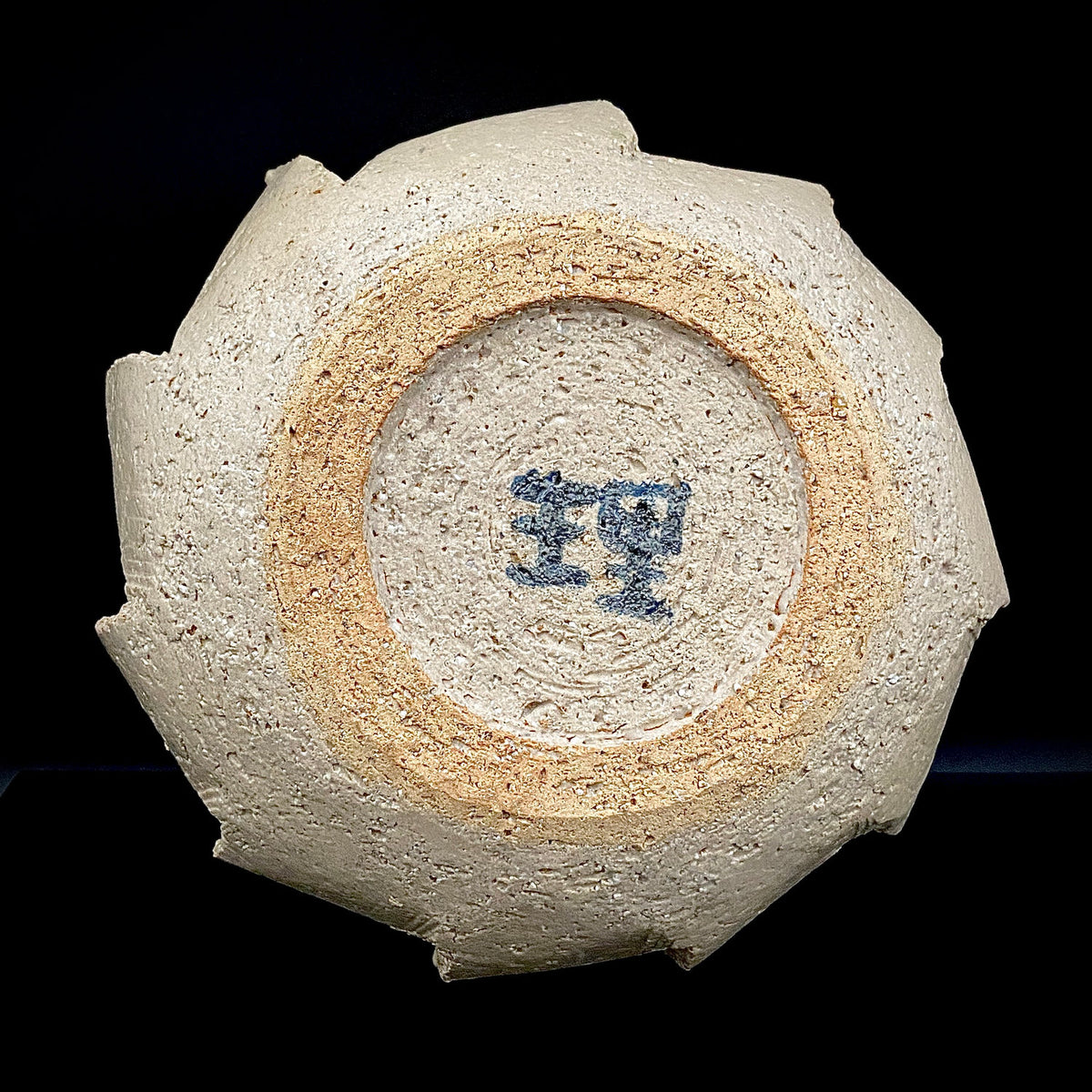
From Mashiko ware, we offer the inscribed ash-glazed yohen bowl (1988) and the salt-glazed tomoe-pattern bowl by Sakata Jinnai (坂田甚内), a direct disciple of Kamoda Shoji (加守田章二), as well as the incised coloured-slip inlay chawan by Yanai Sai (矢内齊), who studied under Sakata Jinnai. Mashiko bowls, which retain the roughness of the clay, have the capacity to embrace whiskies of strong character. And the “Koso-han” red-frost-dappled evening-geese chawan by Oe Bunsho (大江文象), who studied under Kitaoji Rosanjin, has the inscription “紅霜斑 夕雁茶の盃” (red-frost-dappled evening-geese cup for tea) on the lid of its tomobako, suggesting that the artist conceived it as a vessel for both tea and sake.
Mitate 3: a confectionery bowl as an ice bowl or a dish for snacks
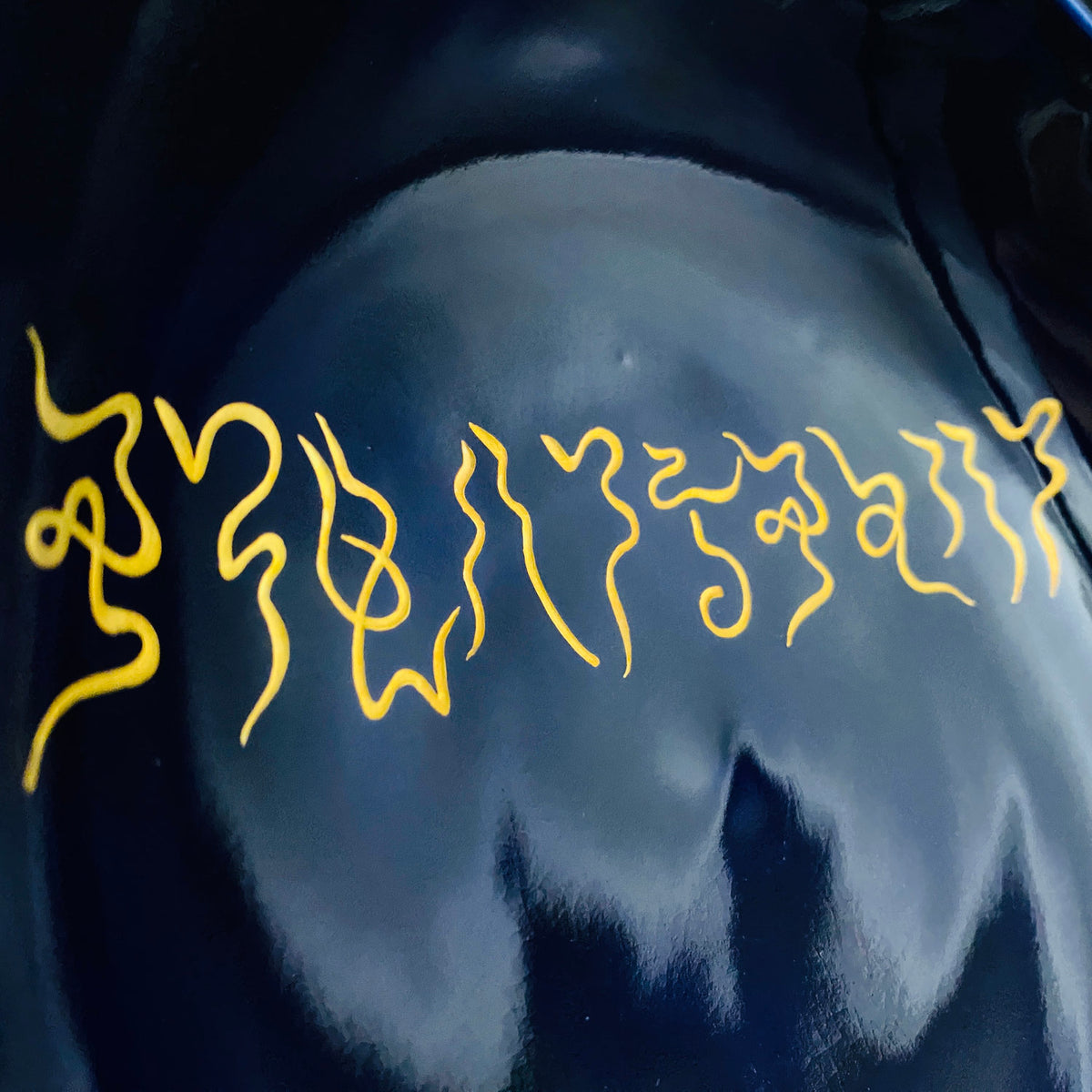
At the drinking table, confectionery and fruit bowls come into their own as ice bowls or as dishes for nuts and dried fruit. The ruri-glazed gilt lobed confectionery bowl with jindai-moji characters by Miyanaga Tozan II (二代 宮永東山) is a splendid piece of deep lapis-blue glaze and gold; heap it with ice, and the ice shines like jewels within the blue. The yatou coloured-glaze incised bowl by Miyanaga Tozan III (三代 宮永東山, Miyanaga Rikichi), known as a member of Sodeisha, is an early work that explores the fusion of function and sculpture, and can be enjoyed both as a fruit bowl and as an ice bowl with real presence. For holding ice, a vessel with some depth is easier to handle, since meltwater collects at the bottom. A glazed bowl also carries little risk of water soaking in, so you can use it with confidence as a vessel that keeps you company on the table for a long time.
More mitate ideas — cylindrical tea bowls, tokkuri and small bowls
The pleasures of mitate do not stop at water droppers, tea bowls and confectionery bowls. Here are a few more pieces from our shop that we would like to invite to the drinking table.
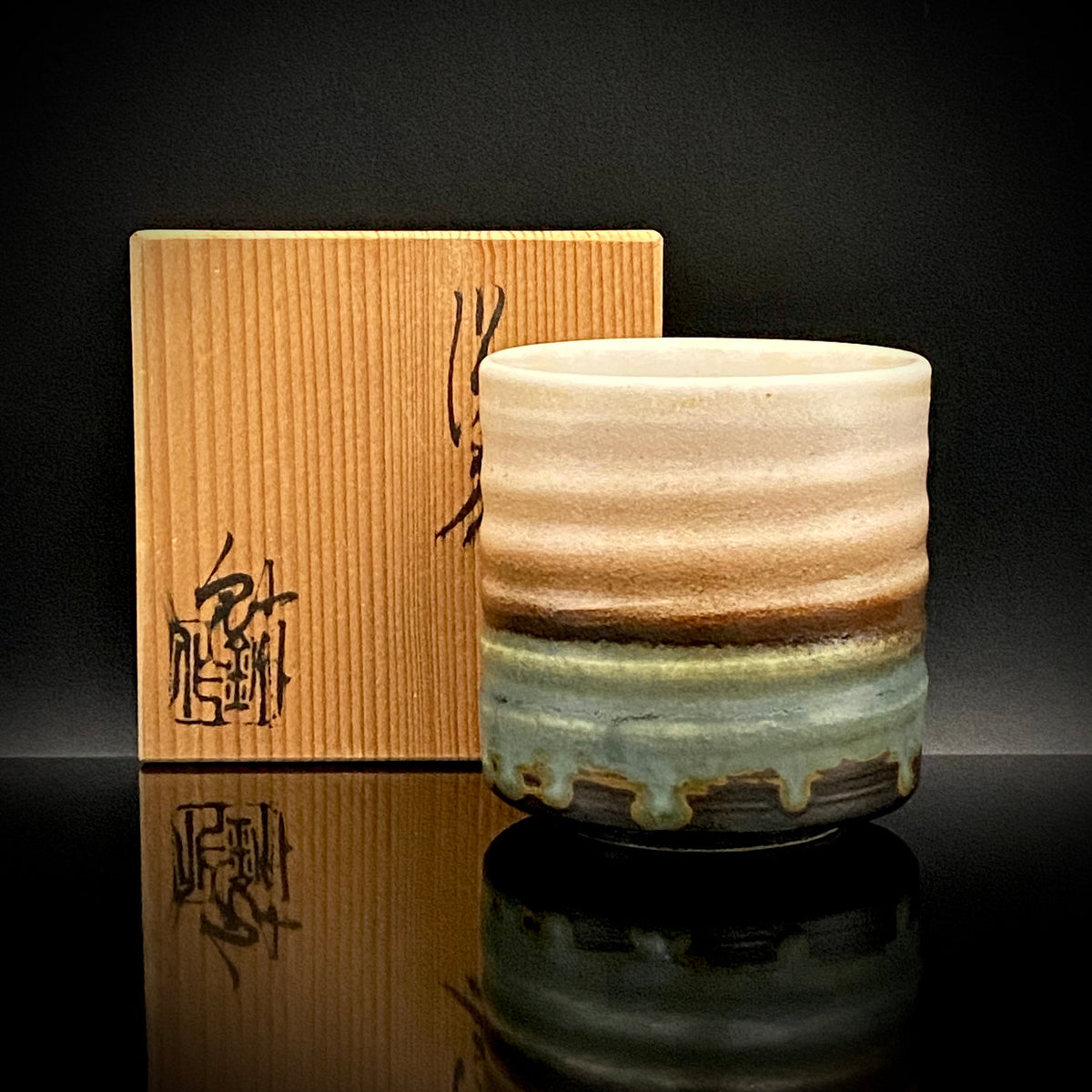
A cylindrical tea bowl as a highball or rocks glass: the tall tsutsu-chawan has been used at winter tea gatherings to keep the tea from cooling quickly. Its cylindrical form is just right for whisky on the rocks or a highball poured over ice, and the aroma rises straight up. The Oribe cylindrical tea bowl with slip decoration by Kato Sho (加藤釥), the iron-brushed hakeme cylindrical tea bowl by Kano Mitsuo (叶光夫), whose work is in the collection of the Museum of Fine Arts, Boston, and the shinyote cylindrical tea bowl by Isomi Tadashi (磯見忠司) each use the clay and techniques of a different region, and show entirely different faces despite sharing the same cylindrical form.
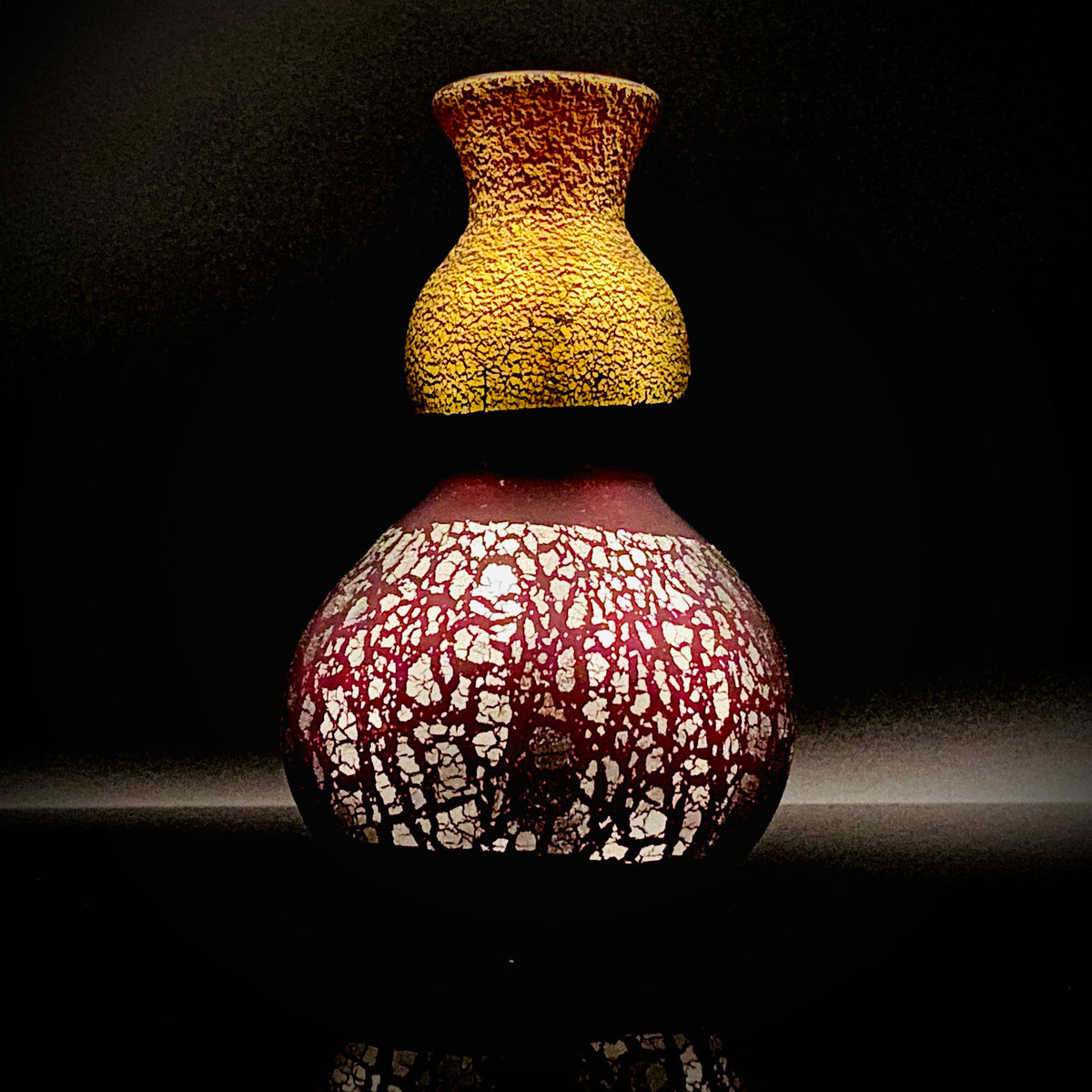
A tokkuri as a water jug for adding water: the tokkuri used for pouring sake also serves well as a jug holding water for mizuwari or for adding to whisky. The gourd-shaped frosted crimson glass tokkuri with gold and silver leaf by Okawa Kaoru (大川薫) brightens the table with the soft colours of Tsugaru Vidro and its charming gourd shape. The tokkuri and pair of teacups with gosu flower pattern by Sakuma Totaro (佐久間藤太郎) can be enjoyed as a set, with the tokkuri as a Japanese decanter and the teacups as rocks glasses.
A small bowl as a snack dish: the cast-metal “Yuragi” small bowl by Living National Treasure Kitamura Shinichi (北村眞一) is a small bowl made by casting metal. Put just a few nuts or pieces of chocolate in it, and the weight and lustre unique to metalwork lend a refined tension to your time with whisky.
How to choose vessels suited to mitate
When you start practising mitate, it helps to look at the size, weight, stability and rim thickness of a vessel. For use as a rocks glass, look for a mouth wide enough for one large ice cube and a stable foot that will not tip over with ice in it. For sipping neat a little at a time, a small vessel that fits in the palm is best. A thin rim lets the liquid slip into the mouth, while a thick rim feels softer on the lips.
Another important point is whether you can enjoy the vessel's surface. A vessel with glaze pooled in the well, or with beautiful kiln effects, changes its expression each time you pour whisky into it, and gives you the pleasure of gazing at it. If a vessel catches your eye, use the dimensions and photographs on the product page to imagine how it would look in your hand.
Vessels invited to the table in their original role
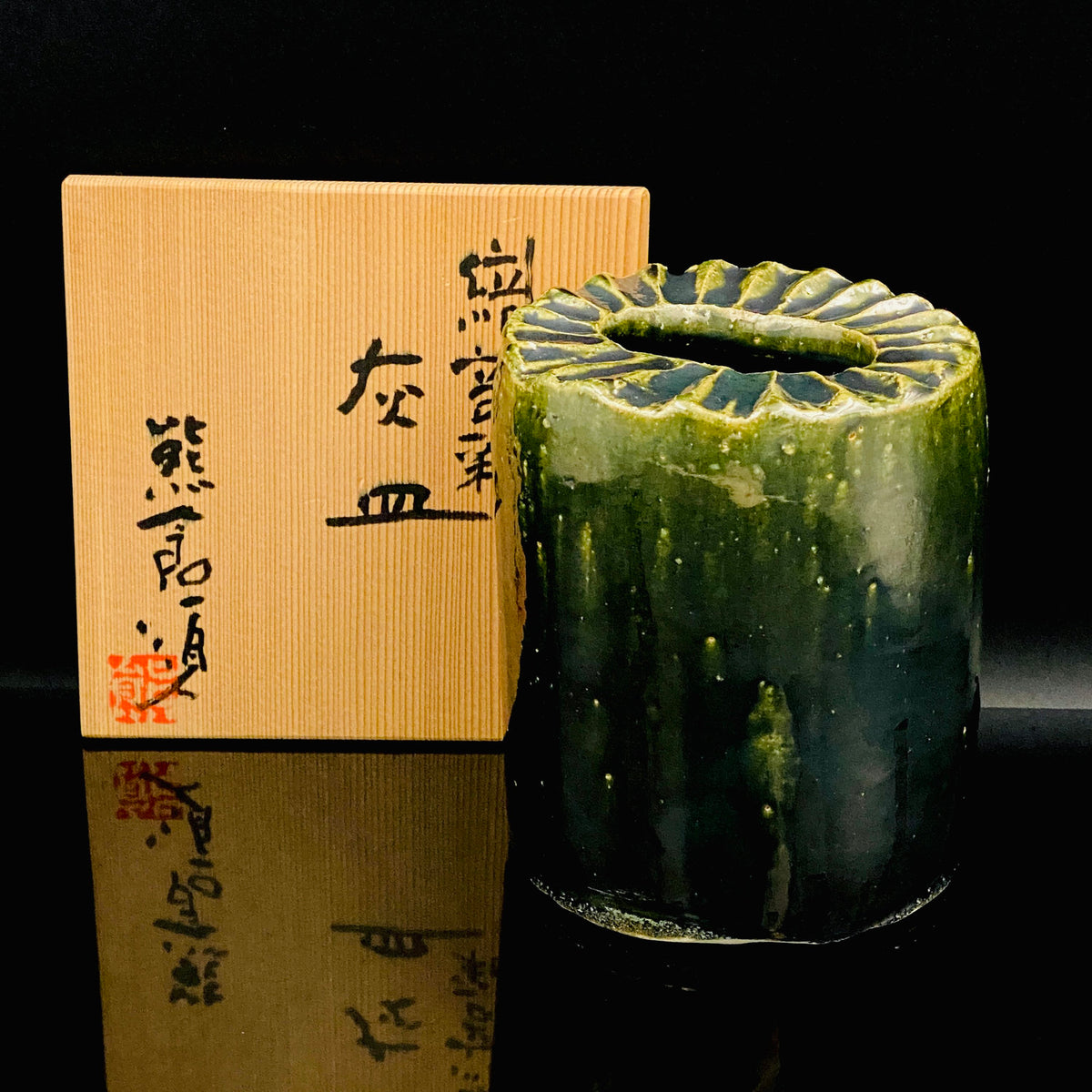
As the opposite of mitate, some vessels enrich the drinking table in their original role. The Oribe-glazed cylindrical ashtray by Kumakura Junkichi (熊倉順吉), a member of Sodeisha and Grand Prix winner at the Brussels World's Fair, is a piece fit for time spent with cigars and whisky. A vessel by a standard-bearer of avant-garde ceramics adds a quiet tension to your moments of relaxation.
Knowing a vessel's lineage makes mitate even more enjoyable
When choosing vessels for mitate, we also recommend paying attention to the lineage of their makers. Many of the works introduced in this article belong to traditions of skill and aesthetics handed down from master to disciple and from parent to child.
For example, Sakata Jinnai of Mashiko was a direct disciple of the potter Kamoda Shoji, who raised Mashiko ware to the level of art, and Yanai Sai studied under Sakata Jinnai. Oe Bunsho of Seto studied under Kitaoji Rosanjin, while Miyanaga Tozan III (Miyanaga Rikichi) of Kyoto and Kumakura Junkichi were members of Sodeisha, which pioneered post-war avant-garde ceramics. Pick up a vessel with this lineage in mind, and you may glimpse the trace of a master or the air of an era within a single tea bowl or bowl.
You can browse each maker's works together in our All Makers & Studios. Combining a water dropper and a tea bowl by the same artist to set the drinking table in one maker's world is a luxurious pleasure that only mitate can offer.
A day with a single vessel
A mitate vessel can also change roles over the course of a day. In the early afternoon, whisk a bowl of matcha in a chawan; at dusk, put ice in the same chawan and pour whisky. In the morning, fill the confectionery bowl with seasonal fruit; at night, heap it with ice as an ice bowl. Watching a single vessel change its expression over time is the very joy of living with vessels. Rather than simply displaying it, take it in your hands again and again in daily life, and the vessel will gradually settle into its owner's hands and become irreplaceable.
Guidelines for enjoying mitate
Mitate is born of free thinking, but there are a few things worth keeping in mind if you want to live with your vessels for a long time.
- For anything that touches your lips, start with vessels made for food and drink: vessels originally intended for food and drink, such as chawan, sake cups and bowls, can be used as drinking vessels as they are. Vessels not designed for food and drink — ashtrays, incense burners, flower vases and so on — are best enjoyed as decoration rather than used for drinking.
- Dry water droppers thoroughly after use: a suiteki is shaped so that its interior is hard to see and slow to dry. After use, rinse it well with water and dry it thoroughly, spout down, in a well-ventilated place.
- Dip stoneware in water before use: dipping absorbent pottery in water before use makes it harder for the colour and aroma of whisky to soak in.
- Wash gold and silver decoration by hand: avoid abrasive sponges and dishwashers for vessels with gold or silver decoration, and wash them gently with a soft sponge.
- Keep the tomobako safe: the tomobako and shiori that accompany a work are important records of its provenance. Even while you use the vessel day to day, keep the box and leaflet together.
Through use, a vessel begins to live again
A vessel shows its true self only when it is used. Its weight as you pick it up, the thickness of the rim against your lips, the landscape of the mikomi (the inside of the vessel) that appears as you pour: these are expressions known only to those who use it, and never discovered by display alone.
The feelings an artist puts into a vessel are passed on to the next generation as the vessel is used and handed down. Giving a vessel that has slept at the back of a shelf a new role, and using it again in daily life — we believe this is the greatest respect one can pay to its maker, and a way of handing the vessel on to the future.
In our product names we make clear each work's original purpose, and add mitate suggestions such as “whisky dropper”, “Japanese rocks glass” and “ice bowl”. Knowing a vessel's original form, and enjoying new ways of using it: we hope that by valuing both, you will find your time with vessels all the richer. If you have any questions about how to use a vessel, please feel free to contact us.
Frequently asked questions
Q. Is it disrespectful to drink alcohol from a chawan made as a tea utensil?
Mitate is a way of enjoying vessels that has long been valued in the world of tea itself. We believe that using a vessel while keeping in mind its origins and respect for its maker is a source of joy for both the vessel and the maker.
Q. Can I pour whisky itself from a water dropper?
A suiteki is a tool for releasing small amounts drop by drop, so we recommend filling it with water for adding to whisky. After use, rinse it well with water and dry it thoroughly with the spout facing down.
Q. Can I use a vessel without a tomobako for mitate?
Of course. A tomobako is an important record of a work's provenance, but it has nothing to do with how the vessel feels in use. We state whether a tomobako or shiori is included under “Accessories” on each product page.
Works featured in this article
- White porcelain water dropper by Inoue Manji #384
- Yakishime three-footed water dropper with stamped pattern by Kitagawa Hiroyuki #264
- Tenmoku yohen water dropper by Heian Sokyu III #191
- Salt-glazed water dropper by Mizukawa Toei II #200
- Kutani-ware aote yuri-kinsai flower-pattern water dropper by Yoshida Katsuzan #207
- Oil-spot tenmoku chawan by Kato Yasuhiro #396
- White tenmoku chawan by Oketani Teiichi II #452
- Inscribed ash-glazed yohen bowl by Sakata Jinnai #447
- Salt-glazed tomoe-pattern bowl by Sakata Jinnai #390
- Incised coloured-slip inlay chawan by Yanai Sai #391
- “Koso-han” evening-geese chawan by Oe Bunsho #343
- Ruri-glazed gilt lobed confectionery bowl with jindai-moji by Miyanaga Tozan II #486
- Yatou coloured-glaze incised bowl by Miyanaga Tozan III #409
- Oribe-glazed cylindrical ashtray by Kumakura Junkichi #450
To search by maker, see All Makers & Studios; to search by type of vessel, see ceramic cups and glasses.