
What “Special Grade (Tokkyu)” Meant for Whisky Sold in Japan, and the History Behind It
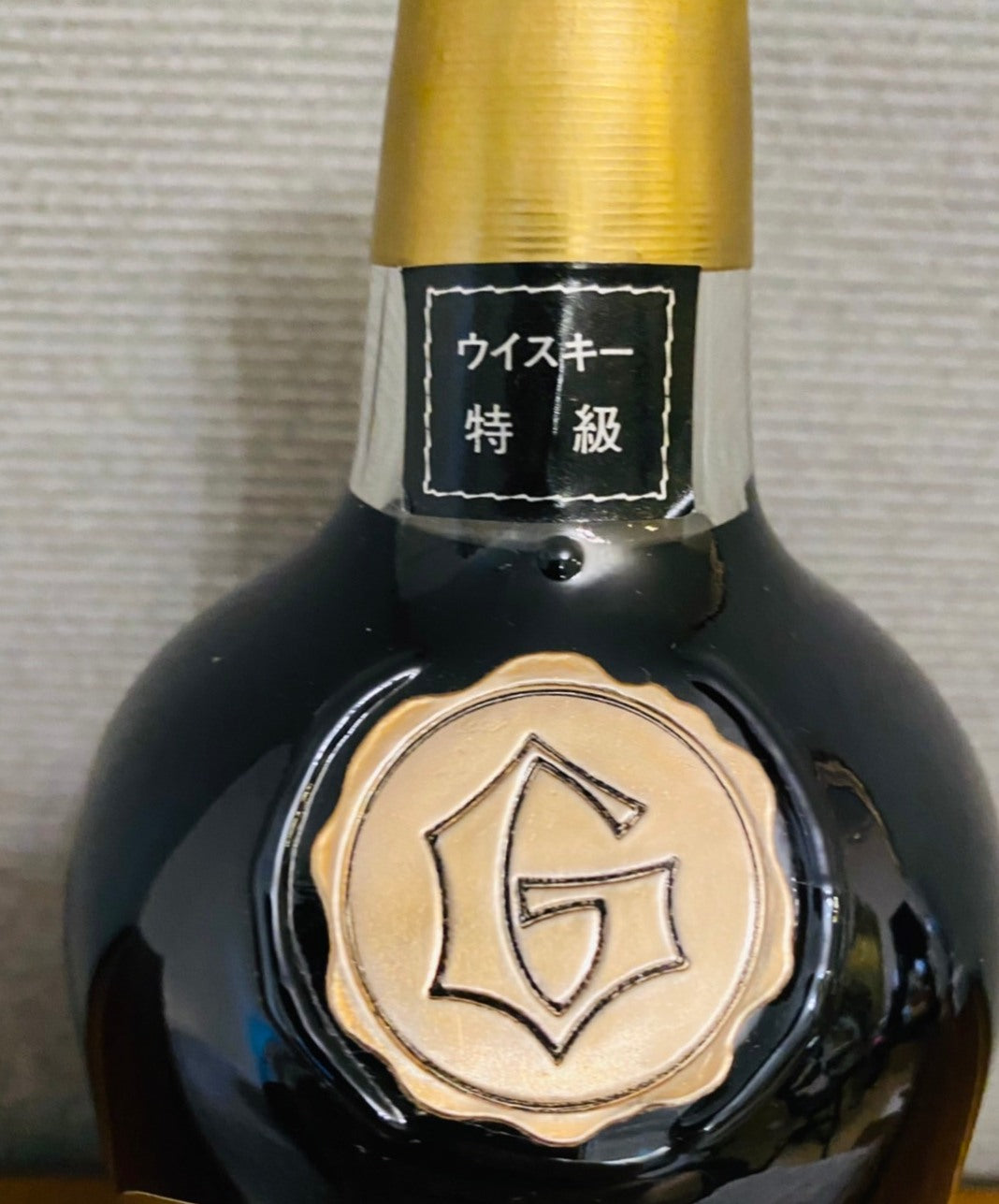
On the labels and neck tags of whisky sold in Japan before April 1989, you will often find a few small characters: “ウイスキー特級” (Whisky, Special Grade) or simply “特級” (Tokkyu). Anyone who hunts for old bottles meets this marking sooner or later. But what exactly did it mean? It is often described loosely — “Tokkyu means top quality”, “Tokkyu means plenty of real whisky” — yet its actual content is rarely explained with precision.
In this article we trace the Special Grade (Tokkyu) system for whisky in Japan from its origins to its abolition, using primary sources: the text of the Liquor Tax Act, explanatory papers written at the time by tax officials, and the report of a GATT (General Agreement on Tariffs and Trade) panel. Along the way, we show how to recognise bottles from the Special Grade (Tokkyu) era, using label photographs of bottles we have handled. All photographs and the chart were taken or made by our shop.
Contents: What “Special Grade” meant | Grades born in wartime | The 1962 reform | Rising thresholds and tax rates | The Special Grade era | Imported whisky, “Special Grade” and “ad valorem” | Abolition in 1989 | Japanese whisky after the grades | Recognising Special Grade bottles | Enjoying Special Grade bottles | FAQ | Sources
What “Special Grade” meant — a tax class, not a verdict on flavour
The first thing to understand is that Special Grade, First Grade and Second Grade were not titles awarded after judging taste or quality. They were tax classes — the “grade system” (kyūbetsu seido) laid down by the Liquor Tax Act. The higher the grade, the higher the liquor tax per kilolitre. Producers chose the grade in which each product would be shipped, and blended the contents to meet that grade's requirements.
The yardsticks for the grades were mainly the “original whisky content” and the alcohol strength. “Original whisky” (genshu) means whisky proper: spirit distilled from malt or grain and matured in casks. Most domestic whisky of the period was made by mixing this original whisky with neutral alcohol, other spirits and flavourings, so the proportion of original whisky was a decisive factor in the grade. Note that the proportion was calculated not by volume of liquid but as the share of the alcohol contributed by original whisky.
Under the grade system, a product could legally be called “whisky” even if it contained only a trace of original whisky, as long as its aroma and taste resembled whisky. A paper by a tax official explaining the 1989 reform states plainly that this was what the earlier rules allowed. That is exactly why the word “Tokkyu” on a label was one of the few signals a consumer had that the bottle contained at least a certain proportion of real whisky.
Grades born in wartime — 1940 to 1953
Japan's Liquor Tax Act was promulgated in March 1940 and came into force that April. At that point whisky had no category of its own; it was treated as a kind of “miscellaneous liquor” (zasshu), the catch-all class for drinks that were not sake, shochu, beer and so on.
The grading mechanism was born in wartime, in 1943. That year's amendment divided the shipment tax on miscellaneous liquors (a tax levied when goods left the brewery or distillery) into First to Fourth Grades, and whisky was fitted into these grades. The government designated the grades, and the grade of each brand is said to have been published by official notice. A classification created to collect tax efficiently and reliably at a time when war funding was urgent was the starting point of the grade system that would later give us “Tokkyu”.
In the shortages after the war, cheap “whisky” containing almost no original whisky circulated in large quantities. The criteria after the 1949 amendment are reported as follows: First Grade, at least 30% original whisky and 43% alcohol; Second Grade, at least 5% and 40%; Third Grade, less than that (even none at all) and 40%. Many of the mass-market brands launched after the war were sold as Third or Second Grade.
Then, in February 1953, the Liquor Tax Act was completely rewritten. Article 5 of the new act stated that “miscellaneous liquors shall be divided into Special Grade, First Grade and Second Grade”, and the word “Special Grade” (tokkyu) appeared in the law for the first time. The detailed criteria were delegated to a cabinet order; according to secondary sources, Special Grade required at least 30% original whisky, First Grade at least 5%, and Second Grade covered the rest. Because whisky was still part of the miscellaneous-liquor class, bottles from this period can be found marked “雑酒特級” (Miscellaneous Liquor, Special Grade).
Whisky gets its own category, and ad valorem tax arrives — the 1962 reform
With the amended Liquor Tax Act that took effect in April 1962, whisky and brandy left the miscellaneous-liquor class and became a category of their own, “whiskies” (uisukī-rui). The grading criteria were set out in Article 11 of the Enforcement Order, and an explanation by officials of the National Tax Agency at the time describes them roughly as follows.
| Grade | 1962 criteria (meeting any one is enough) | Specific tax rate (per kilolitre) |
|---|---|---|
| Special Grade | Original whisky itself / original whisky at least 20% of the alcohol / otherwise, 43% alcohol or more | 845,100 yen |
| First Grade | Original whisky at least 10% / otherwise, 40% alcohol or more | 390,600 yen |
| Second Grade | Anything not qualifying as Special or First Grade | 148,000 yen |
What stands out is that original whisky content and strength were not conditions to be met “together”; they were alternative criteria, and meeting either was enough. The grades are commonly explained as “Special Grade = at least X% original whisky and at least 43%”, but the primary sources show that the system was not built that way.
Under this reform the specific tax was a flat amount up to below 44% for Special Grade, below 41% for First Grade and below 38% for Second Grade, with an additional amount for each degree above that. The way products clustered at 43% for Special Grade, 40% for First Grade and around 37% for Second Grade is most likely the result of matching products to these steps. This is why, even today, the strength of an old bottle gives a rough guide: 43% suggests Special Grade, 40% First Grade, and 37–39% Second Grade.
The 1962 reform added one more major mechanism. For high-priced whisky above a certain price, an ad valorem tax based on price was levied instead of the specific tax based on volume. The ad valorem rate for Special Grade whisky was 150%. This is sometimes described as “double taxation”, with both taxes stacked, but both the official explanations of the time and the GATT report describe the ad valorem tax as applying in place of the specific tax.
Rising thresholds and tax rates — 1968 to 1984
The minimum original whisky content was raised in stages. According to secondary sources, the 1968 amendment set Special Grade at 23% and First Grade at 13%, and in 1978 these rose to 27% and 17%. From 1978 onward, administrative guidance is said to have asked for 30% in Special Grade, 20% in First Grade and at least 10% even in Second Grade. The reason sources variously give 30%, 27% or 20% for Special Grade is that each figure refers to a different period.
On the tax side, the 1968 amendment created a 220% ad valorem rate for the most expensive Special Grade products and extended ad valorem tax to First Grade (100%) and Second Grade (65%), the latter two applying from April 1971. Specific tax rates were raised again in 1978, 1981 and 1984.
| Amendment | Special Grade | First Grade | Second Grade |
|---|---|---|---|
| 1962 | 845,100 yen | 390,600 yen | 148,000 yen |
| 1968 | 929,600 yen | 429,600 yen | 148,000 yen |
| 1978 | 1,413,200 yen | 652,800 yen | 183,900 yen |
| 1981 | 1,755,300 yen | 810,800 yen | 228,400 yen |
| 1984 | 2,098,100 yen | 1,011,400 yen | 296,200 yen |
(Specific tax rates on whisky per kilolitre. Base strengths: Special Grade 43%, First Grade 40%, Second Grade 37%.)
Using the rates in force in the last years of the system, from 1984 to March 1989, the specific tax on one 760ml bottle of Special Grade whisky comes to about 1,595 yen, against about 225 yen for the same volume of Second Grade — a difference of roughly seven times. On top of that, Special Grade products whose producer's selling price exceeded 1,400 yen per litre were taxed at 150% ad valorem, and those above 1,950 yen per litre at 220% (First Grade: 100% above 1,110 yen; Second Grade: 65% above 570 yen). For imports, the ad valorem tax base was the import price (CIF) plus customs duty.
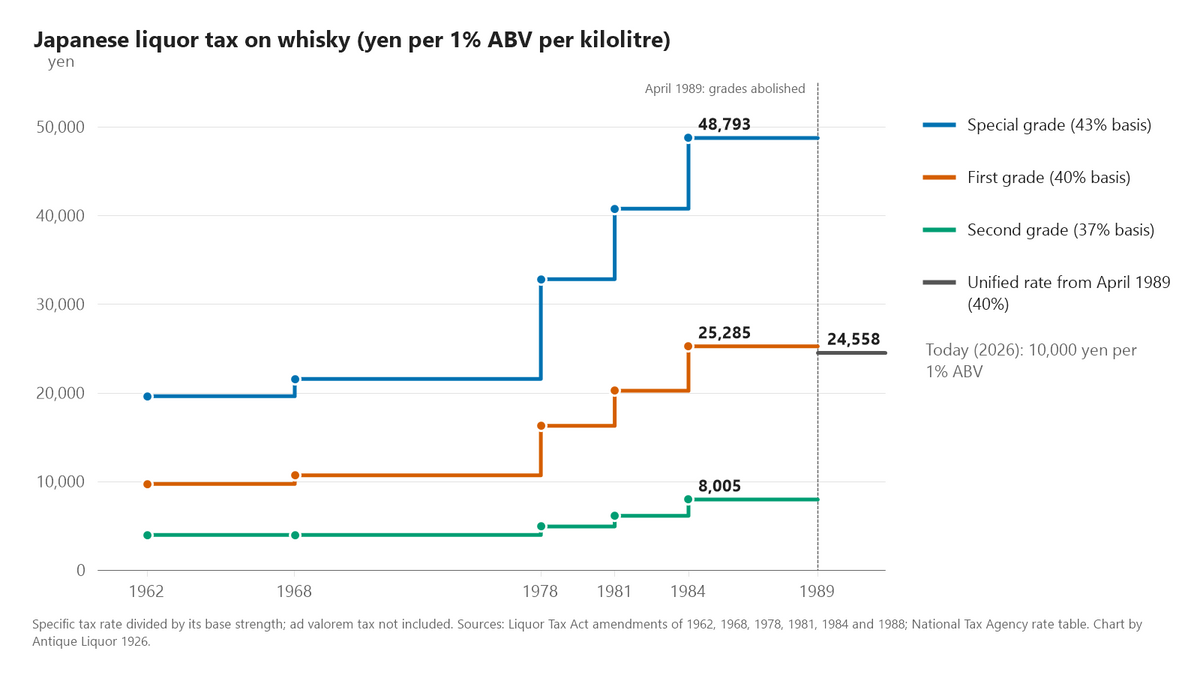
The chart divides each grade's specific tax rate by its base strength to express it per 1% of alcohol. In 1984, Special Grade paid about 48,800 yen per degree and Second Grade about 8,000 yen. Today, by comparison, whisky of 37% or more is taxed at 370,000 yen per kilolitre plus 10,000 yen for each degree above 37%, which makes 400,000 yen at 40%, or 10,000 yen per degree. For a 43% product, today's tax is about one fifth of the Special Grade rate at the end of the grade era.
The Special Grade era — rapid growth and Western spirits for everyone
Under this tax system, domestic producers built flagship brands in each of the three grades. Nikka Whisky lists the grades of the time alongside its products in its official history, which shows clearly how it launched products for each price band: Black Nikka in 1956 (Special Grade), Super Nikka in 1962 (Special Grade), Hi Nikka in 1964 (Second Grade), Black Nikka relaunched in 1965 as a First Grade whisky using Coffey-still grain whisky, G&G in 1968 (Special Grade), Tsuru in 1976 (Special Grade), Pure Malt in 1984 (Special Grade) and From the Barrel in 1985 (Special Grade).
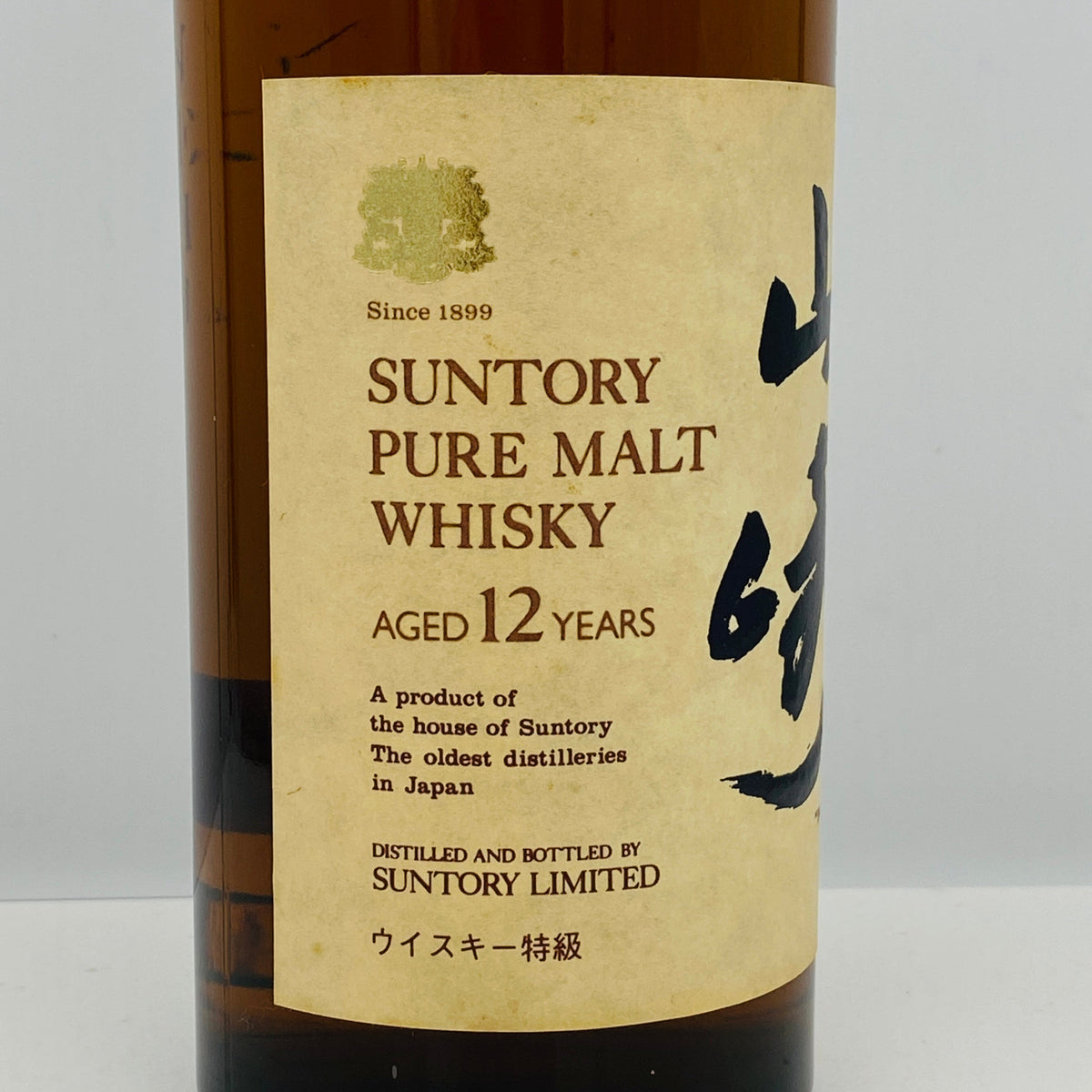
At Suntory, Old (launched in 1950), Royal (1960) and Reserve (1969) were the pillars of Special Grade, while Red, launched in 1964, was the archetypal Second Grade whisky. Old in particular is reported by a business magazine of the time to have shipped 10.5 million cases in fiscal 1977, which shows that Special Grade whisky was not the preserve of a few connoisseurs but part of everyday life: the evening drink of office workers, a staple gift, and the bottle kept behind the bar at the local snack bar. Yamazaki, launched in 1984, also made its debut as a “Pure Malt Whisky” in the Special Grade class.
Whisky consumption in Japan peaked in fiscal 1983 at about 380,000 kilolitres of taxed volume. In fiscal 1987, Special Grade accounted for 52.3% of the taxed volume of the whisky category (which includes brandy). “Special Grade” was by no means a label reserved for a handful of luxury bottles.
Imported whisky and the “Special Grade” and “ad valorem” markings
For whisky from abroad, the Japanese market truly opened between the late 1960s and the early 1970s. Imports of bourbon were liberalised in 1969 and of Scotch in 1971, and with a tariff cut the following year, imported spirits quickly came within everyone's reach. Before that, Scotch was a coveted gift: Johnnie Walker Black Label is said to have sold for around 10,000 yen a bottle in the late 1950s.
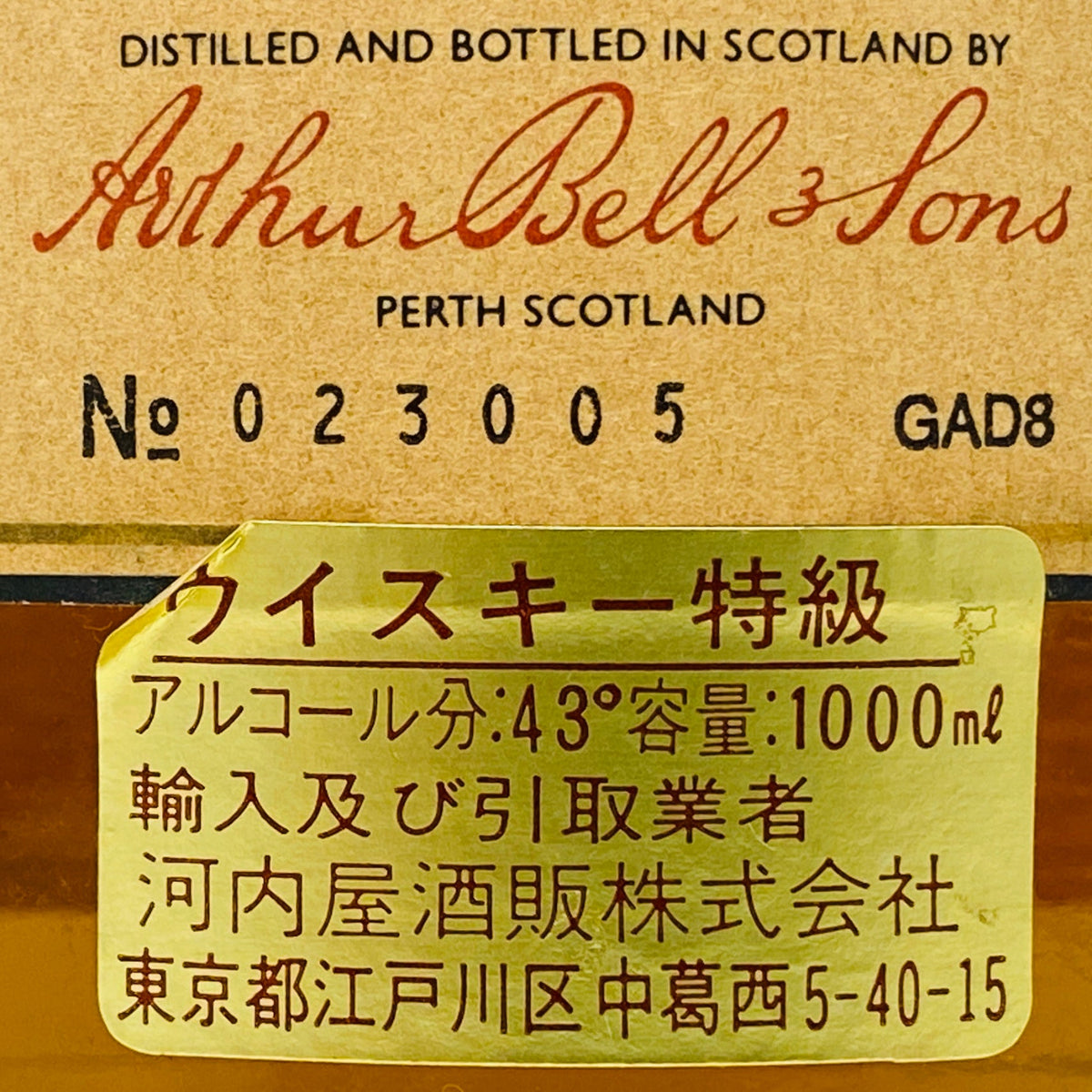
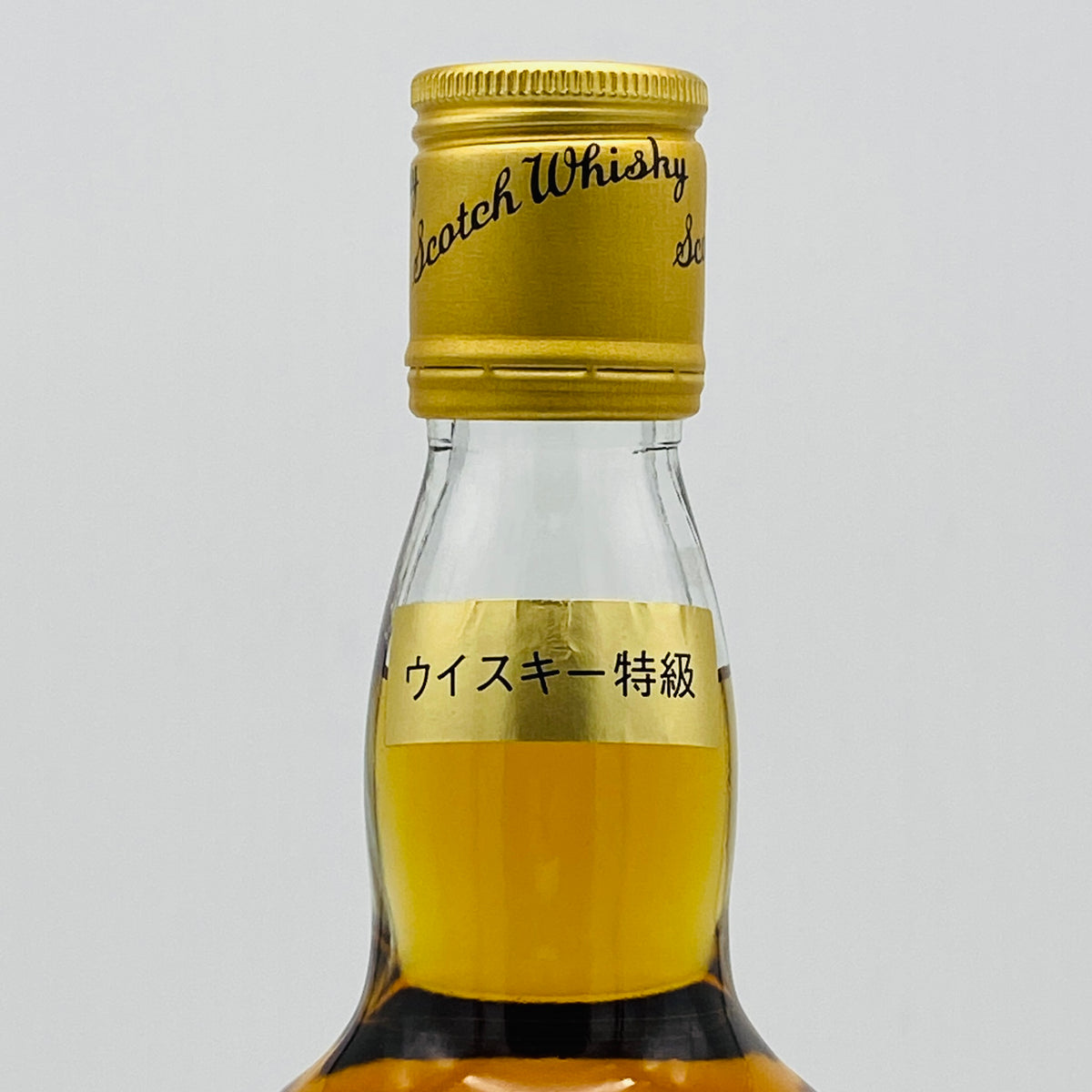
Because Scotch and bourbon are 100% whisky, most bottles officially imported into Japan were treated as Special Grade. Bottles for the Japanese market carry a “ウイスキー特級” slip on the neck or in a margin of the label, and a Japanese back label giving the importer, volume and strength.
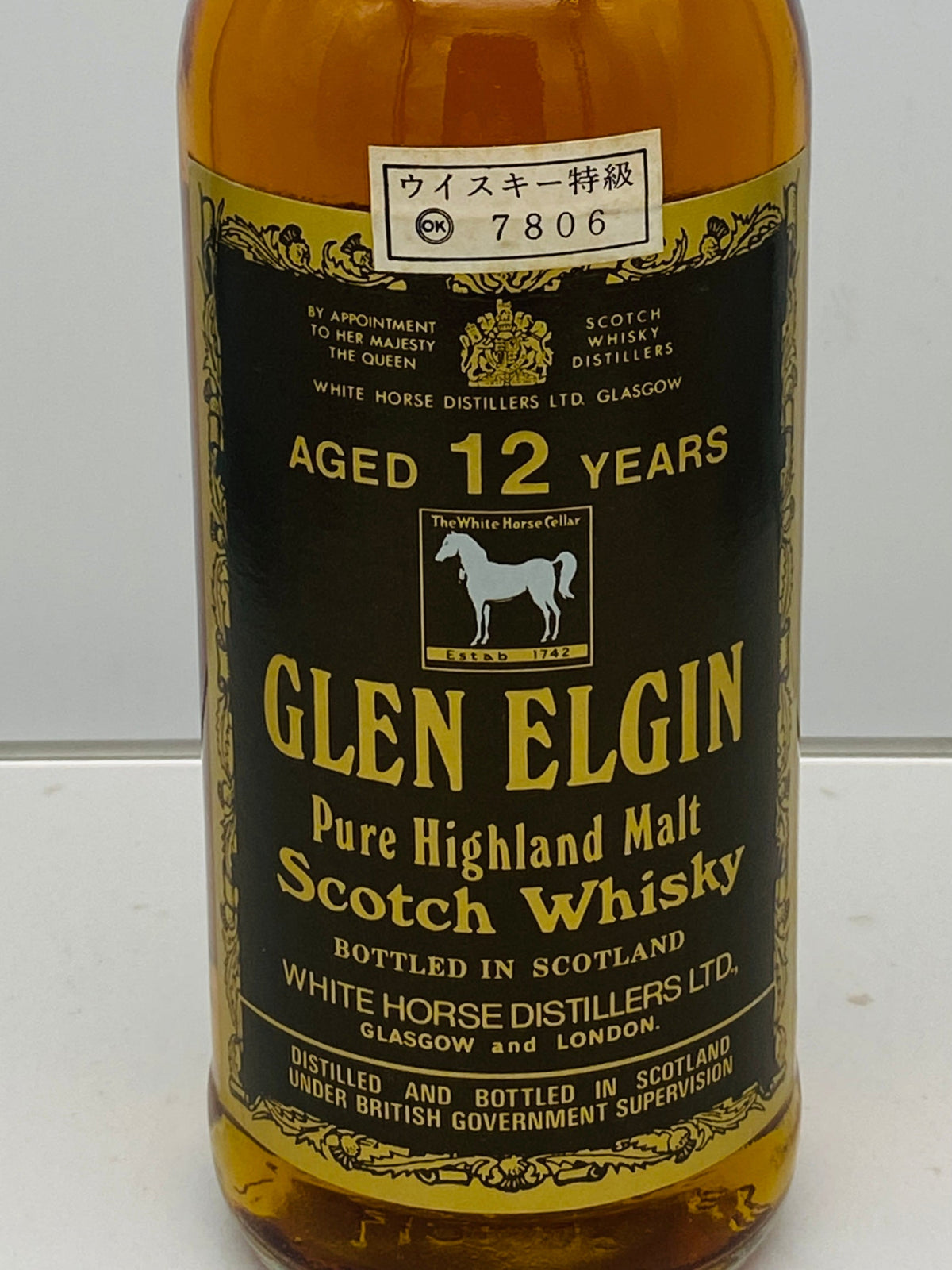
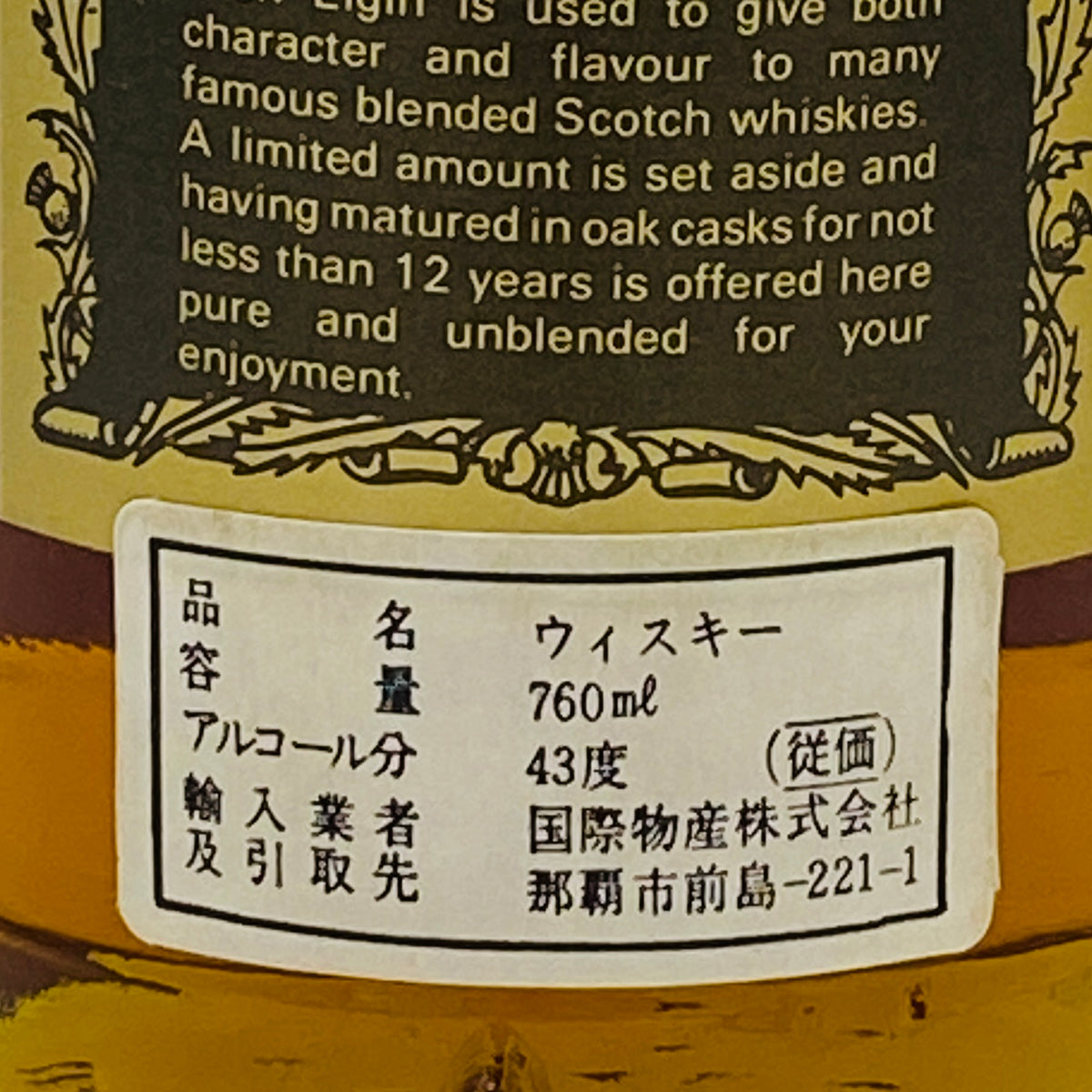
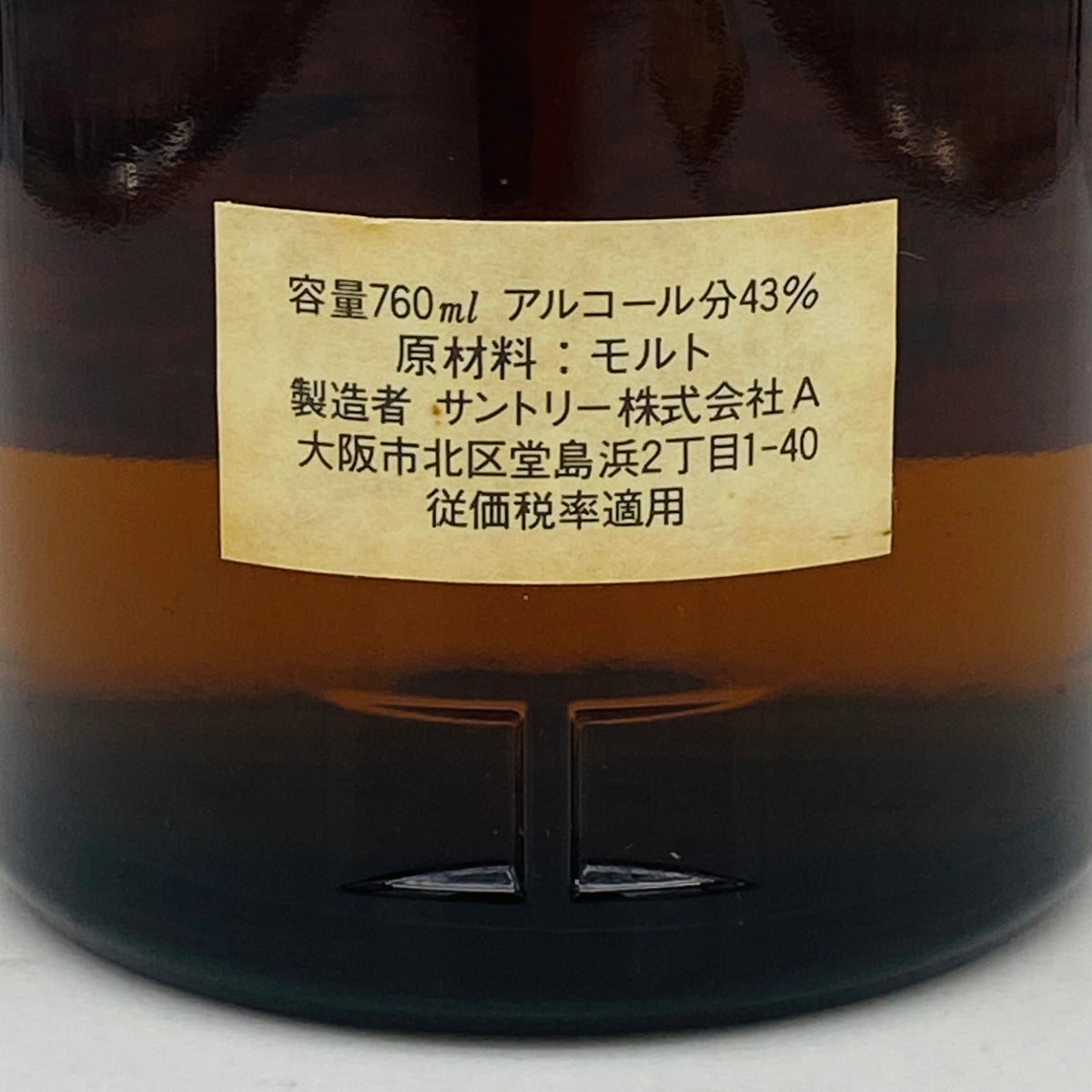
The “(従価)” on this back label is thought to indicate that the product fell in the price band subject to ad valorem tax. We have not been able to confirm a legal basis requiring the marking, but the word “従価” is a clue that the bottle was in circulation before April 1989, while ad valorem tax still existed. According to the GATT report, ad valorem tax applied to 9.2% of Special Grade whisky by volume in fiscal 1985 — limited to high-priced imports like these and some domestic products.
Look closely at the “ウイスキー特級” slip on the neck and you may find a circled letter followed by a number: “OK 7806” on the Glen Elgin, “Y 8686” on the Mortlach in the next photo, and “K 1636” on the Johnnie Walker. One theory holds that the letters indicate the customs house that cleared the import (Y for Yokohama, K for Kobe, and so on), and the “OK” on a Glen Elgin handled by an importer in Naha would fit nicely with Okinawa. We have not been able to confirm this from official sources, however, so we present it only as a theory.
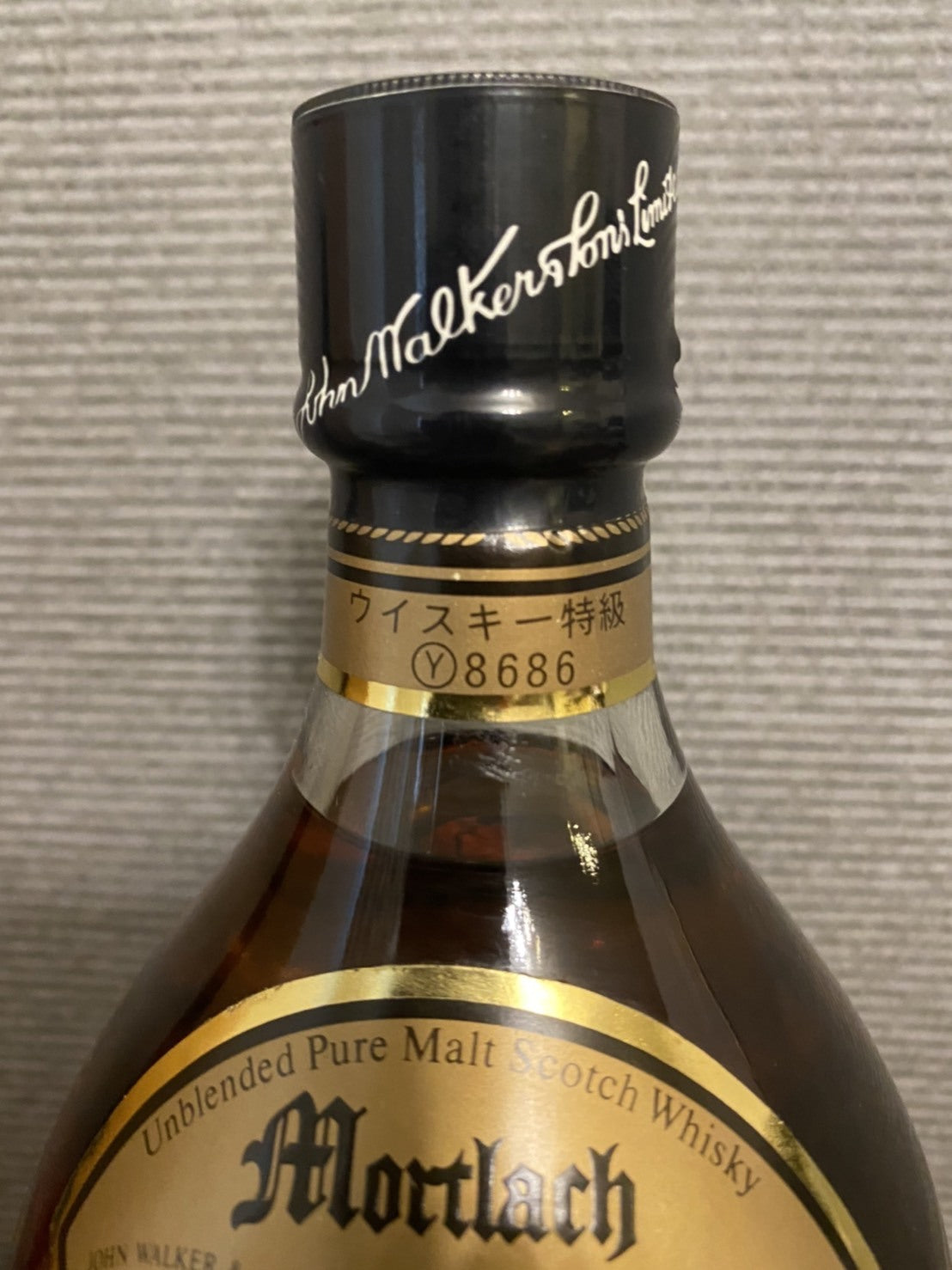
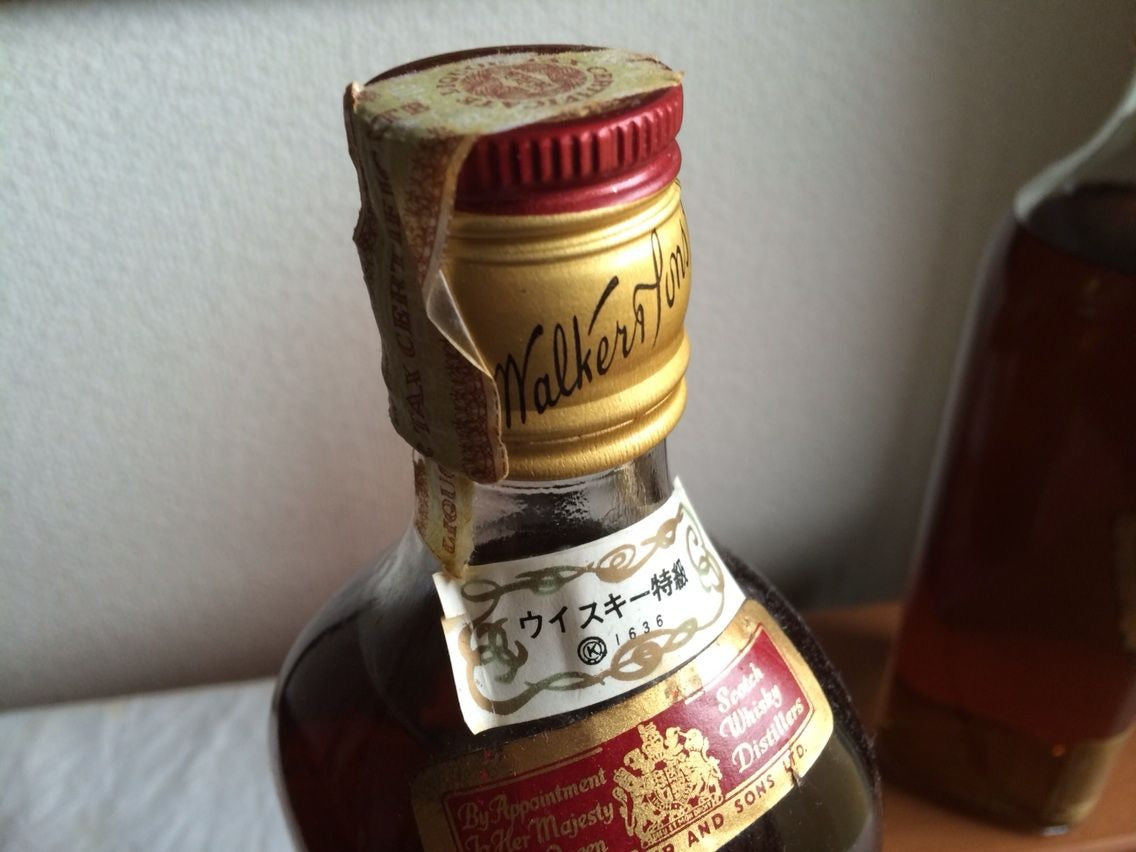
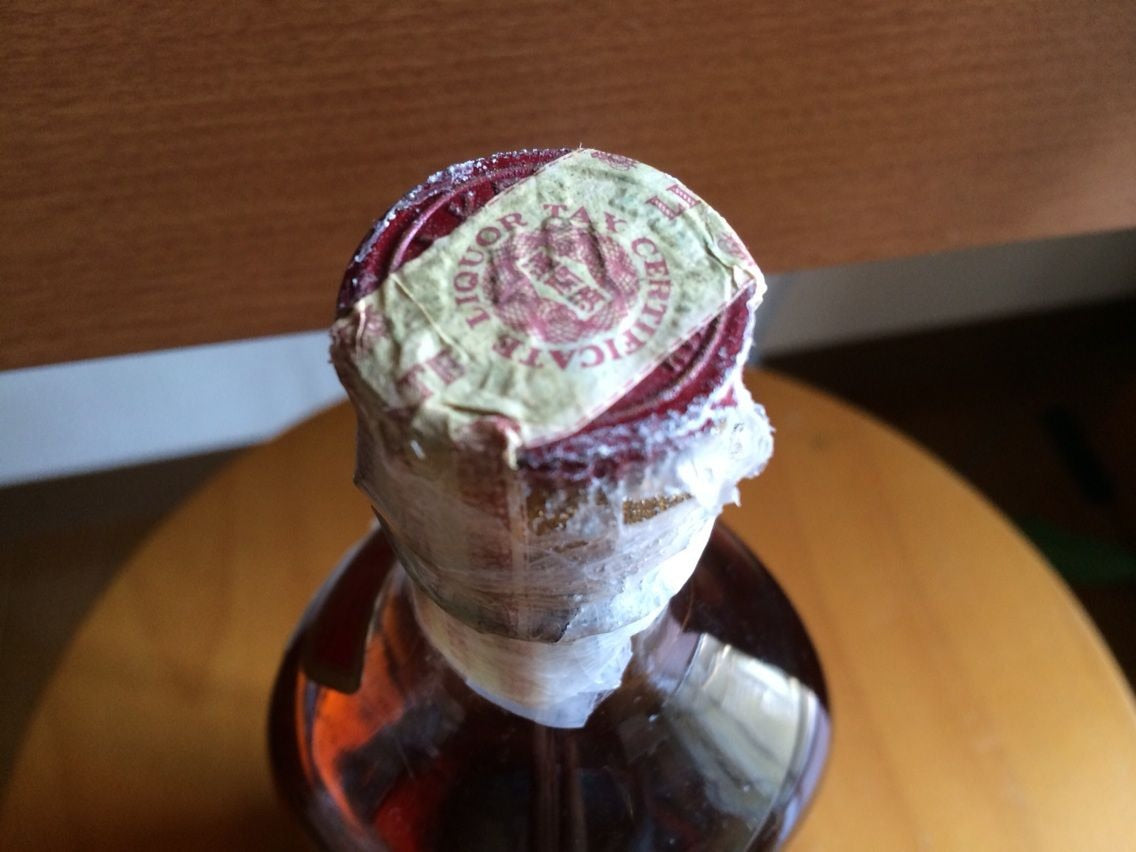
Note the certificate pasted over the cap as well. Printed “LIQUOR TAX CERTIFICATE”, it showed that liquor tax had been paid, and because it is stuck across the cap, it tears when the bottle is opened. The liquor tax certificate system was also abolished, together with the grade system, by the 1989 amendment of the Liquor Tax Act.
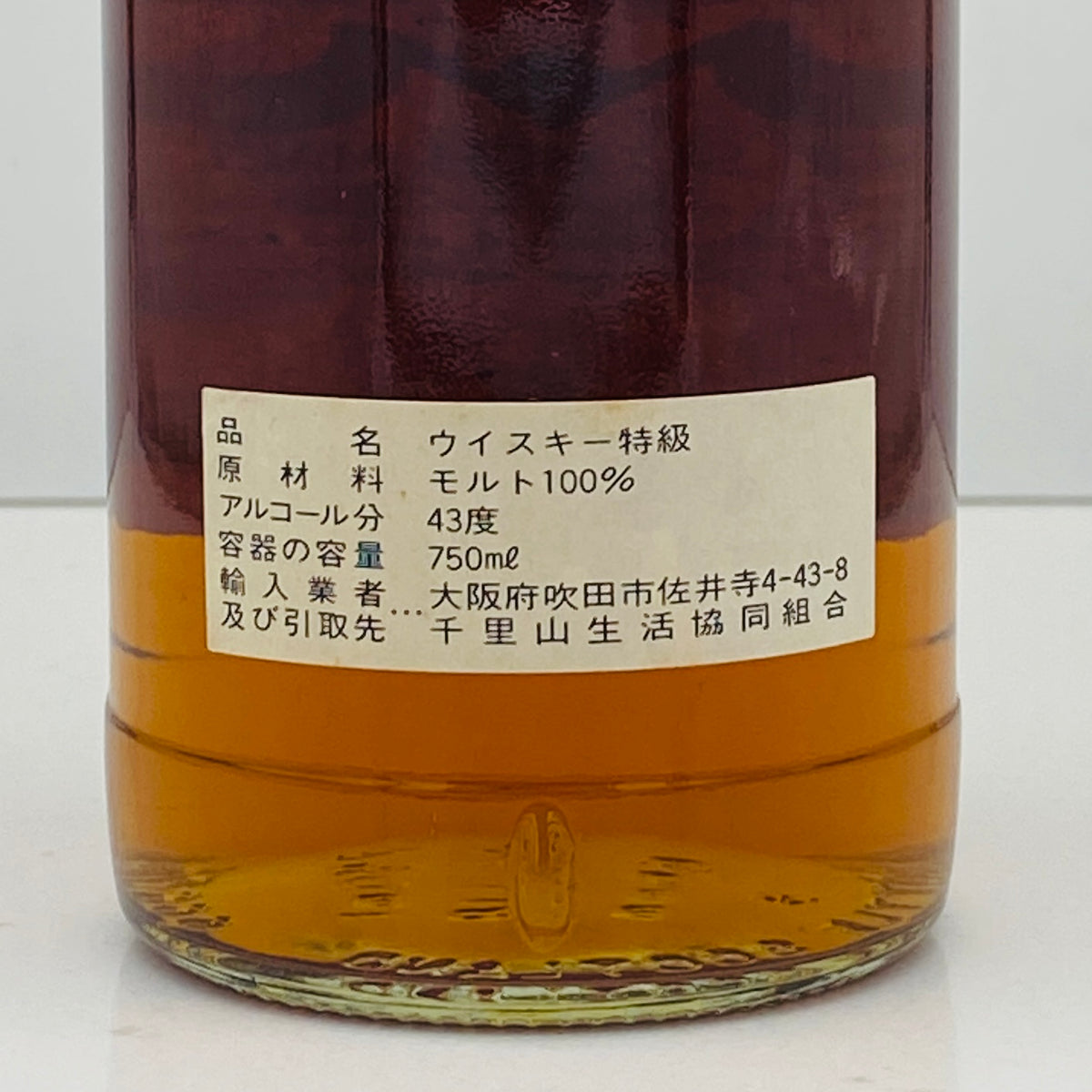
The importers themselves were a varied group. Alongside general trading companies and long-established spirits importers, there were even consumer co-operatives that imported Scotch directly for their members. A Glen Slainte 8 years old we once handled was one such co-op import, its back label giving the product name as “ウイスキー特級” and the ingredients as “モルト100%” (100% malt).
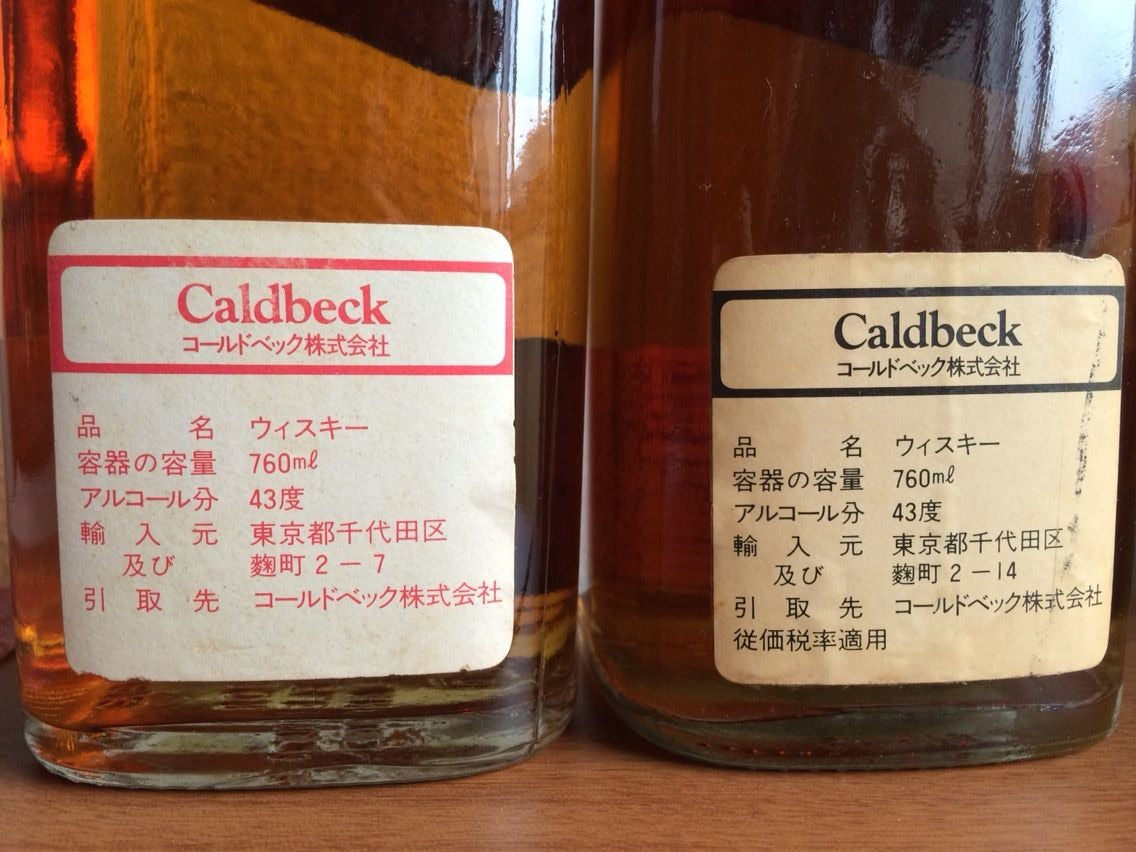
Even for the same importer, back labels changed over time. Compare two bottles imported by Caldbeck Co., Ltd.: the label on the left gives the address as “Kōjimachi 2-7” with no ad valorem marking, while the one on the right gives “Kōjimachi 2-14” and ends with the line “従価税率適用” (ad valorem rate applied). The address and the presence or absence of “従価” can also help to tell apart the periods of the same brand.
Domestic whisky in the higher price bands was subject to ad valorem tax too. The back label of the Yamazaki 12 years old shown earlier gives 760ml, 43% alcohol and the ingredient “モルト” (malt), and states “従価税率適用” (ad valorem rate applied).
April 1989: the grade system is abolished
In time, the grade system and the ad valorem tax drew international criticism. Most imports fell into the high-tax Special Grade, and the more expensive ones also bore ad valorem tax, while mass-market domestic whisky was sold in the low-tax Second Grade. In July 1986 the European Community requested GATT consultations on Japan's liquor taxes. A panel established in February 1987 found in its October report that the tax differences between grades, the ad valorem tax and other features worked against imports. The report was adopted that November.
In response, the Liquor Tax Act was amended in December 1988, and on 1 April 1989 the grade system and the ad valorem tax were abolished. Consumption tax (3%) was introduced on the same day. Whisky moved to a single rate of 982,300 yen per kilolitre at 40% alcohol. Comparing 43% products, the specific tax on former Special Grade roughly halved, while former Second Grade at 37% rose about 3.1 times.
The effects showed up in the figures immediately. From April to October 1989, the taxed volume of domestic whisky fell to 70.9% of the same period a year earlier, while imported whisky rose by 73.3%. By the end of October, imports' share had doubled to 25.2%, from 12.1% a year before. Cheaper imported Scotch filled the shelves, and the map of the Japanese whisky market was redrawn.
The definition of whisky was revised at the same time. After the reform, a product could be called whisky only if original whisky made up at least 10% of its alcohol; anything less was classed as spirits or another category. This 10% rule remains in today's Liquor Tax Act. Shipments of products printed with “特級” ended at the end of March 1989, but stock already in shops and wholesalers is likely to have stayed in circulation for some time afterwards.
Japanese whisky after the grades — a new yardstick
International negotiations over liquor tax continued after the grades disappeared. The EC, the United States and Canada challenged the tax gap between shochu and whisky at the World Trade Organization (WTO), and in 1996 Japan's tax system was finally ruled inconsistent with the agreement. According to the National Tax Agency, liquor tax and related taxes as a share of the price of a 700ml bottle of 43% whisky fell from 47.3% in 1980 to 41.3% in 1989, 27.6% in 1997 and 22.8% in 1998.
With the “Tokkyu” marker gone, however, there was for a long time no common yardstick for what was inside a bottle of Japanese whisky. To fill this gap, the Japan Spirits & Liqueurs Makers Association announced its “Standards for the Labelling of Japanese Whisky” in February 2021, effective that April (with a transition period to the end of March 2024). Among the conditions for labelling a product “Japanese whisky”: malted grain must always be used; water must be drawn in Japan; saccharification, fermentation and distillation must take place at a distillery in Japan; the spirit must be matured in wooden casks of 700 litres or less for at least three years in Japan; and it must be bottled in Japan at no less than 40%.
Then, in October 2026, the National Tax Agency opened public comment on a proposal to designate “Japanese Whisky” as a geographical indication (GI) for liquor, with a deadline of 30 November 2026. From the Special Grade era, which began as a tax class, to an era in which quality is shown by origin and method: the changing words printed on labels trace the very path Japanese whisky has travelled.
Recognising bottles from the Special Grade era by their labels
Finally, here are the points to check when you pick up an old bottle. The key is not to rely on any single marking, but to combine several clues.
- “特級” or “ウイスキー特級” markings: if found on the label, neck tag or Japanese import label, the product was shipped in Japan before April 1989. “雑酒特級” (Miscellaneous Liquor, Special Grade) points to a date before 1962, when whisky became a category of its own.
- “従価” or “従価税率適用” markings: a clue that the product belonged to a higher price band before April 1989, while ad valorem tax existed.
- Strength: 43% is typical of Special Grade, 40% of First Grade and 37–39% of Second Grade. Strength alone does not determine the grade, so check it together with the markings.
- Volume: 760ml (equivalent to 4/5 quart) is common from the 1970s to the early 1980s, 750ml in the 1980s, and 700ml mainly from the 1990s on. For details, see our article on dating old bottles by their volume and strength markings.
- Letters and numbers on the slip: the “ウイスキー特級” slip on imports sometimes carries a circled letter and a number. One theory links them to the customs house that cleared the import; either way, they are useful for comparing individual bottles of the same brand.
- Importer labels: the importer's name and address on the Japanese back label help narrow down when the bottle was officially imported. Bottles for duty-free shops or parallel imports may carry no “特級” marking.
- Company names and addresses: on domestic bottles, changes of company name (for example, Kotobukiya became Suntory in 1963) and address details also help with dating.
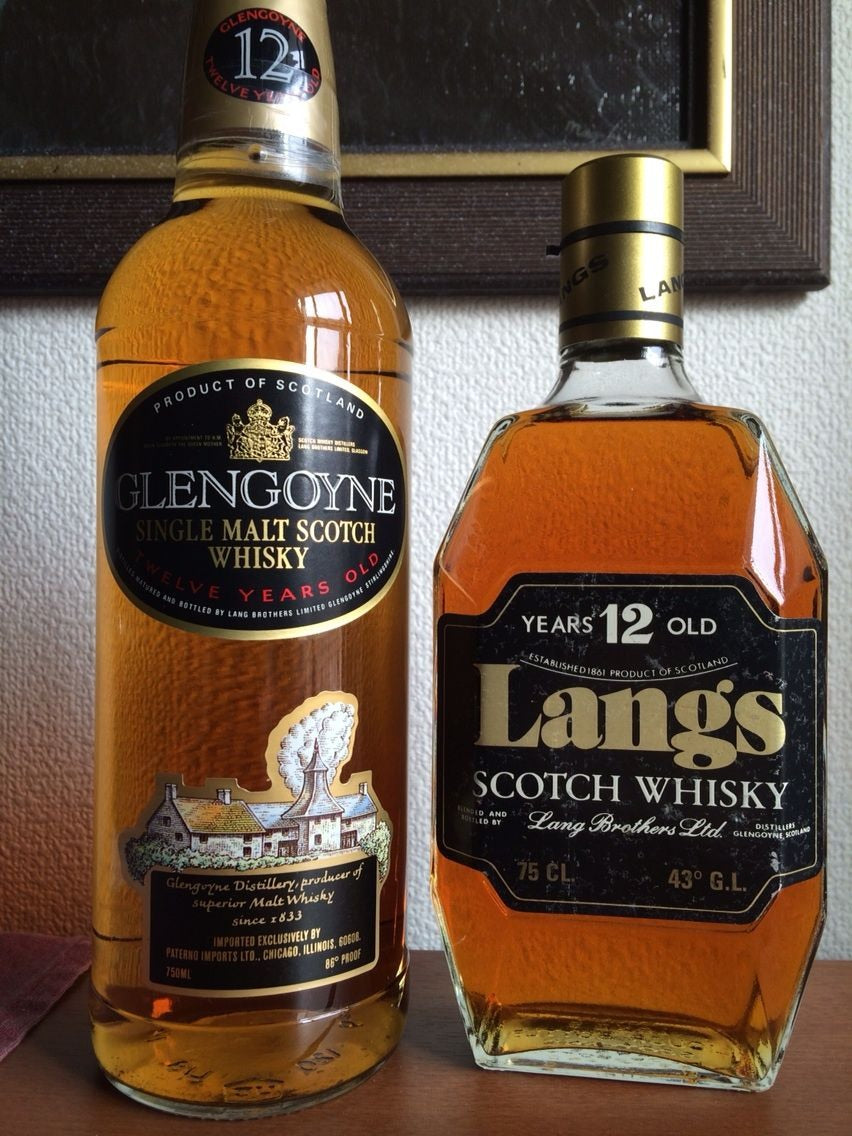
Bottles filled for markets outside Japan, on the other hand, carry no Japanese grade marking. In the photo below, the label of the Glengoyne 12 years old on the left bears the name of an importer in Chicago along with “750ML” and “86° PROOF”, showing that it was a bottle for the United States. The Langs 12 years old on the right uses the European-style markings “75 CL” and “43° G.L.”. When identifying bottles bought abroad or parallel imports, the presence or absence of a Japanese back label and a “特級” marking is a useful clue.
What to know to enjoy Special Grade bottles
As we have seen, “Special Grade” was simply a tax class, not a guarantee of how good a whisky tastes. Even so, there are reasons why Special Grade bottles are still sought after by so many enthusiasts. Beyond being products with a high proportion of original whisky, they were made with spirit distilled from the 1960s to the 1980s, offering the character of distilleries and brands as they were then, which differs from today. Tasting the same brand from different eras side by side can be a genuine surprise.
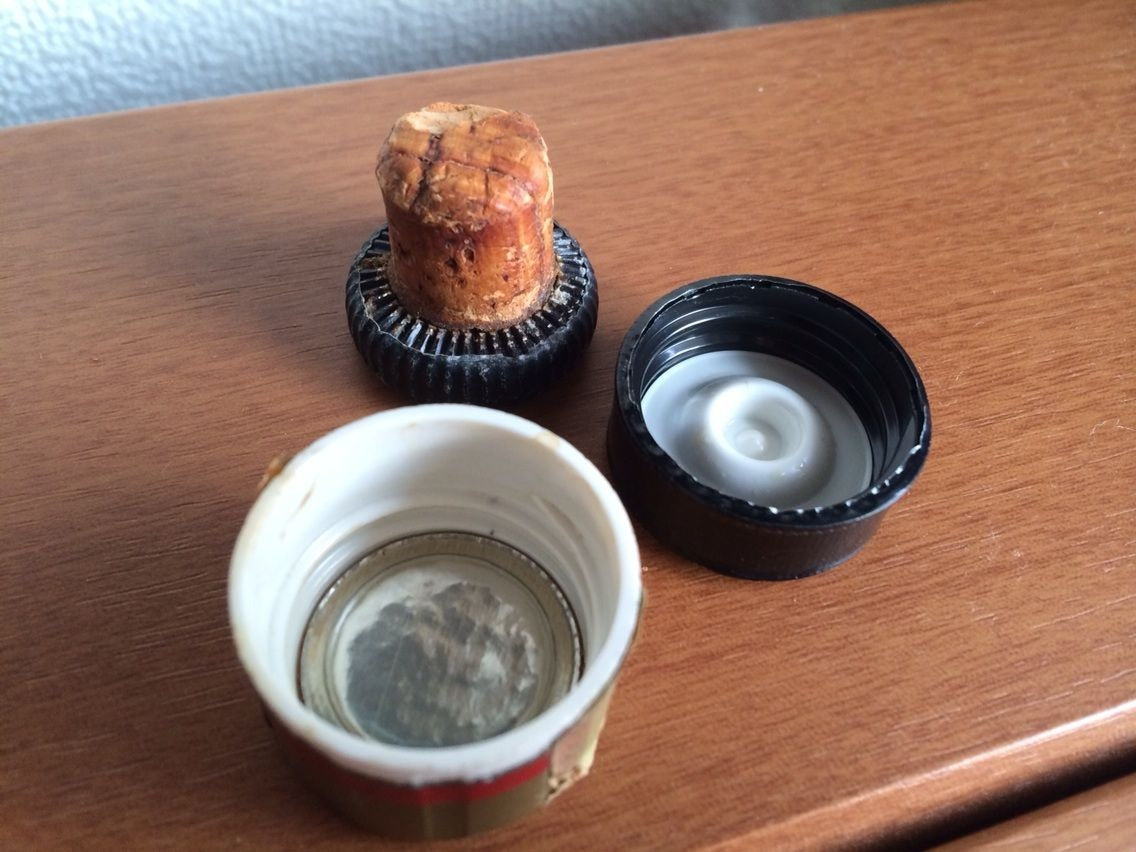
At the same time, bottles that have spent decades since bottling call for some care. People sometimes speak of an “old bottle effect”, in which whisky mellows in the bottle, but this has not been scientifically established, and Suntory explains that whisky does not mature in the bottle once bottled. When buying, check the fill level, the state of the cap or cork, any broken seals and the condition of the label; store bottles upright, away from direct sunlight and heat. Our article on how to store old bottle whisky covers storage in detail.
Nor is every bottle from the Special Grade era rare. Some brands were shipped in enormous quantities, while others were sold only briefly or through a few importers. Reading the markings on a label one by one reveals in which era, and by which route, a bottle reached Japanese tables. That, perhaps, is the real pleasure of holding a Special Grade bottle.
Frequently asked questions
What is the difference between Special, First and Second Grade?
They were different tax classes under the Liquor Tax Act. They were divided mainly by the proportion of original whisky and by alcohol strength, and Special Grade was the most heavily taxed class. Under the 1962 criteria, whisky with at least 20% original whisky or at least 43% alcohol was Special Grade, at least 10% original whisky or at least 40% alcohol was First Grade, and everything else was Second Grade.
If a bottle says “特級”, when was it sold?
It was shipped in Japan before April 1989. The Special Grade class was created by the 1953 reform and abolished on 1 April 1989. For a closer date, combine the volume, strength, importer details, company name and address.
Does Special Grade whisky contain more original whisky than today's whisky?
Special Grade had a minimum proportion of original whisky, so it contained more than First or Second Grade products of the same period. However, Japanese law today requires at least 10% original whisky, and many products, such as Scotch, are 100% whisky. It cannot be said across the board that a Special Grade bottle contains more original whisky than a current one.
What does the “従価” marking mean?
It is thought to show that the whisky, being above a certain price, was subject to ad valorem tax based on price rather than volume. Ad valorem tax was introduced in 1962 and abolished, together with the grade system, in April 1989.
What are the circled letters such as “Y” and “K” on the neck slip?
They are a letter and number added to the “ウイスキー特級” slip on imported bottles. One theory holds that they indicate the customs house that cleared the import (Y for Yokohama, K for Kobe, and so on), but we have not been able to confirm this from official sources.
Our bottles featured in this article
- Yamazaki 12 years old Pure Malt, Whisky Special Grade (Tokkyu), 760ml, 43% (in circulation in the late 1980s) (sold out)
- Glen Elgin 12 years old, 760ml, 43%, Special Grade, ad valorem (in circulation in the mid-1970s) #69
- Glen Slainte 8 years old Pure Malt, 750ml, 43%, Special Grade (in circulation in the early 1980s) #110 (sold out)
- The Dufftown-Glenlivet 10 years old, 1,000ml, 43%, Special Grade (in circulation in the 1980s) #124
Bottles from the Special Grade (Tokkyu) era can be found in our Old Bottle Whisky collection, and by decade in the 1970s and the 1980s. For the brands and prices of the period, see also our article on the whiskies sold in Japan in 1985 and their prices.
Sources
- Liquor Tax Act (Act No. 35 of 1940), its amendment (Act No. 66 of 1943), Liquor Tax Act (Act No. 6 of 1953), and amending acts (Act No. 47 of 1962, Act No. 27 of 1968): Nagoya University, Japanese Law History Database
- 佐藤恒夫・村松隆夫, “Kaisei shuzeihō no aramashi (1)” [Outline of the amended Liquor Tax Act], Journal of the Brewing Society of Japan, 57(8), 1962
- 柴田忠, “Shuzeihō shikōrei no kaisei” [Amendment of the Liquor Tax Act Enforcement Order], Journal of the Brewing Society of Japan, 75(7), 1980
- 柴田忠, “Shuzeihō no kaisei (1)” [Amendment of the Liquor Tax Act], Journal of the Brewing Society of Japan, 84(4), 1989
- 柏伸典, “Nihon ni okeru uisukī shijō no kokusaika” [Internationalisation of the whisky market in Japan], Journal of the Brewing Society of Japan, 85(4), 1990
- GATT Panel Report L/6216, “Japan – Customs Duties, Taxes and Labelling Practices on Imported Wines and Alcoholic Beverages” (1987)
- WTO dispute DS8, “Japan – Taxes on Alcoholic Beverages” (1996)
- Liquor Tax Act (current, e-Gov law search); National Tax Agency, liquor tax rate table and “Sake no shiori”
- Japan Spirits & Liqueurs Makers Association, “Standards for the Labelling of Japanese Whisky” (2021)
- National Tax Agency, public comment on designating “Japanese Whisky” as a geographical indication for liquor (October 2026, e-Gov public comment)
- Nikka Whisky official website, “History of Nikka”; Kirin Holdings, Kirin History Museum; Tsuchiya Mamoru, “History of Japanese whisky” (Gentosha Gold Online)