Skip to product information
1 of 50

Direct Disciple of Kamoda Shoji, Mashiko Ware, Sakata Jinnai (坂田甚内), 1988 Work, Inscribed Ash Glaze Yohen Bowl, Tea Bowl, Japanese Style Rocks Glass #447

Direct Disciple of Kamoda Shoji, Mashiko Ware, Sakata Jinnai (坂田甚内), 1988 Work, Inscribed Ash Glaze Yohen Bowl, Tea Bowl, Japanese Style Rocks Glass #447

Regular price ¥77,000 JPY
Regular price Sale price ¥77,000 JPY
Sale Sold out

Tax included · Free shipping within Japan

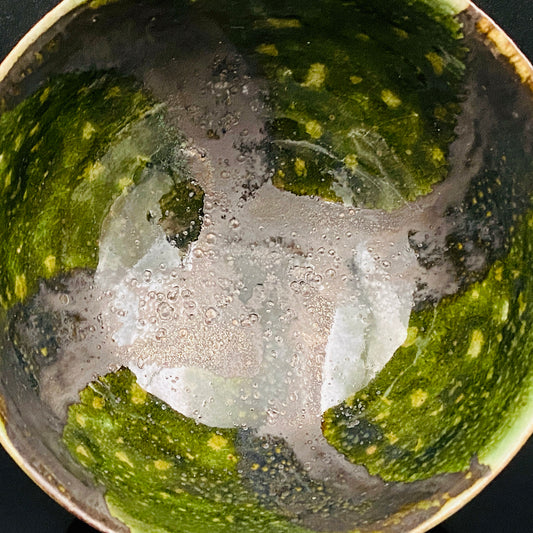
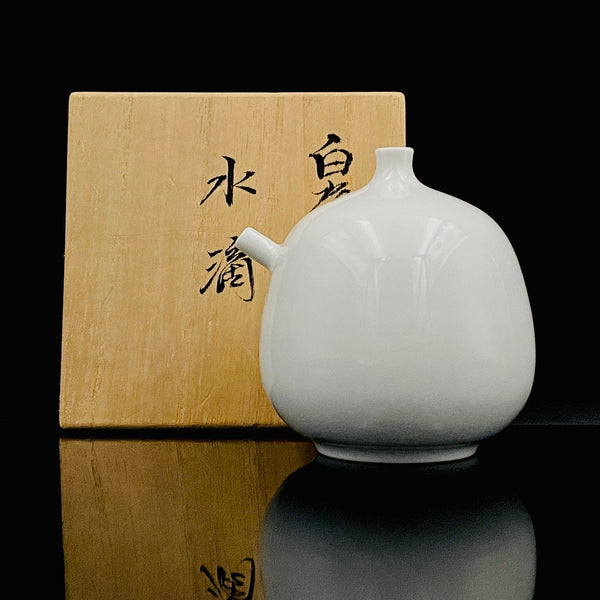
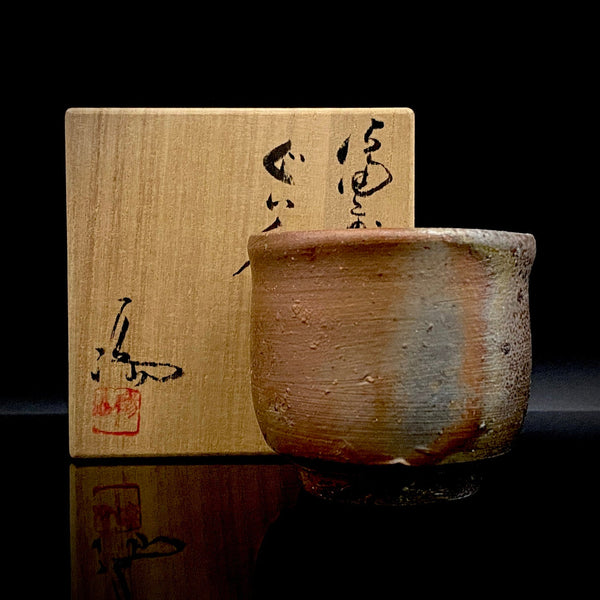
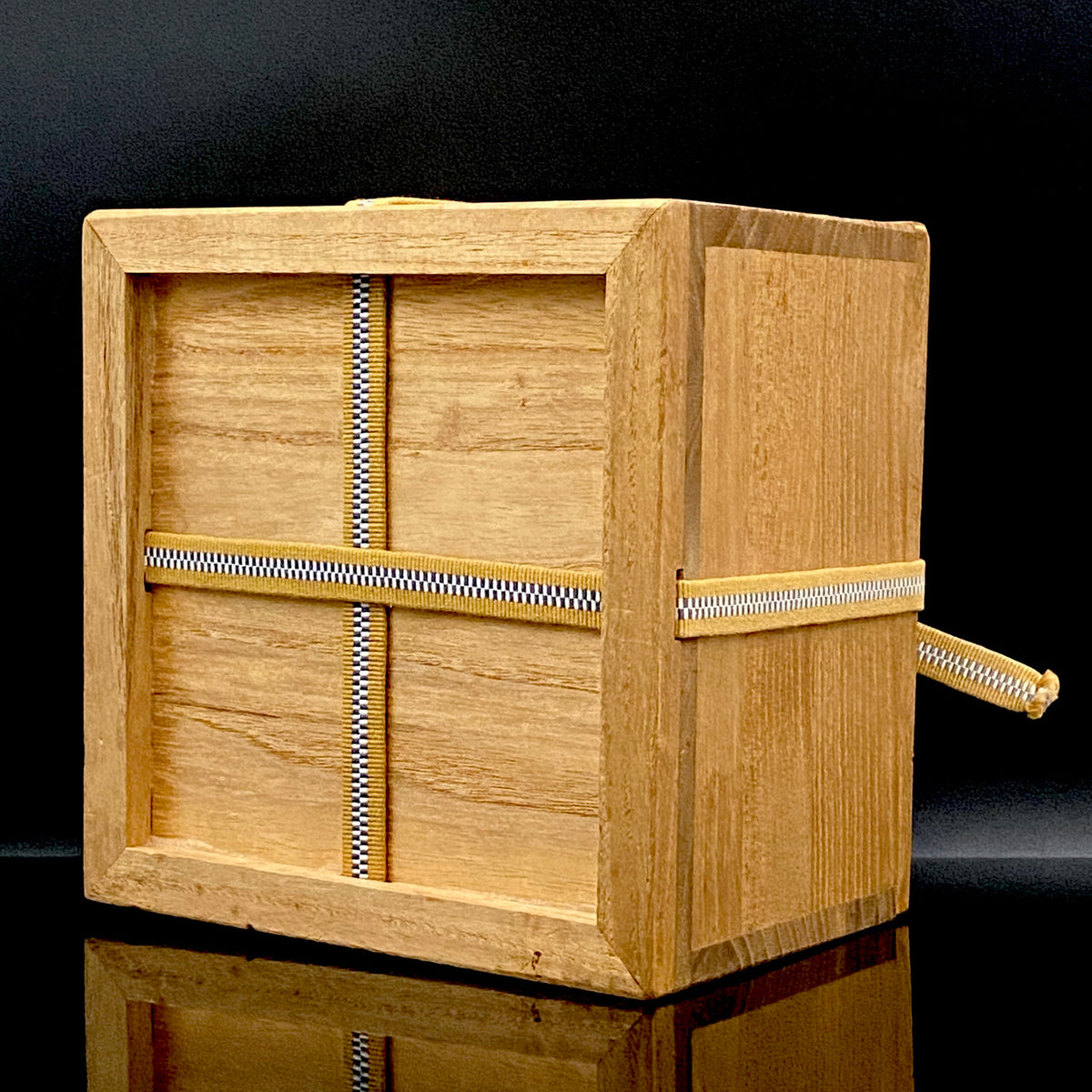
This is an ash-glazed yohen (kiln-transformation) sake vessel created by Sakata Jinnai, a ceramic artist who directly inherited the unique modeling spirit of Kamoda Shoji, a genius who established a milestone in the Showa period ceramic art world. The top of the lid of the included original wooden box (Tomobako) is inscribed by the artist's own hand with "Ash Glazed Yohen Bowl" (灰釉窯変盌). Clear characters reading "63nd Year" (六十三年) are carved into a section on the side of the vessel, which indicates Showa 63 (1988), definitively identifying this work as having been created in 1988.

What is most highly acclaimed in Sakata Jinnai's work is the fusion of heavy incised-lettering (carved text) techniques backed by the structural design philosophy of the artist's master, Kamoda Shoji, three-dimensional pattern compositions directly carved into the clay surface with chisels and spatulas, a passionate sculptural beauty, and the ash glaze yohen created through grueling firing in a wood-burning kiln. Examining the design of this piece, the surface of the vessel is systematically divided into regular vertical bands, with extremely deep carving executed within each section. The body utilizes coarse clay with exposed feldspar and sand grains, presenting a complex yohen landscape across the entire surface that transitions from a glass-like vitrified ash glaze formed by wood ash melting at high temperatures to shades of green-brown and scorched textures.

Observing the group of characters carved into the vessel's surface, in addition to the inscription "63nd Year" indicating the production date, one can confirm carvings in the style of ancient scripts reminiscent of primitive forms and brushstrokes of kanji such as "龍" (dragon), "竜" (dragon), "辰" (dragon/zodiac), "達" (reach/attain), "立" (stand), "絶" (surpass/sever), and "発" (depart/emanate). A major characteristic of these characters is that they all share the pronunciation "Tatsu" in Japanese. It is inferred that the meanings of ascent, departure, and attainment represented by verbs like "to stand" (Tatsu), "to depart" (Tatsu), and "to attain" (Tatsu) are overlaid with the symbolism of the "dragon" (Tatsu/Shin), a divine beast ascending to the heavens. Rather than mere character recording, this design is considered to express the surging of vitality, auspicious omens, and the artist's own resolve in ceramic creation through the overlapping sounds of "Tatsu". The powerful carvings, evocative of ancient bronze and stone inscriptions or oracle bone script, are thought to endow the vessel with ancient mystical and geometric decorative qualities.

While this work was originally created as a tea bowl or small bowl, its sturdy, thick-walled structure, comfortable form in the hands, and the three-dimensional tactile feel of the carved characters transmitted directly to the fingertips provide it with the function of an exceptionally high-quality Japanese-style rocks glass in modern times. Floating ice and pouring thoroughly aged amber-colored vintage sake, vintage whisky, or aged awamori allows the rustic, heavy texture of the ash glaze yohen and the colors of the liquor to show a magnificent harmony. As a precious authentic work of Japanese modern craft (Japanese Kogei) with virtually no information available in overseas markets, we propose this piece not only as a tea vessel, but also as a supreme sake vessel where one can experience deep aesthetic sensibilities through both touch and visual scenery.

  • Artist: Sakata Jinnai (坂田甚内, 1943–)
  • Representative Career Highlights: [1964] Studied under Kamoda Shoji, [1966] Established independent kiln, [1971] Selected for Japan Ceramic Art Exhibition; selected for US and Canada Touring Exhibition, [1973] Selected for Japan Ceramic Art Exhibition; selected for South America Touring Exhibition, [1987] Purchased by The Japan Foundation; exhibited at the "Modern Traditional Ceramic Art Exhibition" overseas touring exhibition, [1989] Selected for New Zealand International Ceramic Exhibition
  • Public Collections / Shrine Dedications: The British Museum (London), Rockefeller Foundation, Embassy of the United States, The Japan Foundation (purchased), etc. (Dedications: Izumo Taisha, Ise Jingu, Hieizan Enryakuji, Kodaiji, Takachiho Shrine)
  • Production Period: 1988
  • Item Condition: Very Good (No chips, no cracks)
  • Accessories: Dedicated original wooden box (Tomobako), cloth (Tomobuke), certificate/brochure (Shiori) included
  • Material: Ceramics (Mashiko ware, salt glaze, tea bowl, stamped/inscribed)
  • Dimensions: Height approx. 7.6 cm, Rim width approx. 12.5 cm, Weight approx. 340 g
  • Note: Even if the products provided by our shop are unused, they were produced a very long time ago and are all listed as pre-owned items. Please understand and confirm that the item may have age-related wear before considering your purchase.
  • Please check the photos: We prepare every description with great care, but errors may still remain in the text. Please examine the photos carefully before purchasing. Where the photos and the description differ, please take the photos as the basis for the product information.

Shipping

  • This item can be shipped overseas (a flat international shipping fee applies; see our Shipping Policy).
  • If you are visiting Japan, we can also deliver to your hotel or other accommodation in Japan.
  • In that case, after placing your order and at least 5 days before your preferred delivery date, please send us the reservation holder's details, your check-in date, and whether you have confirmed that the hotel will accept the parcel, by email (support@antiqueliquor1926.com) or via our contact form.

Low stock: 1 left

View full details

More from Sakata Jinnai (坂田甚内)

View all (12)

Lineage and related information

Sakata Jinnai (坂田甚内, 1943–)

Studied under
  • Kamoda Shoji (加守田章二, 1933–1983)
Students and artists taught
Fellow students and related artists

Teachers, students and family are listed as documented in our product descriptions and their sources; years are given only where documented.