
Tasting Blends Beside Their “Key Malts” — Component Tastings from Our Own Stock
Blended whisky is made by combining several malt whiskies with grain whisky. Among them, the central malts that define the backbone of the flavour are called “key malts”, and they are essential to understanding the character of a brand. Yet there are very few opportunities to taste a blend side by side with its key malt from bottles of the same era. Many key malts are not available on their own as current releases, and assembling both from several decades ago is no easy task.
At our shop, blends distributed between the 1970s and the 1990s sit alongside the single malts regarded as their key malts. In this article we propose four “component tastings” that you can actually put together from our stock. For a list of each brand's key malts, see also our list of key malts for the major blended Scotch whiskies.
Before you taste — why it helps to know the key malt
The flavour of a blend is built from a combination of as many as several dozen whiskies. Within it, the key malt plays the role of a “core” that sets the direction of the aroma and the quality of the finish. If you taste the key malt on its own and then return to the blend, the character it has lent to the blend emerges like an outline through the mist.
Comparing old bottles makes this even more meaningful. Blend recipes and the character of the component whiskies have changed over time, so placing a blend beside a key malt from the same era lets you trace the connection that existed in that period. Note that the make-up of key malts can differ by era and market; the pairings suggested here are based on the information given on each of our product pages.
When blends and single malts stood side by side
Blended whisky developed as a way of combining characterful malt whiskies with gentler grain whiskies to deliver a consistent flavour year after year. In 1970s Japan, imported Scotch meant blends first and foremost, and Ballantine's, Johnnie Walker and Old Parr were coveted as gifts or as a bottle for special occasions. The original retail prices recorded in our product information show that Ballantine's 17 Year Old and Bell's 20 Year Old cost around 15,000 to 20,000 yen — a great deal of money at the prices of the day.
Single malts, which let you taste a distillery's character as it is, gradually spread beyond Scotland during the 1970s and 1980s. Italy in this period is known as one of the first markets to embrace single malts, and our Miltonduff 12 Year Old includes bottles distributed on the Italian market. In Japan, too, single malts began to be introduced through importers such as Suntory from the late 1980s into the 1990s. That we can line up blends and key malts from the same era is, in part, the result of these overlapping histories of distribution.
Tasting 1: Ballantine's 17 Year Old × Miltonduff 12 Year Old
The best-known key malts of Ballantine's are Miltonduff and Glenburgie from Speyside. Our product information for Ballantine's 17 Year Old lists Miltonduff, Glenburgie, Scapa and Glentauchers as its key malts.
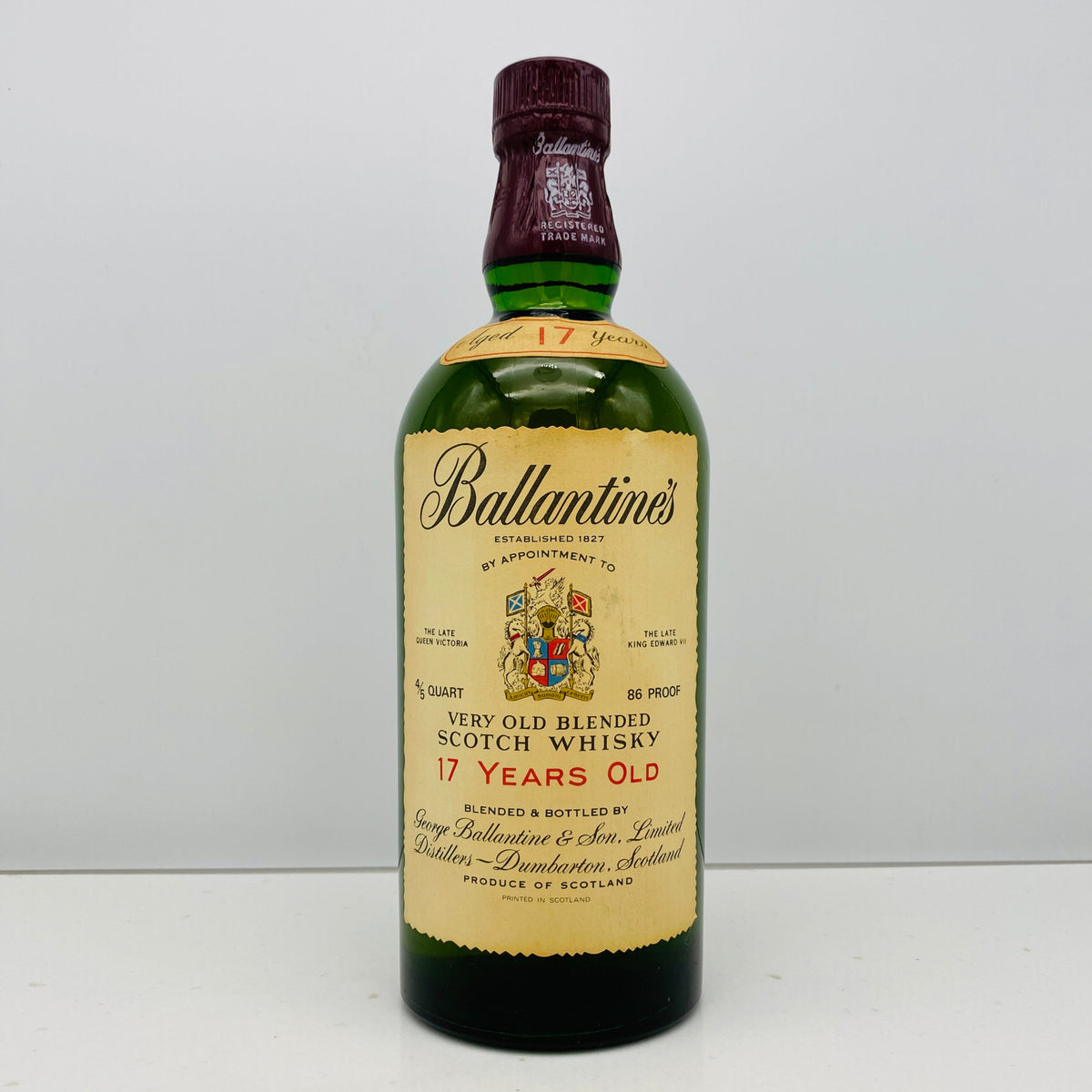
Candidates for this pairing are the 1970s Ballantine's 17 Year Old Blue-Red Flag label #63 and #45, the 1980s Blue-Blue Flag label #61 and #62, the Miltonduff 12 Year Old #145 and #146 distributed on the Italian market in the mid-1980s, and the Miltonduff 12 Year Old #147 imported by Suntory for the Japanese market in the early 1990s.
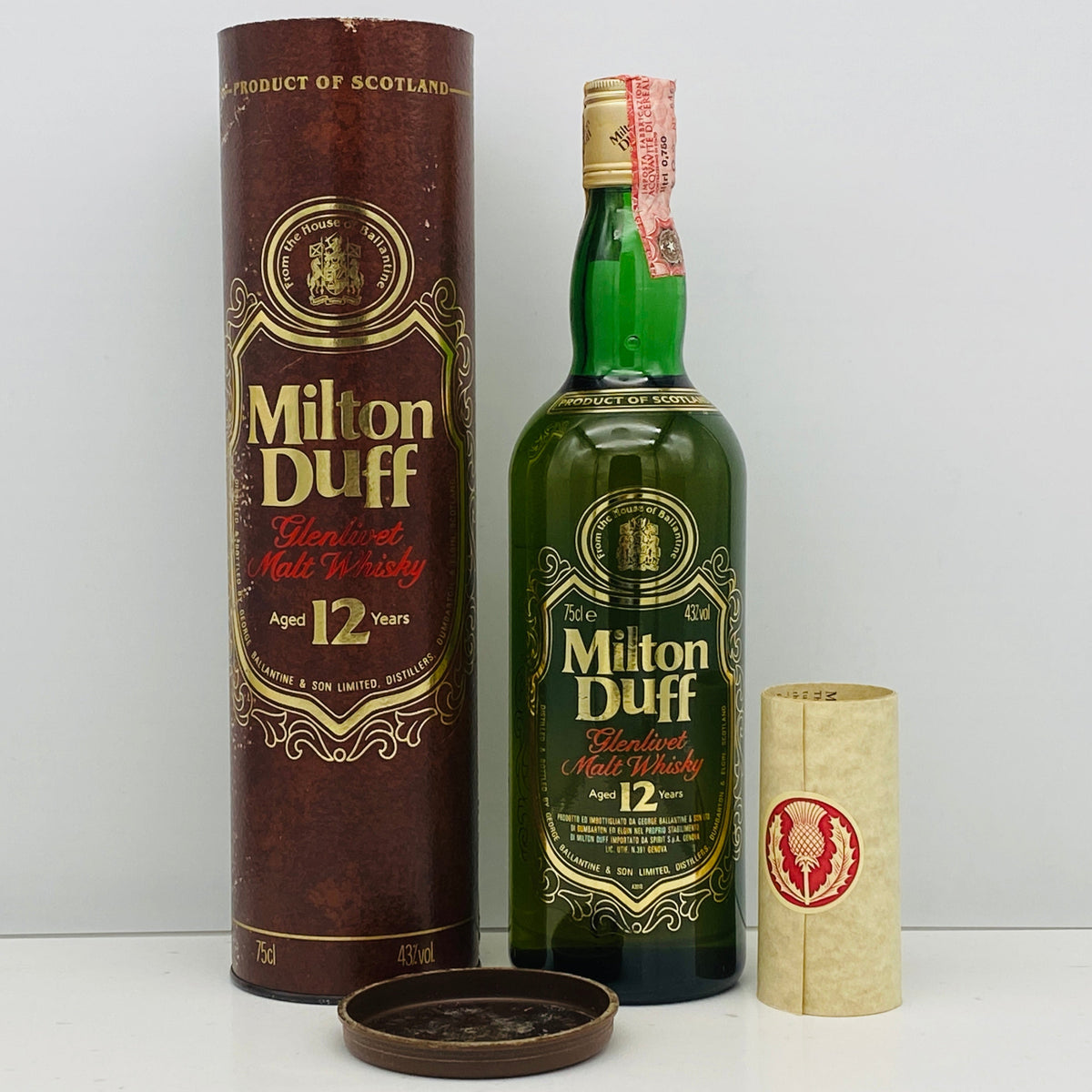
The Miltonduff for the Italian market carries its link to the blend on the bottle itself. The label reads “The House of Ballantine's”, proudly announcing that this is a core component of Ballantine's. In addition, the name of the Genoa importer “GE. SPIRIT S.p.A.” appears at the bottom of the label, an Italian tax stamp is affixed to the top of the bottle, and the volume is 750ml (75cl), from before 70cl became the European standard. These details confirm that the bottle was distributed on the Italian market in the 1980s.
Our recommendation is to pair two bottles from the 1980s: Ballantine's 17 Year Old #62 and Miltonduff 12 Year Old #145. Placing bottles filled in the same period side by side lets you sense the trace of Miltonduff within the blend more directly. If you have the opportunity, finish with the longer-aged Ballantine's 30 Year Old #58 to see how the same key-malt lineage expresses itself after long maturation.
What to look for: Tasted on its own, Miltonduff shows a sweetness reminiscent of honey and baked goods, with a gentle floral aroma. Move on to Ballantine's 17 Year Old and you will notice that this sweetness spreads as the fullness of the whole blend and underpins the softness of the finish. Keep the difference in era between the label colours (Blue-Red Flag and Blue-Blue Flag) in mind as well, and the comparison gains even more depth.
Tasting 2: Bell's Royal Reserve 20 Year Old × Dufftown
Bell's is a blend whose key malts are Blair Athol, Dufftown and Inchgower. We carry three generations of Bell's Royal Reserve 20 Year Old: #53 from the early 1970s, #52 from the late 1970s and #51 from the 1980s.
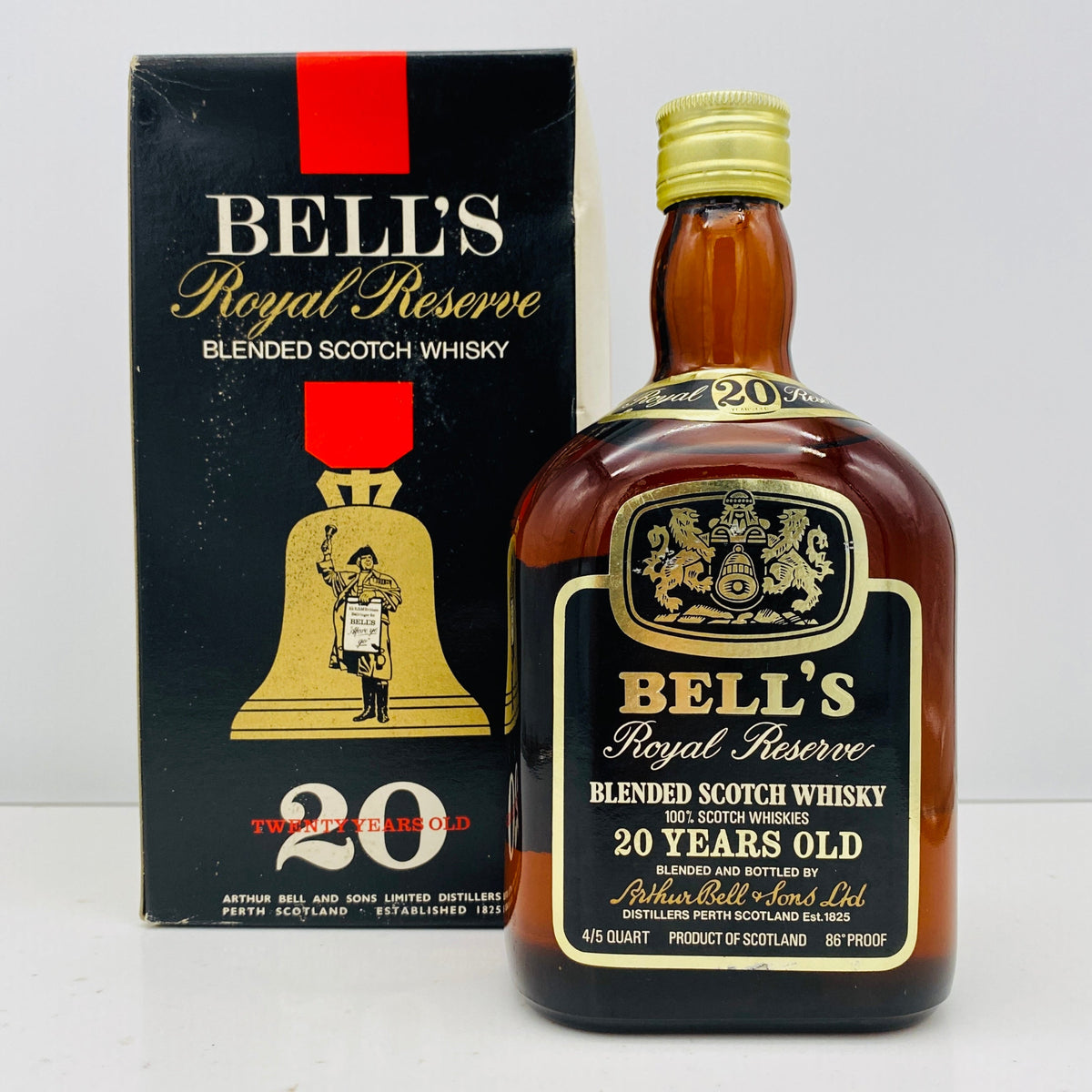
We also have several generations of the key malt, Dufftown: the Dufftown-Glenlivet 8 Year Old #155 and #56 at 46% (early 1970s), #57 at 43% (mid-1980s), and the one-litre Dufftown 12 Year Old #55 and The Dufftown Glenlivet 10 Year Old #124.
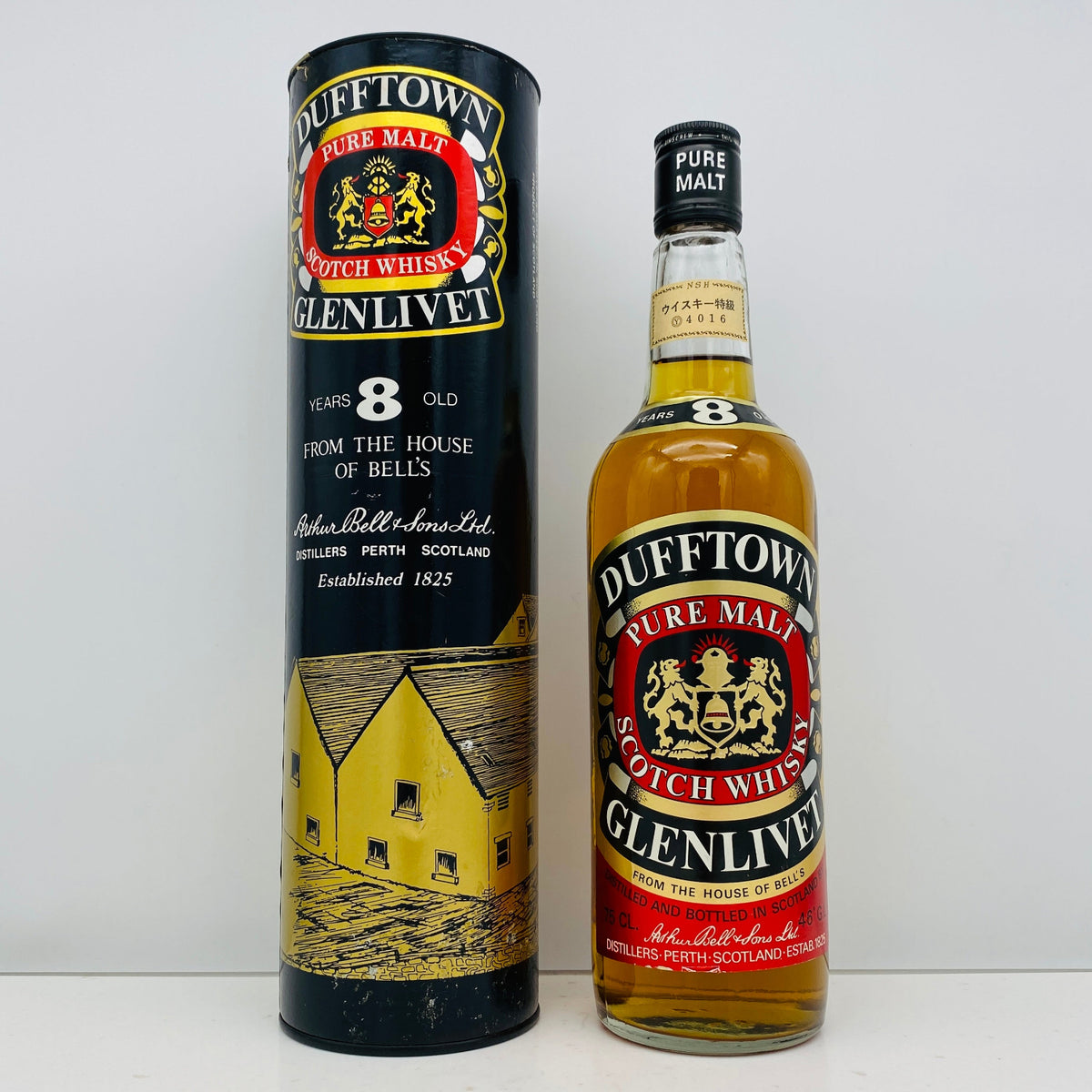
What makes this interesting is that the same Dufftown 8 Year Old exists at both 46% and 43%. Taste the 46% #155 first and the 43% #57 afterwards, and you will see clearly how the difference in strength affects the way the aroma rises and the feel in the mouth. If you then return to Bell's 20 Year Old #53, the presence of Dufftown in its supporting role within the blend should come into view.
What to look for: Dufftown is a Speyside malt with malty sweetness and a light, fruity aroma. Move on to the 20-year-old Bell's, and the bright malty sweetness from Dufftown is woven into the mellowness of long maturation. Royal Reserve 20 Year Old was Bell's oldest premium bottling, and at the time it was sold in large numbers not only in standard glass bottles but also in ceramic decanters, which were highly popular as gifts.
Tasting 3: Johnnie Walker Black Label × Glen Elgin 12 Year Old
Johnnie Walker Black Label is known as a complex blend combining many malts. Our product information lists Cardhu, Talisker, Clynelish, Caol Ila and Glen Elgin as its key malts. Of these, we carry Glen Elgin 12 Year Old distributed in the 1970s and 1980s.
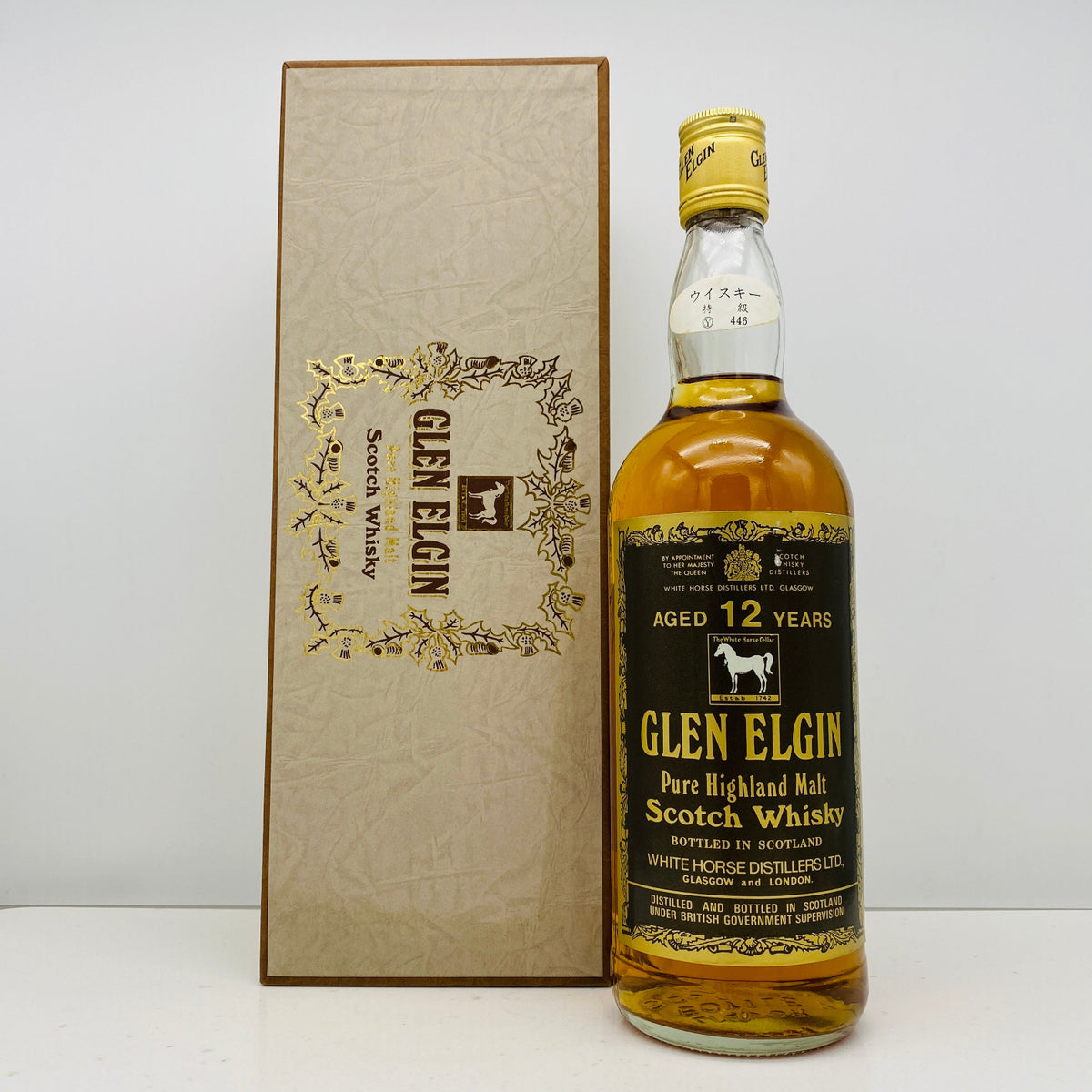
The name “WHITE HORSE DISTILLERS LTD.” on the Glen Elgin label shows that the bottle was released by the company that supplied malt whisky for the White Horse blend at the time. The top of the label carries the Royal Warrant crest and the White Horse emblem; the neck label bears the “Whisky Tokkyu” (special grade) and “Ad valorem” (従価) marks showing it was an official import into Japan; and the back label names the importer of the day, Jardine Matheson & Co. (Japan). It is a witness to the era when a distillery that had lived as a component of blends reached Japan as a single malt.
We recommend pairing the early-1970s Johnnie Walker Black Label #95 or the mid-1970s #93 with the mid-1970s Glen Elgin 12 Year Old #149 or #69. Add the 1980s #153, and you can also enjoy Glen Elgin across different eras.
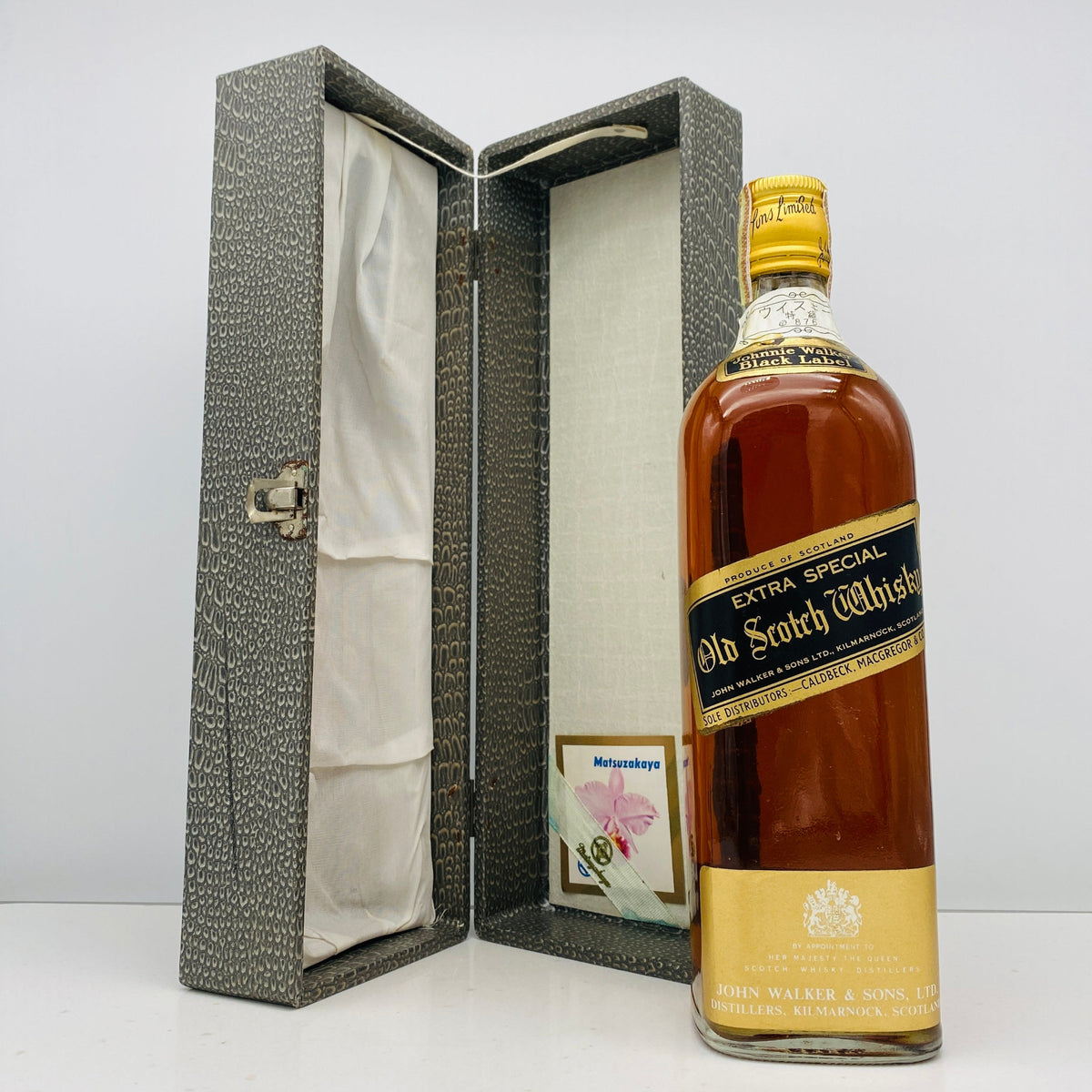
What to look for: Johnnie Walker Black Label is a blend prized for its balance of smokiness and sweetness. Glen Elgin is a malt with a bright, honeyed sweetness, and within Black Label it can be said to contribute brightness and roundness to the aroma. Check the aroma of Glen Elgin first and then taste Black Label, and it becomes easier to identify the sweet layer that lies beneath the smoky structure.
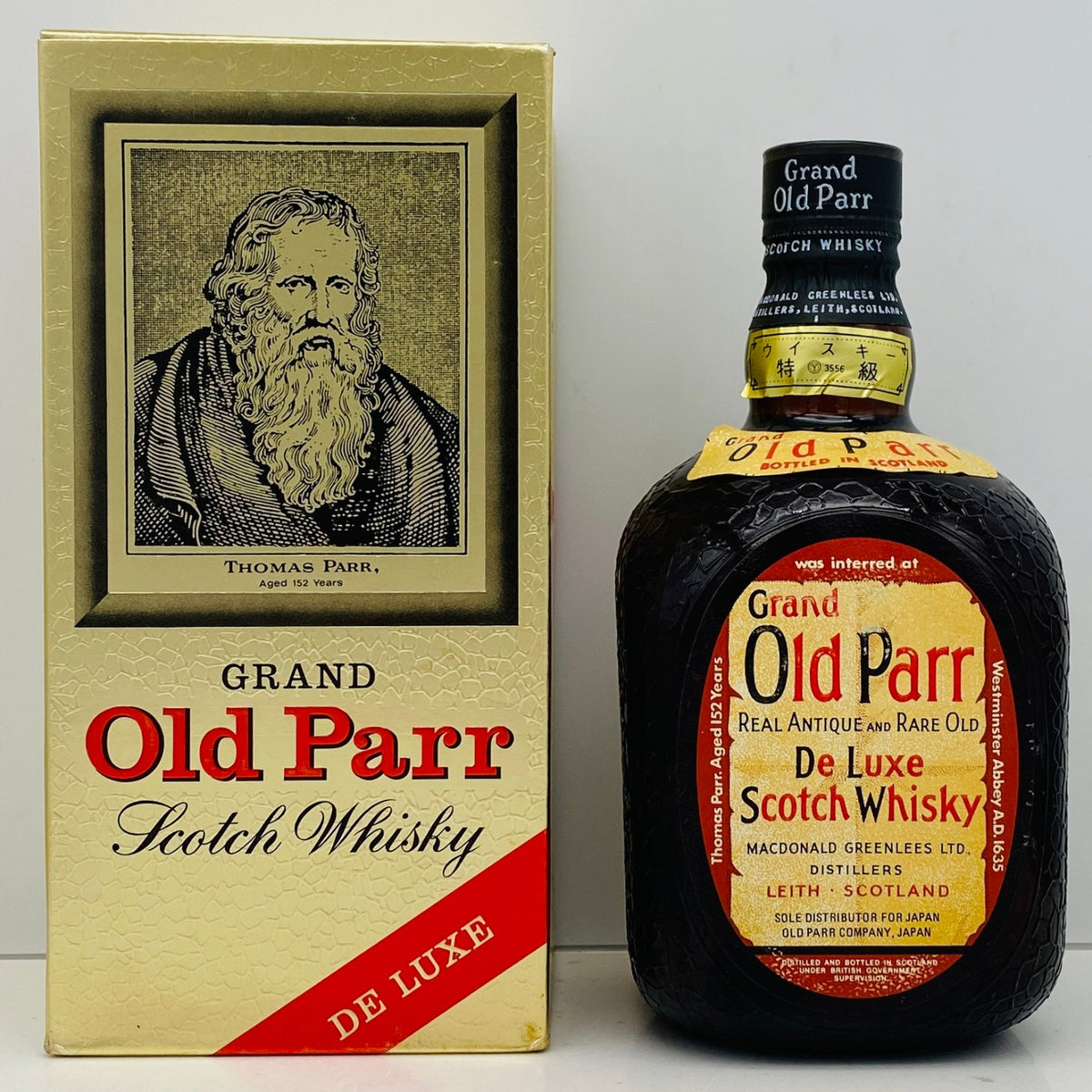
Tasting 4: Grand Old Parr × Glendullan 12 Year Old
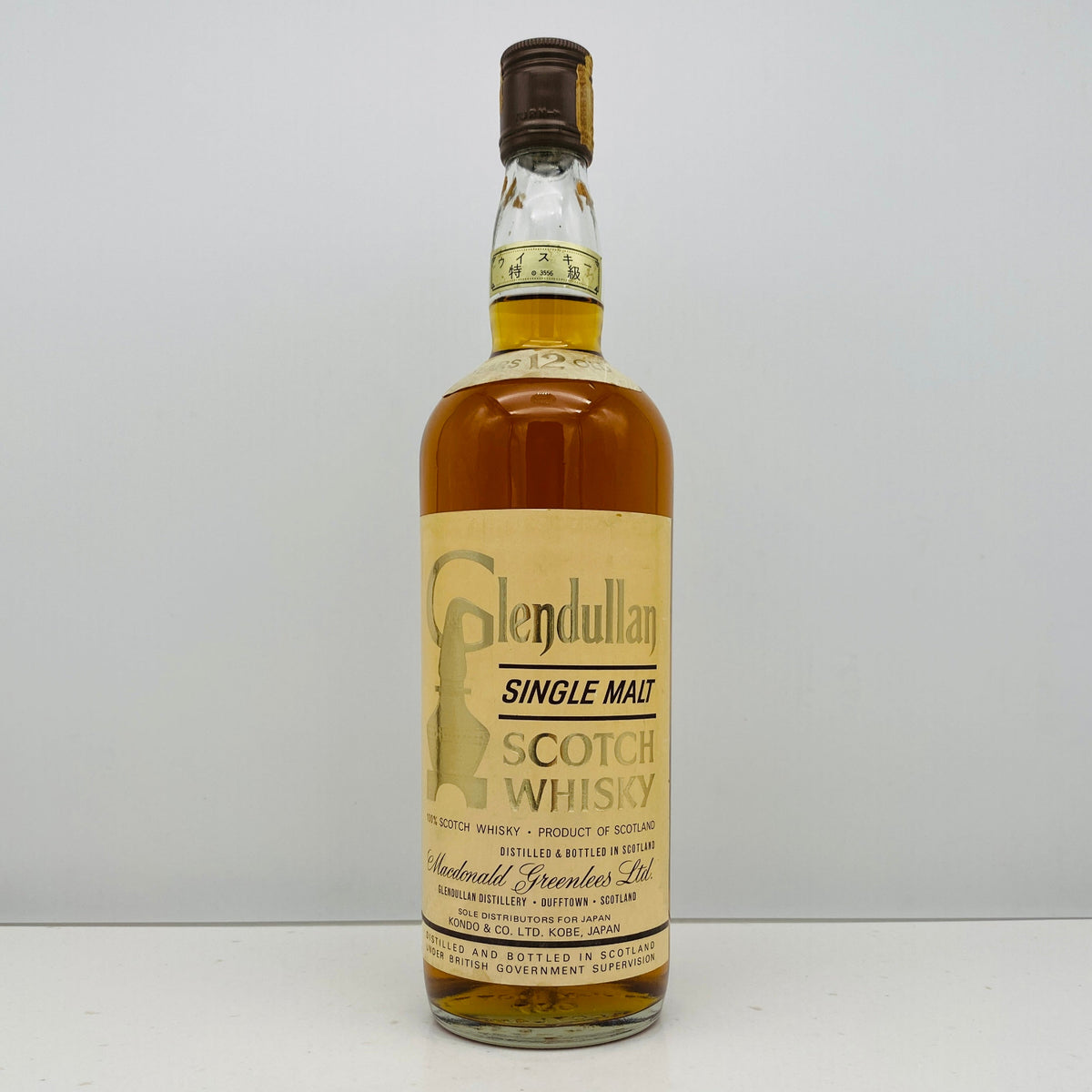
Our product information names Cragganmore and Glendullan as the key malts of Grand Old Parr. We have Glendullan 12 Year Old #130, #136 and #72, all from the early 1970s and all at 47%.
For the Grand Old Parr, you can choose from #46 from the 1960s or #84 and #96 from the early 1970s. Set #84 beside Glendullan #130, both from the early 1970s, and you should sense the gentle fruitiness of a Speyside malt running beneath Old Parr's characteristically smooth sweetness.
What catches the eye on the Glendullan bottle is the “47度” (47 degrees) printed on a small seal on the neck. This was an unusually high strength for an official bottling of the time, offering a rare chance to experience, before blending, the power of the malt that supported Old Parr.
What to look for: At 47%, Glendullan 12 Year Old has a denser aroma than a typical 43% bottle, and a clear first impression. See how the aroma opens with a few drops of water, then move on to Old Parr. Within the blend its edges are softened, and you will find it expressed as the gentle sweetness typical of Old Parr.
Food and vessels to accompany the tasting
Between tastings, we recommend a small amount of food that is not too strongly scented. Nuts, dried fruit, bitter chocolate and aged hard cheeses bring out the sweetness of the malts and the roundness of the blends. Smoked or salty foods paired with a smoky blend make each other's character stand out.
Choosing the vessels is part of the pleasure too. For comparing aromas, a bowl that narrows at the rim, like Ishii Koji's stemmed tasting glass, is ideal. On the other hand, if you want to savour a favourite bottle slowly after the tasting, choose a vessel that feels right in the hand from hand-blown glass such as Iwata Hisatoshi's rocks glass or from our ceramic cups and glasses, and your time with an old bottle will be all the richer.
Tips for enjoying a comparative tasting
- Use matching glasses: glasses of the same shape let you compare aromas fairly. Tulip-shaped tasting glasses are recommended.
- Keep the measures small: about 10–15ml per glass lets you compare with your senses intact to the end.
- Decide the order: tasting the key malt first and then moving to the blend makes it easier to find the malt's character within the blend. Leaving higher-strength whiskies until later helps prevent palate fatigue.
- Try adding water: a few drops of water can open up a closed aroma. You can also use our water droppers (suiteki) for adding water.
- Watch how it changes after opening: an old bottle can show a different face just after opening and a few days later. Comparing the same bottle on different days is another pleasure.
- Take notes: recording the aroma, palate and finish in a few words will help you choose your next bottle.
Points to note with old bottles
Bottles that have spent several decades on the shelf may show a lowered fill level or sediment in the bottle. Sediment consists of whisky components that have precipitated over a long time, and in most cases it is not a quality problem; if it bothers you, pour gently or strain through a fine filter before enjoying. Old corks can also crumble when opened, so we recommend drawing them out slowly while turning.
We describe the fill level, the condition of the label and the type of closure as fully as possible in our product photographs and descriptions. If you have any concerns, please contact us before purchasing.
Our suggestion — the luxury of pairing bottles from the same era
The most important thing in a key-malt tasting is to pair bottles from as close to the same era as possible, because both the design of the blend and the character of its components have changed over time. We make a point of offering blends and single malts from the same era together. Find a pairing that interests you in the table below.
| Blend | Key malt (single malt) | Suggested pairing |
|---|---|---|
| Ballantine's 17 Year Old (1980s) | Miltonduff 12 Year Old (1980s) | Same-era comparison |
| Bell's Royal Reserve 20 Year Old (1970s) | Dufftown 8 Year Old, 46% | Compare strengths as well |
| Johnnie Walker Black Label (1970s) | Glen Elgin 12 Year Old (1970s) | Same-era comparison |
| Grand Old Parr (1970s) | Glendullan 12 Year Old (1970s) | Same-era comparison |
Frequently asked questions
Q. What is a key malt?
Among the malt whiskies used in a blend, the key malts are the central ones that define the backbone of the flavour and the direction of the aroma. They are often malts from distilleries owned by the company that owns the brand, and they are closely tied to the brand's character.
Q. Has the make-up of key malts always been the same?
No. The composition of blends has changed over time with changes in distillery ownership and in the supply of whisky. That is why we recommend comparing bottles from the same era.
Q. How much do I need for a comparative tasting?
About 10–15ml of each is plenty. Even comparing four whiskies comes to only around 60ml in total, so you can compare aromas and flavours calmly to the end.
Browse our blends in Blended Whisky, and single malts including the key malts in Single Malt Whisky. To search by era, the 1970s and 1980s collections are convenient.