

A Whisky Tea Gathering — Hosting with Master Craftsmen's Tea Utensils and Old Bottle Whisky
November is a special month in the world of chanoyu, the Japanese way of tea. It is the month of robiraki, when the brazier used through the warmer months is put away and the sunken hearth cut into the tatami of the tea room is opened. It is also the month of kuchikiri, when the tea jar that was filled with new leaves in spring and sealed is opened, and the year's new tea is used for the first time. With the two coming together, November is called "the New Year of tea", the season in which tea people receive their guests in their most formal frame of mind.
A seal kept closed through the years, cut one day in front of guests: the scene of kuchikiri is strikingly like the moment of opening an old bottle that was filled decades ago. In this article we propose a "whisky tea gathering", a way of hosting guests with whisky that borrows the order of a tea gathering and its way of choosing utensils. It is not a gathering that strictly recreates the temae, the tea-making procedure. Choosing the utensils, thinking about how they go together, cutting the seal and looking at the vessels together: it is an attempt to carry the framework of hospitality that chanoyu has polished over a long history into a setting of Western spirits and Japanese vessels. All the vessels and bottles introduced here are items from our shop, and all the photographs were taken by us.
Why the framework of chanoyu suits whisky
Combining a tea gathering with whisky may sound far-fetched. Yet when you look one by one at the ideas that shape chanoyu, you notice how many of them apply directly to the moment of tasting an old bottle.
Ichigo ichie. This well-known phrase of chanoyu, "one time, one meeting", expresses the attitude that because the same people, the same utensils and the same season will never come together twice, that one occasion should be treasured. A bottle filled in the 1970s or 80s can never be had again once it is opened. A gathering to open it is, quite literally, a once-only meeting.
Toriawase. The host of a tea gathering brings everything together under one theme, from the hanging scroll and the flowers to the tea bowl, the fresh-water jar and the sweets. Toriawase, the art of deciding which utensil to set beside which, is where the host's skill shows. Thinking about how to combine a bottle and a vessel is nothing other than the pleasure of toriawase.
Haiken. At a tea gathering, once the temae is over, the guests take the utensils in their hands to look at them and ask the host about the maker, the kiln and the name. At a whisky tea gathering, the guests examine the bottle's label and seal, and the inscription on a vessel's tomobako (the box signed by its maker) and its shiori (leaflet). The words "special grade" still on a label, the volume markings, a signature or a date written on a box: each of them can become a topic for the whole evening.
Mei. Tea utensils are sometimes given names drawn from poems or the seasons by their owners or by tea masters. Place a named tea bowl at the centre, and that single word sets the theme of the evening.
Kuchikiri and opening the bottle — making the cutting of the seal the high point
At a kuchikiri tea gathering, the host cuts the seal of the tea jar in front of the guests and begins to use the year's new tea. At a whisky tea gathering, the equivalent is opening the bottle before your guests' eyes.
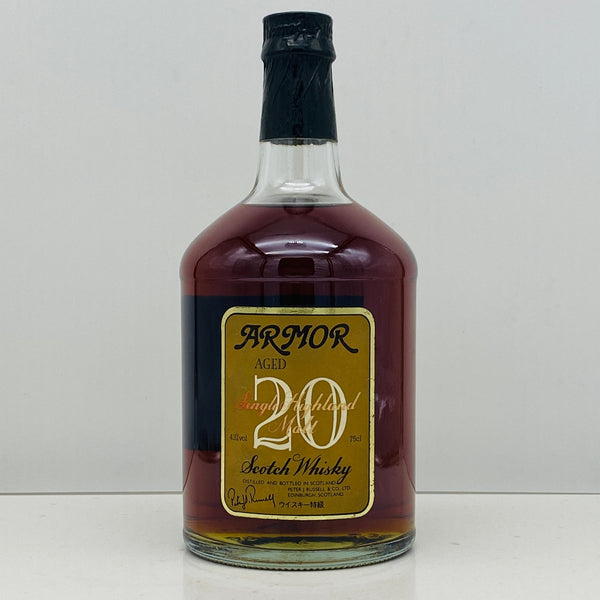
Before opening it, first set the unopened bottle in front of your guests. Our Grand Old Parr (distributed in the 1960s) is a bottle from the special-grade era, with an old-style metal closure on its neck known as a "tin cap" or "spring cap". Armor Glenfarclas 20 Year Old carries the marking "whisky special grade", which tells us it was sold before Japan's grading system for whisky was abolished by the 1989 revision of the Liquor Tax Act. If everyone looks at the shape of the seal and the words on the label before it is cut, opening the bottle becomes not a chore but the high point of the gathering.

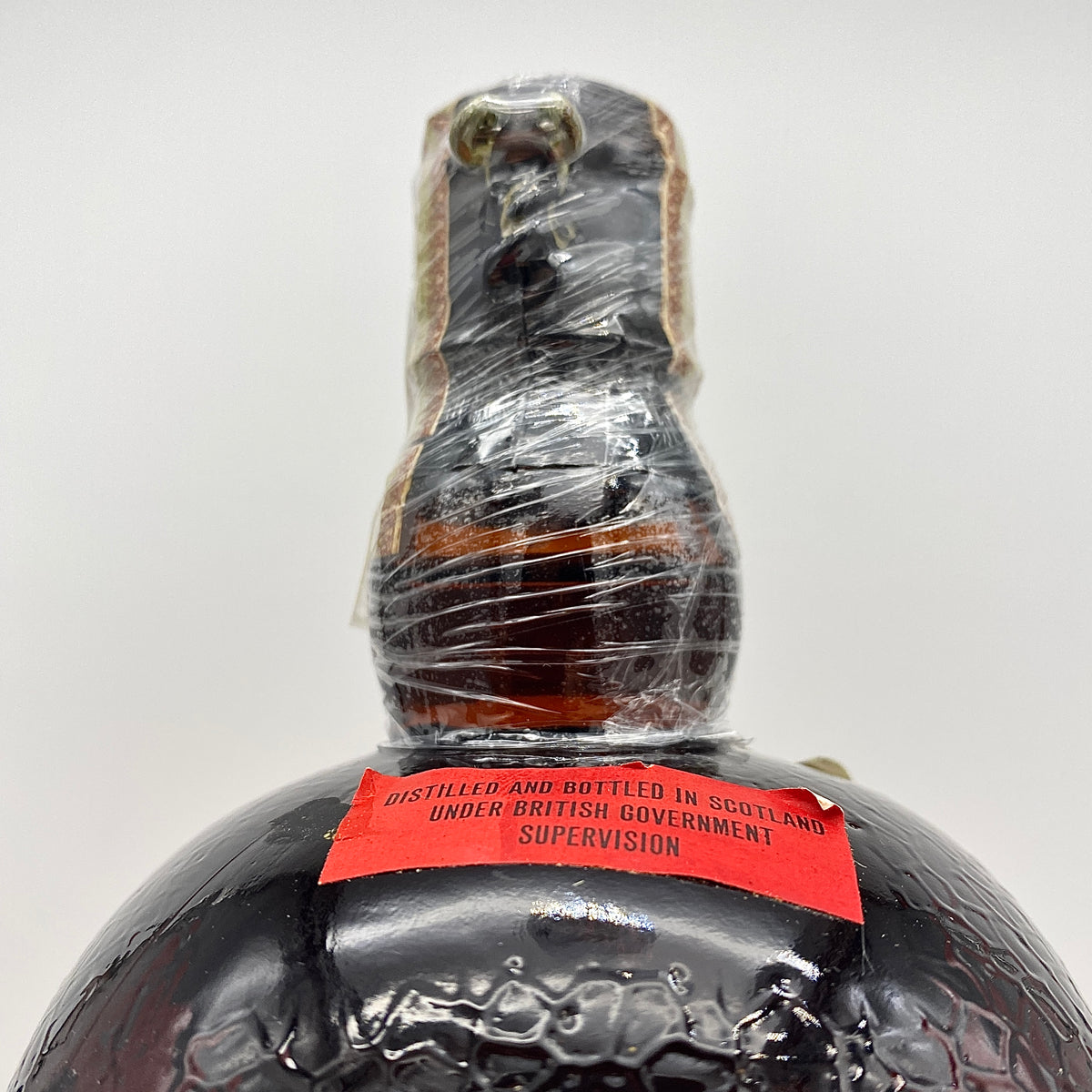
Over long years an old closure may have stuck fast, or the cork may have deteriorated. So as not to be flustered in front of your guests, check the closure beforehand and keep a tea strainer or a clean piece of gauze at hand in case the cork crumbles. We explain more about handling old bottles in our article on how to store old bottle whisky correctly.
The set of utensils — seeing tea utensils as whisky utensils
Every utensil of a tea gathering can be given a role at a whisky gathering. Here is a set of utensils for one gathering, put together from our stock.
The main tea bowl — the e-Shino named "Yuki no Hi"
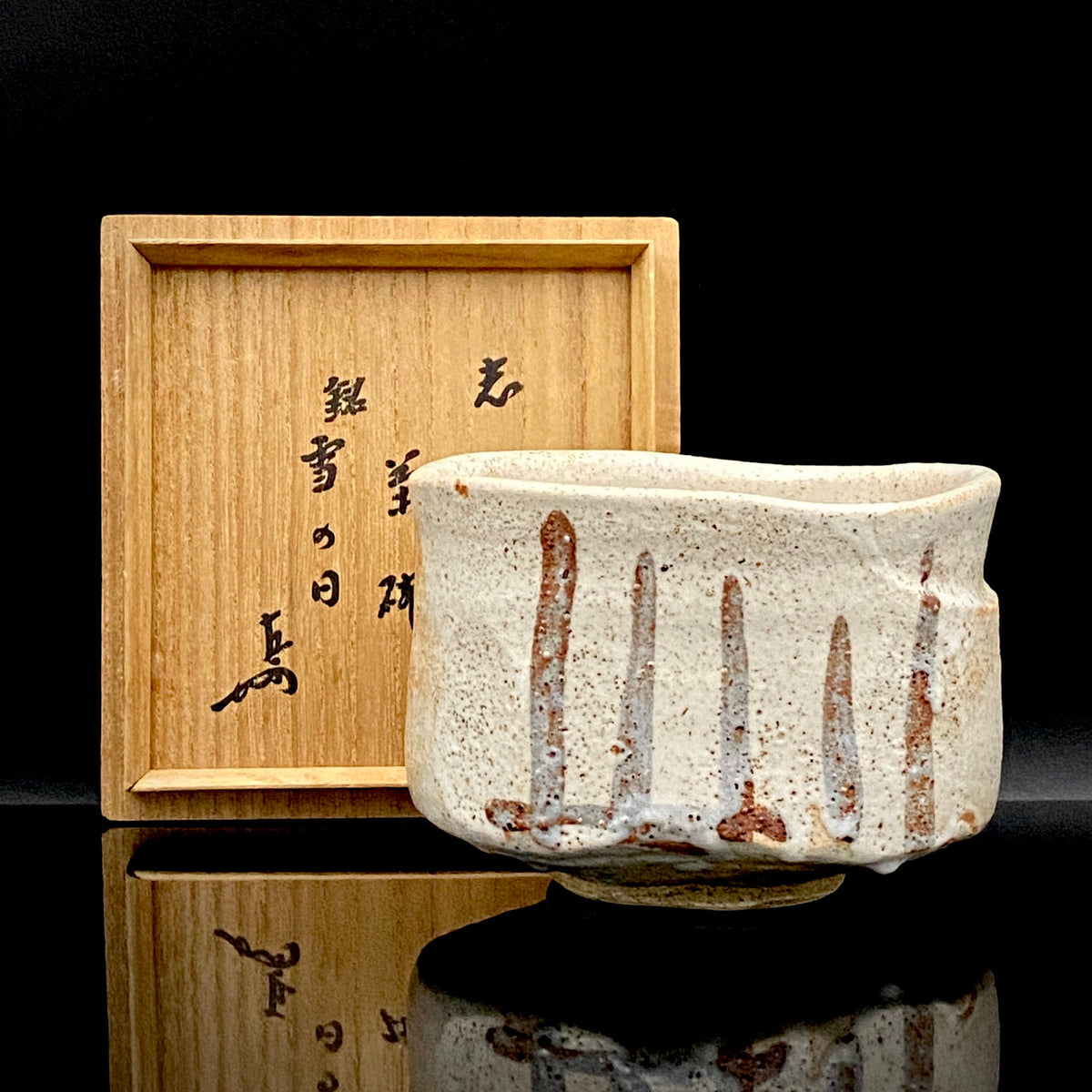
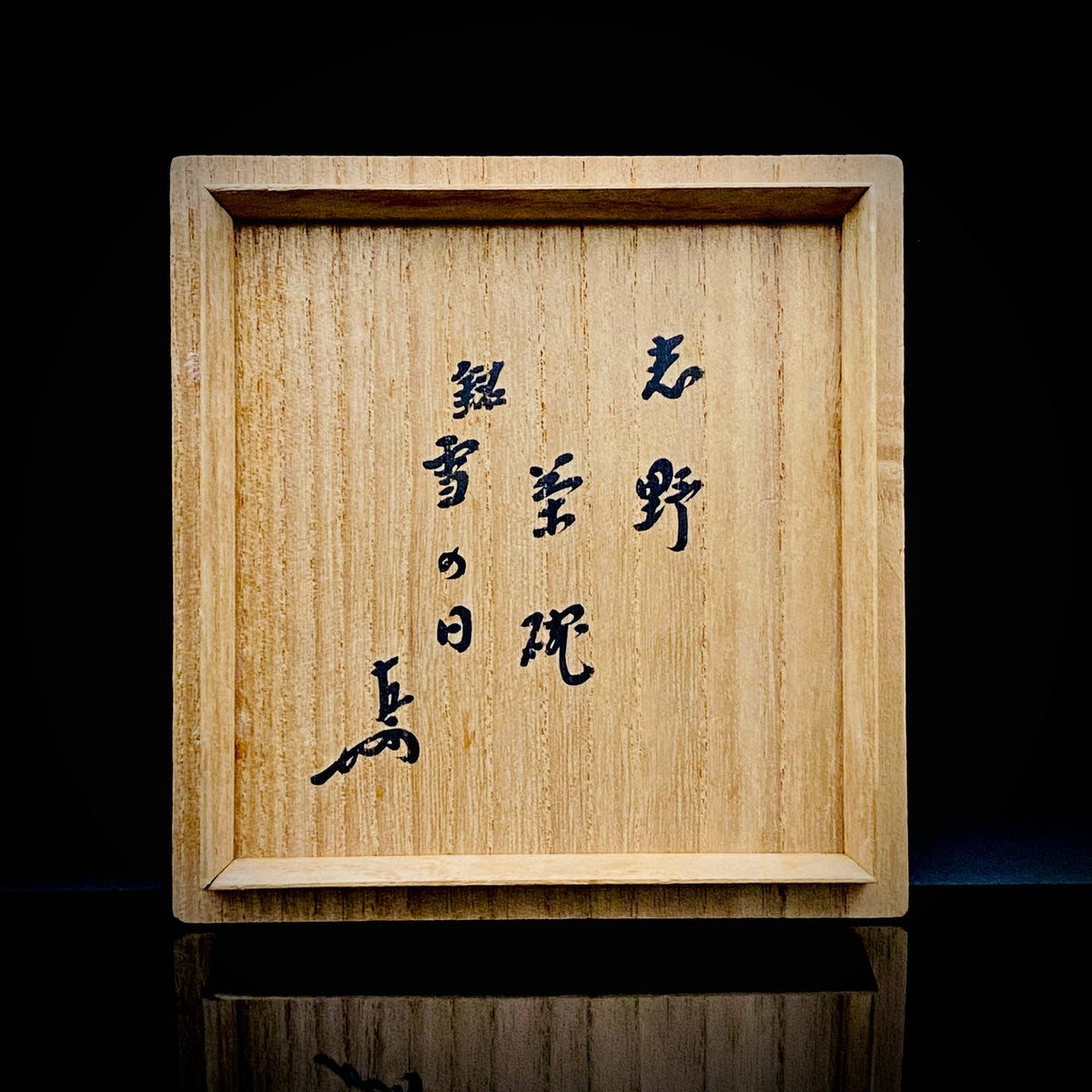
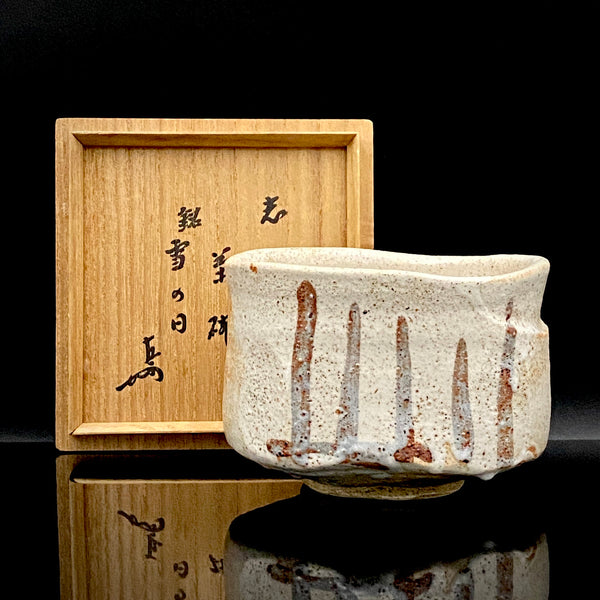
For the main tea bowl, the centrepiece of the gathering, we would choose the e-Shino chawan named "Yuki no Hi", with an inscription by Sokuchusai, the 13th grand master of Omotesenke. It is an utsushi, a respectful copy, that takes as its model the National Treasure Shino tea bowl "Unohanagaki", and on its paulownia box Sokuchusai wrote "Shino tea bowl, named Yuki no Hi" and added a kao, the grand master's stylised signature. The white of the thickly applied feldspar glaze is, true to the name, like fallen snow; beneath it an iron-painted lattice bleeds through, and here and there a faint flush of fire colour appears. Sink a single large piece of ice and quietly pour in amber whisky, and the white interior and its web of crackle rise up through the liquid. We estimate the inscription to date from around the 1950s to the 1970s.
Alternate bowls — a different face for each guest
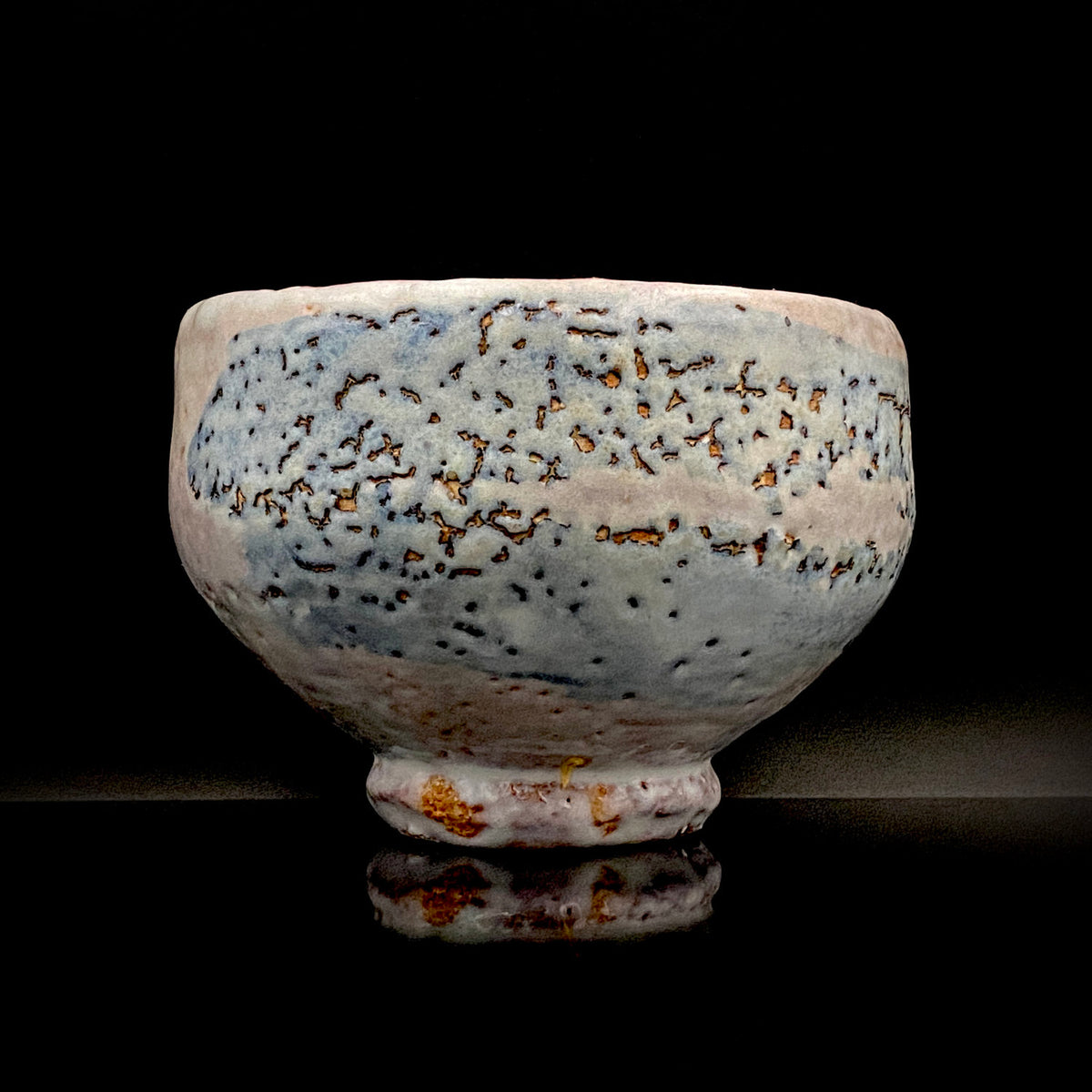
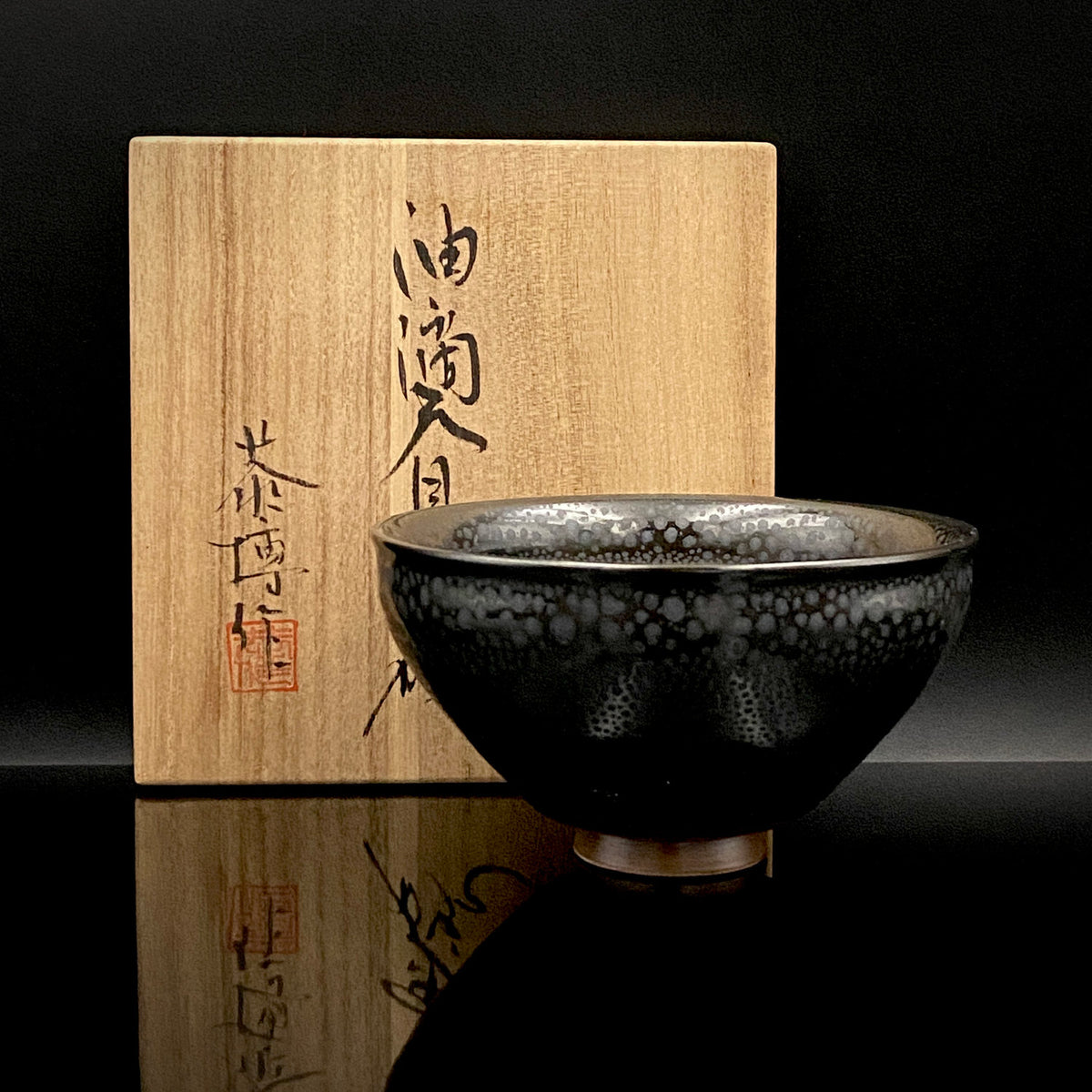
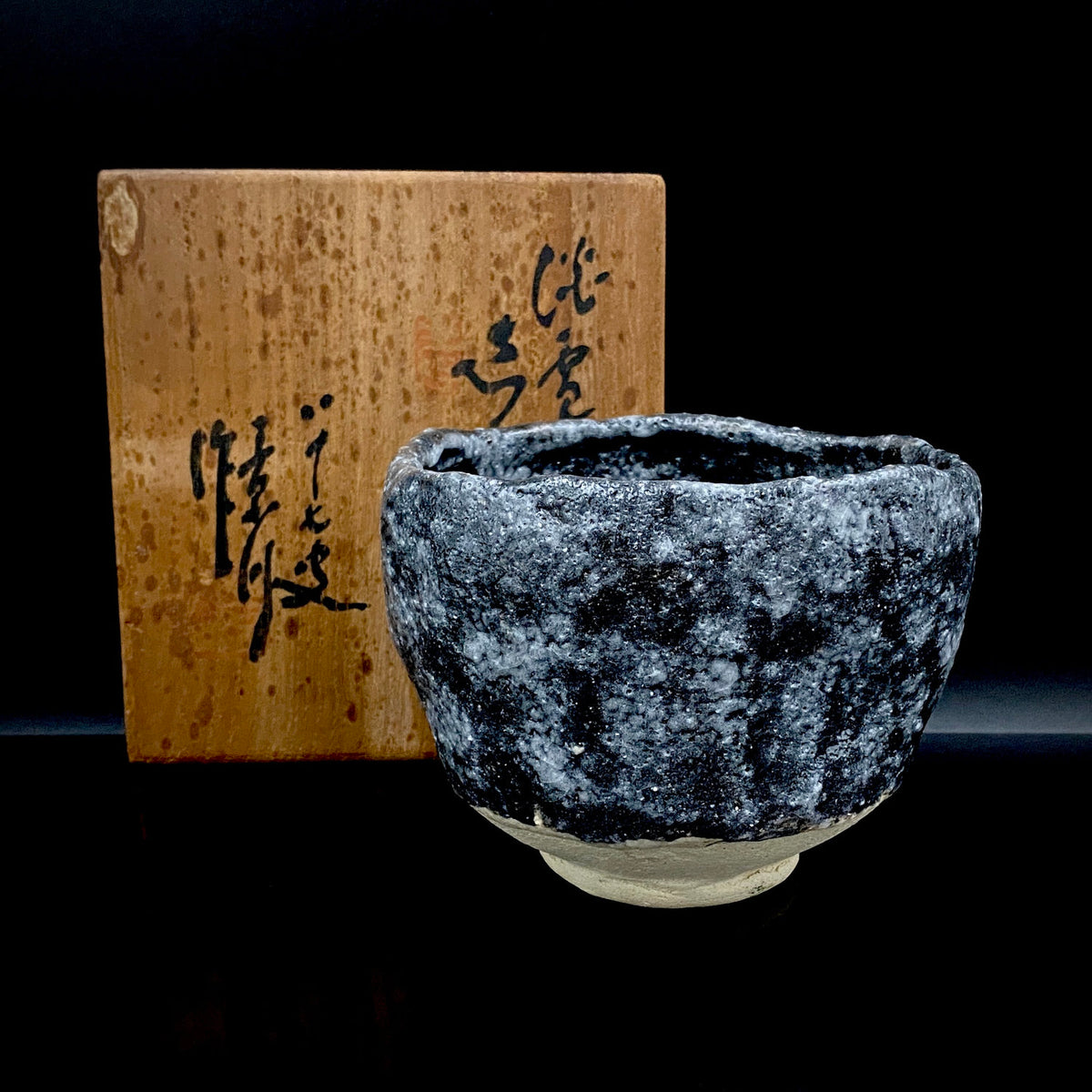
At a tea gathering, besides the main tea bowl, the host may prepare kae-jawan, alternate bowls, so that each guest is served in a different bowl. At a whisky tea gathering too, preparing bowls of different character for each guest lets the same bottle show a different face in each. The Oni-Hagi tea bowl with blue and white Hagi glazes by Yoshida Shuen, who trained as an apprentice of Miwa Kyusetsu X (Miwa Kyuwa), the Living National Treasure of Hagi ware, has white Hagi glaze and a blue glaze trailing across rough Oni-Hagi clay. The oil-spot tenmoku tea bowl by Kato Yasuhiro has silver spots scattered over a black glaze; pour in ice and whisky and its interior becomes a night sky full of stars. Add the Shino tea bowl "Awayuki" (Light Snow) by Yano Keisen, and its name echoes the main bowl's "A Snowy Day".
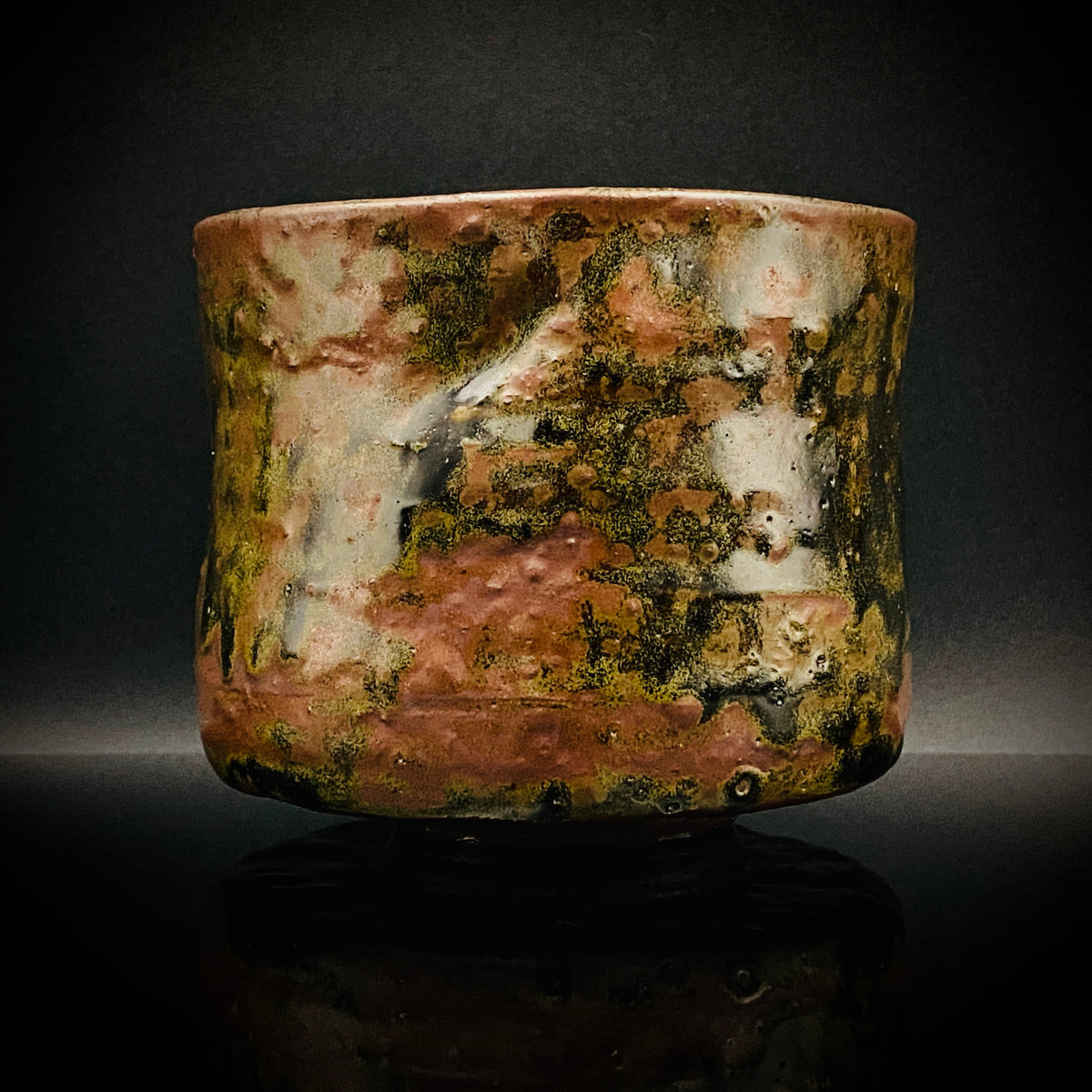
As the cold deepens, we would also add a tsutsu-jawan, a tall tea bowl with a narrow mouth and a deep body. Because the tea inside cools slowly, tsutsu-jawan have long been favoured in the cold season. The Chosen-Karatsu tsutsu-jawan by Tanaka Hozan is a powerful bowl in which a white straw-ash glaze runs down over a black iron glaze, and its tomobako is inscribed "tsutsu-jawan". On a chilly night it also suits warm whisky diluted with hot water.
Mizusashi and kensui — vessels to keep and to receive ice
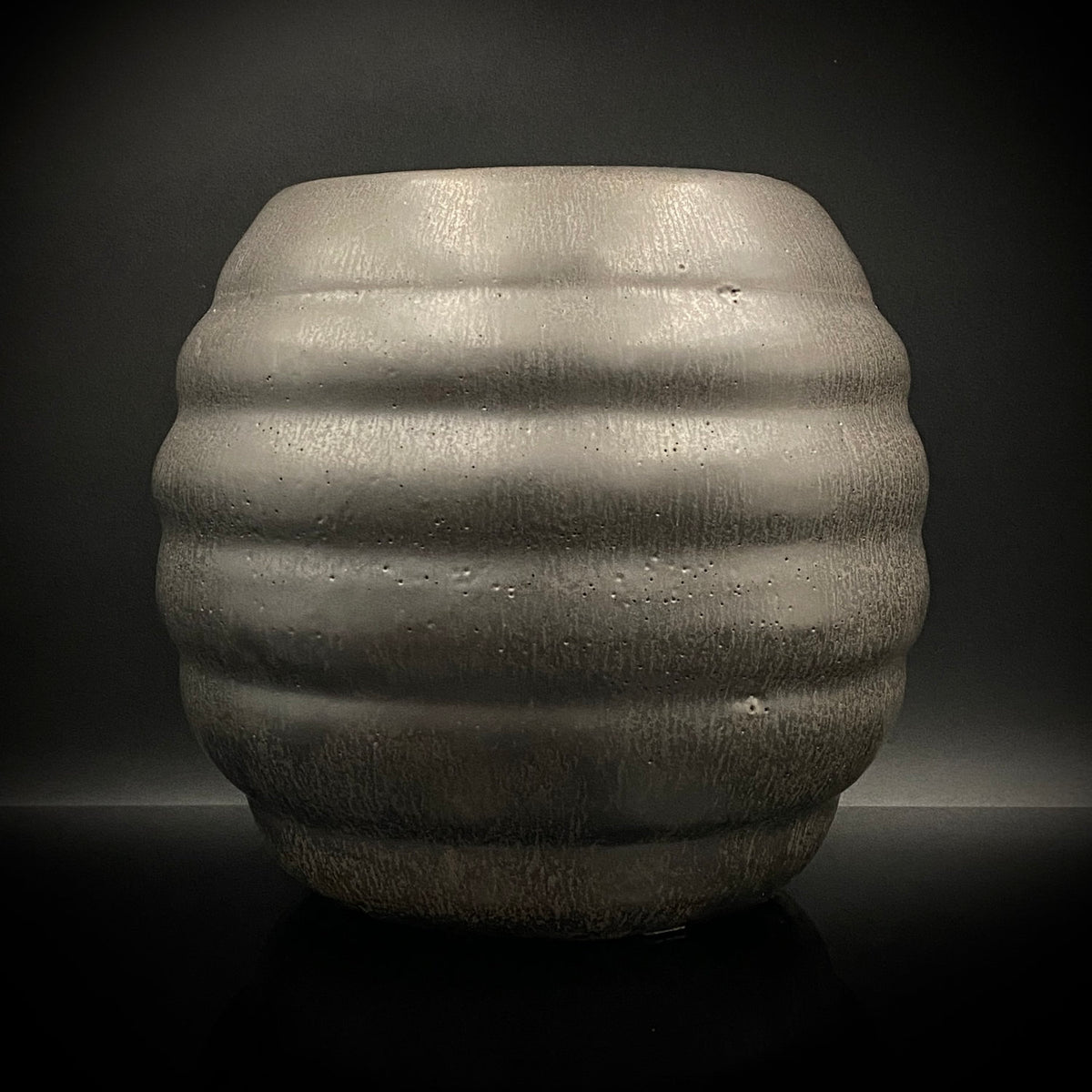
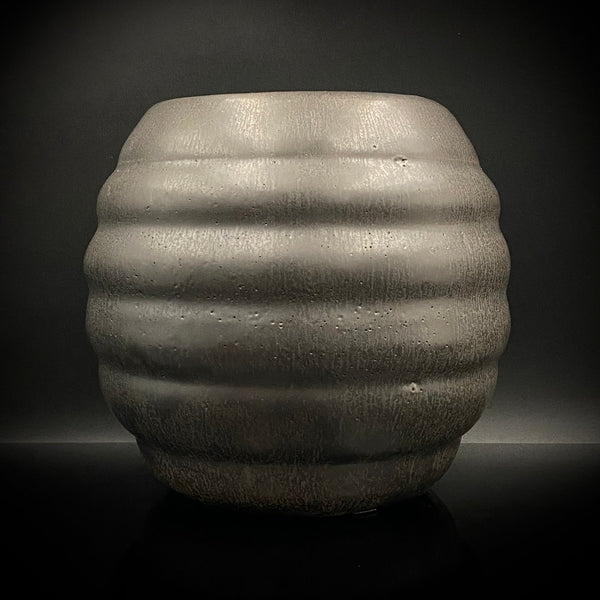
The mizusashi, the jar that holds fresh water for topping up the kettle during the temae, becomes an ice container at a whisky tea gathering. The bellows-form mizusashi by Kozuru Hajime has a stepped body like a bellows and a lid, a shape well suited to keeping ice from melting. It is covered with a glaze the artist made from the ash of Mount St. Helens in the United States, which erupted in 1980, and its dark grey surface, which seems to swallow the light, makes clear ice stand out all the more.
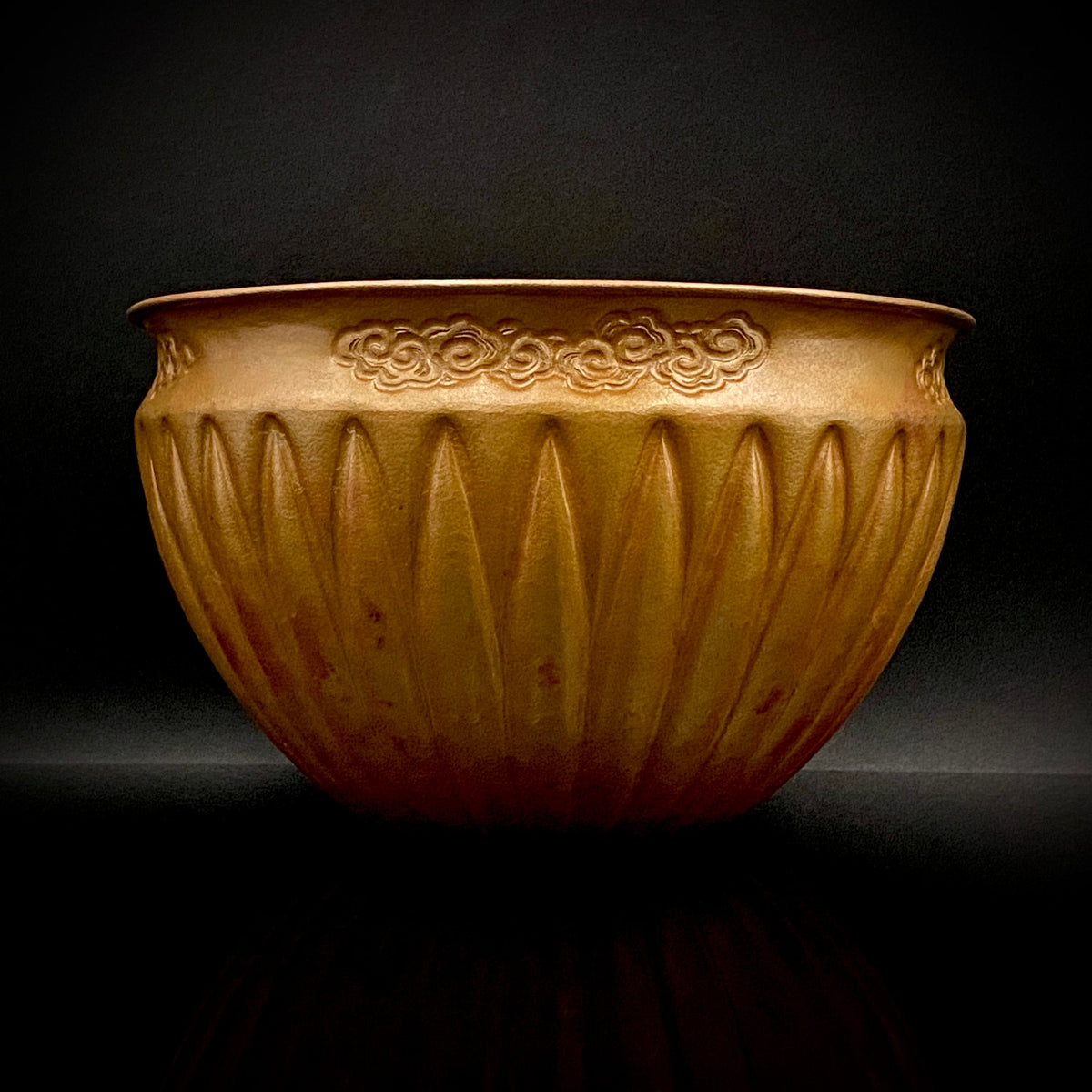
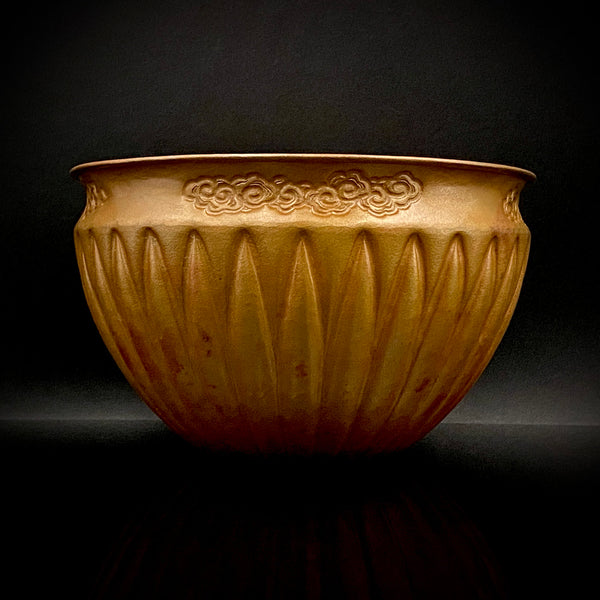
The kensui, the bowl into which used water is emptied, comes into its own for catching meltwater or holding ice. The forged copper kensui with a chrysanthemum pattern by Tanaka Hideaki is the work of a metal artist who made tea utensils in the workshop of Nakagawa Joeki, the metalworker of the Senke Jissoku, the ten families of craftsmen who serve the Sen schools of tea. A single sheet of copper has been hammered out to form the petals of a large chrysanthemum.
Mizutsugi and water droppers — utensils down to the last drop
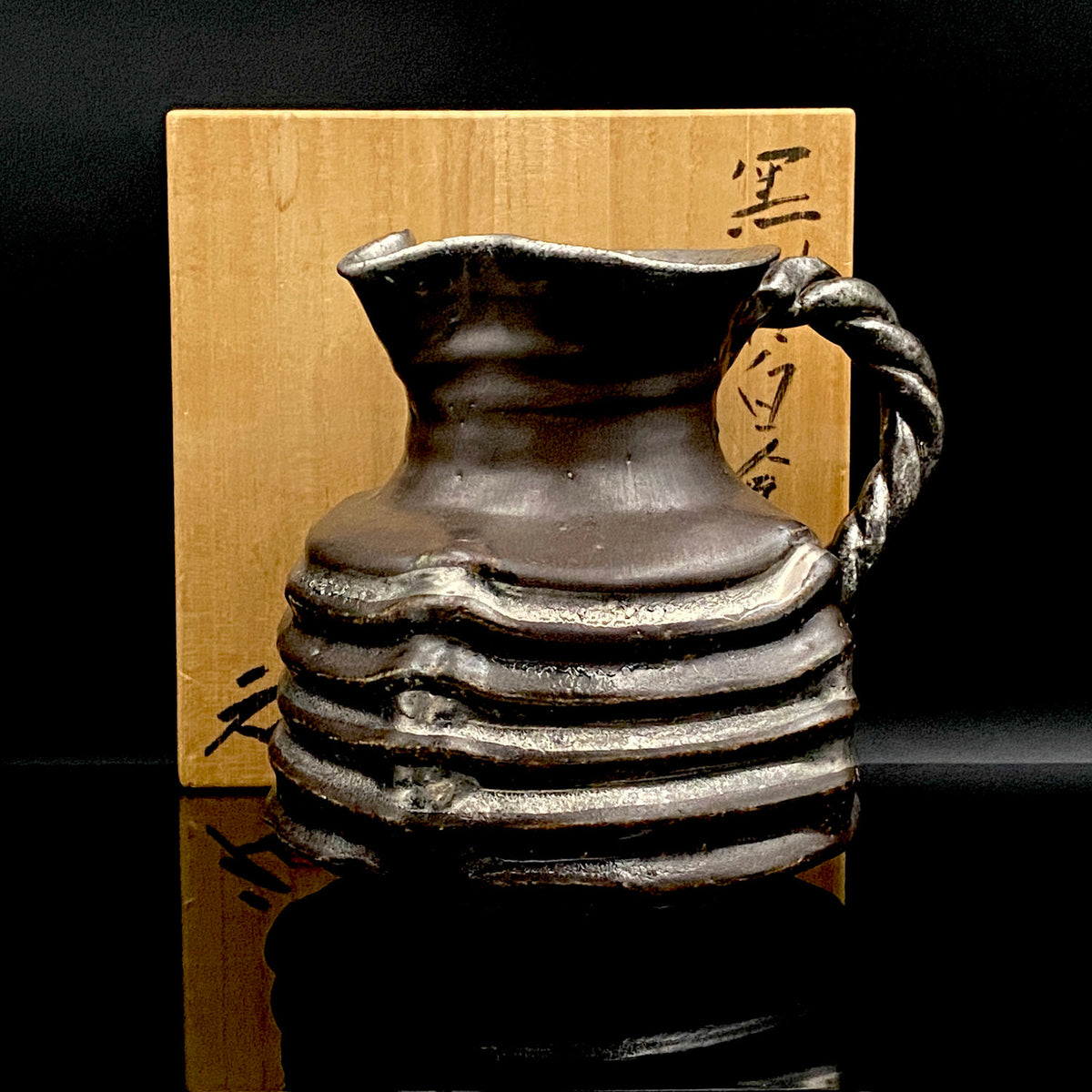
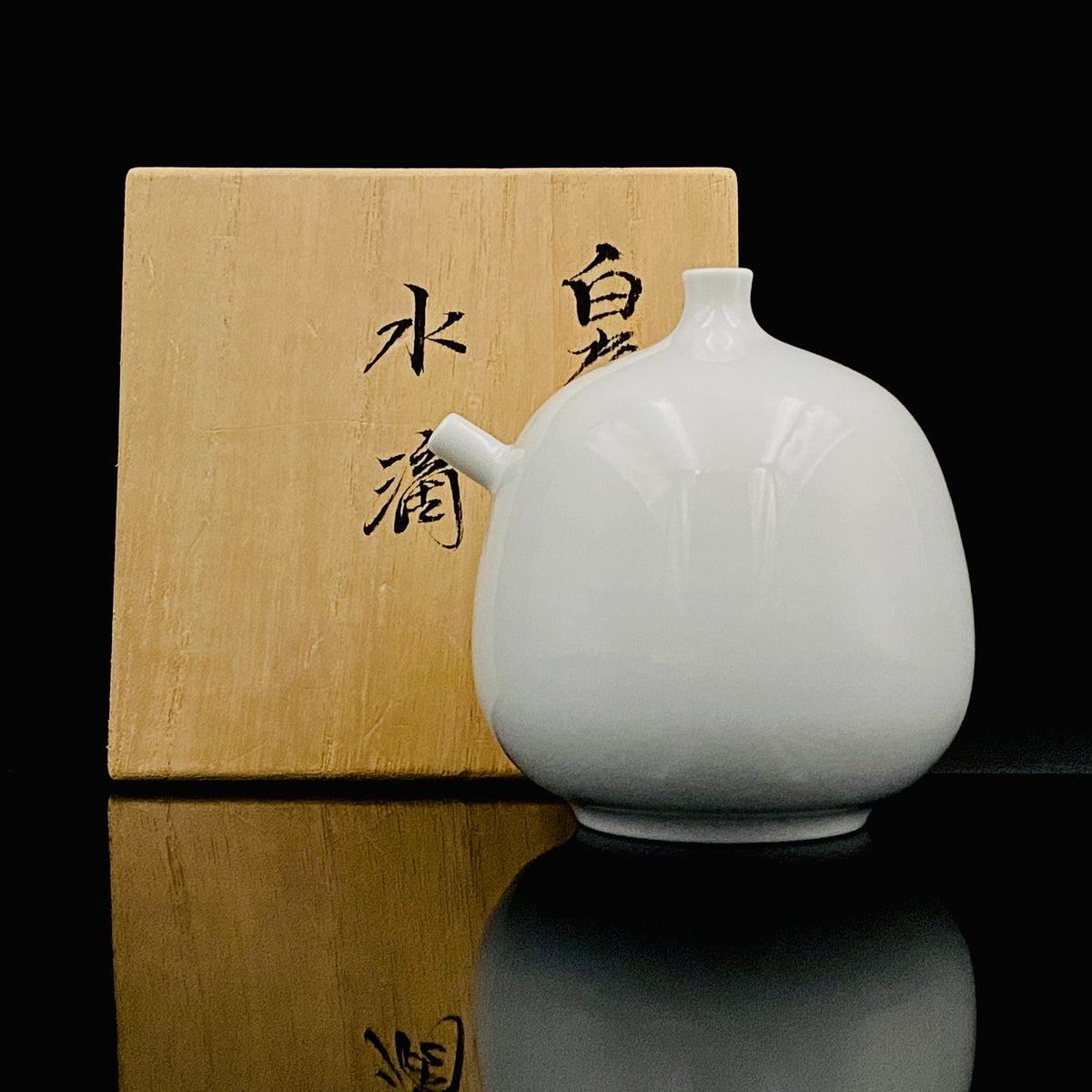
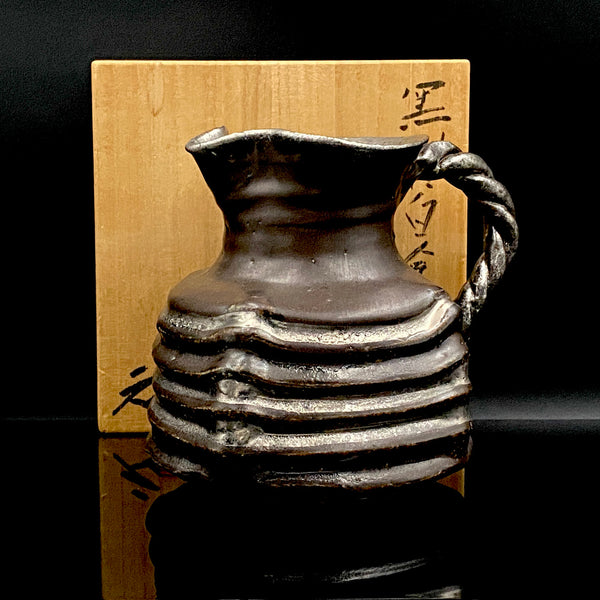
The mizutsugi, the pitcher used to refill the mizusashi, becomes the vessel for the water you add to whisky. The black-glazed pitcher (mizutsugi) with platinum decoration by Kozuru Hajime has a bellows-like body touched with platinum over a black glaze and a twisted handle, and simply setting it on the table brings focus to the whole setting. For the few drops of water that open up the aroma, use the white porcelain water dropper by Living National Treasure Inoue Manji or the tenmoku yohen water dropper by Heian Sokyu III. The spout of a water dropper, which lets water fall one drop at a time, is ideal for enjoying the change in aroma while checking how much you have added.
Incense container and incense burner — utensils of scent for the hearth season
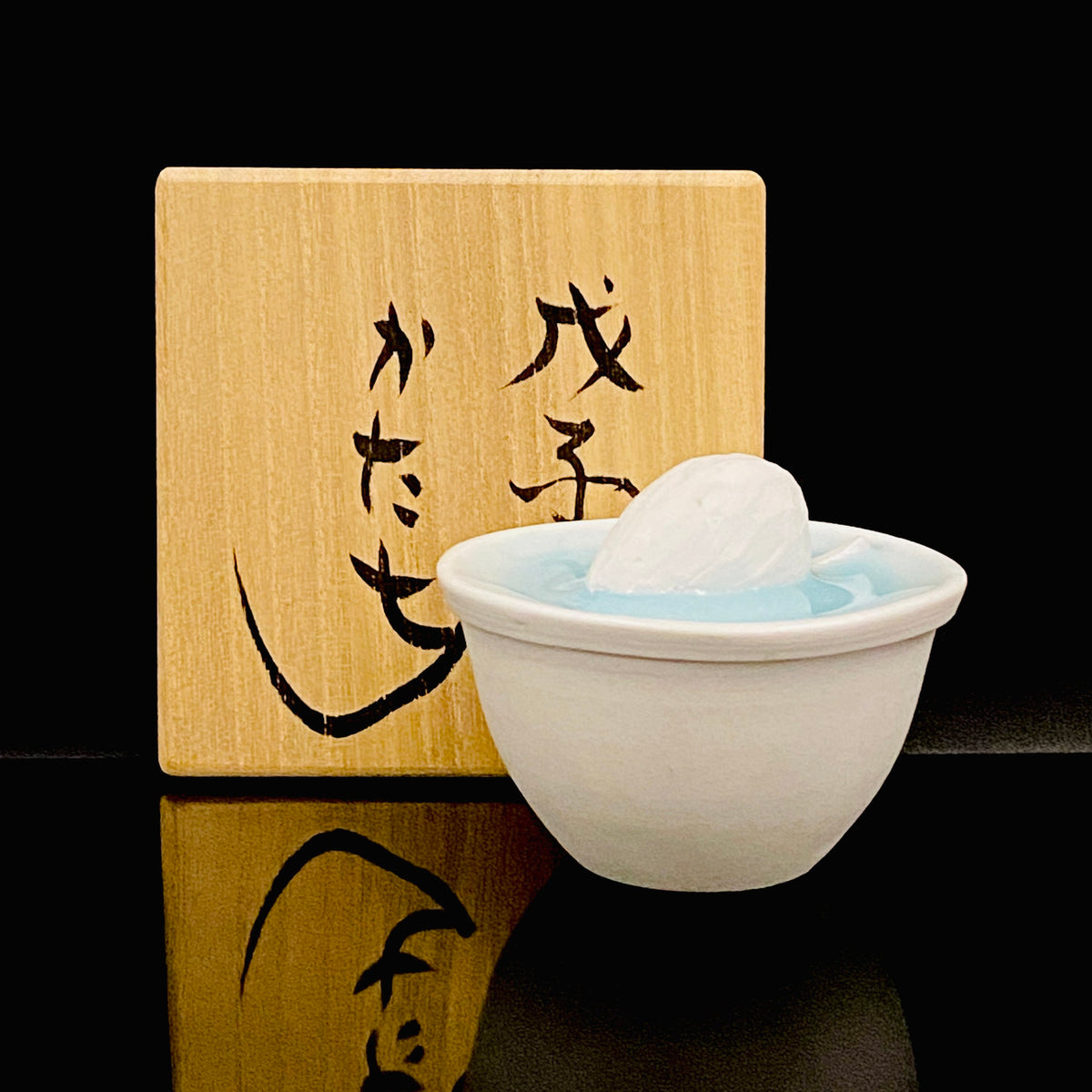
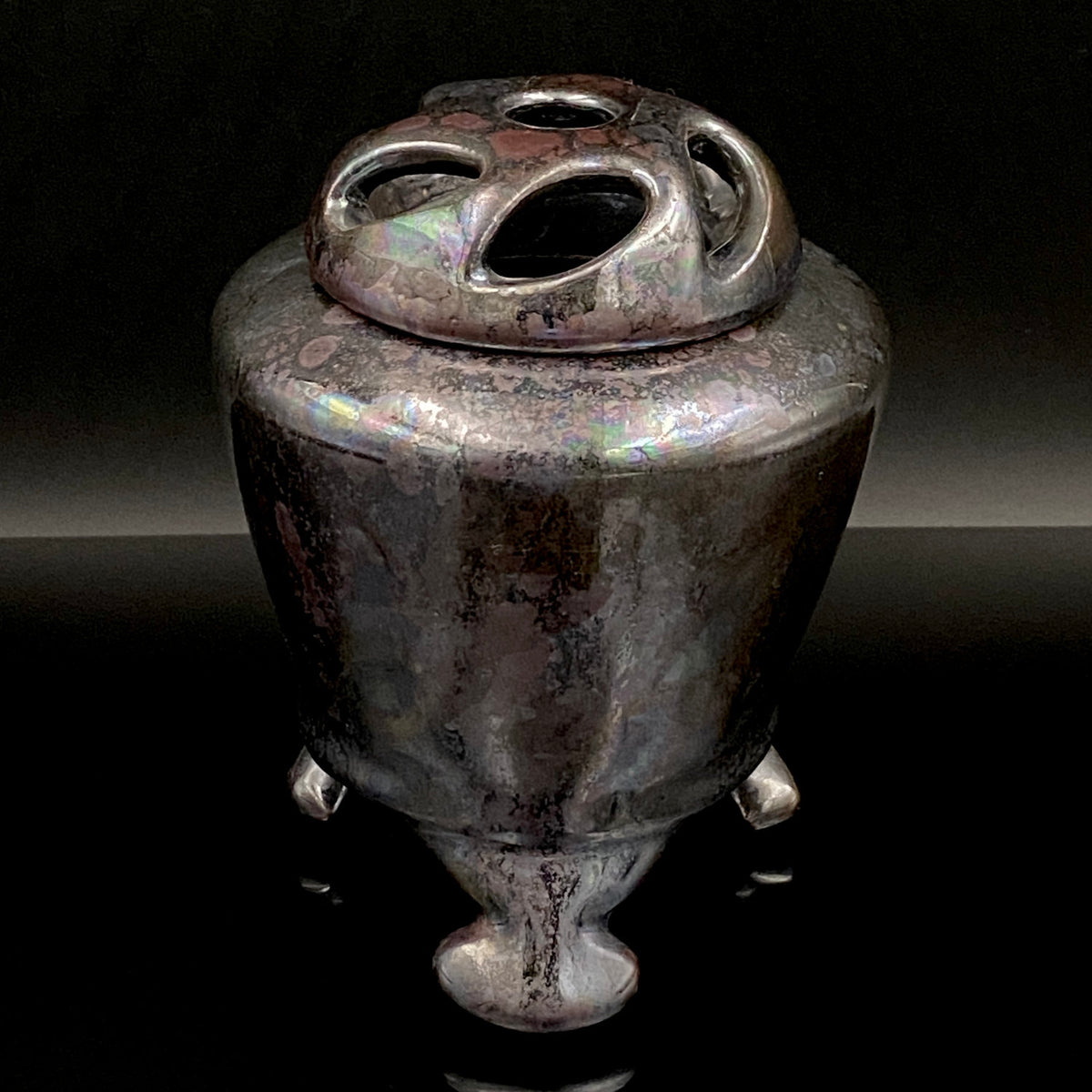
In the hearth season, it is said to be customary at tea gatherings to use a ceramic kogo, the small lidded container for kneaded incense. Nagae Shigekazu's "Form of Boshi" is a lidded piece of seihakuji, pale bluish-white porcelain, originally made as a kogo for tea; with its lid removed it can also be used as a small drinking cup. In the alcove, displaying the yohen tenmoku tripod incense burner by Heian Sokyu III would be a fine touch.
Take care, however, when burning incense at a whisky tea gathering. Whisky is a drink savoured for its aroma, and if strong incense lingers in the room, its delicate notes become hard to perceive. Burn the incense lightly and finish before the guests arrive, or simply display the incense burner in the alcove as an ornament. For the same reason, we suggest that the flower in the alcove be a single bloom with a gentle scent.
Sweets bowls and cups — as many as there are guests
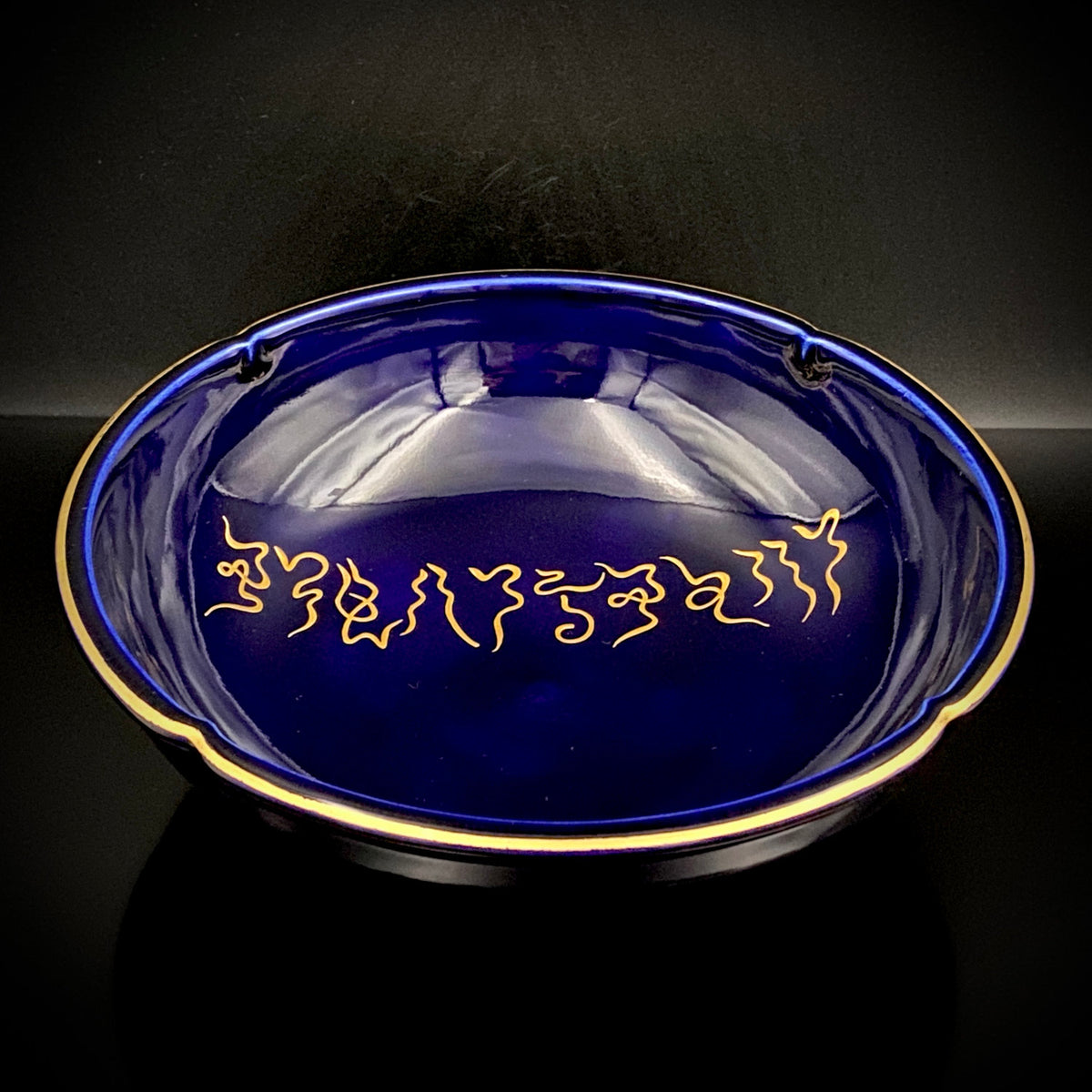
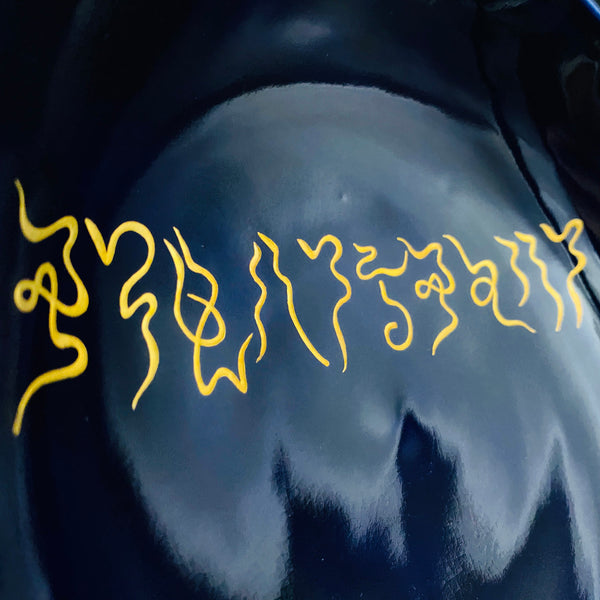
At a whisky gathering, the sweets of a tea gathering become small dishes to accompany the drink. The ruri-glazed confectionery bowl with gold kamiji characters by Miyanaga Tozan II is a lobed bowl with a single line of jindai moji, the "characters of the age of the gods", drawn in gold on its deep lapis-blue interior; the artist studied chanoyu under Yurinsai, grand master of the Mushakoji Senke school. The green-glazed decorative plate with pampas grass and bamboo by Kitade Fujio was made at Seisen Kiln in Kutani, a kiln named by Tomimoto Kenkichi, and is just right for a small serving of dry sweets or nuts.
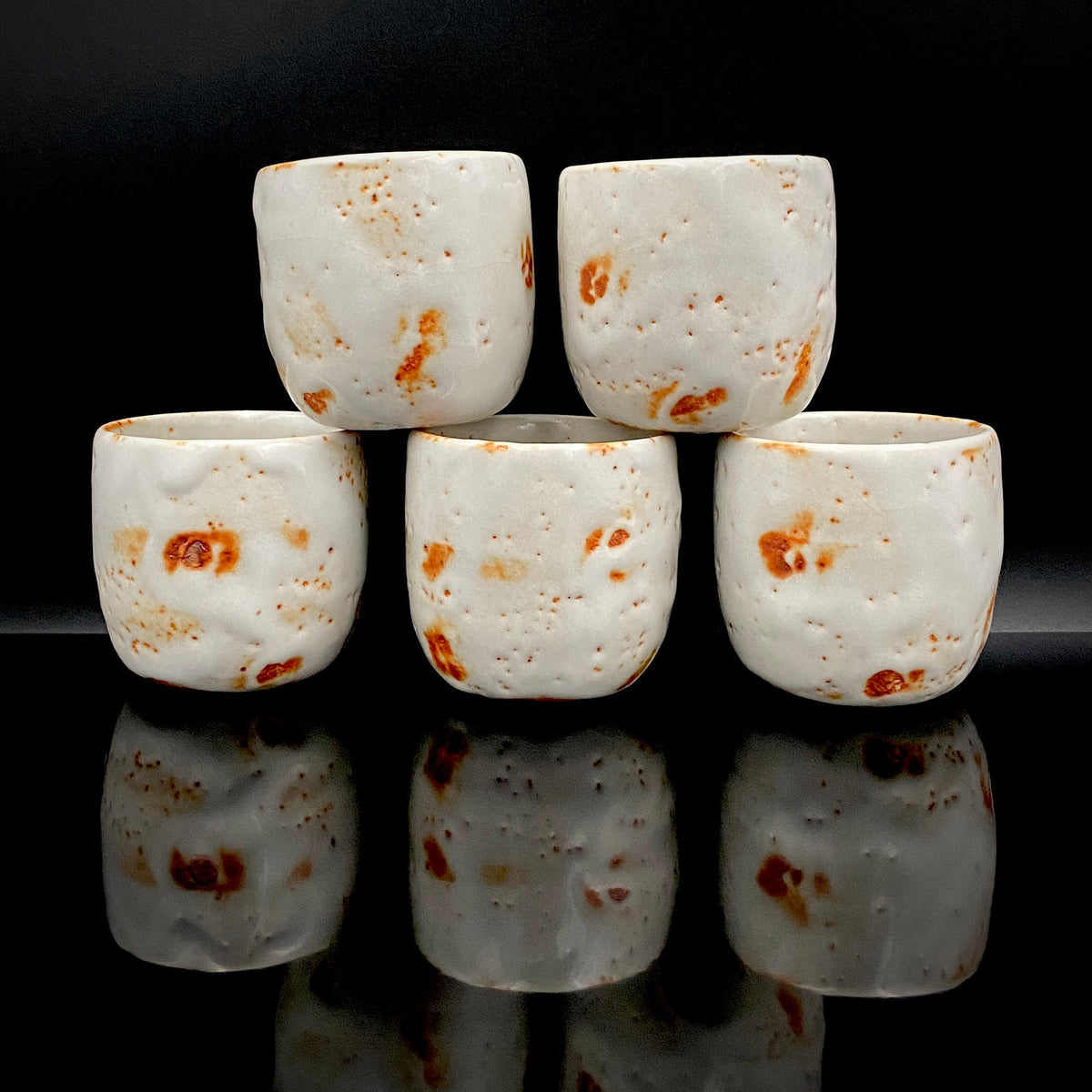
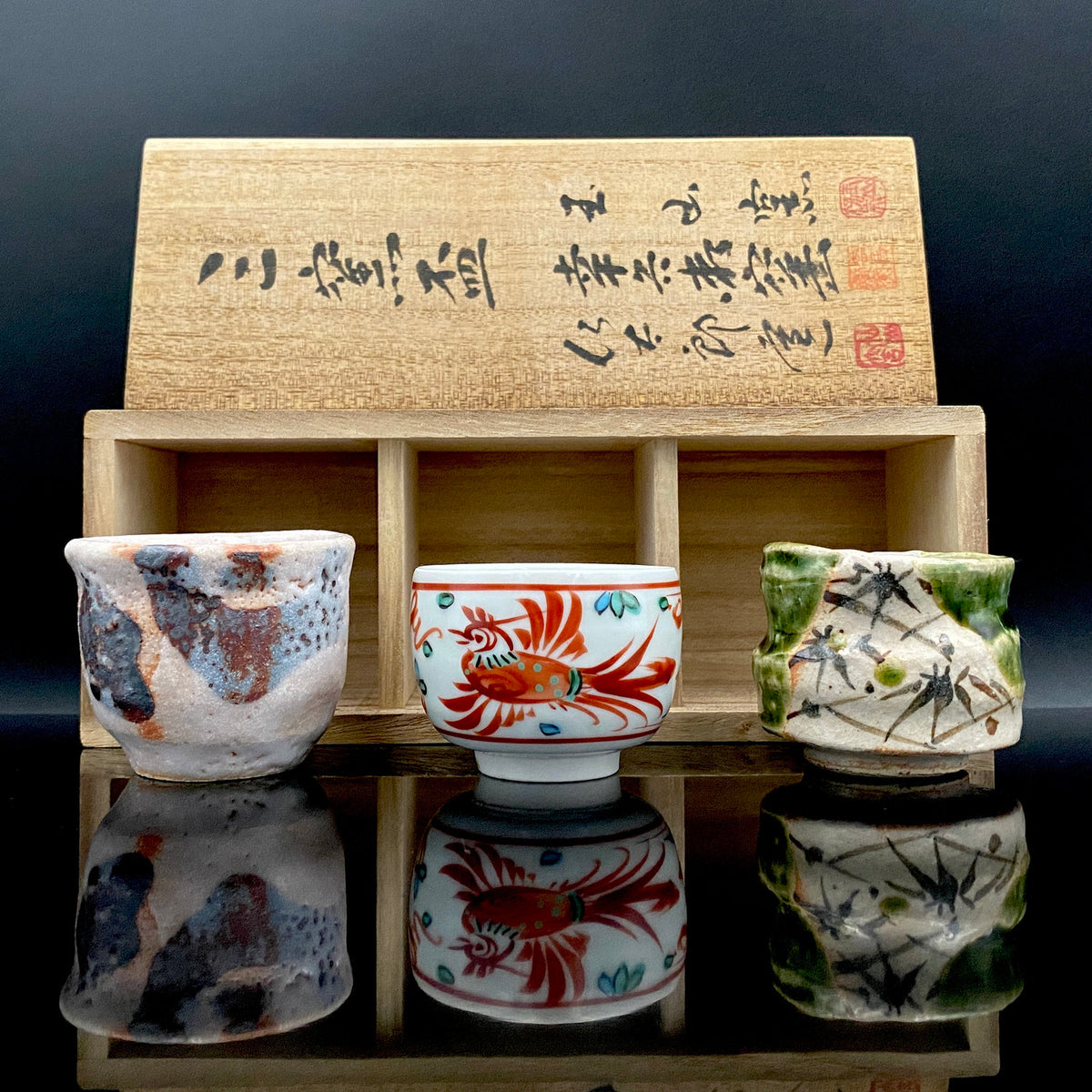
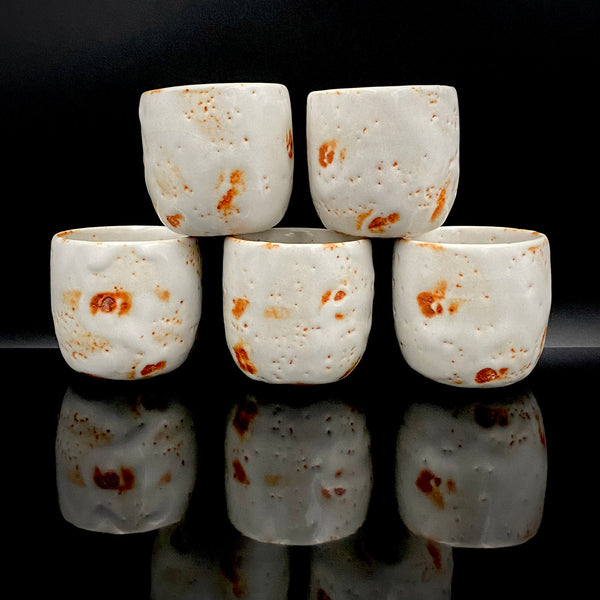
A chaji is a formal tea occasion to which a small number of guests are invited and which proceeds from the kaiseki meal to thick tea and thin tea, and the number of guests is said to be about five at most. For your guests' cups, the set of five Shino yunomi by Ando Hidetake is just the right number. For a gathering of three, the three-kiln cup set, in which three famous Mino kilns made a Shino, an Akae and an Oribe cup, can be handed out so that each guest has a different cup.
The flow of the gathering — from the waiting room to looking at the utensils
Once the utensils are ready, build the gathering along the flow of a chaji. Here we imagine a gathering of about two hours for up to five guests.
- A glass of water in the waiting room: At a chaji, guests prepare themselves in the waiting room and are served plain hot water before entering the tea room. At a whisky tea gathering, serve a glass of cold water here. It also plays the part of what the sake world calls yawaragi-mizu, the water drunk between sips of alcohol.
- Looking at the alcove: On entering, the guests first look at the alcove. Display the bottle there before its seal is cut, together with its box or material from its time.
- Kuchikiri (opening the bottle): The host cuts the seal in front of the guests, pours the first glass into the main tea bowl and checks its aroma and condition.
- The first serving, neat: Serve each guest a small amount neat in a cup. As it is a strong drink, about 15ml per serving is enough.
- The second serving, on the rocks in a tea bowl: Put a large piece of ice into an alternate bowl and serve the same bottle on the rocks. Find out together with your guests how the aroma and the feel in the mouth change with the vessel.
- Water and small dishes: Add water one drop at a time from a water dropper and enjoy the change in aroma while nibbling on the dishes from the sweets bowl.
- Looking at the utensils: Finally, invite the guests to take the vessels and the bottle in their hands, and talk about the makers, the kilns, the names and the box inscriptions.
Sake is indispensable in the kaiseki meal of a chaji. In particular, in the course called hassun, the host and guests exchange cups of sake. Chanoyu is a culture that has always lived side by side with the hospitality of sharing a drink. Think of the whisky tea gathering as one in which that drink is replaced with a Western spirit and raised a little further into the leading role.
For the principal guest, the finest cup
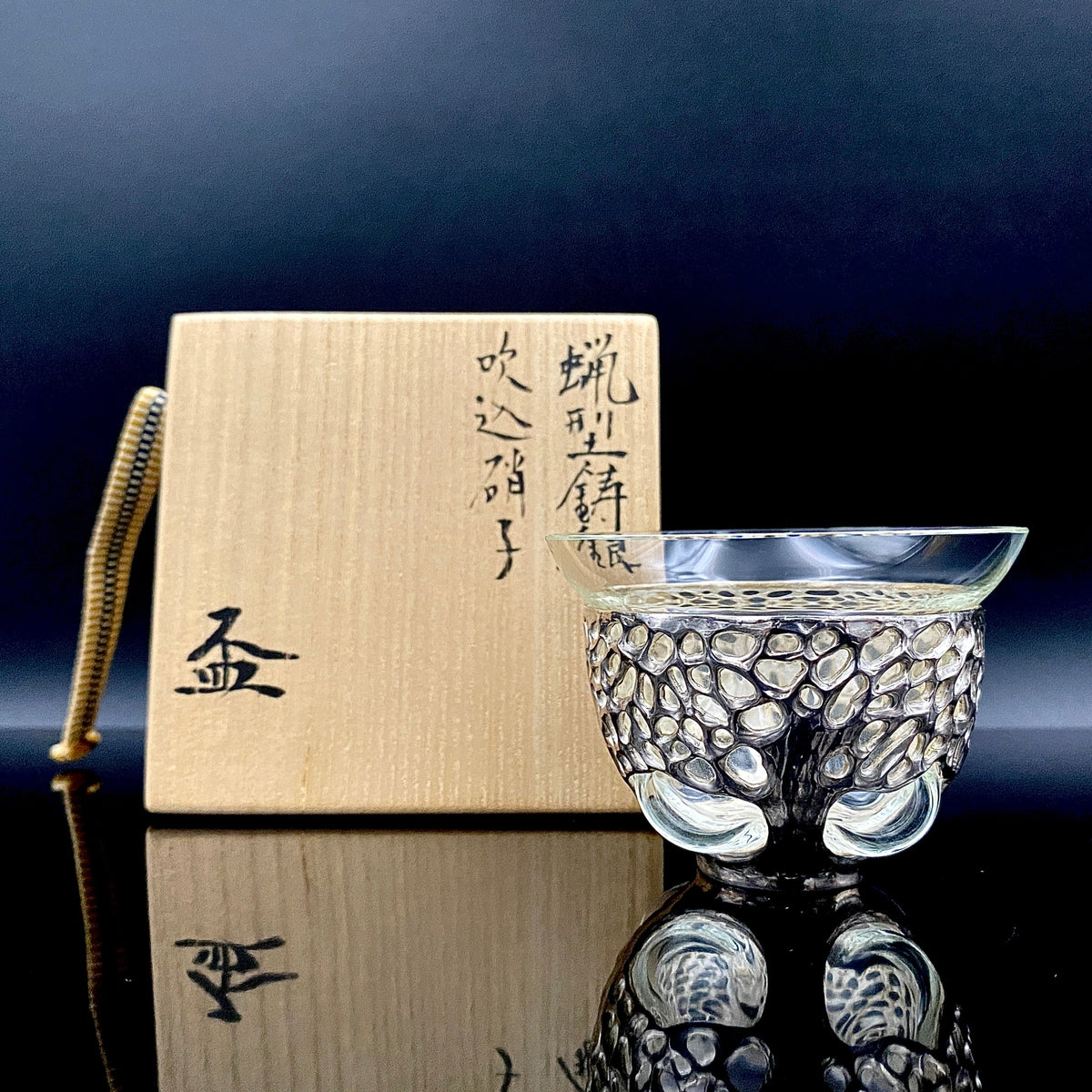
At a tea gathering, the guest in the most honoured seat is called the shokyaku, the principal guest, and the conversation with the host proceeds mainly through the shokyaku. At a whisky tea gathering too, choosing a vessel of a higher order for the principal guest gives the gathering a sense of occasion. If we were to choose one cup for the principal guest from our stock, it would be "The Silver Arbor" by Living National Treasure Kitamura Shinichi. This cup combines silver cast by the lost-wax method with blown glass, an extremely rare work that brings two different materials, metal and glass, together in a single vessel.
Choosing the bottles for the gathering
The idea of toriawase also guides the choice of bottles. Make the most important one, the main bottle, a bottle with a story worthy of being opened in front of guests. If the inscription on the main bowl dates from the mid-Showa period, for example, pair it with a bottle that breathed the same Showa air.
| Theme of the gathering | The main bottle | Vessel to pair |
|---|---|---|
| Savouring Showa's special-grade era | Grand Old Parr (distributed in the 1960s) | E-Shino chawan "Yuki no Hi" |
| A long-aged single malt | Armor Glenfarclas 20 Year Old | Kato Yasuhiro, oil-spot tenmoku chawan |
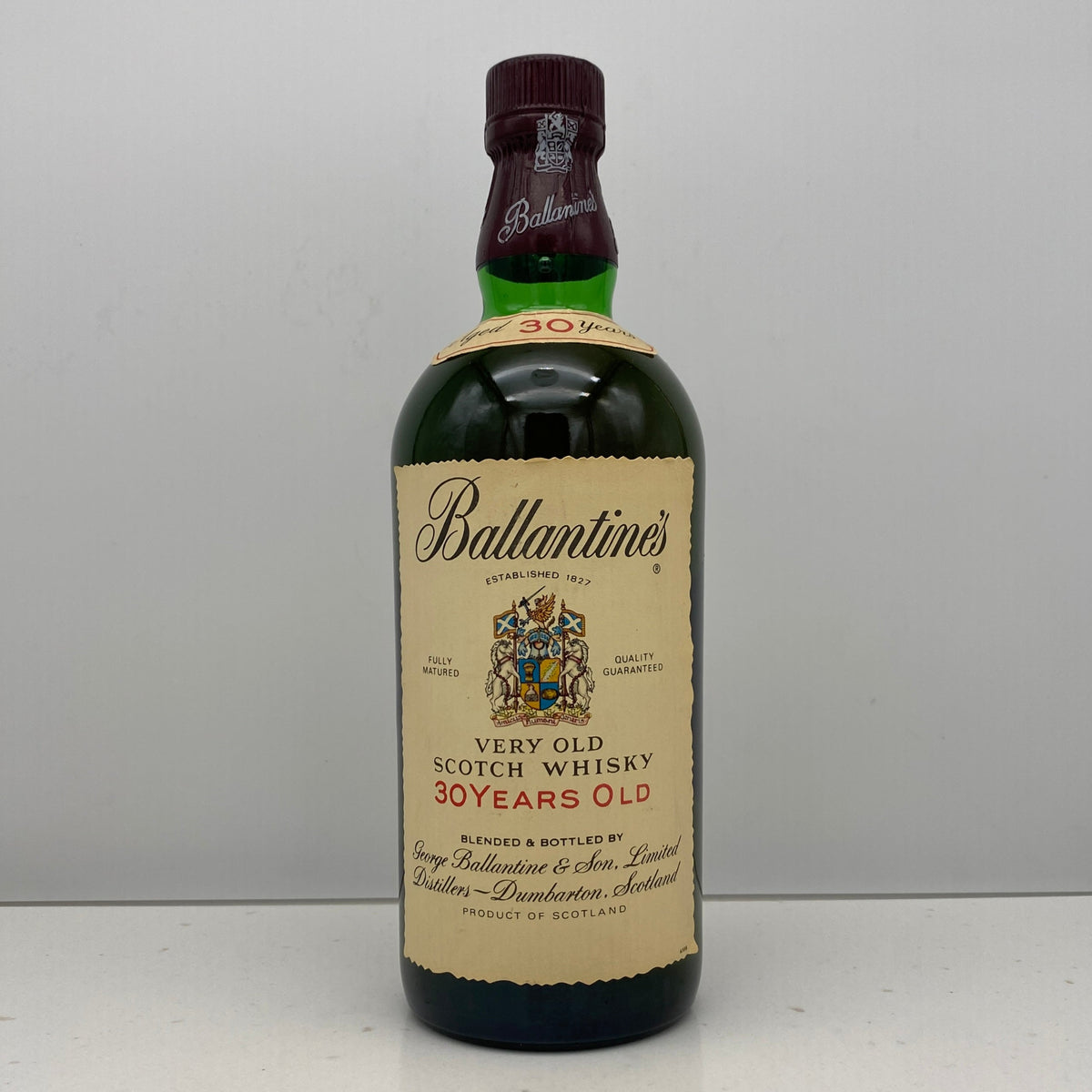
| A distinguished blend | Ballantine's 30 Year Old, Blue-Blue Flag label | Yoshida Shuen, Oni-Hagi chawan |
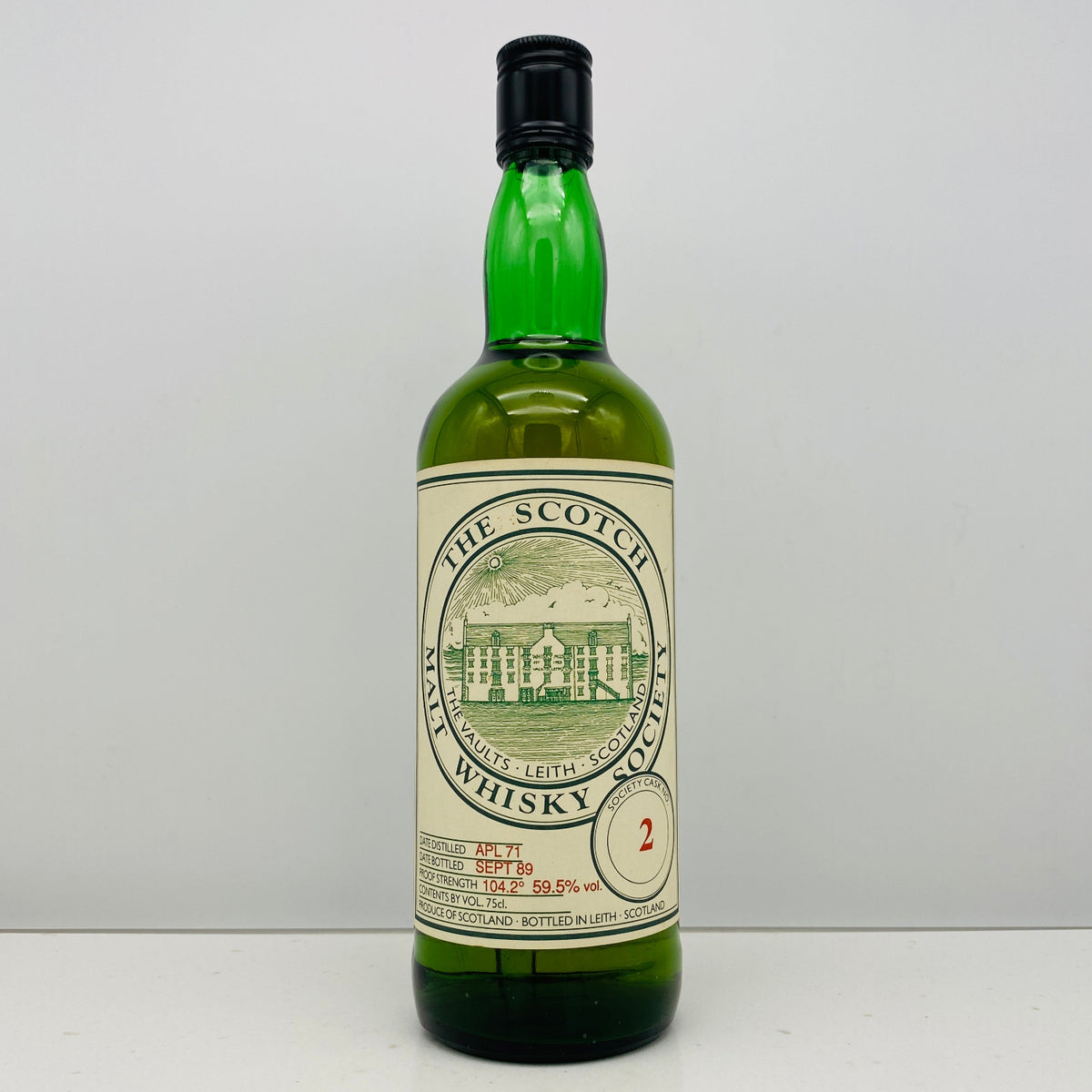
| A high-strength malt straight from the cask | SMWS No.2 Glenlivet 1971-1989 | Mino three-kiln cup set |
SMWS No.2 is a Glenlivet distilled in 1971, matured for 18 years and bottled in 1989 at cask strength by The Scotch Malt Whisky Society. Because it is so strong, you can share with your guests the process of tasting a little neat from a cup and then adding water one drop at a time from a water dropper as the aroma opens. Ballantine's 30 Year Old was distributed in the mid-1980s and is known as the "Blue-Blue Flag" because both flags in the coat of arms on its label are blue.
An opened bottle can still be enjoyed at your next gathering if you close it tightly and store it upright. After opening, however, the aroma gradually changes as it meets the air, so it is wise to plan to finish the bottle while it is at its best, in step with your plans for the next tea gathering.
The host's notes — aroma, temperature and quantity
- Bring in nothing strongly scented: Perfume, the scent of fabric softener and strongly flavoured food all mask the aroma of whisky. Host and guests alike should show the same consideration as guests at a tea gathering who refrain from wearing perfume.
- Prepare the temperature of the vessels: Dipping a tea bowl for drinks on the rocks in water to cool it before use makes the ice last longer. With earthenware, dipping it in water also helps keep darkly coloured drinks from soaking into the crackle.
- Small amounts, several servings: Serving small portions several times, changing the vessel or the way of drinking each time, lets you enjoy the changes in one bottle to the very end.
- Thinking of the way home: As alcohol is served at this gathering, have water or tea ready for guests who are driving, and let everyone know in advance that no alcohol will be served to anyone under 20.
Summary — bringing tea utensils back to the drinking table
Tea bowls, fresh-water jars and waste-water bowls are by nature utensils for making tea. Yet when we remember that chanoyu itself is a culture of exchanging cups of sake at the kaiseki meal, of looking at the utensils together and of sharing a once-in-a-lifetime moment, inviting an old bottle into it should be no disrespect to the utensils. On the evening you cut the seal of a bottle that has travelled through decades, gather the vessels of master craftsmen that have aged in the same way, and receive your guests in the order of chanoyu. That is what we mean by a "whisky tea gathering". For more on bringing tea utensils to the drinking table, please also see our article on mitate drinking vessels.
Frequently asked questions
Q. Can I hold a whisky tea gathering without knowing the tea ceremony?
Yes. What this article introduces is a way of hosting with whisky that borrows the order and the choice of utensils of chanoyu, and there is no need to recreate the temae exactly. It is enough to enjoy the flow of choosing the utensils, cutting the seal and looking at the vessels together.
Q. Will drinking whisky from a matcha bowl damage it?
If you wash it straight after use and let it dry thoroughly before putting it away, there is usually no problem. With earthenware such as Hagi or Shino, dipping it in water before use helps keep darkly coloured drinks from soaking into the crackle. Wash vessels with gold or silver decoration and old vessels by hand, and keep them out of dishwashers and microwave ovens.
Q. Can I order vessels and bottles together?
Yes, you can buy them in the same order. Alcohol can only be shipped within Japan, but we also ship vessels overseas. For details, please see our FAQ.
Related items in our shop
Pieces from our shop connected with this article. Click a photo to open its product page.

You can browse more in Old-Bottle Whisky, Ceramic Cups & Glasses, Mino Ware (Shino, Oribe, Ki-Seto) Sake Cups & Vessels, Tenmoku Sake Cups & Bowls.