This rare set of three sake cups brings together the craftsmanship and history of Gyokuzan Kiln, Kobei Kiln, and Sentaro Kiln, the three prominent kilns representing Mino ware in Ichinokura-cho, Tajimi City, Gifu Prefecture. Inheriting the aesthetic sensibilities of Mino Momoyama pottery, these three renowned kilns have crafted a three-piece set of sake vessels, demonstrating without reservation their signature traditional techniques: Shino, Akae (overglaze red enamels), and Oribe. The lid of the accompanying dedicated paulownia wooden box (tomobako) is inscribed in ink with "Sake Cups of Three Kilns" (Sangama-hai) alongside the kiln names and red seal stamps of Gyokuzan, Kobei, and Sentaro, testifying to its firm pedigree as a collaborative work of the three kilns. From the accompanying pamphlets, the career histories of each kiln's master artisans, and the character of the box inscription, this work is identified as having been produced between the late 1980s and the early 1990s (late Showa to early Heisei era), when the techniques and styles of the three kilns had reached full maturity. It is a piece in exceptionally fine condition, complete with its dedicated three-compartment paulownia box, wrapping cloths, and explanatory pamphlets.
Examining the design of each cup in detail reveals that the diverse charms of Mino ware and the aesthetics of each kiln's master artisans are condensed into their respective microcosms. The first piece, a Shino sake cup by Gyokuzan Kiln (mouth diameter approx. 6.0 cm, height approx. 5.0 cm), was crafted under the supervision of Yasuo Tamaoki, a Holder of Important Intangible Cultural Property of Gifu Prefecture. Covered in a thick, rich feldspar glaze (Shino glaze), it displays deep, warm gradations of scarlet fire marks (hiiro) and scorched hues born from kiln transformation, along with subtle pinholes resembling citrus peel (yuzuhada) that give it a profound character. The reverse side of the foot is impressed with the stamp "Gyoku" (玉), proof of Gyokuzan Kiln. The second piece, an Akae Phoenix Pattern sake cup by Kobei Kiln (mouth diameter approx. 5.6 cm, height approx. 4.5 cm), was produced under the guidance of Kato Takuo VI (加藤卓男, 1917–2005; a Living National Treasure), Kato Kobei VII, and Kato Naohiko. On a refined white clay body, dynamic phoenixes and peony arabesques are vividly depicted in fine vermilion-red lines and green and blue overglaze enamels, while the character "Sakigake" (魁, meaning pioneer) is powerfully rendered in vermilion red at the center of the interior bowl. The interior of the foot ring bears Kobei Kiln's unique impressed mark. The third piece, an Oribe Grass-Pattern Shoe-Shaped (Kutsugata) sake cup by Sentaro Kiln (mouth diameter approx. 5.0–5.3 cm, height approx. 4.5–4.7 cm), was guided and crafted by Ando Hidetake (安藤日出武, 1938–), a Holder of Intangible Cultural Property of Tajimi City, and Ando Takumi. A vivid green copper glaze forms a striking contrast with iron-underglaze grass motifs (bamboo leaves) painted on white ground, while its Momoyama-style shoe-shaped form, hand-compressed after wheel throwing, creates a dynamic distortion that fits comfortably in the hand. The reverse side of the foot bears the impressed mark of Sentaro Kiln.
Our shop proposes these three elegant sake cups, each possessing a distinct texture and sculpted beauty, as a dignified "Japanese-style shot glass set (Japanese liquor vessel set)" tailored to modern drinking culture and refined lifestyles, allowing one to compare aged spirits, vintage whisky, matured sake, or liquors straight neat side by side. It offers the opportunity to enjoy the three major techniques of Mino ware simultaneously—the warm clay feel of Shino, the vivid elegance of Akae, and the innovative sculpted beauty of Oribe—enhancing the colors of poured amber-toned aged spirits or clear liquors. An extraordinary set that allows one to savor the true essence of traditional Japanese craft through both visual appreciation and practical use.
《Kobei Kiln Pamphlet》
Kobei Kiln was founded in 1804 (Cultural Era Year 1) by Kato Kobei I in Ichinokura, Mino, and soon became an official purveyor kiln supplying blue-and-white (sometsuke) tableware to the Honmaru and Nishinomaru of Edo Castle. Thereafter, continuing to develop as one of Mino's premier workshops through the second to fourth generations, the kiln achieved a firm reputation under the previous Fifth Generation Kato Kobei (五代加藤幸兵衛, 1893–1982), who created numerous masterpieces employing a wide variety of techniques including Chinese ceramics such as celadon, kinrande, sometsuke, akae, and tenmoku, as well as Kenzan and Joseon dynasty styles. The current master, Kato Takuo VI, based on years of research, creates works that integrate tradition and originality, such as lusterware, blue glazes, tricolor (sancai), and Persian overglaze enamels based on restored Persian ceramics and Shosoin tricolor techniques. For these achievements, the master has been designated a Living National Treasure. The master's eldest son, Kato Kobei VII, is active with a distinctive artistic style. Additionally, with over 40 skilled artisans, the kiln produces dignified Japanese tableware under the guidance of Kato Takuo and Kato Kobei VII.
《Gyokuzan Kiln Yasuo / Supervised by Yasuo Tamaoki Pamphlet》
Deeply drawn to the unique beauty of Shino and Oribe, the aesthetic legacy and famed ceramics of the Momoyama period born from our ancestral homeland, we refine the secret traditions handed down through generations, striving day and night in our research to breathe new life into them.
- Artist: Gyokuzan Kiln (玉山窯, Supervised by Yasuo Tamaoki), Kobei Kiln (幸兵衛窯, Guided by Kato Takuo VI, Kato Kobei VII, Kato Naohiko), Sentaro Kiln (仙太郎窯, Guided and Crafted by Ando Hidetake, Ando Takumi) - Mino Three Kilns Collaboration
- Master Artisans & Potters of Each Kiln: Gyokuzan
Kiln: Supervised by Yasuo Tamaoki (Holder of Important Intangible Cultural Property of Gifu Prefecture); Kobei
Kiln: Guided by Kato Takuo VI (Living National Treasure), Kato Kobei VII, Kato Naohiko; Sentaro
Kiln: Guided and Crafted by Ando Hidetake (Holder of Intangible Cultural Property of Tajimi City), Ando Takumi
- Date: Late 1980s–early 1990s (Late Showa to early Heisei era)
- Condition: Very Good (No chips, no cracks). Please regard the crazing that forms in firing, other characteristics of ceramics and the patina of age as part of the pleasure of an antique piece.
- Accompanied by: Dedicated three-compartment paulownia box (Tomobako with calligraphy "Sangama-hai" and seals of three kilns), wrapping cloths, explanatory pamphlets included
- Medium: Ceramic / Porcelain (Shino glaze, Akae overglaze enamel, Oribe glaze)
- Dimensions: Shino Sake Cup (Gyokuzan Kiln): Mouth diameter approx. 6.0 cm, Height approx. 5.0 cm; Akae Phoenix Pattern Sake Cup (Kobei Kiln): Mouth diameter approx. 5.6 cm, Height approx. 4.5 cm; Oribe Grass-Pattern Shoe-Shaped Sake Cup (Sentaro Kiln): Mouth diameter approx. 5.0–5.3 cm, Height approx. 4.5–4.7 cm
- Please Note: The items provided by our shop were produced a very long time ago and are all listed as pre-owned items. Please understand and confirm the age-related changes before considering your purchase.
- About the Photographs: We prepare every description with great care, but errors may still remain in the text. Please examine the photos carefully before purchasing. Where the photos and the description differ, please take the photos as the basis for the product information.



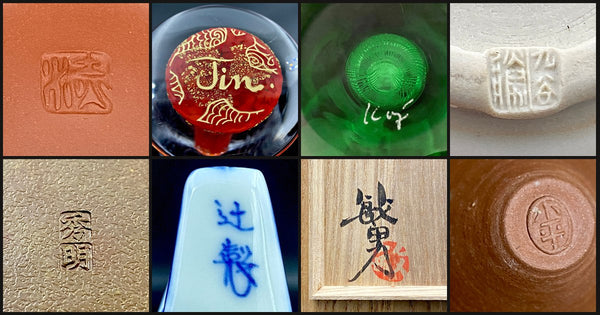 Japanese Pottery Seals, Box Signatures and Marks: A Photo Index of 160 MakersThe seal or incised signature on the base of a piece, and the signature and s...
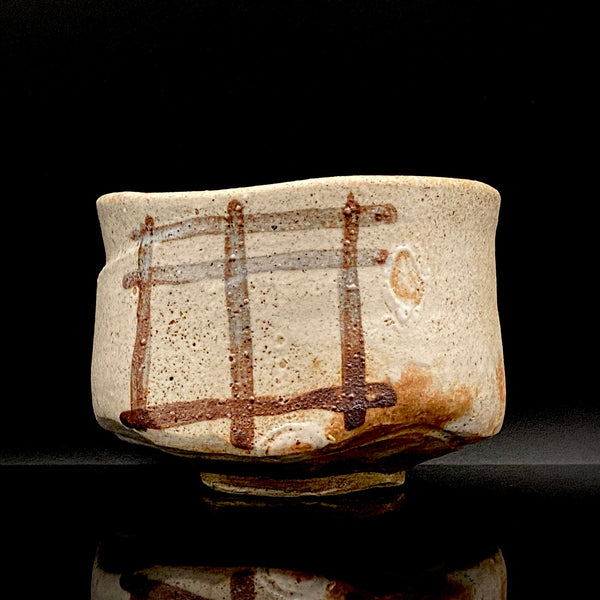 A Whisky Tea Gathering — Hosting with Master Craftsmen's Tea Utensils and Old Bottle WhiskyNovember, when the hearth is opened and the year's new tea is unsealed, is ca...
